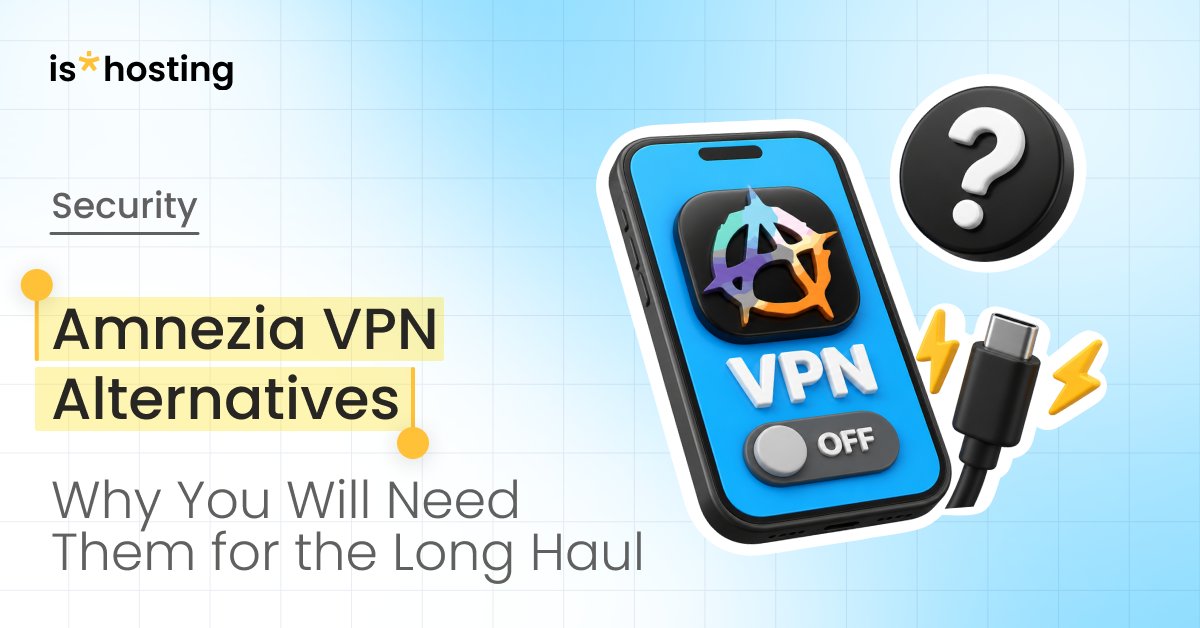
#Amnezia’s main servers dropped off the grid for almost three weeks this summer. Paid Premium users lost connection right alongside everyone on the free tier.
Buying a commercial #VPN subscription feels convenient until a provider-wide block hits. When DPI targets full server ranges and subnets, paying for a premium account offers zero immunity. On top of that, AmneziaWG’s packet-padding trick often freezes on mobile data because carriers filter non-standard traffic far more aggressively than home Wi-Fi. If your entire daily routine depends on one client app, a single targeted block cuts you off completely.
The fix isn't to find one "indestructible" provider, but to shift to self-hosted configs like VLESS + REALITY and keep a multi-protocol fallback stack ready. We looked into what actually keeps working during heavy outages and how to set up clean VPS backups.
Read the full breakdown on alternatives here: https://t.co/hI8qBYz4Ev
Case: attackers hijacked the update channel of cPGuard, a security add-on for panel servers. Fake builds 5.88.12–5.88.19 ran as root on about 2,950 servers (vendor figure), dropped a hidden shell and collected credentials.
Lesson: a security tool's update channel is attack surface too, and it runs as root.
→ Check /opt/cpguard/logs/install_log for builds 5.88.12–19
→ Rotate root, DB and cloud keys if one was installed
→ Rebuild from a pre-Nov-1 backup if you see manual logins
You want a private #VPN to get off crowded shared servers, but you probably don't want to spend your Saturday fighting #Linux routing tables. You just want to scan a QR code and get online.
#WireGuard makes this surprisingly easy. It’s miles faster than #OpenVPN and light enough to run on a basic $6 VPS. But there’s a serious blind spot if you live in a region with strict internet filtering. Standard WireGuard traffic has completely predictable packet sizes. Deep Packet Inspection (DPI) systems can spot this signature immediately and throttle the connection to zero, rendering your shiny new server completely useless.
We documented a way to bypass those filters without overcomplicating the setup. You can deploy wg-easy to manage your connections through a clean web dashboard, and then layer #AmneziaWG or wg-obfuscator on top to disguise your VPN traffic as a standard video call.
Grab the copy-paste commands to build this exact setup here: https://t.co/sVul1IYa1z
#Hermes Agent works in a loop: plan, change, read the result, revise. It ships with ~40 built-in skills and writes its own as it goes. Nous Research says agents with 20+ self-made skills finish similar tasks ~40% faster. The code it generates runs in #Docker or #WASM sandboxes.
Our servers dressed up for Halloween 🎃
Spooky on the outside, 100% calm on the inside: all lights blue, all systems running.
Happy Halloween from is*hosting
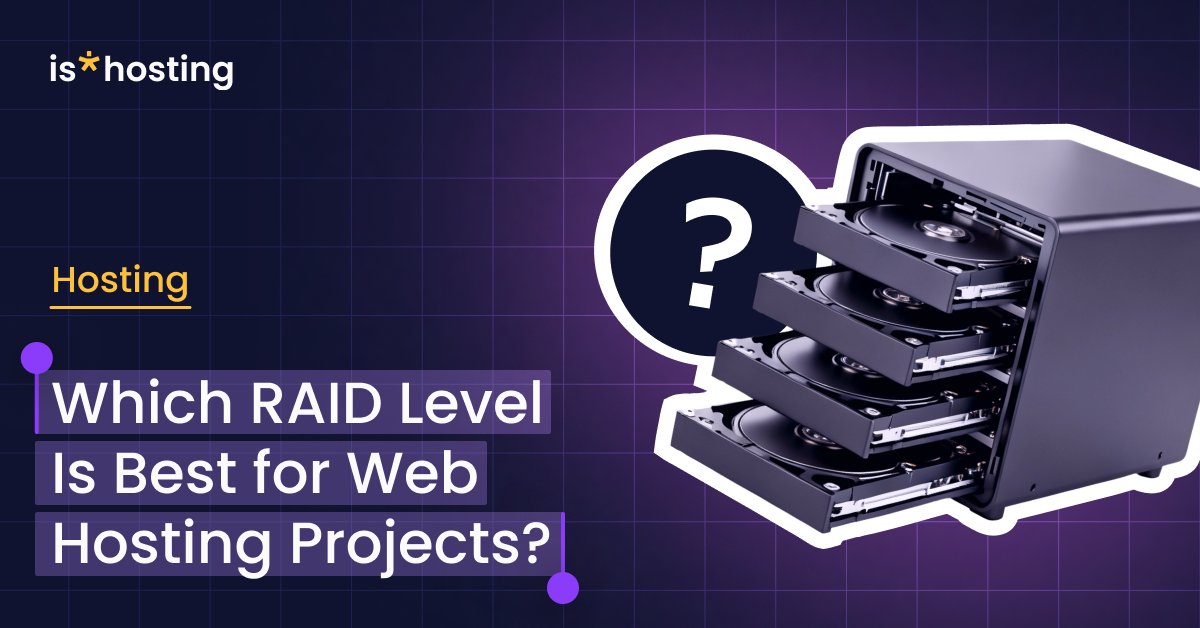
A drive fails in a #RAID 5 array. During the 15-hour rebuild, a second disk throws an unrecoverable read error. Your entire array is gone.
On paper, RAID 5 looks like a smart compromise for extra capacity. In reality, rebuilding multi-terabyte drives hammers the surviving disks right when they are most vulnerable. If a second drive gives out during that long read window, you lose everything.
Write performance is an even bigger trap. Running a busy database on parity RAID forces the controller into four physical I/O operations for every single write. While a simple static site barely touches the disk, transactional workloads stall out trying to compute parity math under load.
We broke down the actual #IOPS math for real production workloads. Here’s when a standard RAID 1 mirror is plenty, why databases require RAID 10, and where RAID 6 actually makes sense.
Read the full guide: https://t.co/kJaBwW6Pur
Did You Know?
Face recognition and smart search in #Immich run in a separate ML container. That container is why 8 GB RAM is recommended. On a 4 GB server you can disable it. Face recognition and search by description go with it.
PHP security update: fixes are out. Update now.
PHP has released patches for the two critical vulnerabilities we reported earlier: CVE-2026-109618 and CVE-2026-109619. Both can allow unauthenticated remote code execution.
Fixed versions: 8.5.12, 8.4.27, 8.3.36 and 8.2.35.
Back up, install the appropriate update, and restart the services running PHP. If you use distribution or control panel packages, check your vendor for patched builds.
Running PHP 8.1 or older? Contact your vendor about backported fixes or migrate to a supported branch.
Updating is the only complete fix.
Official advisory:
https://t.co/9ddcAGPuqh
Running PHP? Prepare for an urgent security update.
The PHP team has announced two critical vulnerabilities, each rated CVSS 9.2. A security release is scheduled for today, October 21, at 14:00 UTC, possibly earlier.
Check the PHP versions serving your sites and apps, take a backup, and be ready to apply the fixes as soon as they’re available.
Running PHP 8.1 or older? Prepare to migrate to a supported branch and test compatibility first.
What to check and how to prepare:
https://t.co/lnnllr3FGf