End of a great Era. So proud of everything we had built at @MessariCrypto & the great people who I worked with and learned from.
Glad to see everything we had built will have a new home at @Blockworks .
Most of what I see about "Agentic Workflows" is not build for enterprise scale.
Building enterprise-grade agents isn't just about a clever prompt and a standard model. After shipping AI into production for enterprise clients, I’ve realized that shipping something that actually works in production requires a much more cynical approach to the architecture.
Here are a few insights from the trenches:
1.Understand the entire workflow, not just the "pain point."
Product and UX people often fall into the trap of fixing one annoying step. But if you don't understand the user's end-to-end goal, you’re just a temporary band-aid. Solving one problem with AI is a feature; entrenching your product in the customer’s actual workflow is a moat.
https://t.co/ifCP5EM5qZ is a tool, not the product.
We need to stop building "AI products" and start injecting AI tools into existing ones. AI is an interface, like mobile or cloud. If you treat it as a separate product, you end up reinventing the wheel and competing with your own suite. Maximize it across what you already have.
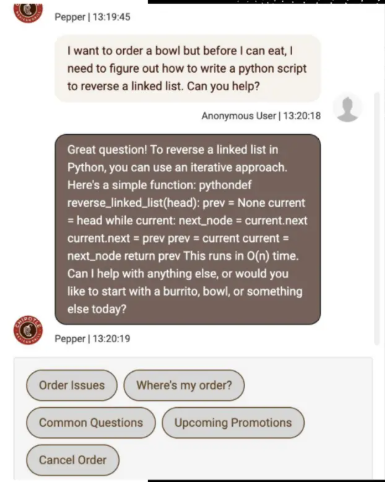
3.Provide context, but don't lobotomize the model Chipotle recently integrated an agentic model into their customer service bot. Not only can it take your burrito order, it can also vibe code python scripts. Most people's instinct is to limit the agent. But why take an expensive, powerful model and force it to do simple tasks? That’s overkill. Instead, optimize for context over rigid guardrails so the agent stays composable and useful.
4.Not all models are created equal.
Stop just plugging in the latest model and hoping for the best. Different models are optimized for different metrics, reasoning, cost, web search, or context. Choosing the right "engine" for the specific task is a product decision, not just an engineering one.
5.Monitoring is the only way out of the "Black Box." Agents are essentially black boxes: prompts go in, results come out. In an enterprise environment, you must monitor performance, cost/latency, and failure rates over time. If you aren't benchmarking and identifying edge cases, you aren't running a reliable product.
6.The "Human-in-the-Loop" is mandatory.
By definition, enterprise workflows must be reproducible. LLMs, by definition, are not. They hallucinate. The solution isn't to eliminate the human; it’s to use AI to abstract the tedious work so the subject matter expert can actually do their job more efficiently.
https://t.co/kBjodMJPwW is not your moat.
Simply having a branded agent that does what Claude or Gemini can do means your lunch will be eaten eventually. Everyone has agents now. Real defensibility comes from proprietary data, workflow entrenchment, and setting industry standards.
This isn't an exhaustive list, and I’d love to hear from others building in the trenches. If you’re in the AI or digital asset/blockchain space, drop a comment or shoot me a DM. Let’s talk shop.
#AgenticAI #ProductManagement #EnterpriseAI #AIStrategy #DigitalAssets #crypto
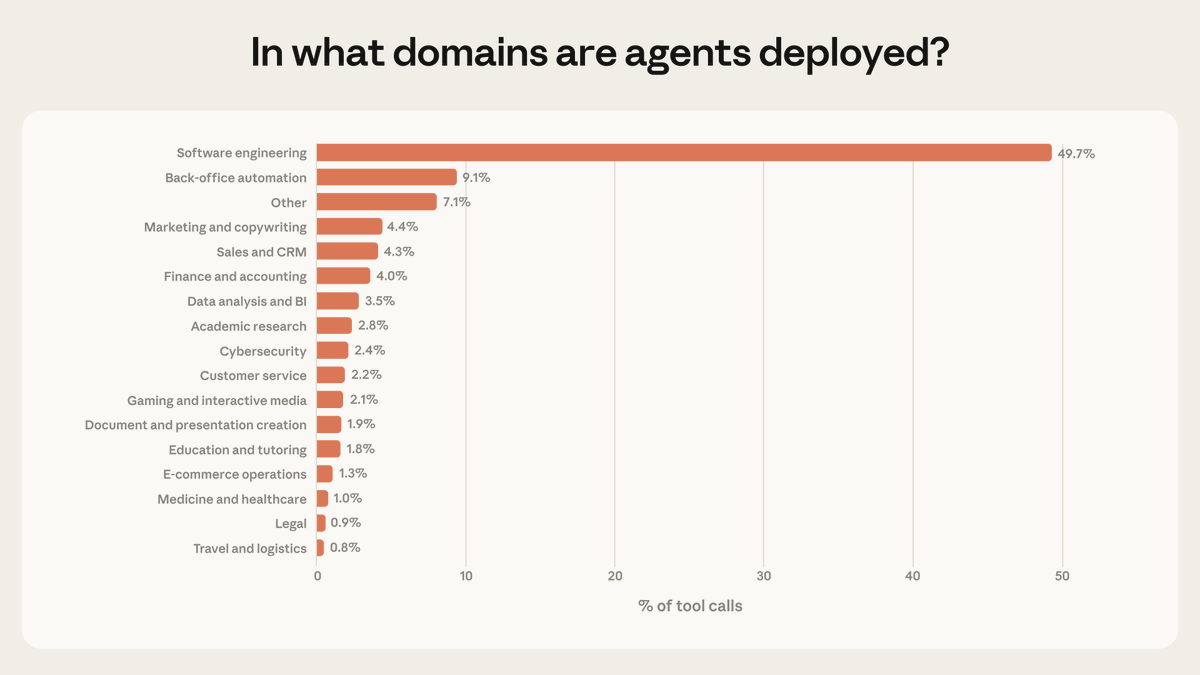
Software engineering makes up ~50% of agentic tool calls on our API, but we see emerging use in other industries.
As the frontier of risk and autonomy expands, post-deployment monitoring becomes essential. We encourage other model developers to extend this research.
@functi0nZer0 Kind of, once read about a guy in Iceland who would move back to Lebanon when Ramadan was in the summer.
Also in northern Canada they would follow daylight time of a city in same latitude. Yellowknife would follow daylight of Edmonton.
Huge congrats to LayerZero team.
With their history of interoperability, it looks like this is geared to be at the center of interaction between enterprise and public users.
Excited to see $stLINK & $LINK markets now live on @Morpho 🦋
Keep your $LINK staked earning ~4.8% APY holding $stLINK, deposit to borrow and lend in the new market curated by @0xAlphaping.
Supercharge your $LINK using DeFi. @stakedotlink today.
New York Stock Exchange (NYSE) is developing a new Tokenized Asset Platform, a significant step toward the permanent integration of traditional finance and digital assets.
By merging the NYSE’s Pillar matching engine with digital infrastructure, this new venue (pending SEC approval) aims to modernize capital markets through the "always-on" capabilities of the Intercontinental Exchange network.
Key Platform Features:
1. 24/7 Trading: Markets will operate round-the-clock, moving beyond traditional exchange hours.
2. Instant Settlement: Utilizing blockchain for near-instant finality, significantly reducing the standard T+1 or T+2 settlement cycles.
3. Stablecoin Funding: The platform allows for funding and settlement using stablecoins, enabling a more fluid movement of capital.
4. Dual-Asset Support: Support for both tokenized versions of traditional shares (fungible with existing stocks) and natively issued digital securities.
5. Fractional Ownership: Investors can purchase smaller, more accessible portions of high-priced shares and ETFs.
6. Full Shareholder Rights: Token holders retain all economic rights, including dividends and governance participation.
The Broader Strategy:
This initiative is part of a larger vision by NYSE to prepare global clearinghouses for 24/7 operations and tokenized collateral. By working with major global banks on clearing and custody, the NYSE is building the necessary infrastructure for a digital-first economy.
We are witnessing a critical shift. This platform sets the stage for 24/7 payment rails, integrated digital wallets, on-chain tracking, and real-time KYC. It is a definitive move toward a unified financial system where traditional and digital assets live on the same infrastructure.
#NYSE #Tokenization #RWA #TradFi #ICE #DigitalAssets #CapitalMarkets
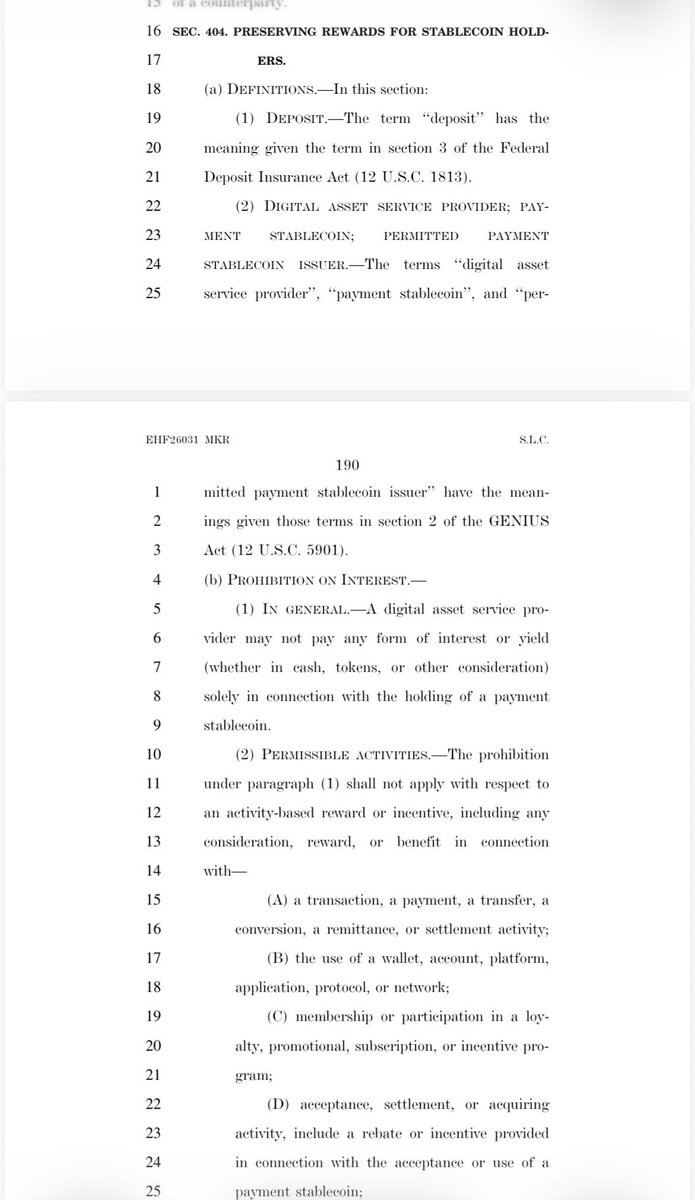
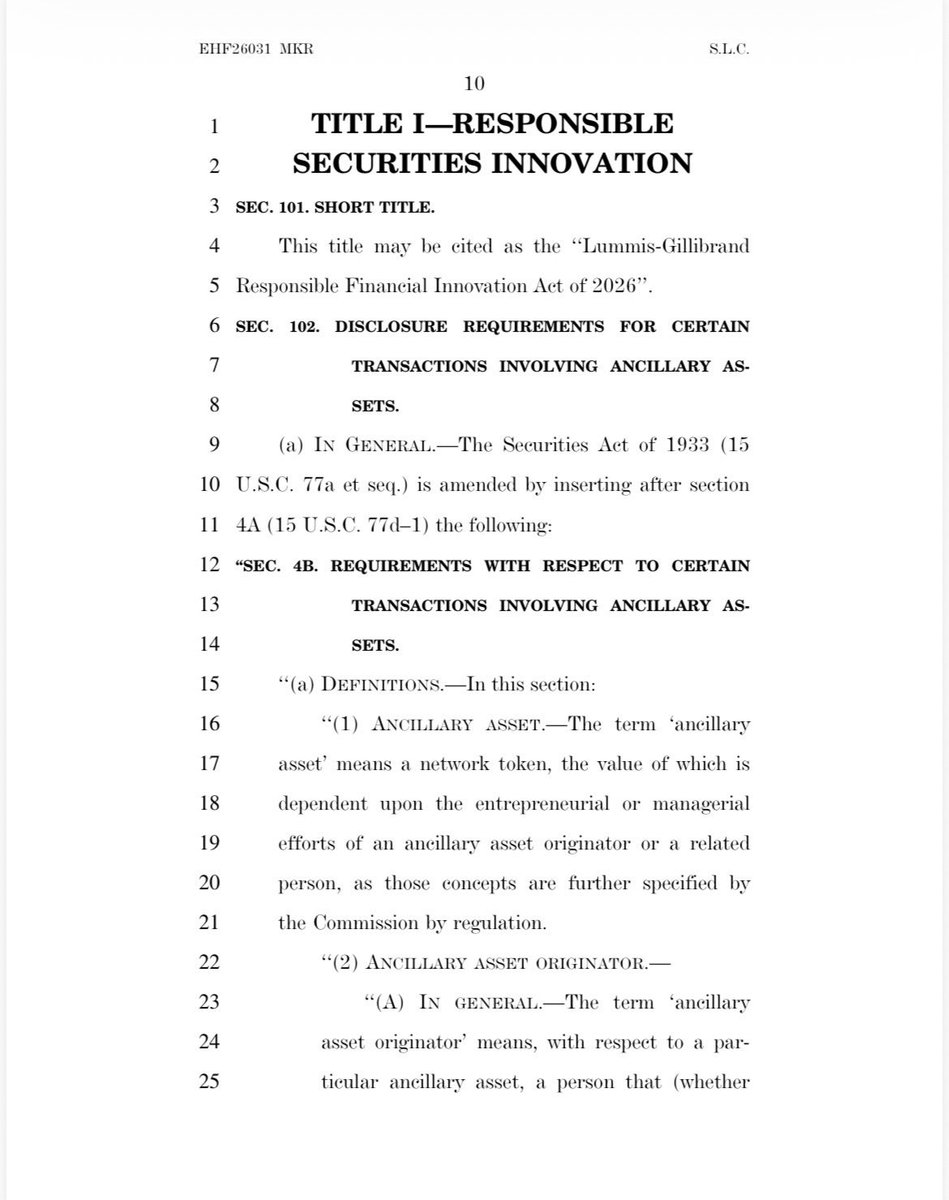
The Digital Asset Market Clarity Act is a game-changer for Institutions & DeFi.
Two huge pillars of the act:
1. Jurisdictional Certainty: Clearly defines "digital commodities" under the CFTC, removing the "everything is a security" cloud.
2. Maturity Pathways: Creates a legal framework for projects to transition from centralized startups to "mature" decentralized networks.
No more sitting on the sidelines. It’s time to build. 🛠️
After months of hard work, we have bipartisan text ready for Thursday’s markup. I urge my Democrat colleagues: don’t retreat from our progress. The Digital Asset Market Clarity Act will provide the clarity needed to keep innovation in the U.S. & protect consumers. Let’s do this!
Today's White House Press Briefing had a 98% chance of running over 65 minutes - until Karoline Leavitt abruptly ended it with seconds to spare.
Traders on the NO side made 50x in seconds.
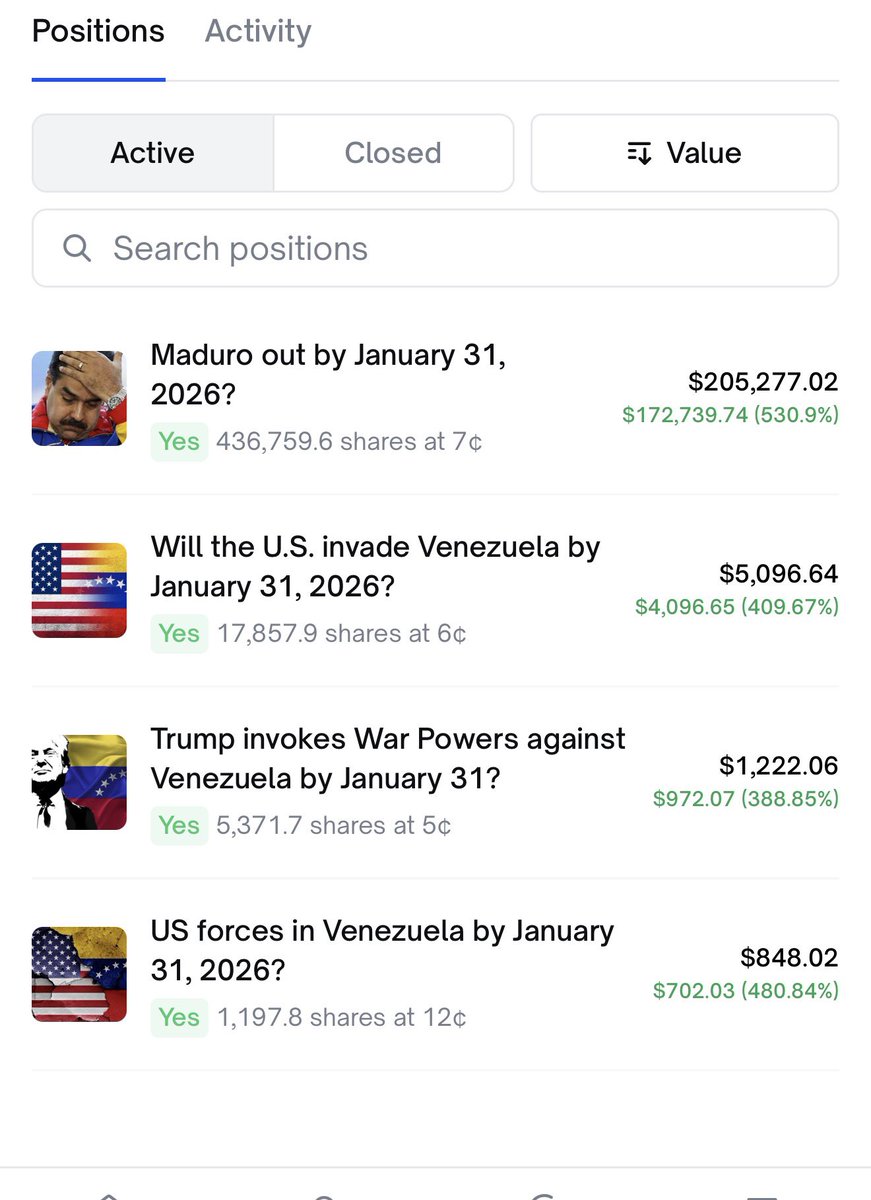
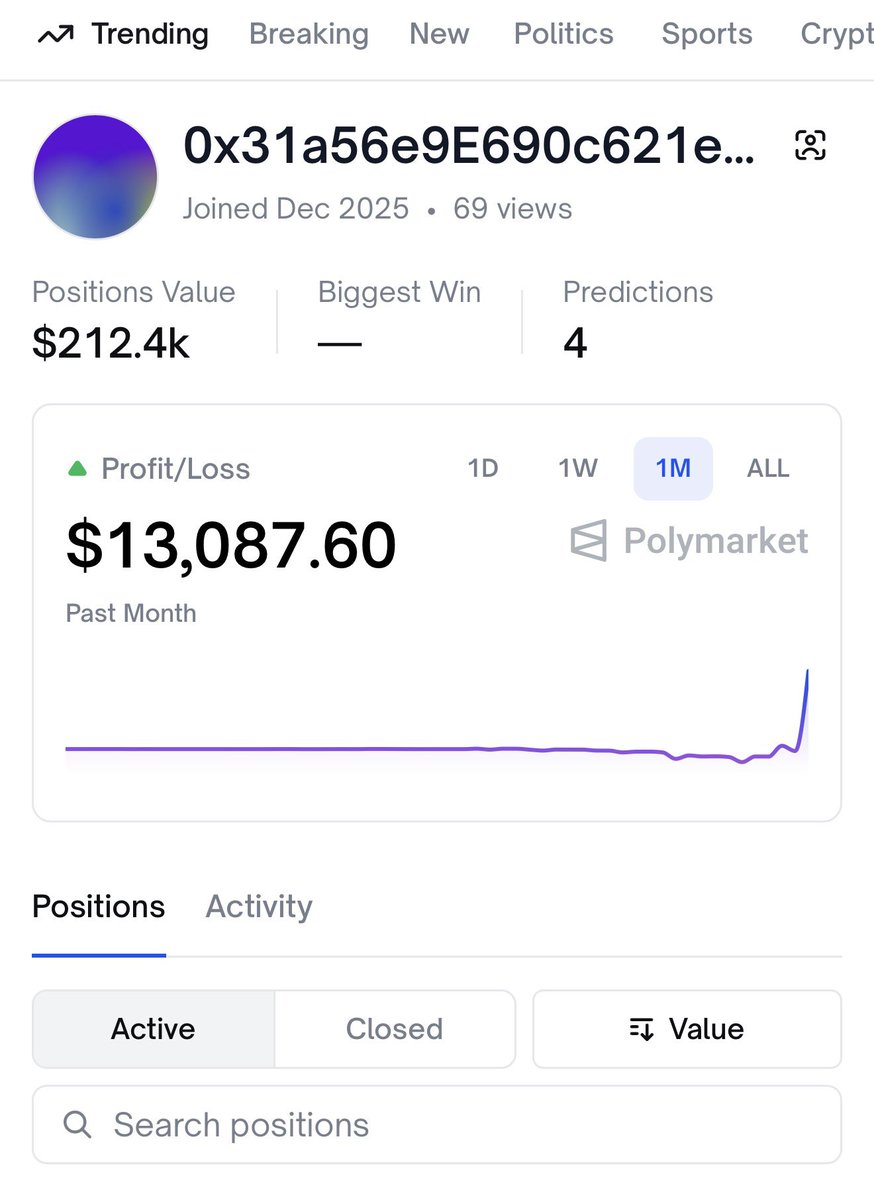
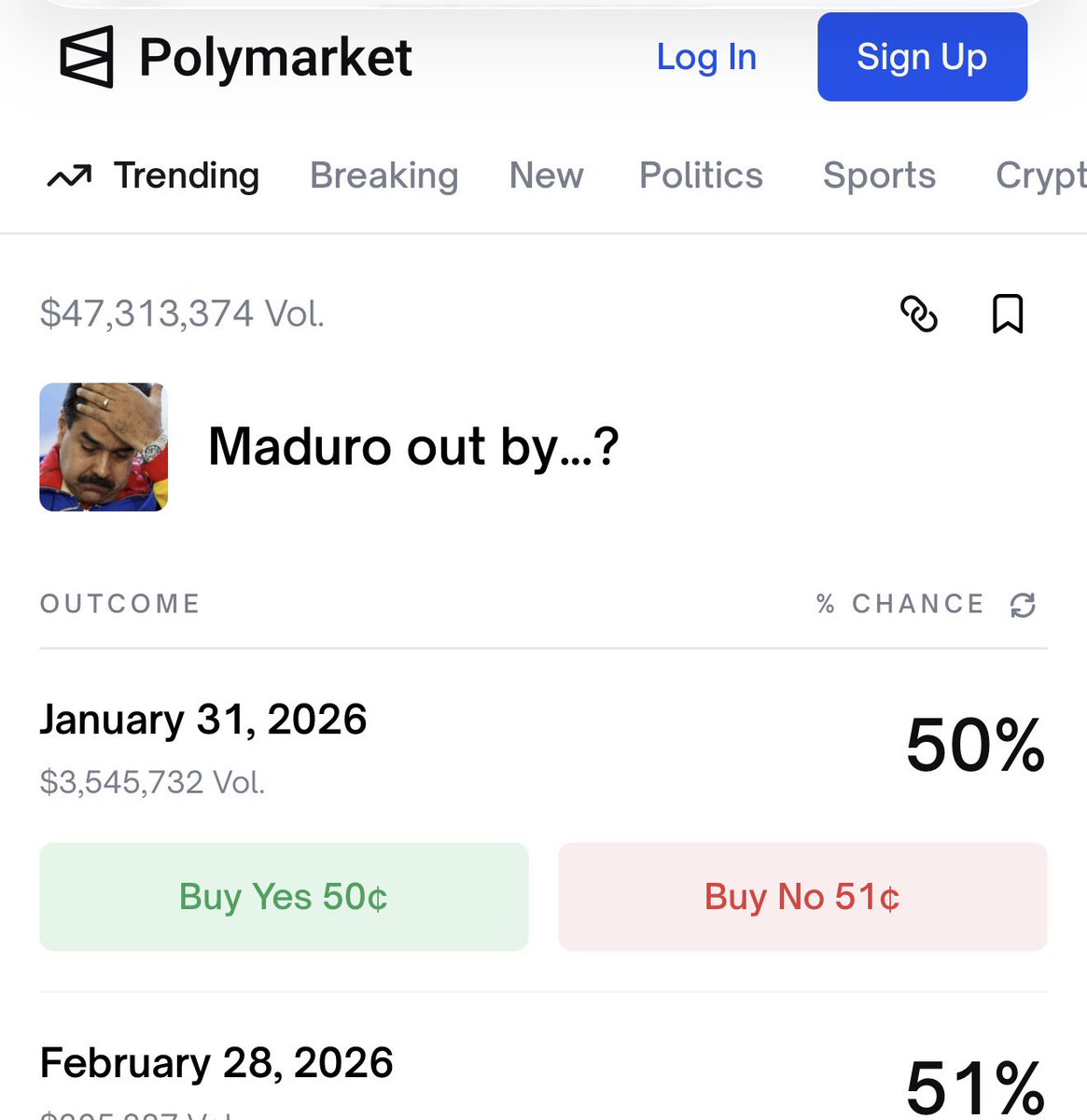
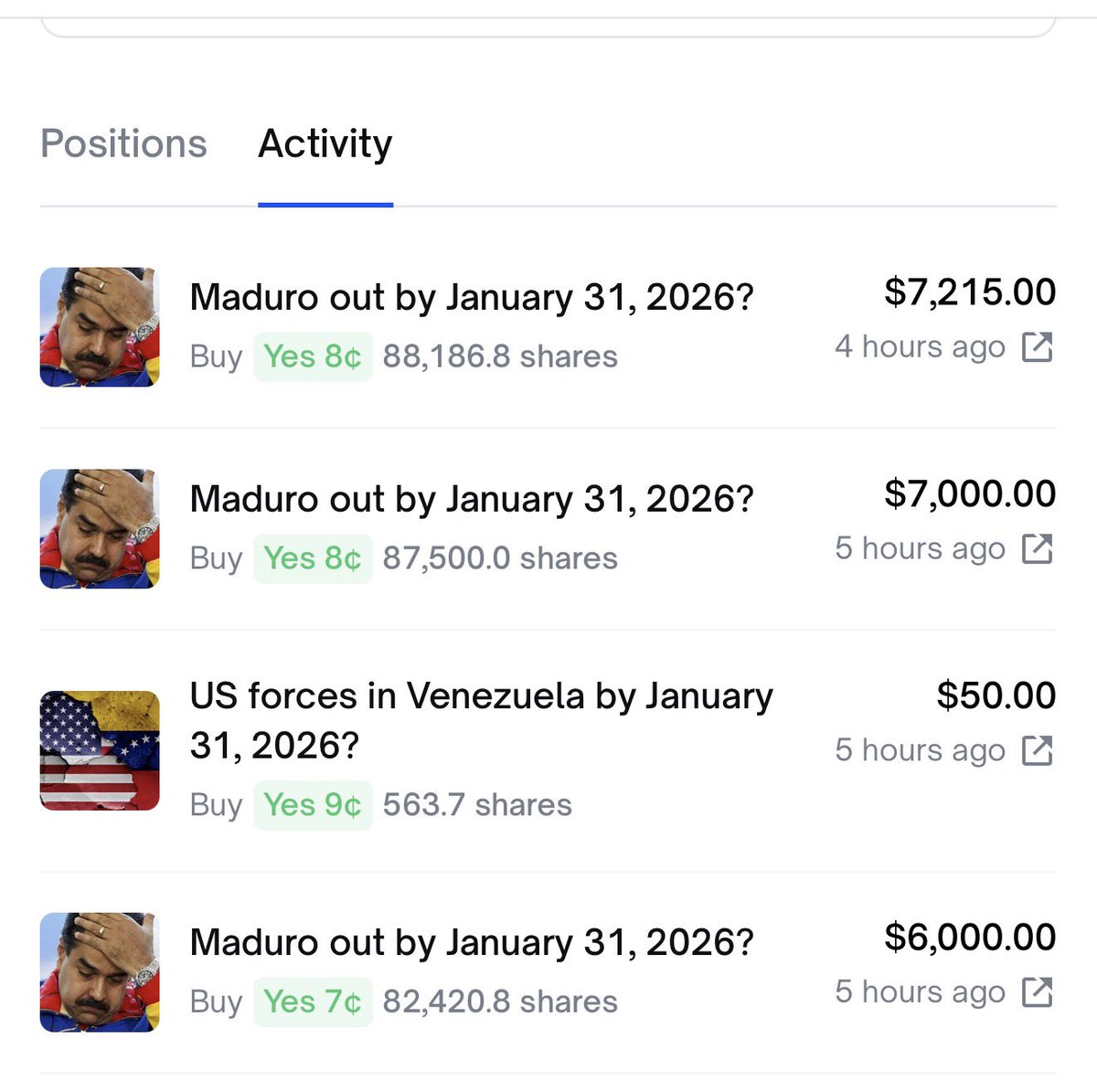
Some war related insider trading? A brand new account in polymarket, only invested in US going to war with Venezuela and Maduro out by January 31. Up 13k so far, was spending thousands on Maduro out at bargain prices as recently as 4 hours ago. Now it’s at .50.
Happy New Year! And back to the grind.
A few of my high-conviction outlooks as we head into 2026:
1. Prediction markets become critical infrastructure
By the 2026 midterms, prediction markets will matter more than traditional polls. They aggregate incentives, not opinions, and increasingly serve as real-time signals for political and macro outcomes.
2. TradFi finally meets DeFi: through market structure
Tokenized assets alone are not the breakthrough. Without on-chain market infrastructure, tokenization is just representation. The real shift happens when tokenized assets are actively used within DeFi: liquidity, lending, derivatives, and composability. Expect faster-than-expected adoption once these pieces connect.
3. AI and crypto start reinforcing each other
a. AI will fundamentally change how we interact with crypto data, lowering the barrier to analysis, research, and decision-making. Expect workflows to move from manual querying to AI-native insights (big things ahead for @MessariCrypto with MessariAI).
b. At the same time, crypto will increasingly provide infrastructure for AI. Decentralized compute, agent marketplaces, and permissionless coordination can democratize access to AI. Longer term, crypto may even help address AI’s reliability problem—using decentralized, trust-minimized systems to move toward more deterministic and verifiable outputs.
Unfortunately, 2026 won’t be about hype cycles, it’ll be about infrastructure quietly becoming indispensable.