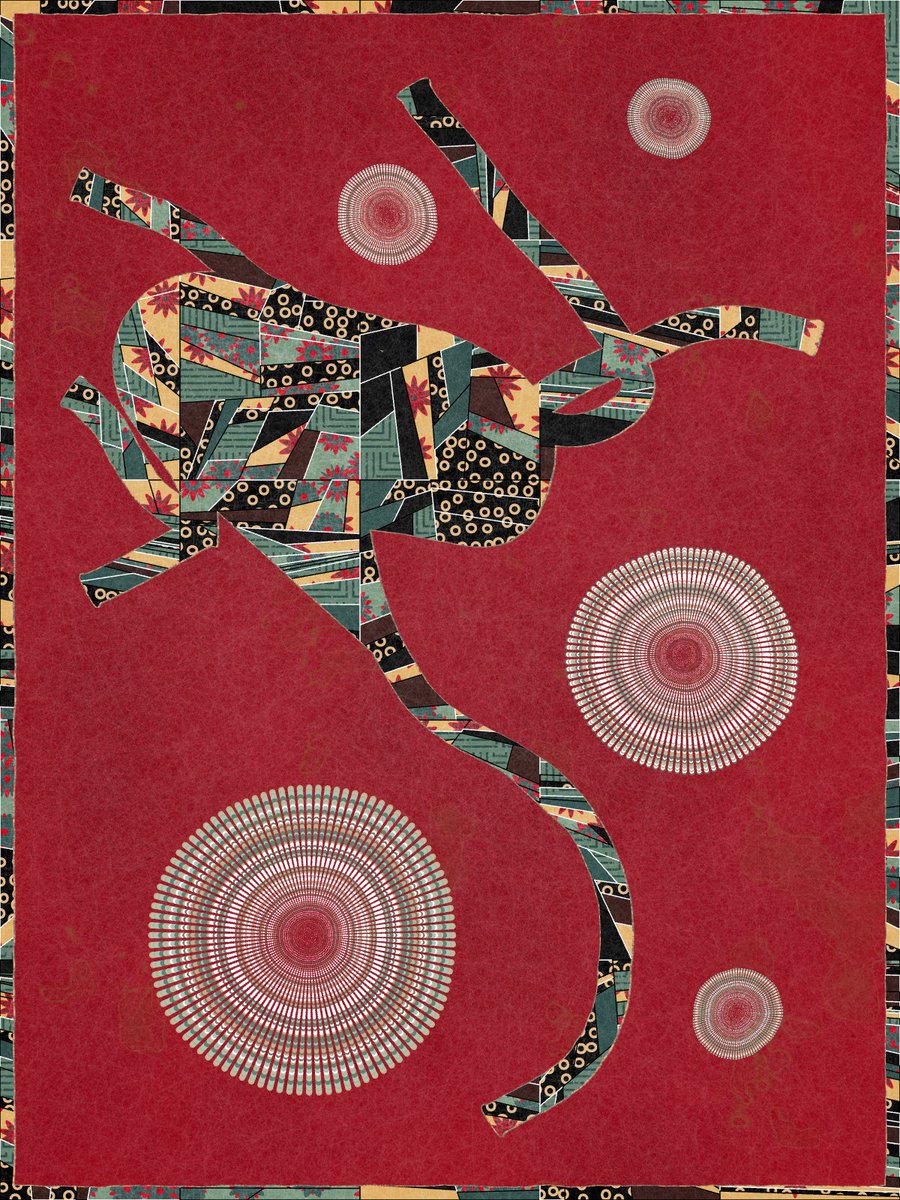
I shared some thoughts on generative art in an interview with @outland_art. It's an art form that has been around for decades but saw a surge of talent and interest in the past few years.
Excited to announce that next week, I’ll be releasing an on-chain generative series, Interwoven, in collaboration with @CactoidLabs and @LACMA.
🧵 (1/8)
I had more fun with paint simulation today. Today, I found micro-variations in hsl in the brush texture made for a more natural approximation of color mixing in the brush stroke.
#generativeart
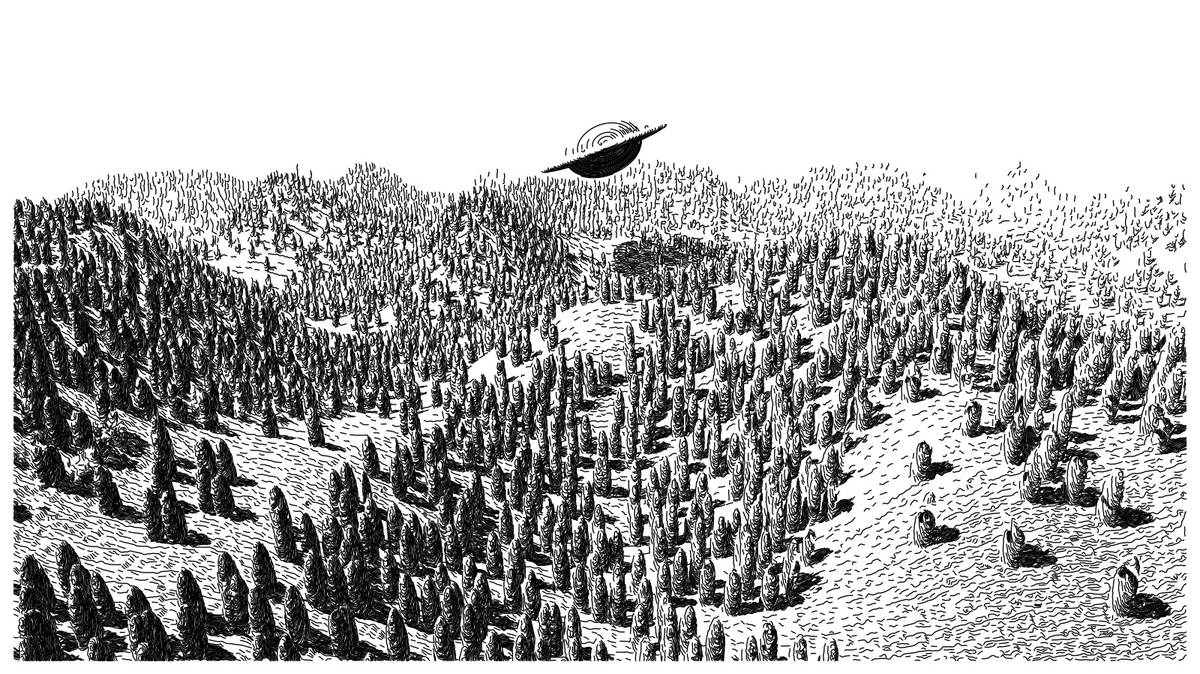
I just read this amazing article about writing the SDF for a UFO scene by @ClausWilke in one go. Step by step explanations, screenshots, demo code, everything.
https://t.co/2OTDXeukMv
Highly recommended for anyone looking to create figurative SDFs with Universal Rayhatcher!
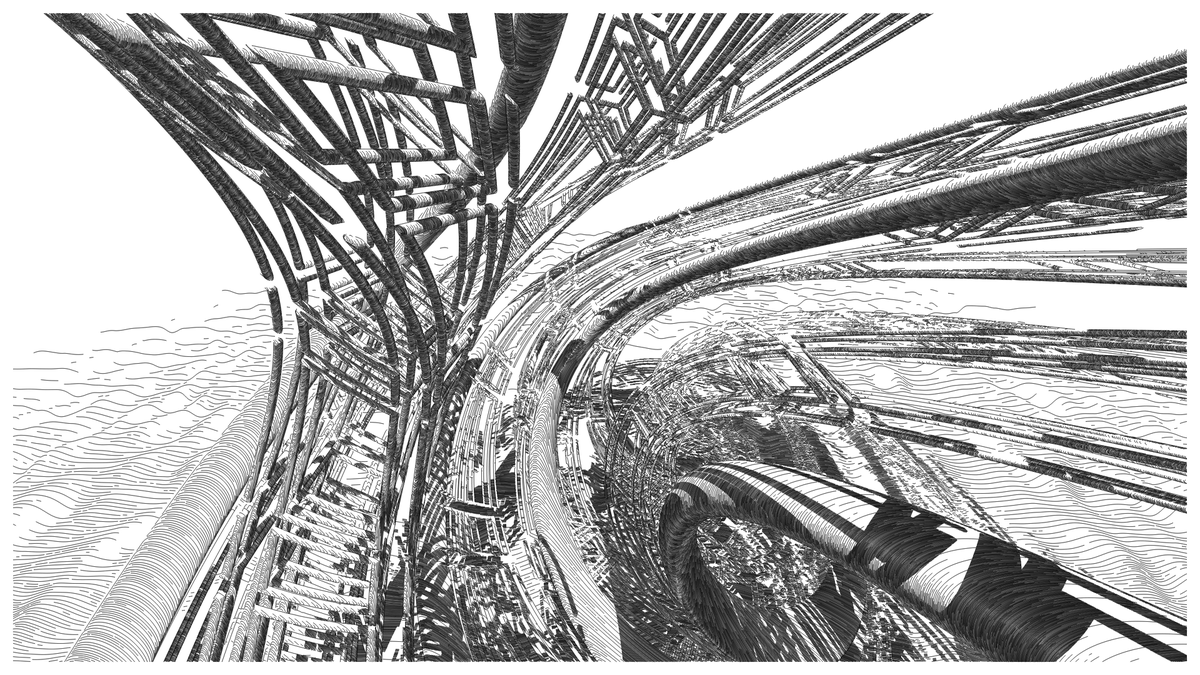
Playing with building SDFs for @piterpasma's Universal Rayhatcher
I'm still very unskilled at it but it's also a lot of fun
https://t.co/HOlUzlkxd2
https://t.co/tPcoTGEqwG
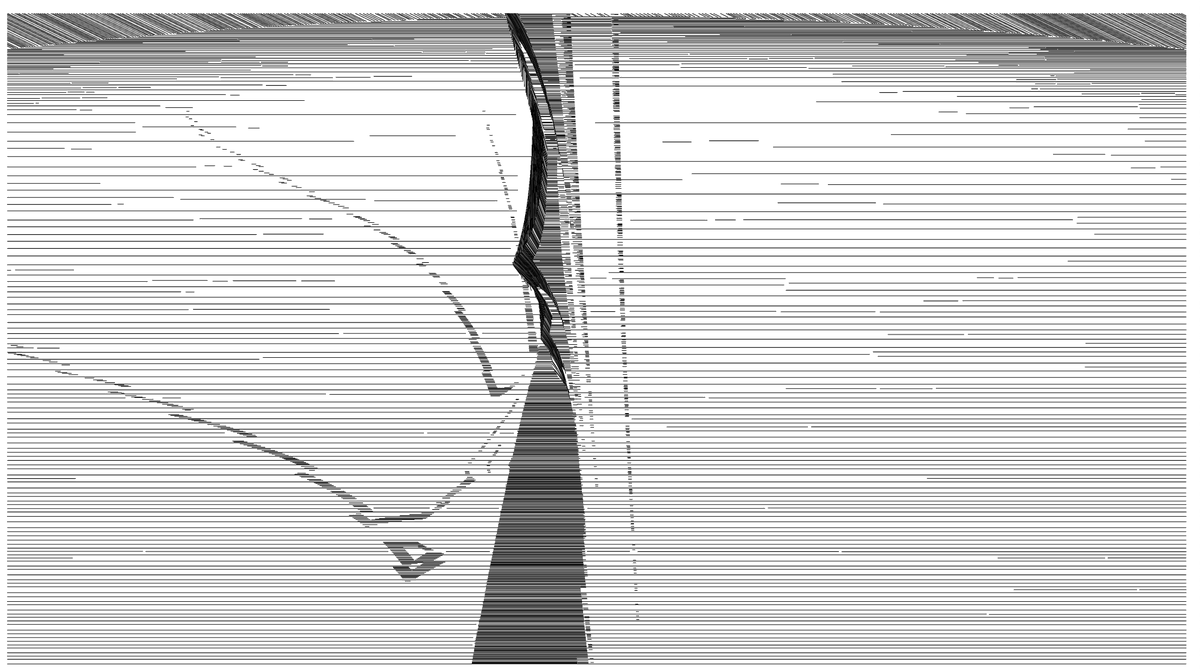
@piterpasma ...lots of assumption in the wrapping around the SDF, interesting to see that a constant still makes an interesting composition: https://t.co/1CZy06R2DZ
Universal Rayhatcher is a priceless gift to the generative art community, combining technical excellence, collaboration, education, and artistic expression in one release.
Thanks, @piterpasma!
#rayhatching#genartclub#fxhash
(Universal Rayhatcher #114)
So, what is an SDF: In short, an SDF is a 3d function that returns the distance to the closest surface at every point in the space. it returns 0 exactly at the surface of objects, and negative values on the inside.