Warren Buffet: "True wealth is not having the biggest house or the most expensive car.
It is having enough money to live comfortably while being free to choose how you spend your time, who you work with, and the life you want to live.
In the end, time and freedom are the greatest forms of wealth".
Very true…
Herkes ABD'ye bakıyor. Asıl kararı bugün Japonya verecek.
Japonya bugün faiz kararını açıklıyor. Piyasa neredeyse kesin artış bekliyor.
Artış gelirse yükseliş biter deniyor.
Bence tam tersi, belirsizliği bitiriyor.
Önümüzdeki dönemin yakıtı da belli, iki faiz arasındaki fark.
Dikkatli okuyun.
ABD'de faiz %3.75 ile %4 arasında.
Japonya'da faiz %1. Bugün %1.25'e çıkması bekleniyor.
Artış gelse bile arada 2.5 puandan fazla fark kalıyor.
Bu fark ne işe yarıyor?
Şöyle düşünün.
Su, yükseklik farkı olduğu sürece akar. Yükseklik farkı kapanmadan suyu durduramazsınız.
Faiz farkı da aynı şekilde çalışıyor.
Japonya'dan %1.25'le borçlanıp kur riskini alarak dolara geçen bir fon %4'e yakın kazanıyor. Yen güçlenmediği sürece aradaki fark kârı oluyor.
Son yılların yükselişini besleyen şey bu.
Fark var oldukça bu para akmaya devam ediyor. Bugünkü artış farkı kapatmıyor, sadece biraz daraltıyor.
Peki Japonya farkı kapatabilir mi?
Vadeli piyasa Japonya için yıl sonunda %1.5, 2 yıl içinde %2 fiyatlıyor.
Daha hızlı gidemiyor, çünkü borcu milli gelirinin iki katından fazla, %230'un üstünde.
10 yıllık tahvil faizi bu ay 1996'dan beri ilk kez %3'ü aştı ve tahvillerin yaklaşık yarısı kendi merkez bankasında, yani faiz yükseldikçe zararı kendisi üstleniyor.
Kural basit.
Borçlu bir devlet enflasyona yetişecek faizi veremez, verirse kendi borcunu ödeyemez.
Japonya ABD'ye yetişmeye çalışıyor ve yetişemiyor.
Şimdi bu sefer neden düşüş beklemediğime gelelim.
Japonya 2024'ten beri 5 kez faiz artırdı.
İlk artışlarda piyasalar sert sarsıldı, Ağustos 2024'te Japon borsası 1 günde %12 düştü ve satış bütün dünyaya yayıldı.
Piyasa bu mekanizmayı öğrendi.
Satışı karara giden haftalarda yapıyor, karar günü geldiğinde iş bitmiş oluyor.
Bu sefer de öyle oldu.
Yen Temmuz sonundan beri 164'ten 156'ya geldi, sadece son 1 ayda %2.3 değer kazandı. Artış beklentisi fiyata çoktan girdi.
Temmuz'da şunu yazmıştım.
Boğa piyasası yen güçlendiği için başlamaz, yen'deki sert hareket bittiği gün başlar.
Bugün o gün olabilir.
Karardan sonra yen'de sert bir sıçrama olursa riskli varlıklar bir kez daha sarsılır, ama fark kapanmadığı için o sıçrama kalıcı olmaz.
Büyük resim şu.
Yükselişi yaratan şey ucuz yen.
Ucuz yen'i yaratan şey iki ülke arasındaki faiz farkı. Farkı yaratan şey Japonya'nın borcu.
Borç gitmediği sürece bu zincir bozulmuyor.
Bugün Japonya faiz artırabilir. Değiştiremeyeceği şey ABD ile arasındaki fark.
Bana göre bu fark kapanmadığı sürece para riskli varlıklara girmeye devam edecek.
Bu benim şahsi analizim.
Gelişmeleri inceliyorum, sizi bilgilendireceğim.
Yesterday's employment report was strong. Payrolls increased by 162,000, household employment grew more than 500,000, and the average workweek increased. The economy was cranking in August.
Many will see more inflation and Fed tightening. I see something bigger.
Headline inflation is 3.7%, but other measures are much closer to 2%. Oil could fall toward $30. Equities are hitting all-time highs as rates rise. Capital spending has broken through a ceiling that held for more than 20 years. Bitcoin is breaking away from gold. Companies embracing artificial intelligence are creating jobs faster.
These are not disconnected signals. They could mark the beginning of stronger real growth and powerful technology-driven deflation.
The consensus is pricing the old economy. I believe a new one is taking shape.
Watch my latest In The Know: https://t.co/hMeN9u42Pc
Bitcoin'i 85 bine gönderecek yakıt, satmak isteyenlerin elinde olabilir.
Herkes Bitcoin 80 bini geçer mi diye bakıyor. Ben o seviyede kimin ne taşıdığına bakıyorum.
Orada fiyatın yükselmesini istemeyen 2 grup var.
80 bin geçilirse ikisi de Bitcoin almak zorunda kalıyor.
Anlatıyorum.
Bitcoin şu an 77 bin 100 dolarda.
Üstünde 3 seviye duruyor, 80 bin, 82 bin ve 85 bin. Altında ise 75 bin var.
Opsiyon piyasasında birileri 80 bin üstü için alma hakkı sattı.
Bu hakları satan kurumlar, fiyat 80 bini geçerse zarar ediyor.
Kendilerini korumanın yolu Bitcoin tutmak.
Fiyat yükseldikçe daha fazla tutmaları gerekiyor.
Şu anki toplam pozisyonları eksi 183 milyon dolar. Eksi olması şu demek.
Fiyat hangi yöne giderse, onlar da aynı yöne işlem yapmak zorunda.
Normalde bu kurumlar fiyatı sakinleştirir. Yükselince satar, düştüğünde alır. Şimdi tersi geçerli. Yükselirse alacaklar.
Yani fiyat yükseldikçe alım geliyor, gelen alım fiyatı daha da yükseltiyor.
Aynı mantık piyasanın başka bir yerinde daha çalışıyor.
Short açanlar.
İki taraf da satış tarafında duruyor. İkisi de yükselişte alıcıya dönüşüyor. Birinin alımı diğerinin tetiğini çekiyor.
80 bin geçilirse zincir 4 adımda dönüyor.
1. Opsiyon satan kurumlar korunmak için Bitcoin alır.
2. Bu alım fiyatı yukarı taşır.
3. Yükselen fiyat shortların teminatını eritir. Pozisyonları kapanır ve kapanması için Bitcoin alınır.
4. Bu alım fiyatı daha da yukarı taşır. Kurumlar yeniden alıma geçmek zorunda kalır.
Sonra 1. adıma dönülür ve döngü kendini beslemeye başlar.
Bunu şöyle düşünün.
Bir mağazanın önünde uzun bir kuyruk var ama kimse indirim olduğu için sırada değil. Herkes almak zorunda olduğu için sırada.
80 bin geçilirse oluşacak alım da böyle bir alım olur.
Peki nereye kadar gider?
80 binden sonraki ilk fren 82 binde. Orada da satılmış haklar birikmiş durumda.
82 bin geçilirse sıradaki durak 85 bin. Ondan sonrası 91 bin.
Her basamakta aynı hesap yeniden kuruluyor. Fiyat o seviyeyi geçerse orada bekleyen alım devreye giriyor.
Bir de madalyonun öbür yüzü var.
Bu düzen tek yönlü çalışmıyor. Fiyat aşağı giderse aynı hızlanma ters yönde başlar.
Aşağıdaki ilk durak 75 bin. Orada alma tarafında en büyük birikme var, düşüş büyük ihtimalle orada yavaşlar.
Asla şunu unutma.
Piyasada en sert hareketi almak ya da satmak isteyenler yapmaz. Mecbur olanlar yapar.
Bir fiyatı aşağıda tutan pozisyon, o fiyat geçildiği anda onu hızla yukarı iten pozisyona dönüşür.
Bu benim kişisel görüşüm, yatırım tavsiyesi değil.
Gelişmeleri sizinle paylaşmaya devam edeceğim.
🇺🇸🇮🇷 The US and Iran War have now officially ENDED after 110 days.
Both countries have signed a 14 point MOU to end the war effective immediately, per Axios.
1. Immediate permanent ceasefire on all fronts, including Lebanon. No more wars or threats.
2. Respect Lebanon’s sovereignty and territorial integrity.
3. Fully reopen Strait of Hormuz to commercial shipping.
4. Lift US naval blockade on Iran.
5. Release frozen Iranian assets.
6. Waivers for Iranian oil exports/sales.
7. Iran commits never to make or get nuclear weapons.
8. IAEA monitors Iran’s nuclear stockpile; no further advances.
9. Start 60-day talks for a final comprehensive deal.
10. Create $300 billion fund for Iran’s reconstruction.
11. Set up monitoring to check compliance.
12. Outline path for final agreement (possibly UN-backed).
13. Allies on both sides commit to upholding the ceasefire.
14. Define timelines and rules for implementation/enforcement.
The jobs report was a barnburner. Nonfarm payrolls increased by 172,000 versus expectations for 88,000, while prior months were revised higher by 93,000. Wage growth came in at roughly 0.3%. Yet the market sold off. In our view, the market is misreading the signal. It is assuming that stronger than expected employment and growth will cause a an acceleration in inflation. History would suggest otherwise. Productivity growth is running near 3%, while unit labor costs are hovering around 0.5%. Those are not the hallmarks of an inflationary boom. They are the hallmarks of healthy, productivity-driven growth that will lower inflation. Meanwhile, the yield curve continues to flatten despite a roughly 55% increase in oil prices year-over-year based on a three month moving average. In past cycles, an energy shock of this magnitude steepened the yield curve when the Federal Reserve was accommodating it. Instead, the bond market appears to be discounting something much more powerful: the deflationary impact of technological innovation, particularly artificial intelligence, which is beginning to increase productivity across broad swaths of the economy. If tensions with Iran ease and oil prices retreat, we believe inflation could move into negative territory before year-end. In our view, the Fed made a historic policy error when it raised rates aggressively into what was largely a supply-driven inflation shock in 2022. We do not believe the next generation of monetary policymakers will be eager to repeat that mistake. Notably, gold peaked on the day Kevin Warsh was appointed. The inflation trade may already be behind us. If our research is correct, the next phase of this cycle could be characterized by accelerating growth, declining inflation, falling interest rates, and a strengthening U.S. dollar. That combination would create a remarkably supportive backdrop for innovation-led equities and the technologies driving the next productivity boom. I discuss this framework in greater detail in this month’s episode of In The Know.
🚨Banks are trying to kill the most important crypto bill in US history again.
And the Senate vote is just 4 days away.
On May 1 a bipartisan compromise was reached on stablecoin yield after months of negotiations.
The Senate Banking Committee immediately scheduled the markup vote for May 14.
Within days of the vote being announced, the American Bankers Association, Bank Policy Institute and three other major banking lobbies submitted a joint letter demanding changes to the compromise text they had literally just accepted.
What banks agreed to was simple, crypto companies cannot pay passive yield on stablecoins the way a bank pays interest on deposits, but they can offer rewards tied to actual usage and transactions on their platforms.
Banks are now saying even that is too generous and want the entire rewards framework scrapped.
Their real concern has nothing to do with consumer protection. Banks have explicitly stated that yield bearing stablecoins could reduce consumer, small business and farm loans by 20% or more, meaning people would move money out of bank accounts into crypto platforms and banks would have less to lend and less profit.
Trump said publicly he will not let bankers ruin this bill.
If it misses the May 21 Memorial Day recess deadline the entire bill gets pushed off the Senate calendar and a full year of negotiations goes to zero.
The banks know exactly what they are doing and exactly when they are doing it.
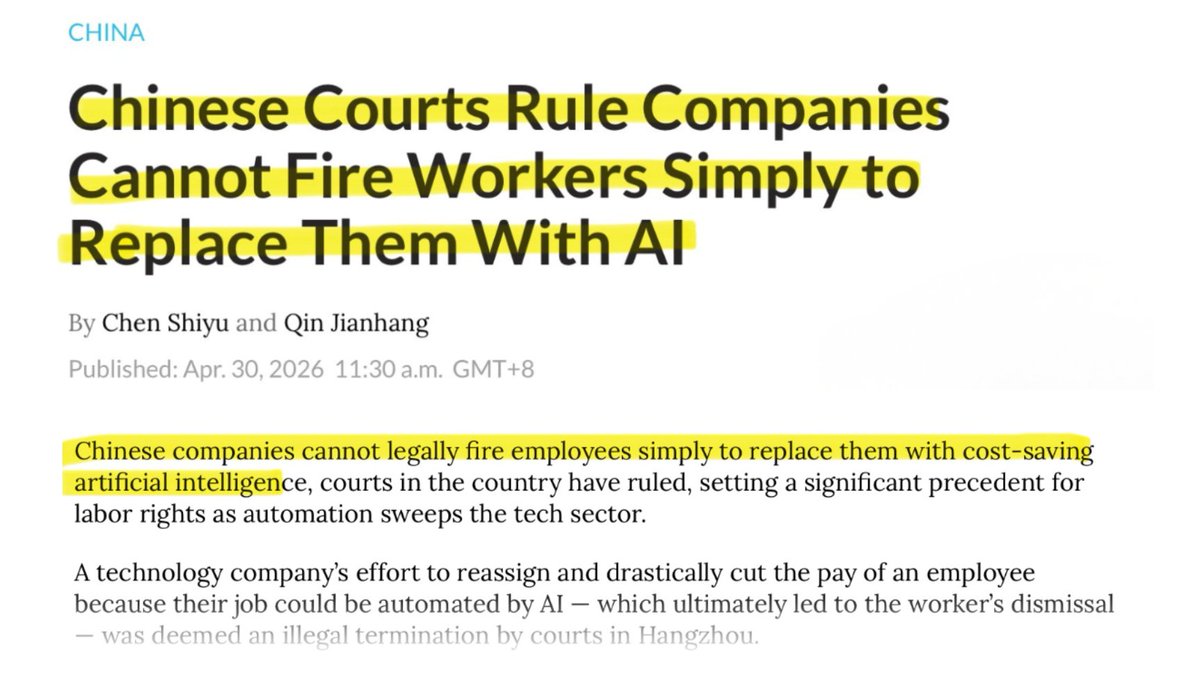
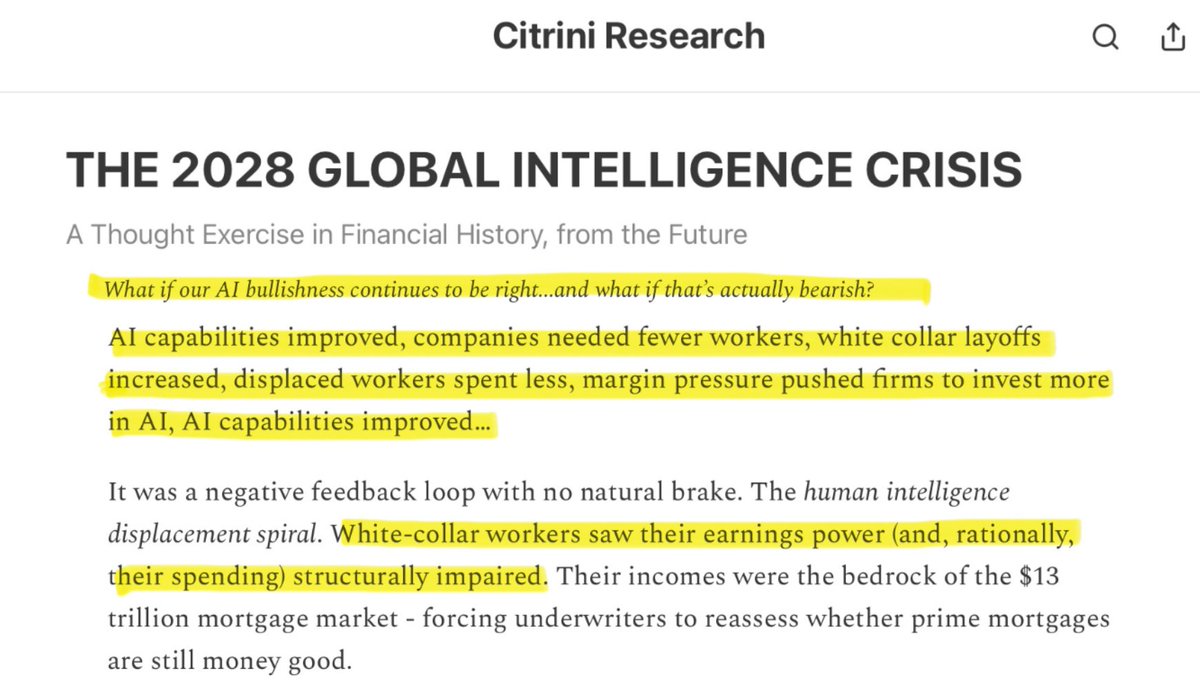
🚨 CHINA JUST MADE IT ILLEGAL TO FIRE EMPLOYEES AND REPLACE THEM WITH AI.
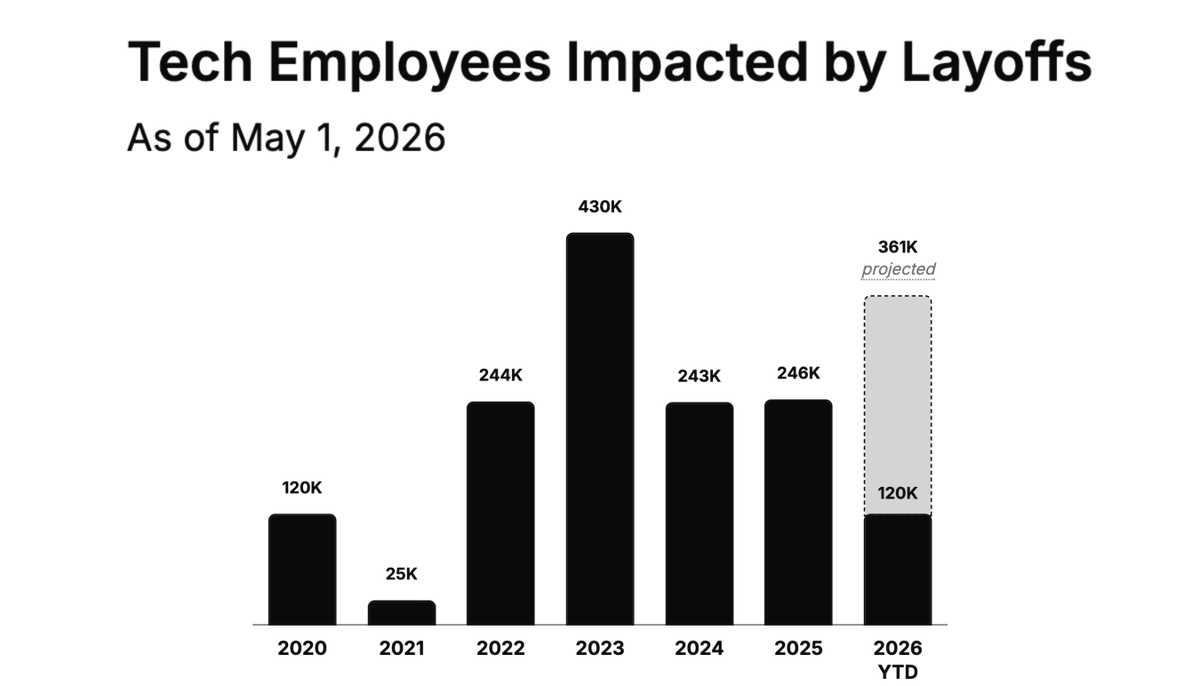
The rest of the world had cut 1.5 Million+ jobs since 2020 doing exactly that.
The Hangzhou Intermediate People's Court ruled that a tech company's decision to cut an employee's salary from 25,000 yuan to 15,000 yuan because AI could now handle his tasks, and then fire him when he refused the cut, was an illegal termination. A similar Beijing case involving a map data collector whose entire role was replaced by AI automation reached the same verdict.
Both courts ruled that adopting AI is a voluntary business decision, not an uncontrollable external event and therefore companies cannot shift the financial consequences of that decision onto employees.
The courts stated that AI replacement does not automatically justify terminating a labor contract. Companies must instead retrain workers for new roles, reassign them to suitable positions with fair compensation, or help them develop new skills.
Now look at what is happening everywhere else.
Over 100,000 employees were hit by AI-driven layoffs in 2025. In 2026 alone that number has already exceeded 61,000 in the first four months. 78,557 tech workers were laid off between January and April 2026, with 47.9% of those cuts directly attributed to AI replacing human roles.
Amazon eliminated 30,000 corporate jobs across late 2025 and early 2026 citing AI efficiency. Block cut its workforce nearly in half from 10,000 to 6,000 with CEO Jack Dorsey saying directly: "This is not driven by financial difficulty, but by the growing capability of AI tools." Atlassian cut 1,600 and Meta is about to cut 8,000.
Companies are not just replacing workers with AI, they are cutting headcount to fund AI infrastructure spending. "Companies are shifting budgets toward AI investments at the expense of jobs," according to Challenger, Gray & Christmas.
The workers losing jobs are directly funding the AI that replaced them.
An MIT simulation found AI can replace nearly 12% of the US workforce, approximately $1.2 trillion in lost salaries. Anthropic CEO Dario Amodei and Ford CEO Jim Farley have both said AI will wipe out half of all entry-level white-collar jobs in the US.
White-collar workers represent 50% of employment and drive roughly 75% of all discretionary consumer spending in the US economy. These are not peripheral workers. They are the engine of the entire consumer economy. When they lose their jobs and their salaries disappear, they stop buying houses, cars, holidays, restaurants and everything else that keeps other businesses alive.
The companies cutting these jobs are boosting their profits and funneling those profits straight back into AI compute, not back into wages, not back into consumer spending or the economy. Corporate earnings can go up, GDP numbers look fine on paper. But the money is not circulating through the real economy anymore. Economists have a name for this: Ghost GDP. Output that shows up in the national accounts but never reaches the people who actually spend it.
A University of Pennsylvania and Boston University study called this the "AI Layoff Trap", firms automate to cut costs, widespread layoffs reduce consumer spending, and since workers are also customers, overall demand in the economy starts to fall. "At the limit, this becomes self-destructive: firms automate their way to boundless productivity and zero demand."
China drew a legal line and said the cost of the AI revolution cannot be borne by individual workers. By forcing companies to retrain and reassign instead of firing, China is protecting the one thing that keeps an economy alive: consumer spending.
The people who buy things must keep getting paid or the entire system collapses on itself.
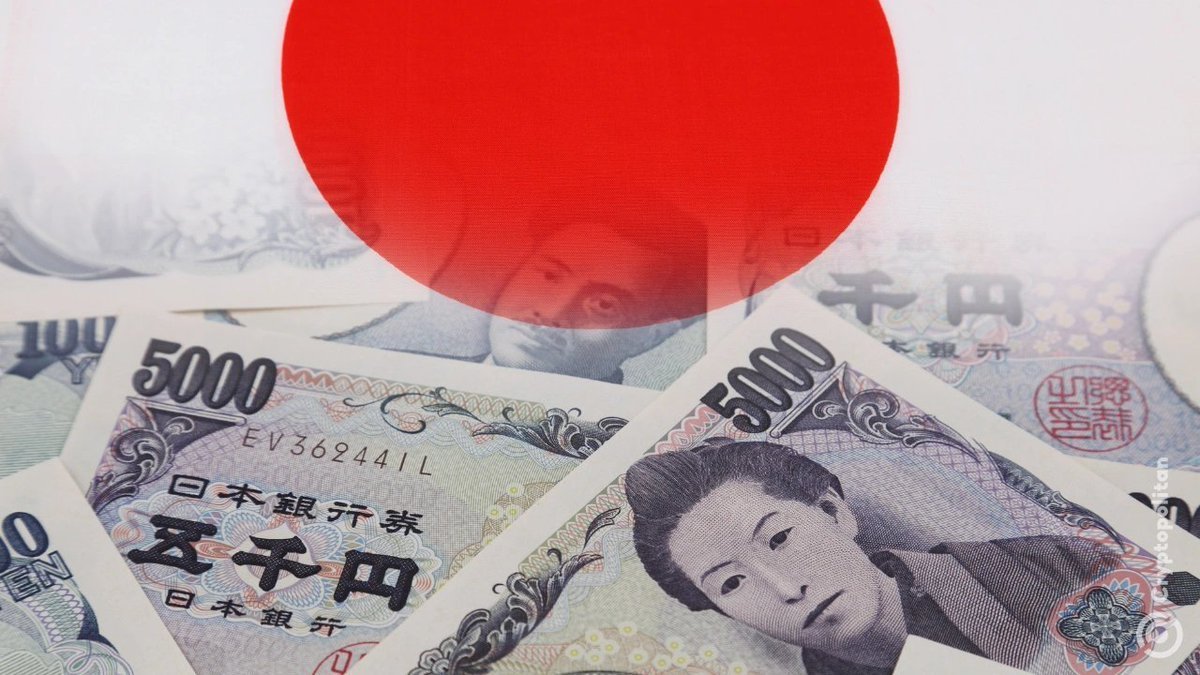
Japonya'da 31 yıldır yaşanmayan bir şey fiyatlanıyor.
Tahmin piyasaları Japonya'nın faizi %1'e çıkaracağını fiyatlıyor.
Bu neden önemli?
Çünkü Japonya faiz artırdığında sadece Japonya etkilenmiyor. ABD borsası, Bitcoin, gelişmekte olan ülkeler. Hepsi tepki veriyor.
Bunu anlamak için size Japonya ile dünya piyasaları arasındaki bağlantıyı anlatmam lazım.
1985'te ABD ve dört büyük ekonomi New York'ta toplandı.
Japonya'nın parasının değerlenmesi kararlaştırıldı. Japon yeni 24 ayda %100 değer kazandı. Japon ürünleri bir anda 2 kat pahalandı. İhracat çöktü.
Japonya Merkez Bankası ekonomiyi kurtarmak için faizi düşürmeye başladı. Sıfıra kadar indirdi. Bir dönem negatife bile düşürdü.
30 yıl boyunca Japonya'dan borç almak neredeyse bedavaydı.
Dünya bunu fark etti.
Yatırımcılar Japonya'dan çok düşük faizle yen borç aldı. Bu yenleri dolara çevirdi.
O dolarlarla nereye yatırım yaptılar?
ABD tahvillerine yatırdılar. Japonya'da faiz %0.5 iken ABD'de %5. Aradaki fark doğrudan kâr.
ABD borsasına yatırdılar. S&P 500, Apple, Google, Amazon. Bedava borçlanıp Amerikan hisselerinden getiri aldılar.
Bitcoin'e yatırdılar. Kripto piyasasına girdiler.
Gelişmekte olan ülkelere yatırdılar. Yüksek faiz veren her yere aktılar.
Buna carry trade deniyor.
Bunu birkaç kişi yapmıyor. Dünyanın en büyük fonları yapıyor. Trilyonlarca dolar bu stratejiyle hareket ediyor.
ABD borsasındaki yükselişin, Bitcoin'deki rallilerin, gelişmekte olan ülkelere akan sermayenin önemli bir kısmı Japonya'dan gelen bu ucuz parayla finanse ediliyor.
Şöyle düşünün.
30 yıldır açık bir musluk var. Bu musluktan akan su dünya piyasalarını besliyor. Borsaları besliyor. Kripto piyasasını besliyor. Gelişmekte olan ülkeleri besliyor.
Japonya faiz artırdığında o musluğu kısıyor.
Musluk kısılınca ne olur?
Borçlanma maliyeti artar.
Faiz artınca yen güçlenir. Yen güçlenince borç aldığın para değerlenir. Geri ödemen pahalanır.
Kârın erir. Belki zarara döner.
O zaman ne yaparsın?
Bitcoin'i satarsın. Hisseleri satarsın. Pozisyonlarını kapatırsın.
Tek bir yatırımcı olsa sorun olmaz.
Ama trilyonlarca dolar aynı anda çıkmaya çalışırsa satış dalgası başlar.
Son kez böyle olduğunda ne olduğunu biliyorsunuz.
Şimdi Haziran'a bakılıyor.
Tahmin piyasaları %1 faiz fiyatlıyor. Bu gerçekleşirse 31 yılın en yüksek seviyesi olur.
Haziran'ı dikkatli takip etmek gerekiyor.
Gelişmeleri takip ediyorum. Sizi bilgilendireceğim.
🚨🇮🇷🇺🇸 JUST IN: US-Iran peace talks in Islamabad have COLLAPSED after 21 hours.
Here is why the deal failed:
Iran came to negotiate. The US came to dictate. Iran wanted trust. The US wanted surrender. Iran remembered decades of broken promises. The US offered another one.
JD Vance says Iran rejected America’s "final and best offer" on nukes and ending the war. "We leave with bad news," he admitted.
The final offer was not final. It was an ultimatum. Iran does not respond to ultimatums. Iran responds to respect. There was none.
The Strait of Hormuz remains chaotic. Oil prices are spiking again. The US is stuck. Iran is still standing.
The deal failed because the US cannot accept a multipolar world. It still thinks it is the 1990s. Iran knows it is 2026. That gap could not be bridged in 21 hours. Or 21 years.
Back to square one? No. Square one is gone. The US is on square zero. Iran is on square ten. That is why the talks collapsed.
THIS IS ABSOLUTE CINEMA 🍿
> 🇮🇷 Iran gave 4 point non-negotiable terms to the US
> 🇺🇸 US demanded Iran to give up control over the Strait of Hormuz
> Meanwhile 🇺🇸 US tried to sneak into SOH to break Iran control
> 🇮🇷 Iran caught US within 30 min, beltéd the US mid negotiation 😭
> 🇺🇸 US abruptly announced the negotiation to be inconclusive, plans for next round
> 🇮🇷 Iran announced that they won’t come for another round 🤣
> 🇮🇷 Iran has now announced to strengthen its grip over SOH 🔥
Now get ready to face the worst of the economic crisis, and full credit goes to Trump regime for betrayal.
Meanwhile don’t underestimate Iran, Araghchi has already employed Plan B. Get ready for 6D Chess 🔥
THIS IS BIG.
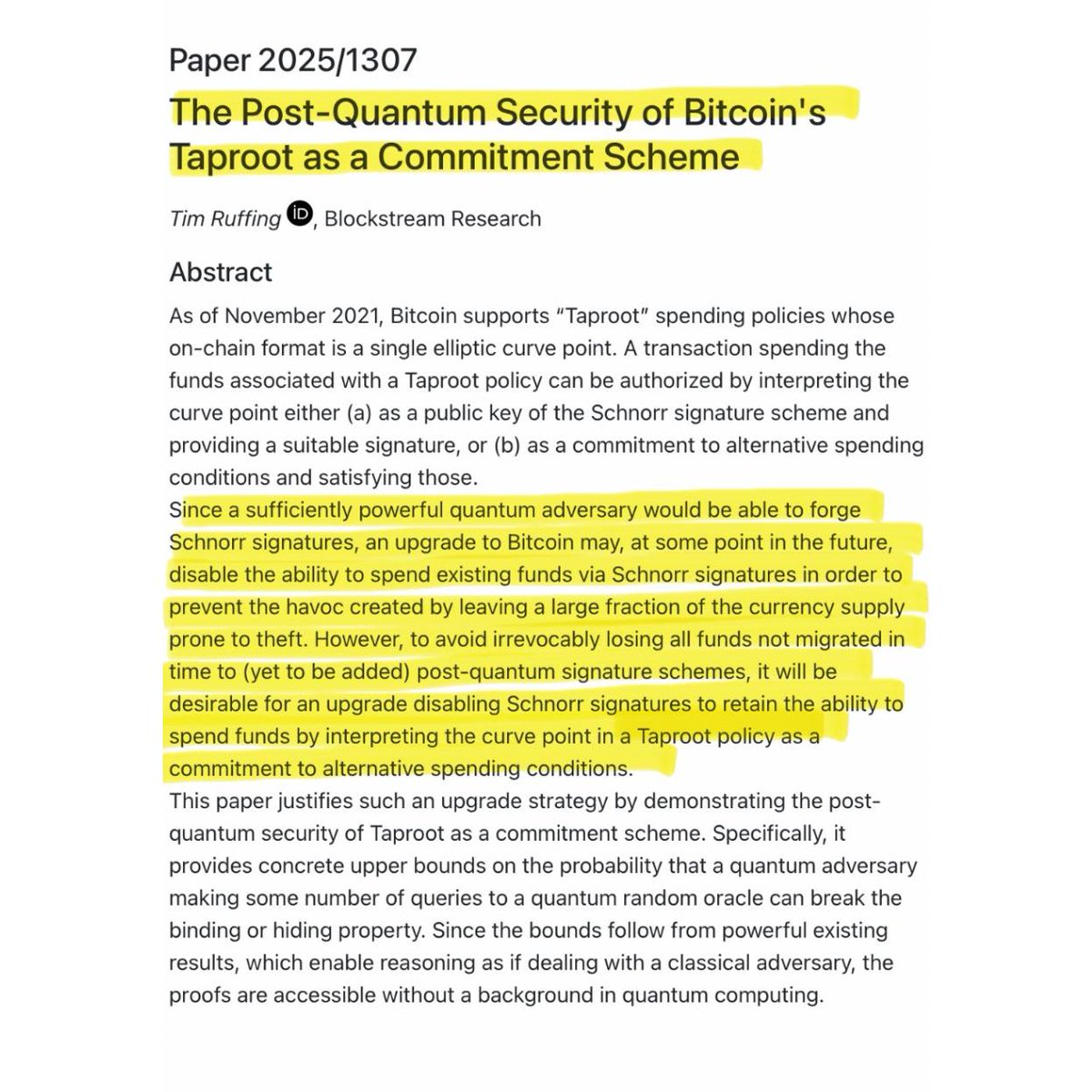
A Bitcoin developer has built a working prototype that protects your wallet from quantum computers. Even if Bitcoin is forced to shut down part of its own security system to protect itself.
To understand why this matters you need to understand the problem first. Every Bitcoin wallet is secured by a cryptographic signature scheme built on elliptic curve mathematics.
The security assumption behind this system is that deriving a private key from a publicly visible public key requires computational work that classical computers cannot perform within any practical timeframe.
Quantum computers running Shor's algorithm can break that assumption. Google researchers published findings last week showing a quantum computer could compromise Bitcoin's core cryptography in as little as nine minutes, using significantly fewer physical qubits than prior estimates required.
The threat is not immediate but the timeline is compressing faster than most researchers projected.
Now here is where it gets complicated. Bitcoin's Taproot upgrade, activated in 2021, improved transaction efficiency and privacy across the network.
But by design it permanently exposes the public key of every Taproot wallet on the blockchain. Because that public key is permanently recorded and publicly visible, a sufficiently powerful quantum computer could use it to derive the corresponding private key and drain the wallet at any point in the future.
Approximately 6.9 million Bitcoin across Taproot and older P2PK address formats are already in this exposed state.
The developer community has a contingency plan for this scenario. If quantum computers advance to the point where this becomes an active threat, Bitcoin could activate an emergency soft fork that disables the key path spend in Taproot, which is the specific spending mechanism a quantum attacker would exploit.
This closes the vulnerability before it can be exploited.
But this emergency response introduces a serious secondary problem that nobody had resolved until now. The vast majority of modern Bitcoin wallets, particularly single signature Taproot wallets, rely entirely on that key path spend mechanism and have no alternative spending path configured.
If Bitcoin disables that mechanism network wide, those wallets have no remaining method to authorize transactions. The funds inside them become permanently inaccessible, not stolen, but completely unspendable even by their rightful owners.
The same upgrade designed to protect users could permanently strand their funds.
This is the problem that Olaoluwa Osuntokun, chief technology officer of Lightning Labs, just solved with a working prototype posted to the Bitcoin developer mailing list yesterday. His solution uses a zk-STARK proof, which stands for zero knowledge scalable transparent argument of knowledge. In practical terms this means the following.
Every Bitcoin wallet is ultimately derived from a master seed, typically the 12 or 24 word recovery phrase generated when the wallet is first created. All keys in the wallet are mathematically derived from that seed following a deterministic standard called BIP-32.
Osuntokun built a system that generates a cryptographic proof demonstrating that a specific public key was derived from a specific master seed via the standard BIP-32 derivation path, without revealing the seed itself or any intermediate private key material.
The Bitcoin network can verify the proof and authorize the wallet owner to move their funds, bypassing the disabled signature mechanism entirely.
The prototype generates a valid proof in 50 seconds on a standard MacBook using Metal GPU acceleration, consumes approximately 12 gigabytes of RAM during proof generation, and produces a final proof of 1.7 megabytes. Osuntokun acknowledged the codebase is largely unoptimized and that a production implementation built specifically for this statement would run significantly faster and produce smaller proofs.
He also noted that multiple proofs could be aggregated into a single compact proof to reduce on-chain verification overhead.
Cryptographically relevant quantum computers capable of executing this attack do not exist today.
What has changed is that Google's latest research has materially lowered the estimated resource requirements for such an attack, and the practical timeline is now closer than the field previously assumed.
What is also new is that the developer community now has a working prototype of one of the critical tools needed to execute an emergency quantum defense without permanently locking legitimate holders out of their own funds.
A problem that has existed in theoretical discussions for years has now produced a concrete technical implementation.
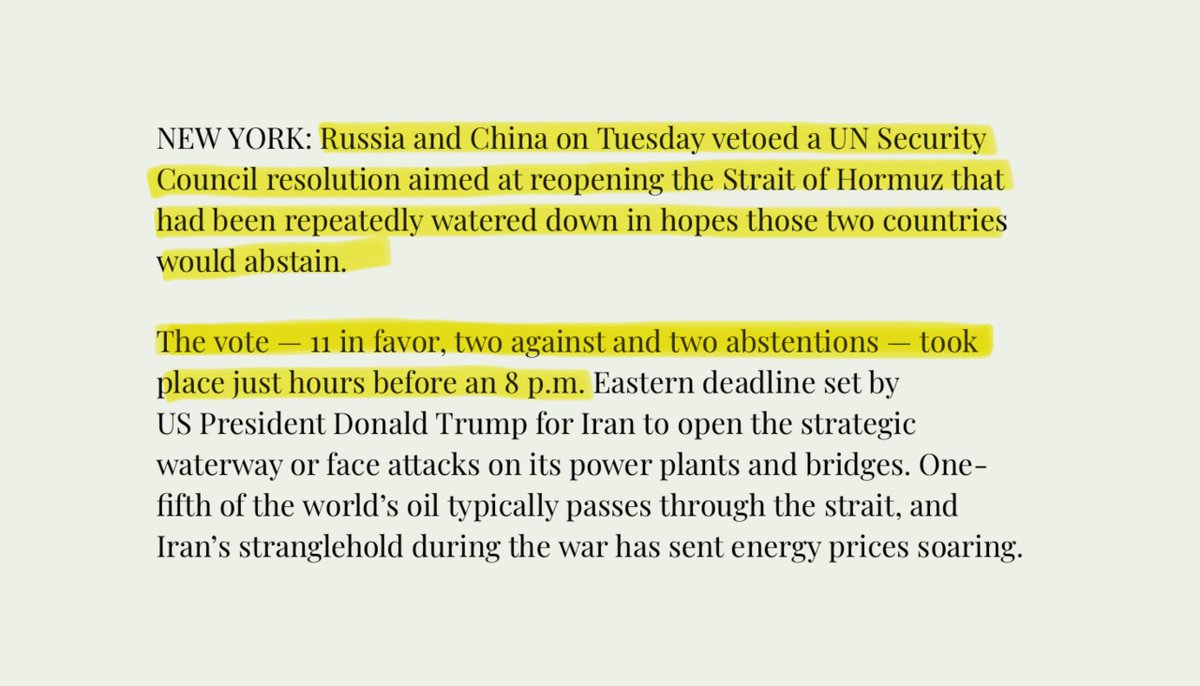
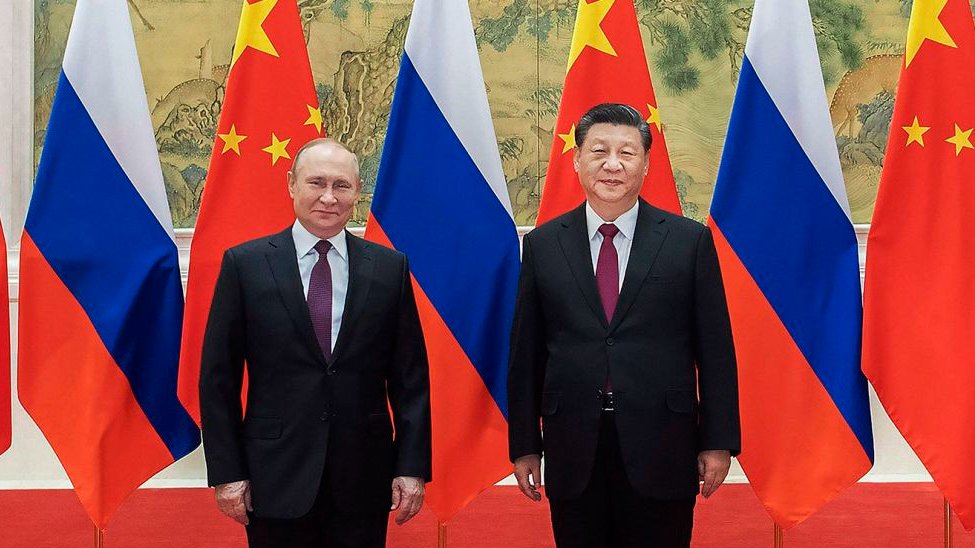
BREAKING: Russia and China just vetoed the UN resolution to authorize military force to reopen the Strait of Hormuz.
11 countries said yes, Russia and China said no. Two countries stopped the entire world from acting.
This is the same resolution that was already weakened three times just to get Russia and China to stay neutral. They blocked it anyway.
20% of global oil flows through that strait. China receives a third of all its oil through it. Russia benefits from oil prices staying high. Iran is already letting Chinese and Russian ships pass while blocking everyone else.
Washington now has two choices:
- Act alone tonight without UN backing.
- Or extend the deadline for the sixth time.
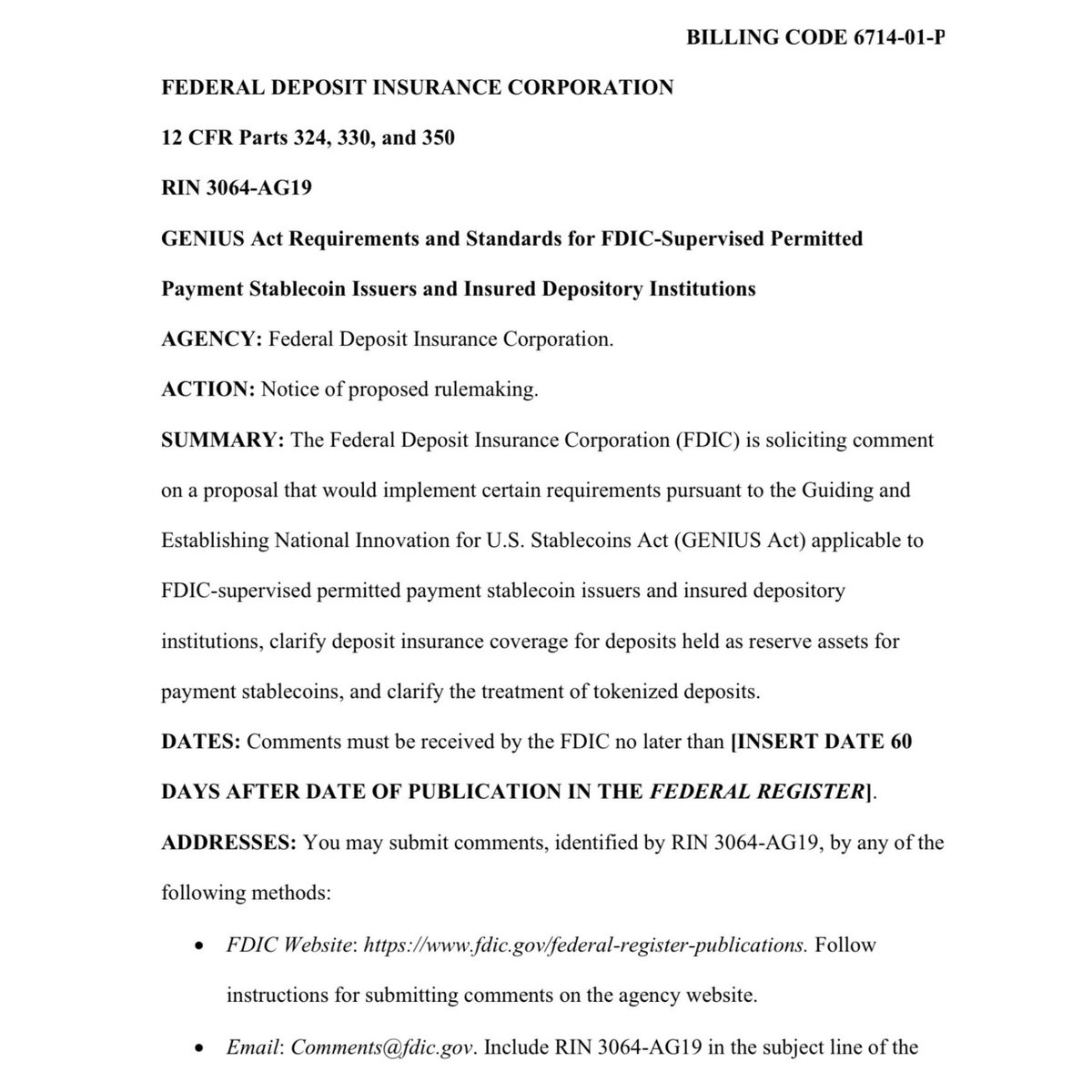
BREAKING: The US government just created the first official banking rules for stablecoins.
The FDIC today approved a full regulatory framework for stablecoin issuers under the GENIUS Act. Here is what it means:
Every stablecoin must be backed 1:1 with real assets. If there are $1 billion worth of stablecoins in circulation, the issuer must hold $1 billion in actual reserves without any exceptions.
Every stablecoin must be redeemable on demand at face value. If you hold $100 in stablecoins, you can always get $100 back.
Reserve assets cannot be rehypothecated or reused. The reserves must sit fully segregated and cannot be used for any other financial activity.
Stablecoin issuers cannot pay interest or yield to holders simply for holding the coin. This directly affects yield bearing stablecoin products currently in the market.
If redemption requests exceed 10% of all outstanding stablecoins within a single 24-hour period, it triggers a significant redemption event requiring immediate action.
Stablecoin issuers must meet capital requirements and risk management standards similar to what banks follow. Quarterly reporting and CEO signed audits are required. Banks that hold or manage stablecoins on behalf of customers fall under the same rules.
One important clarification. FDIC insurance covers the issuer's reserve deposits at the bank level, not individual token holders.
Why this is good for crypto?
Right now stablecoins operate in a gray area. No clear rules means no trust from institutions, no trust from regulators, and no certainty for users. These rules change that. Regulated stablecoins backed by real reserves and covered by FDIC insurance become as safe as a bank deposit.
That opens the door for banks, pension funds, and large institutions to use stablecoins without legal risk. A regulated stablecoin market is the foundation that the rest of crypto needs to grow.