A community college professor taught the same study skills lecture for 30 years, and the video quietly became one of the most watched educational recordings on the internet.
His name is Marty Lobdell. He spent his career as a psychology professor watching students fail not because they were lazy, but because nobody had ever taught them how their brain actually works under the pressure of learning something hard.
The lecture is called "Study Less Study Smart." Over 10 million views. Passed around in Reddit threads, Discord servers, and university study groups for over a decade. And the core insight buried inside it has been sitting in cognitive psychology research for years, waiting for someone to explain it in plain language.
Here is the framework that completely changed how I think about effort.
Your brain does not sustain focus the way you think it does. Studies tracking real students found that the average learner hits a wall somewhere between 25 and 30 minutes.
After that, efficiency doesn't just decline. It collapses. You're still sitting at your desk, still looking at the page, but almost nothing is going in.
Lobdell illustrated this with a student he knew personally. She set a goal of studying 6 hours a night, 5 nights a week, to pull herself out of academic probation. Thirty hours of studying per week. She failed every single class that quarter.
She wasn't failing because she lacked effort. She was failing because she had confused time spent near books with time spent actually learning. The 25-minute crash hit her at 6:30pm every night. She spent the next five and a half hours sitting in the wreckage of her own focus and calling it studying.
The fix sounds almost too simple. The moment you feel the slide, stop. Take five minutes. Do something that actually gives you a small reward. Then go back. That five-minute reset returns you to near full efficiency. Across a six-hour window, the difference is not marginal. It is the difference between thirty minutes of real learning and five and a half hours of it.
The second thing he taught destroyed something I had believed about how memory actually works.
Highlighting feels productive. Going back over your notes and recognizing everything feels like knowing. But recognition and recollection are two completely different cognitive processes, and your brain is very good at making you confuse them.
You can see something you've read before and feel completely certain you understand it, even when you couldn't reconstruct a single sentence from memory if the page were blank.
He proved this live in the room. He read 13 random letters to his audience. Almost nobody could recall them. Then he rearranged the same 13 letters into two words: Happy Thursday. The whole room got all 13 without effort.
Same letters. Same count. The only thing that changed was meaning.
The brain stores meaning. Not repetition. The moment new information connects to something you already understand, the retention changes entirely.
This is what the cognitive psychology literature calls elaborative encoding, and it is the mechanism underneath every effective study technique.
The third principle was the one that hit me hardest, and the one almost nobody applies.
Lobdell cited research showing that 80 percent of your study time should be spent in active recitation, not passive reading. Close the material. Say it back in your own words.
Teach it to someone else, or to an empty chair if no one is around. The struggle of retrieval is where the actual learning happens. Reading your notes again is watching someone else do the work.
His parting line has stayed with me longer than almost anything else I have read about learning.
He told the room that if what he shared didn't change their behavior, they hadn't actually learned it. It would just live in their heads as something they had heard once and felt good about.
He was right. And most people leave every lecture exactly like that.
The students who remember everything aren't putting in more hours.
They stopped confusing the feeling of studying with the fact of it.
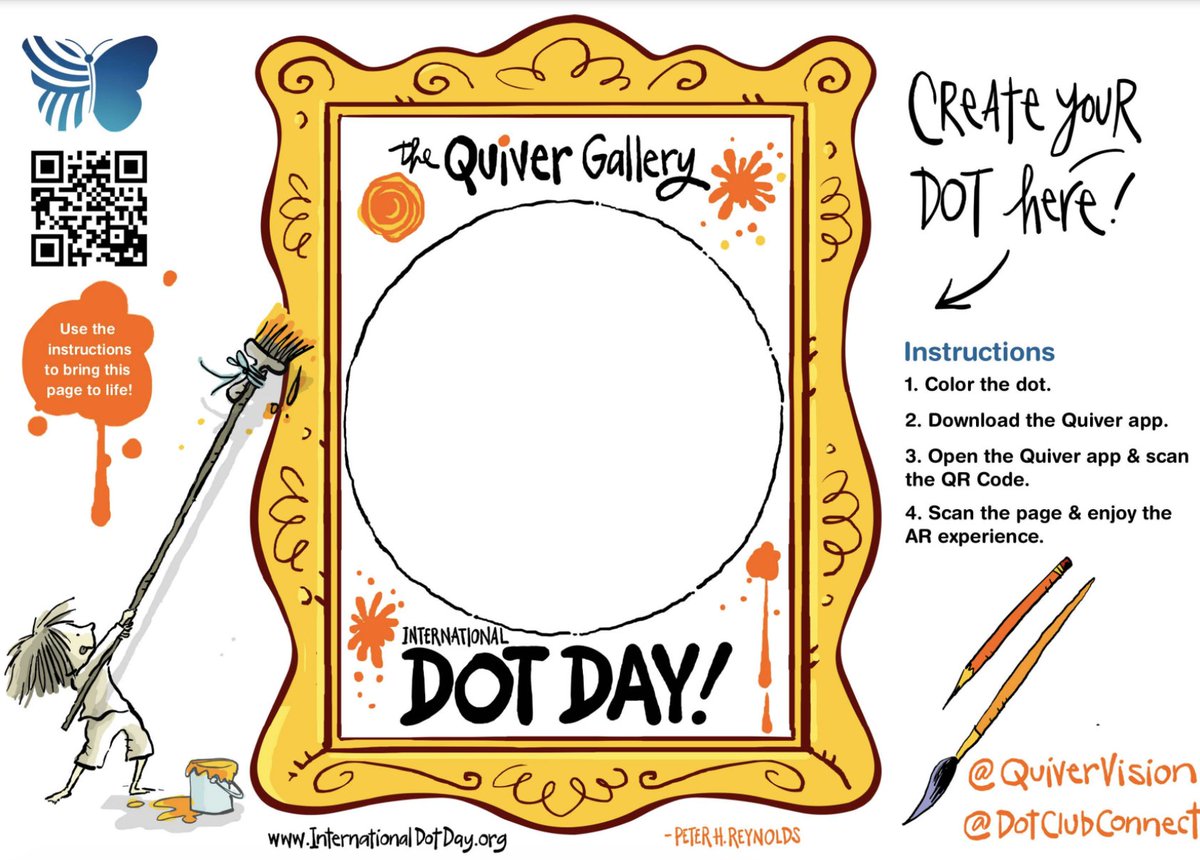
Dot Day is right around the corner on September 15ish.
I LOVE this @quivervision Augmented Reality Dot Day Activity that @peterhreynolds created for our Dot Day celebrations.
You will find it, along with the directions on how to use here in this post, friends.
https://t.co/IjfijQaJWZ
#DotDay #InternationalDotDay
#tlchat #futurereadylibs #edchat #edtech #AR #ISTELib
Celebrate #WorldEmojiDay and unlock student creativity with this #AppliedDigitalSkills lesson that takes storytelling to the next level. Challenge your students to create epic emoji stories: https://t.co/ZGreWADN7y #GrowWithGoogle
Calling all Chromies! If your school uses #Chromebooks, don't miss these updates:
-Watch Screencast recordings from any device
-Reduce distractions with reading mode in Chrome browser
-Access new presenter settings in cast moderator
https://t.co/RGHfDLPBca #EDUin90
To celebrate #InternationalWomensDay, #sportsYou is giving away over $1,000 in prizes! Grand prize is a $500 amazon giftcard & sportsYou hoodie! Follow us, retweet this post & reply with a woman in sports who has inspired you! Winners randomly selected & notified by DM! #IWD2022
Thank you to all the amazing educators for a great day of growing. #GISDGROW22 Learning about intervention, dysgraphia, painting poppies, petting dogs, arranging flowers, & cooking gnocchis, it was time to soak it all up. Different speeds but on the same page. @Aracelicovingt2
Capturing our student voice from various organizations throughout the year. It’s Chalk Talk with Alvin Guzman & Mia Rowe @EVHSxc! #ThisIsEV#beliEVe
This is my why. My first graders @PurlPumas just finished learning about Ruby Bridges and how 1 person, even a 6 year old, can make a difference. #wearegisd https://t.co/aCQNXbRkiF
I’m committed to teach for every starfish I reach! On really challenging days when I search for my #WHY, I can go back to the starfish story and find it! 🌟#StarfishClub