Wallet drainer bots don't hack your wallet.
They get you to hand it over yourself.
The attack flow:
1. Fake site mimics a legitimate protocol (Uniswap, OpenSea, Coinbase)
2. User connects wallet - standard action, feels safe
3. Site requests a transaction signature, looks routine
4. Signature approves a drainer contract to move all assets
5. Wallet emptied. Funds gone. Irreversible.
Dark web discussions about drainer malware rose 135% between 2022 and 2024.
The tooling is commoditized. The barrier to launching a campaign is near zero.
The attack doesn't exploit code. It exploits the fact that users can't verify what they're actually signing.
Can you have confidentiality without mixing?
Mixers hide your transaction by combining it with everyone else's, statistically including some bad actors. You can't prove your funds stayed clean.
Your counterparty can't verify it either.
Privacy that requires a shared pool will always have a compliance problem.
Building it without one is harder. That's the problem worth solving.
Breaking down the quantum threat live at @ProofofTalk in Paris and handing the audience the solution.
The attack surface isn't what you think.
The fix is faster than you think.
Read our paper linked below to learn how Proof of Seed Provenance quantum-proofs crypto.
Monero set the privacy standard in 2014 and never gave it up.
Twelve years on, it's still the cleanest implementation of confidential transactions in production.
What it isn't: a smart contract platform, an L2 host, or anywhere agents can transact.
Monero solved payment privacy.
Crypto has since moved well past payments.
Smart contract security has always been asymmetric.
Defenders need to find and fix every vulnerability.
Attackers need just one.
AI coding agents didn't create that asymmetry.
They industrialized it.
The industry kept betting on better audits.
The attack side just got a machine that never sleeps.
🏺 Tessa Hunt and the Golden Sands is LIVE — exclusively at Jackpotter! 🔥
The 10 random users will each receive 10 Free Spins
RT + Tag a friend + Jackpotter Username to enter!
Be the first to spin! 👇 🎮
https://t.co/hvsWtC4zgS
Decentralization is the most overused word in crypto.
Most "decentralized" identity systems can still see:
— Who you registered as
— Which wallet that name maps to
— Every transaction tied to that wallet
That's not decentralization. That's a directory service with a marketing budget.
The bar should be: once a name is registered, the issuer has no way to see who you're transacting with, what you're sending, or what your balance is.
What happens at registration and what happens after it are two different questions.
Most systems fail both. The better ones at least solve the second.
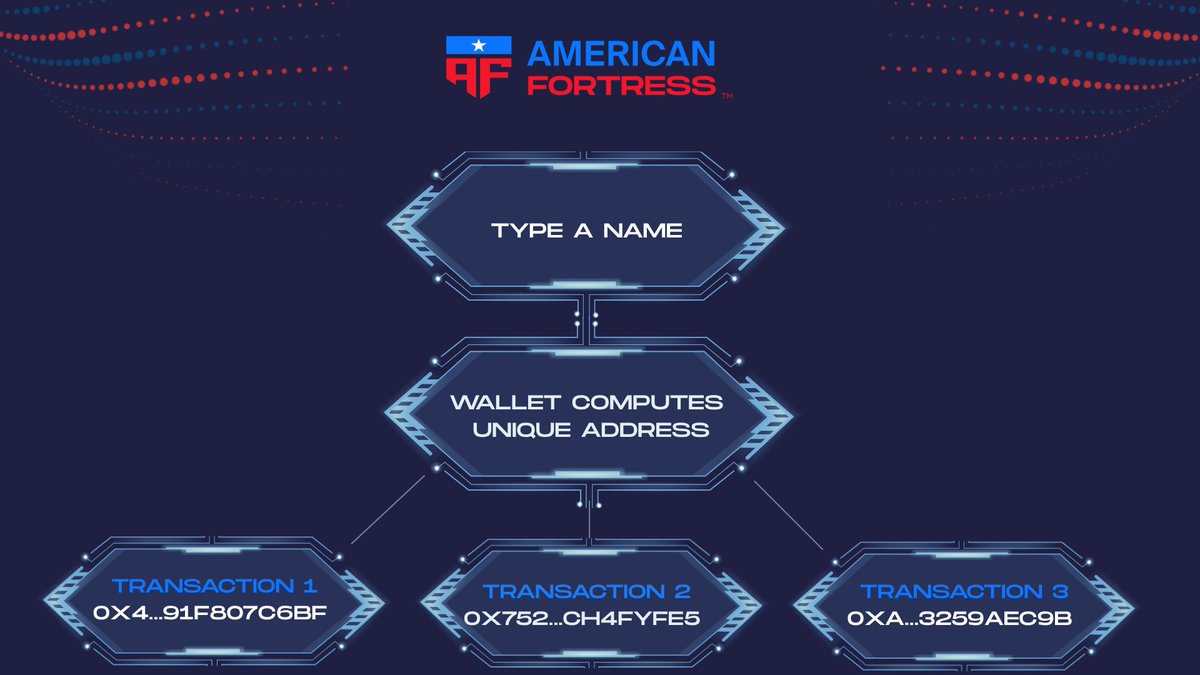
Quick breakdown of how stealth address systems actually work:
1. Someone sends to a human-readable name
2. Their wallet computes a brand new receive address that has never existed before
3. Only the sender and recipient can derive that address
4. The address is never reused
5. It works across every chain and every token
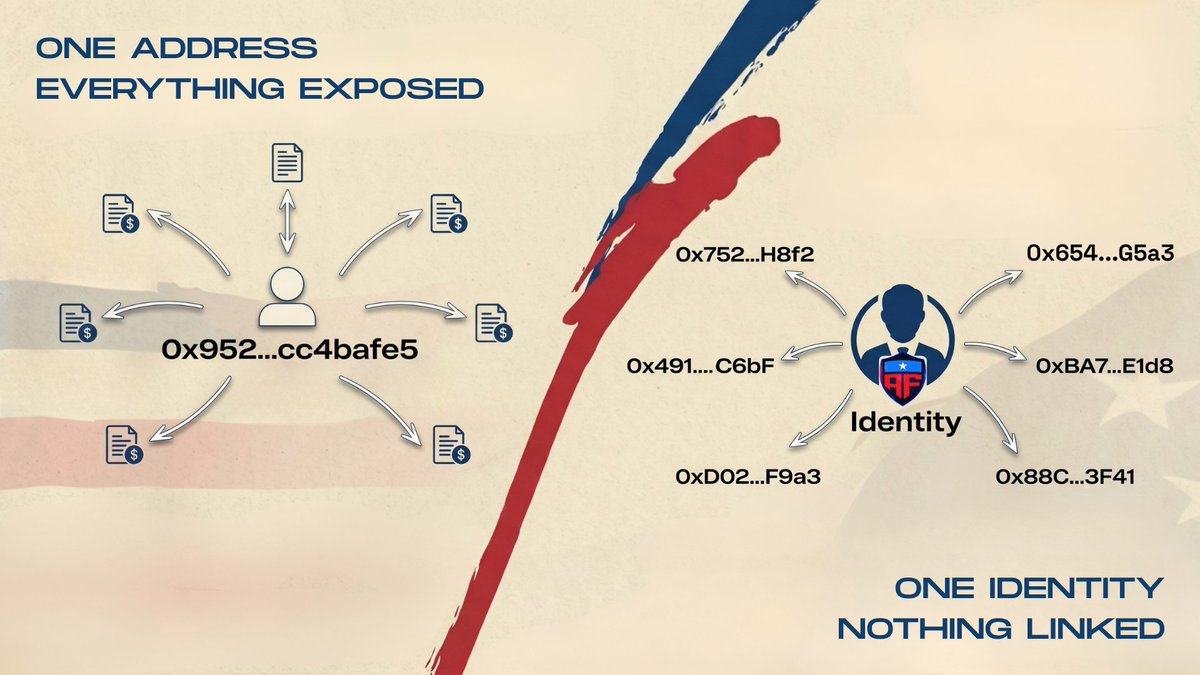
To an outside observer, every payment appears to go to a completely different wallet.
Because cryptographically, it does.
Why isn't more institutional capital on-chain yet?
Exposure. Not regulation.
Every wallet address is a permanent public identifier, and every transaction lands on the same ledger.
Trading strategies, supplier relationships, treasury movements, anyone with a block explorer can read all of it.
No CFO signs off on broadcasting that data live.
Until on-chain transactions match the discretion of traditional banking rails, institutional liquidity stays in crypto-native venues.
The privacy gap is the adoption gap.