Which tax was reduced? Which levy was suspended? Which global market variable shifted so dramatically within hours to justify such a reduction?
A government loses trust the moment its policies begin to look negotiable under pressure but impossible under reason
My fellow Kenyans ,
To construct the Thika Superhighway, an entire mall that housed a Nakumatt supermarket was demolished. When questioned in Parliament, Chris Obure, the Infrastructure Minister at the time, stated plainly that roads are not built in the air and that even flyovers require land. His words were direct, but they captured an unavoidable truth: development demands sacrifice.
At the time, the demolition of Nakumatt along Thika Road sparked public outrage. There was a hue and cry, and many viewed it as excessive or unjustified. Yet today, Thika Highway is lined with multiple malls, residential complexes, and countless commercial developments. The corridor has transformed into one of the country’s most vibrant economic zones. Few people remember what was demolished; most benefit from what was built. That is often the nature of progress—initial discomfort followed by long-term gain.
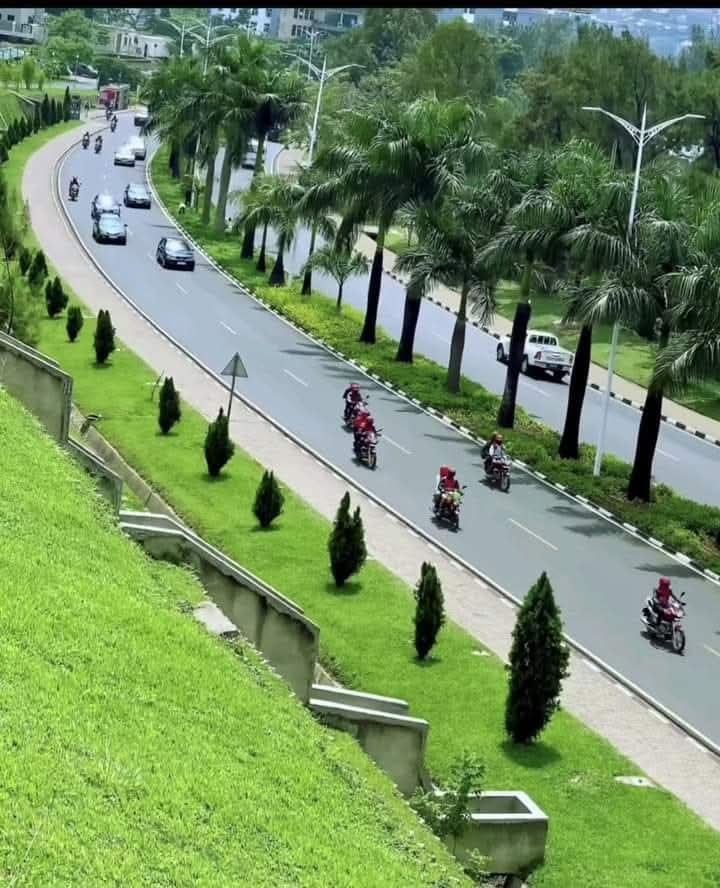
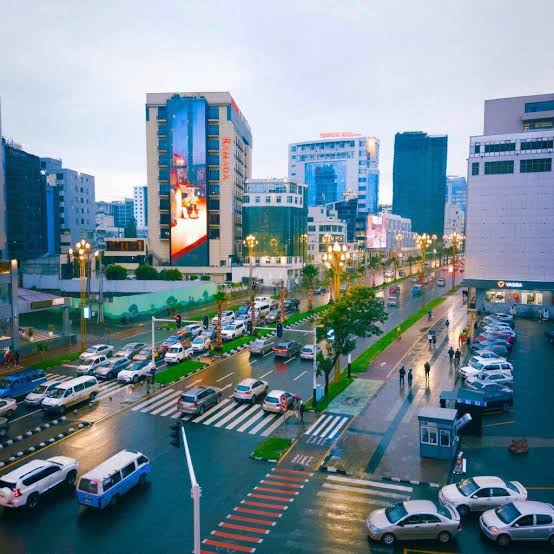
Kenyans routinely praise cities such as Dubai, Kigali, and Addis Ababa. Comparisons flood social media, often portraying Kenya as stagnant or incapable of progress. Yet the contradiction is striking. When authorities take concrete steps to restore order or reorganize public spaces, resistance quickly follows.
We cannot demand world-class cities while defending disorder at home. Pavements are for pedestrians. Highways are for transport. They are not extensions of private enterprise. The unchecked spread of kiosks onto walkways and road reserves has normalized congestion, safety hazards, and urban chaos. Order cannot coexist with selective obedience to the law.
Kigali did not become organized by accident. President Paul Kagame’s administration enforced regulations firmly and consistently, including prohibiting kiosks along major roads and pedestrian paths. The same determination has been visible in Addis Ababa under Prime Minister Abiy Ahmed and Mayor Adanech Abebe. These leaders did not ask whether enforcement would be popular; they recognized that lasting order requires resolve.
What undermines reform in Kenya is not merely resistance from affected traders but the predictable politicization that follows. Law enforcement should not be turned into campaign material. Where notice has been issued and regulations are clear, implementation should proceed without apology.
Many of the kiosks being removed were erected illegally and should never have occupied public spaces in the first place. Pretending otherwise for political convenience only entrenches impunity. A nation cannot mature if every enforcement action is framed as oppression and every demolition becomes a rallying cry.
Yes, people must earn a living. Informal trade sustains thousands of families. But economic survival does not grant permission to appropriate pavements and road reserves. Kenya has designated markets that remain underutilized because roadside visibility is seen as better which is a bad mindset. This mindset steadily erodes urban order in the long term.
The real question is simple: what kind of country do we want?
It is inconsistent to criticize leadership for failing to match Kigali or Addis Ababa while resisting the discipline required to achieve similar outcomes. Progress is rarely painless, but it is often worthwhile. The benefits of order tend to outlast the protests that precede it.
If we genuinely aspire to have organized, functional cities, then the law must be applied firmly and consistently—and both politicians and citizens must stop sabotaging that process.
As always I choose to remain an optimist
My fellow Kenyans ,
To construct the Thika Superhighway, an entire mall that housed a Nakumatt supermarket was demolished. When questioned in Parliament, Chris Obure, the Infrastructure Minister at the time, stated plainly that roads are not built in the air and that even flyovers require land. His words were direct, but they captured an unavoidable truth: development demands sacrifice.
At the time, the demolition of Nakumatt along Thika Road sparked public outrage. There was a hue and cry, and many viewed it as excessive or unjustified. Yet today, Thika Highway is lined with multiple malls, residential complexes, and countless commercial developments. The corridor has transformed into one of the country’s most vibrant economic zones. Few people remember what was demolished; most benefit from what was built. That is often the nature of progress—initial discomfort followed by long-term gain.
Kenyans routinely praise cities such as Dubai, Kigali, and Addis Ababa. Comparisons flood social media, often portraying Kenya as stagnant or incapable of progress. Yet the contradiction is striking. When authorities take concrete steps to restore order or reorganize public spaces, resistance quickly follows.
We can not demand world-class cities while defending disorder at home. Pavements are for pedestrians. Highways are for transport. They are not extensions of private enterprise. The unchecked spread of kiosks onto walkways and road reserves has normalized congestion, safety hazards, and urban chaos. Order can not coexist with selective obedience to the law.
Kigali did not become organized by accident. President Paul Kagame’s administration enforced regulations firmly and consistently, including prohibiting kiosks along major roads and pedestrian paths. The same determination has been visible in Addis Ababa under Prime Minister Abiy Ahmed and Mayor Adanech Abebe. These leaders did not ask whether enforcement would be popular; they recognized that lasting order requires resolve.
What undermines reform in Kenya is not merely resistance from affected traders but the predictable politicization that follows. Law enforcement should not be turned into campaign material. Where notice has been issued and regulations are clear, implementation should proceed without apology.
Many of the kiosks being removed were erected illegally and should never have occupied public spaces in the first place. Pretending otherwise for political convenience, only entrenches impunity. A nation can not mature if every enforcement action is framed as oppression and every demolition becomes a rallying cry.
Yes, people must earn a living. Informal trade sustains thousands of families. But, economic survival does not grant permission to appropriate pavements and road reserves. Kenya has designated markets that remain underutilized because roadside visibility is seen as better, which is a bad mindset. This mindset steadily erodes urban order in the long term.
The real question is simple: What kind of country do we want?
It is inconsistent to criticize leadership for failing to match Kigali or Addis Ababa while resisting the discipline required to achieve similar outcomes. Progress is rarely painless, but it is often worthwhile. The benefits of order tend to outlast the protests that precede it.
If we genuinely aspire to have organized, functional cities, then the law must be applied firmly and consistently—and both politicians and citizens must stop sabotaging that process.
As always, I choose to remain an optimist
Mohammed Hersi
Mombasa
My people, allow me to say something that many of you might disagree with, but just hear me out.
I’ve been following the Mbeere North results closely, and there’s something we really need to pay attention to heading into 2027.
-Wamuthende won with 15,802 votes.
-Karish followed with 15,308.
-Mbui got 2,480.
Now look at that properly.
The margin between Wamuthende and Karish was only 494 votes.
Yet Mbui, who many expected to step down, took 2,480.
My people, imagine those 2,480 votes going to Karish. The whole result changes instantly.
That’s the classic divide-and-rule strategy at work.
And this is the real danger for 2027.
We all want a new parliament
But picture this: UDA puts forward one candidate per seat. Meanwhile, the opposition has candidates under Wiper, DCP, DP, Jubilee, DAPK, everyone running their own race.
You already know what will happen.
We’ll have constituencies where UDA wins by tiny margins, 10 votes, 50 votes, simply because the opposition split its own strength.
For MPs etc, you’ll see results like:
UDA - 12,000
Wiper - 9,000
DCP - 8,000
DP - 1,000
And boom, UDA has a super majority.
Yet if united, they easily beat UDA.
This playbook is not new. Samia Suluhu used it in Tanzania. Look at Cameroon, where the opposition has always had 20 parties. Based on tribe etc, the ruling party doesn’t need to win big; they just wait for the other side to divide itself.
The only place this trick fails in Kenya is the presidential race because of the 50% +1 rule, and we should always be proud of the new constitution .
Honestly, I wish that rule applied to MPs and governors, too.
So my people, if we want any real change in 2027, let’s start urging the opposition to unite behind fewer, stronger candidates.
It may not be perfect, but unity gives Kenya a better chance than scattered efforts.
Kenya is bleeding under a regime that mistakes public suffering for an opportunity to cash out. And this Mau–Rironi tolling scandal is the clearest proof yet that @WilliamsRuto's administration has crossed every line of decency and governance.
Mwai Kibaki built Thika Superhighway and never once tried to turn it into a private cash register. He built a national asset, not a toll trap. He understood that a highway is the bloodstream of an economy not a feeding trough for a regime.
Uhuru Kenyatta gave Kenya the Expressway. Yes, it is tolled but he left Mombasa Road completely free, fully functional, and accessible to every Kenyan who couldn’t afford the toll.
He created choice, not oppression.
He balanced development with public dignity.
He never forced Kenyans into a toll gate they couldn’t escape.
Now enter William Ruto, who wants to toll the Mau–Rironi corridor with no alternative route.
No free lane.
No public bypass.
No mercy.
Just a compulsory toll whether you are a farmer, a trader, a student, a trucker, a matatu operator, or a mother carrying groceries home.
This is not development.
This is economic punishment, designed by leaders who think the country exists to feed their greed.
KSh 8 per km for 176.65 km that’s KSh 1,600 one way.
And they expect Kenyans to pretend that’s normal?
How many towns lie on that road? How many families survive on the trade along that corridor? How many businesses depend on the daily movement of goods? Did Ruto even consider the cost of living in Nakuru, Naivasha, Gilgil, Molo, Mau Summit places where thousands of Kikuyu, Kalenjin, Luo, Luhya, Kisii, and Somali families live?
Because once this toll is slapped:
1. Food prices will shoot
2. Bus fares will spike.
3. Trucking charges will rise.
4. Companies will pass every extra shilling down to consumers.
5. Farmers will earn less because transport cost absorbs their margins.
This is the reality. This is what people are angry about.
Not tribe.
Not politics.
Not bitterness.
It’s GREED.
Pure, naked, unapologetic greed.
And every time Kenyans raise the alarm, the regime starts shouting tribe especially dragging the Kikuyu community into a debate they never started.
Why?
Because they want to turn a national cry into a tribal quarrel.
Because tribal smoke screens have become their full-time defense mechanism.
Because when the theft is too big to sanitize, they look for someone to blame.
But even the ethnic card won’t hide this mess.
This road is a regional business corridor used by Uganda, Rwanda, Congo, and South Sudan. Tolling it recklessly will damage Kenya’s entire economic backbone.
PPP contractors and investors already rejected the model because it makes no sense.
Murkomen already hiked Road Maintenance Levy from 18 to 25 bob.
Kenyans already pay through fuel.
Now they want to toll people on top of what they already pay.
And after borrowing KSh 1.2 trillion this year alone, they still come back to squeeze NSSF dry.
So, let’s say it clearly, with the honesty this country deserves:
Kibaki built.
Uhuru balanced.
William Ruto is squeezing the nation for cash and calling it leadership.
This is not progress.
This is a national ambush.
And Kenya must not be silent.
Because if they can toll a major highway with no alternative, they can toll anything.
And if we keep quiet, they will.
Kenya depends on stopping this.
I want to encourage each of us to belong to a community — whether it’s a church, a chama, or any genuine social network. It’s heartbreaking to witness someone’s burial and realize they never belonged anywhere; that a “community” or church has to be hired just to lay them to rest.
Please, don’t let that be your story. Be intentional about belonging. Build ties that connect you back home, to people who know you and can stand with you. Don’t fall for the fake, isolated standards people set here. Belong. Be part of something real.
Look at the Mass Raila commanded. I would be lying if I said I do not recognize it,and its supremacy.
If Baba wanted a hospital in Migori,all he had was to say it.
If Baba wanted SHA stolen billion returned,hiyo pesa ingerudi.
If Raila wanted SGR reaching Malaba from Mombasa,walahi hiyo reli ingefika.
If Raila said lipa hawa madaktari wacha na hiyo affordable housing,It would be done.
If Raila said,stop stealing kenyans money in kenya power,cheapen that electricity,that would be done.
I just wish he used his supremacy to impact our lives positively. Sisi wenye aliambia tuvae sufuria kwa kichwa na tukavaa.
But what did he do? Blackmailing parastatals administrators for kickbacks and brokering national airport sale,while soliciting money from Leaders in his party. What for?
But Robert from mlolongo is there saying he was like a father to you?
Is it opium or keroiko? In maber ewich? Vichwa zenu ni mzuri nyinyi
If you grew up without a FATHER,
Know that:
- You have no land to inherit,
- You have no father to guide you,
- People will take advantage of you to misuse you
So:
• You are alone.
• You vs Yourself.
• Stop joking.
• Take your life seriously.
Chin up towards God.
Justin Muturi was sacked because he's a Kikuyu and for revoking Muslim Endowment fund, nothing else. Ruto has fell off with Christians and he's seeking refuge from Muslims.
The Kikuyu language is really a beautiful language.
Kikuyus are generally amiable people.
If they trust you, they can support you to the end. — business, politics, morally, financially.
Politics, like chess, is a game of wits where every move is calculated, every sacrifice intentional, and every strategy cloaked in foresight—or folly. Whether Kindiki was “checked” by Farouk or not, whether Ichung’wa is “castling” in glee or brooding in silence, such side dramas are distractions. Plato reminded us that “the penalty for refusing to participate in politics is to be governed by your inferiors,” and Stalin would warn us that power is not given; it is taken.
So, we the people, we must sharpen our revolutionary instincts. Forget the theatrics; focus on the kingpin—Ruto and his regime. Demand accountability as if storming the Bastille, demand services as if it’s a march on Washington, and demand an IEBC worthy of its name. The constitution is not a pawn to be sacrificed in a careless gambit; it is the queen protecting our democracy.
Kindiki? He chose his role on this board. Let him play—or perish. Our battle is not with pawns but with the regime. Either it changes its game or the people will end it. Checkmate awaits.
@KindikiKithure@rigathi@RodgersKipembe@husskhalid@FGaitho237