In AI, every direction has its time in the spotlight
That can happen due to
> natural progress: other capabilities enable it, or new models make old ideas viable
> external shifts: a new product, paper, project, talk
My experience in the last few years:
• pre-training: 📈📉📈
• model arch: 😐📈📈😐
• multimodal: 📈😐📈
• small models: 📉📈📉📈😐
• post-training: 😐📈😐
• RLHF: 😐📈📉
• synthetic data: 📈📉📈😐
• inference-time scaling: 📈😐📈📈
• "real" RL: 📈📉😐📈📈
• code LLMs: 😐😐📈😐📈📈
• tool use and agents: 📈😐📈😐📈
• alignment, safety, interpretability: 😐📈📉😐
• self-improvement: 📈😐📈
• open-endedness: 😐📈
• continual learning: 😐📈
(there is only one of these you should be working on now btw)
In order to maximize impact (your own definition), you should:
> focus on goals and not methods
> balance staying the course with staying ahead of the trend, and
> work on fundamental problems that will continually be relevant
Like most mathematicians, I believed the Riemann Hypothesis to be completely out of reach at present (even with the best AI tools), because I expected it to require substantial theory-building, probably in arithmetic geometry. The kind of new theory-building that fills entire books, and that AI isn't so good at yet.
Mathematicians have a notion of how deep a problem is. A sufficiently deep problem is generally intractable until enough of the theory is in place. If difficult problems are like valuable mineral reserves buried miles underground, you first need to build the infrastructure to reach them.
What Levent's proof seems to have done instead is something completely different. It takes an incredibly complicated tour through the infrastructure built for a hundred other mineral reserves, situated far from the destination, and somehow create a wormhole to the original destination.
This is not theory-building in the usual sense. It is something much weirder and more alien. The best human mathematicians know how to build theory, painstakingly, to reach a goal. But no human brain, on its own, is capable of creating a wormhole that requires a 25,000 page long tour through existing infrastructure with no obvious or realistic connection to the goal. But huge credit to Levent here: I think no current AI, on its own, is capable of this either.
I had never worked on or thought too much about the Riemann Hypothesis: it seemed very far removed from my own area of number theory.
But the astonishing thing about Levent's claimed proof of RH (which I think has a very good chance of being correct) is that it uses a huge number of precisely the things that are central to my own corner of number theory:
- Theta functions and other automorphic forms on unitary groups
- Gan–Gross–Prasad period formulas
- Relative trace formulas
Etc., etc.
A problem that I had always assumed would require new theories in arithmetic geometry may instead turn out to be tractable through an inhuman chain of existing (deep) results in higher-rank automorphic forms (and a lot else).
Taking a moment to reflect on the last 5 weeks of Gemini 4:
- Need more intelligence: we shipped Argon
- Need even more intelligence: we shipped Carbon (4 weeks later)
- Actually, we need it faster: we shipped Hydrogen (2 days later)
- Well, maybe more intelligence, just keep it fast: we're shipping Neon (6 days later)
We hear all the feedback and we're iterating as fast as we can. Keep telling us what's working (and what isn't) and let us know what you think of Neon!
Anyway, back to work..
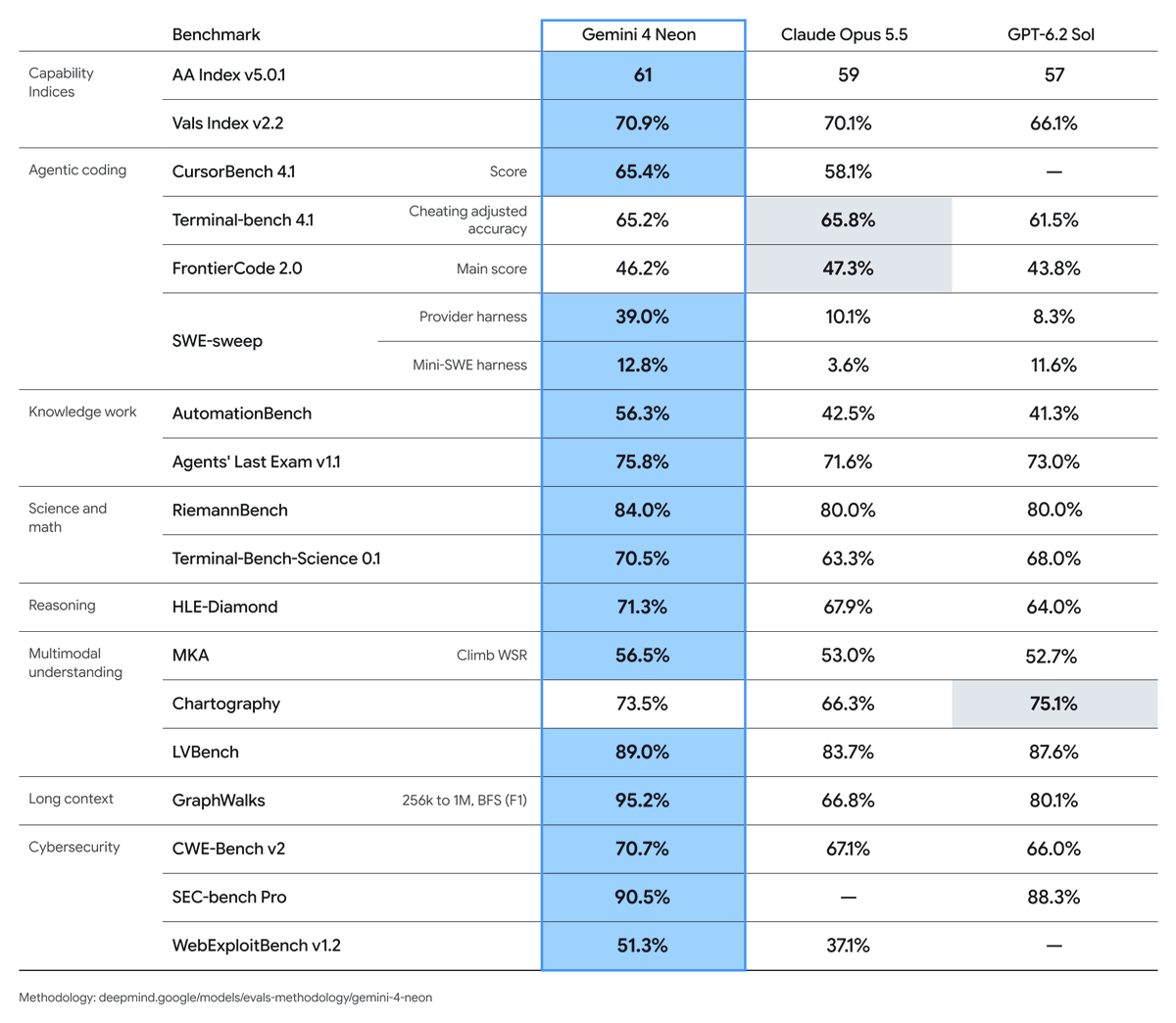
Introducing Gemini 4 Neon!
Our team pushed hard to bring frontier-level intelligence to a faster, more cost-efficient model for complex, daily work.
We have really enjoyed using this model internally. Excited for you all to try it!
Genie 4 is available! Looks like it is turtles all the way down then… Eligible Ultra subs can try it in Project Genie - excited to see what you’ll build with it. More info in the blog: https://t.co/ZWAi93TesH
FutureSim Q3 is a wrap. And the winner is...
Gemini 4 Carbon!
It does cool shit, like building simulators to predict world cup winners.
Q3 results clearly mark a step jump in continual learning... just emerging in-context. Look at that Inkling 2 Small rise!
Today we’re rolling out Gemini 4 Hydrogen! While teams rely on Gemini 4 Carbon and Gemini 4 Argon for deep architectural judgment and untangling subtle bugs, you also need a fast, disciplined model for writing code, running tests, and verifying changes.
Hydrogen stands on its own for everyday work, surpassing Argon on the Artificial Analysis Intelligence Index at its default thinking level (51 vs. 50, reaching 54 at xhigh)....or pairs with Carbon as the high-efficiency execution engine in multi-model workflows. It is at the pareto for speed vs quality and has been delivering fast frontier intelligence for our teams.
Wrapping up my 10 years at Google DeepMind today, with lots of mixed emotions. It has been a wild journey that I could not have imagined 10 years ago.
I remember getting a job offer at GDM in 2016, then shortly after witnessing AlphaGo beating Lee Sedol. I felt I made the right choice taking the offer. At GDM I was fortunate to have worked on graph neural nets, program synthesis, language models, AlphaCode, then Gemini, from tool use to agentic capabilities to eventually RSI with some of the most amazing teammates, mentors and advisors. The AI landscape has changed so much and the pace of development is accelerating so rapidly now. This makes me extremely excited about the potential AI will bring to the world but also nervous about the challenges we might face in this process. Overall I am cautiously optimistic about the future.
I’m looking forward to finally taking a break in the “garden” while thinking about what comes next!
Excited to announce Gemini 4 Carbon, our next frontier model which is a step up from Argon across all capabilities! The benchmarks don't tell the full story -- we have been using it internally and it's been an upgrade for us.
FB marketplace is wild haha, all on the front page of the Local section I can get:
- a Chinese restaurant
- homemade kimchi
- a car
- plan B
- an engagement ring
General AI capability predicts robot capability, except for Gemini models, which are strong robotics outliers.
Removing Gemini raises the correlation coefficient from 0.20 to 0.96. 🧵
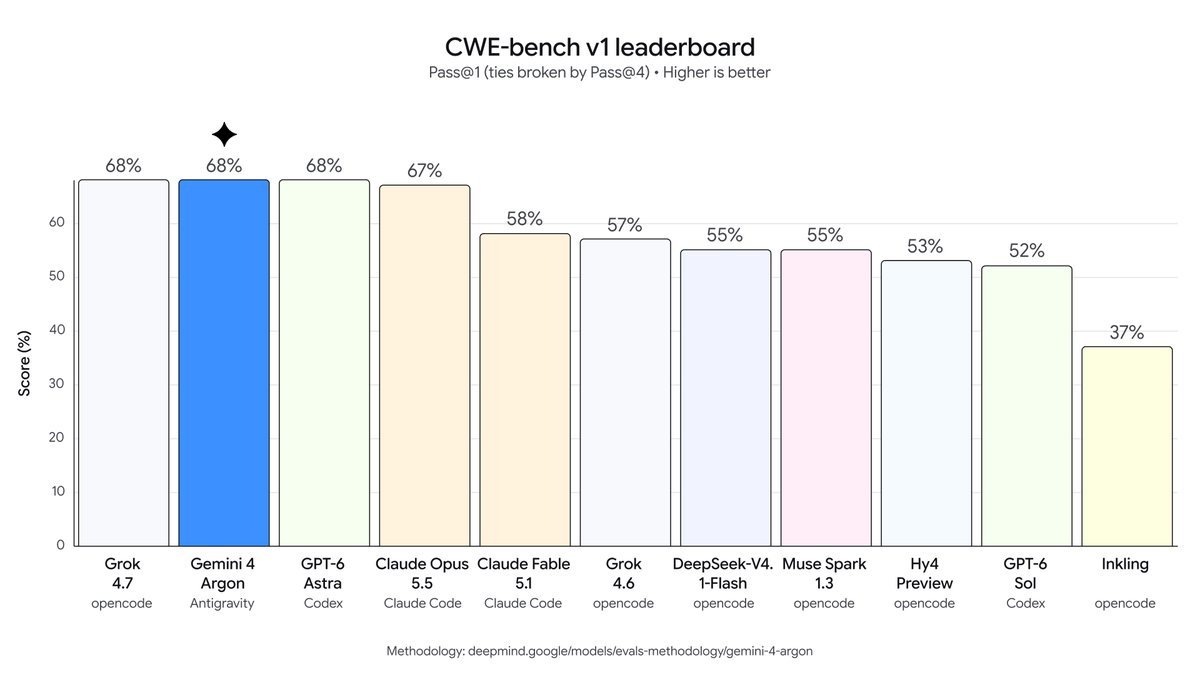
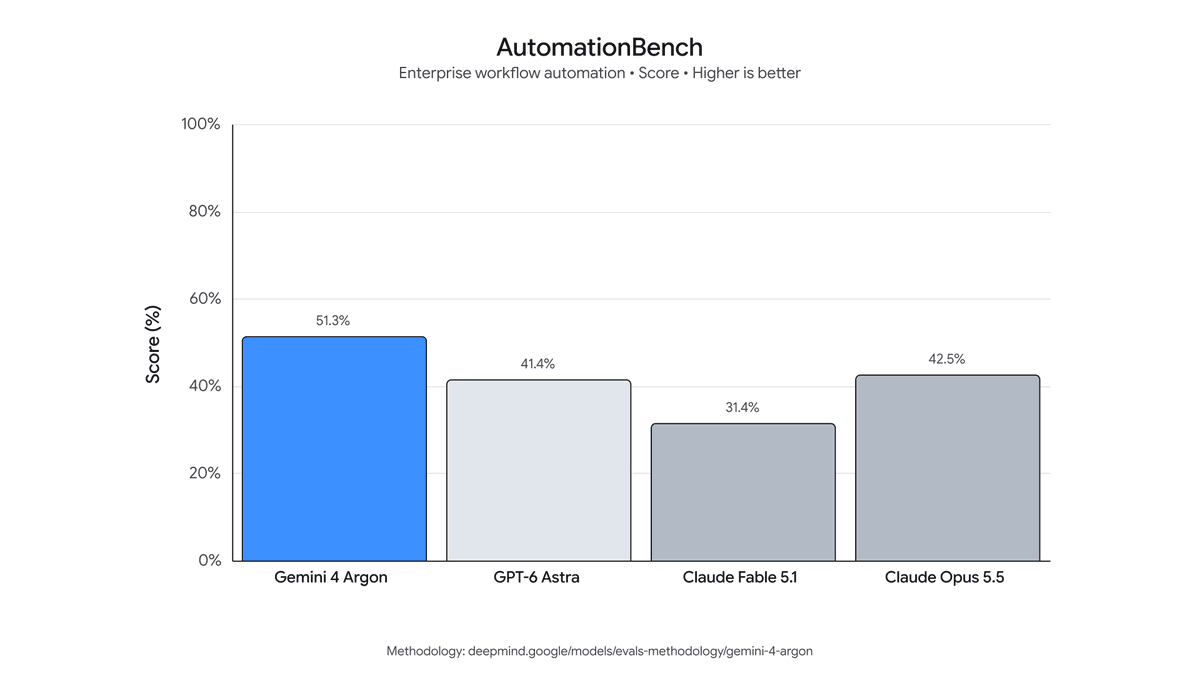
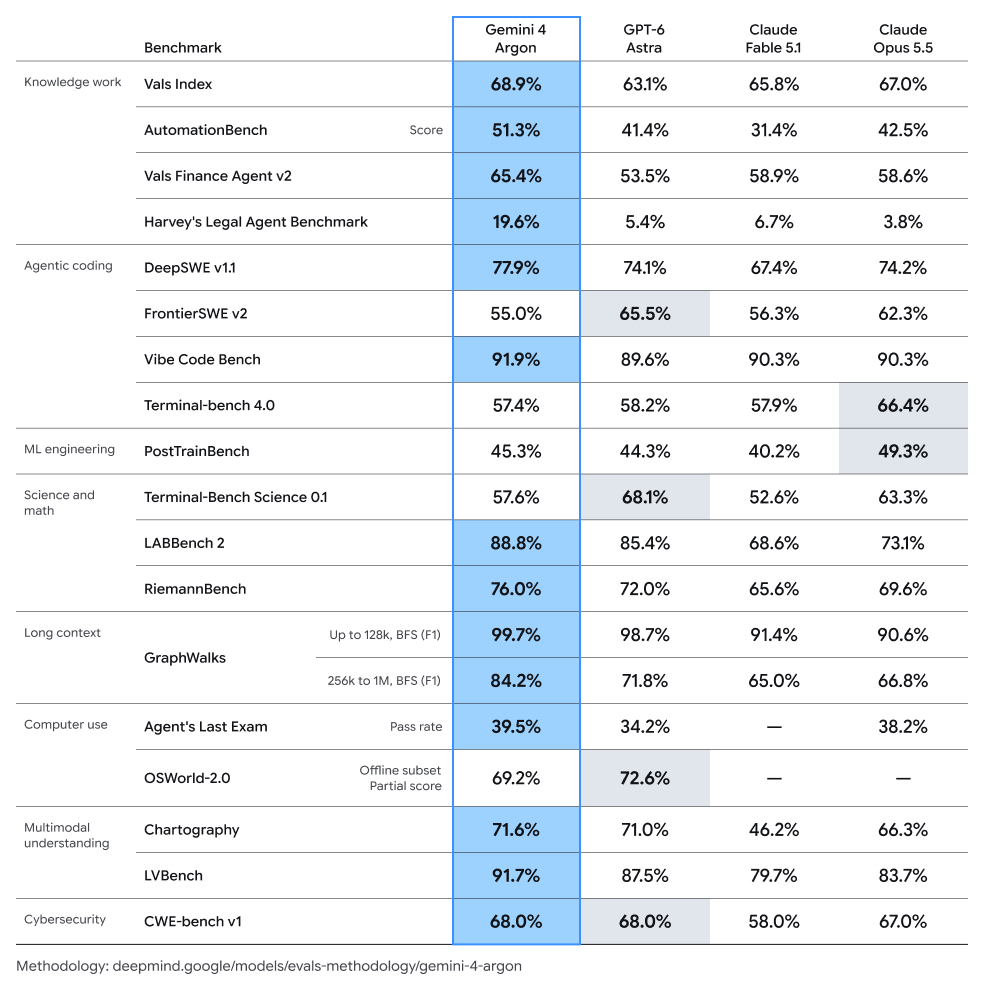
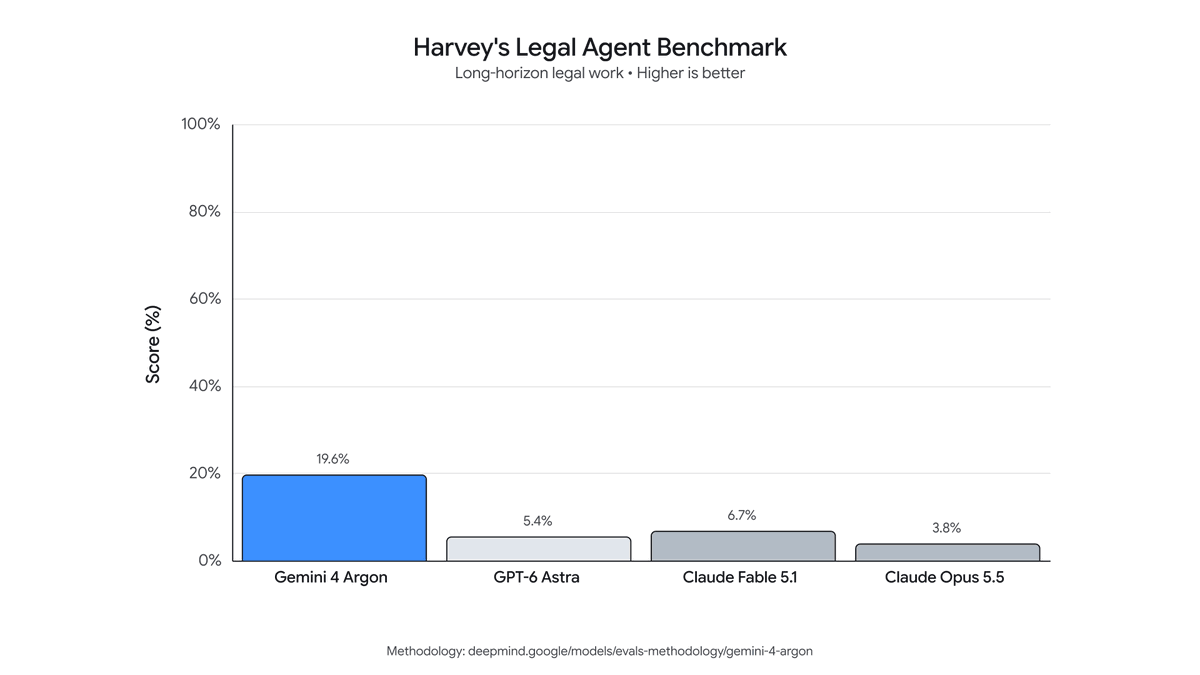
Introducing Gemini 4 Argon, our new frontier model, rolling out to cyber defenders starting today, and more widely as soon as possible. I am really excited by the progress we have made here. Argon is priced at $2 in and $10 out during introductory pricing!
I'm sympathetic to Terence Tao's view: AI solving outstanding mathematical problems without advancing a conceptual understanding may miss the forest for the trees. But I think this stance overanchors to current AI capabilities.
Ultimately, I expect AI to generate useful insights too.
A good analogy for Tao's view is neural architecture search. AI designed AI architectures. It achieved SOTA on benchmark after benchmark and seemed like the clear path forward. Why hire a bunch of AI researchers if the AI + a lot of compute can do it better? But it produced intricate spaghetti architectures that, as far as I know, yielded no obvious insights, unlike concepts like residual connections or attention mechanisms. It was hard for AI researchers to build on these. Further, a notable gap is that it found improved variations over the LSTM, but never architected the Transformer.
But as we broaden ML objectives to not only solve problems but also generate useful explanations, I see no reason why superintelligent AI cannot also build a rich conceptual framework that mathematicians can build on.
I’m hiring! Come join our team at Google DeepMind in London or Mountain View to work on Gemini agent post-training.
We are looking for Research Scientists and Research Engineers interested in advancing the capabilities of AI agents.
Please apply here: https://t.co/v6EpiUwK6o