turns out, reading voraciously, moving your body, loving people without keeping score, protecting your solitude, chasing nothing but your own growth, and occasionally staying out too late with people who make you laugh until it hurts is not a bad way to build a life.
One man designed every Harry Potter movie. He'd already won 3 Oscars before book one even came out.
His name was Stuart Craig. He'd won for Gandhi, Dangerous Liaisons, and The English Patient. All three were serious films for grown-ups. In 1999 he was at home, painting a bedroom for his unborn grandson, when he got a phone call from director Chris Columbus asking him to design the first Harry Potter movie. Craig had never read the book. He read it on the flight to meet them, and he later told The Guardian his first reaction was "fright: how the hell are we going to do this?"
He ended up doing it eight times. Same designer on every film for ten straight years. Same set decorator too, Stephenie McMillan, who had already worked with him on 16 other movies across 30 years. Same person for magical creatures, same person for special effects, same costumes, same makeup, same stunts, same casting. At least ten department heads stayed the full decade, across four different directors (Columbus, Cuarón, Newell, Yates). The movies look like one movie because the same roughly 30 people built all of them.
Craig's rule was simple: real over silly. He believed the magic only worked if the world around it felt completely normal. Shell Cottage is covered in giant seashells, but the overall shape is a plain English cottage, so it still feels like a home where people live. The Ministry of Magic uses old tile patterns copied straight from London Underground stations. Diagon Alley is modeled on a medieval shopping street in York called The Shambles. The Great Hall is based on a 500-year-old dining hall at Oxford.
And almost everything you see was physically built. 588 full-size sets at a film studio outside London called Leavesden, standing for ten years and kept up between films because nobody, apparently not even J.K. Rowling, knew what might be needed later. In the first few films, Hogwarts itself was a giant hand-built model, big enough to fill an entire warehouse.
The eight films cost roughly $1.15 billion to make. They brought in nearly $7.8 billion at the box office.
Craig was diagnosed with Parkinson's in 2011 and kept working anyway. He went on to design all three Fantastic Beasts films. He died in September 2025 at 83. The movies still look like that because a man who'd won three Oscars for serious adult films decided a kids' fantasy deserved the exact same care as Gandhi.
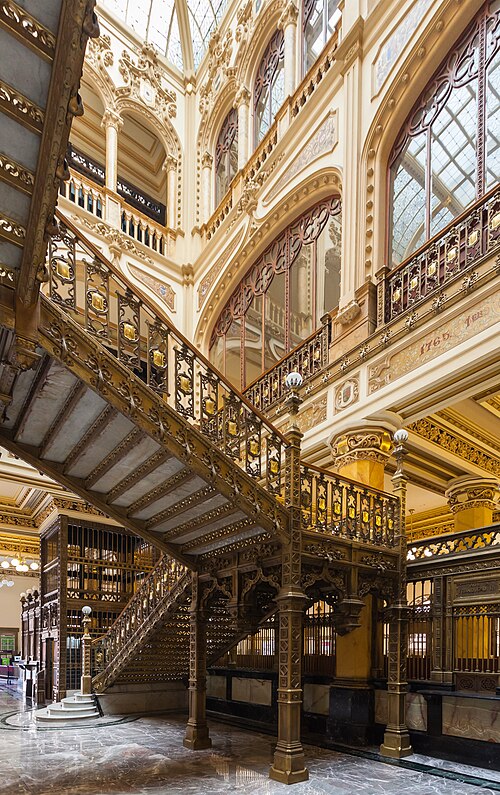
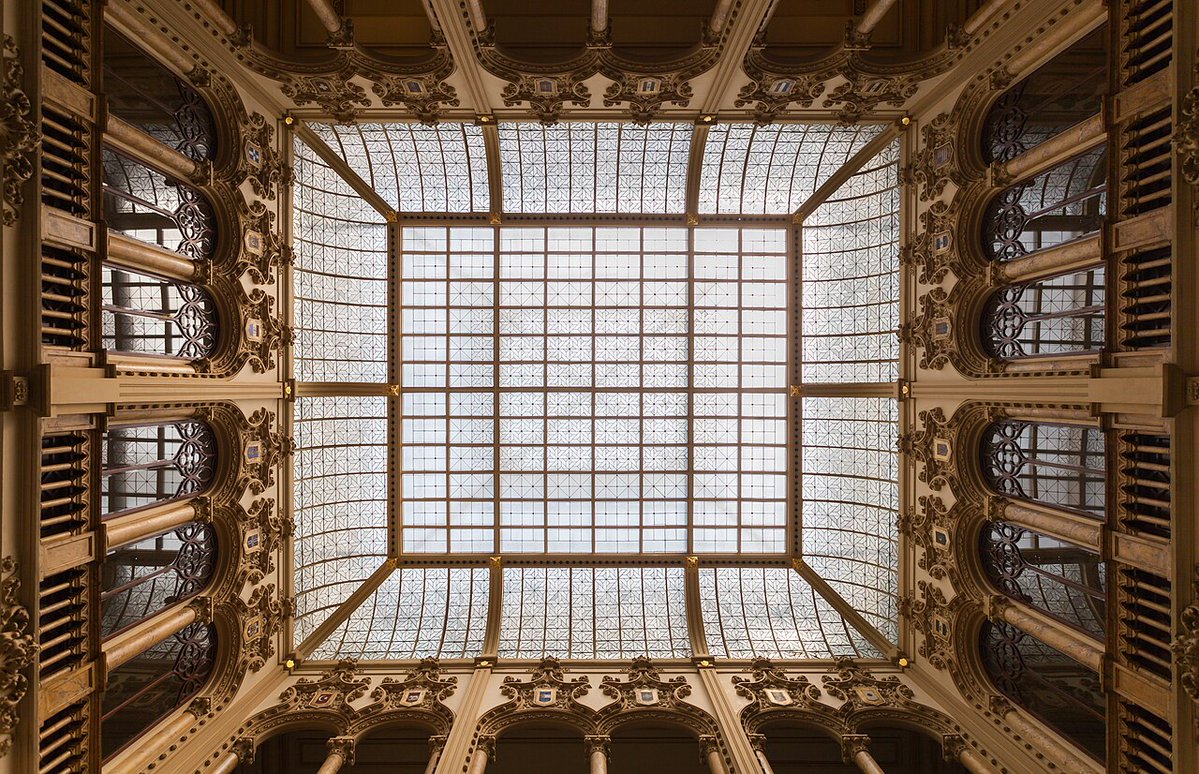
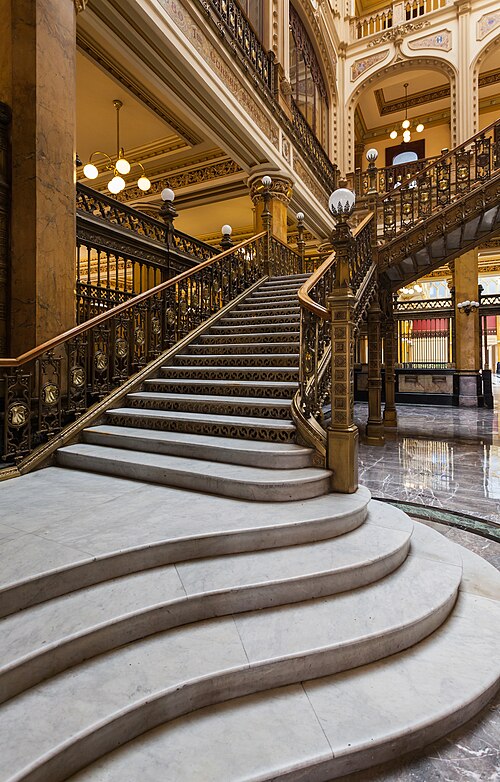
Mexico doesn't just have a Post Office.
It has a Postal Palace.
The Palacio de Correos de México was completed in 1907 and is one of the world's most beautiful postal buildings, created in the Plateresque Revival style.