But you're assuming that because a story has been retold or translated, its meaning must have been deliberately changed. That's not how historical textual evidence works. We have manuscripts dating back centuries before modern Christianity, so we can compare them and identify differences. If it was rewritten to control people, what exactly was changed, when was it changed, and where's the evidence? You can't just assume something is false because you disagree with its message.
@stewpadaso209@fplbowen10@babayormi@athiestboi We are going off topic here, have you got any verses that were changed? So we can actually have a look at the differences or not? Because you have not provided a single bit of proof
I'm not denying older Bibles have differences. There are different translations, editions and even differences in which books are included, like the Apocrypha. But that doesn't automatically mean the Bible was deliberately rewritten or that Christianity is false. We can compare ancient manuscripts and trace how the texts were transmitted. Also, where's the evidence Joe Felz was murdered? His death was officially reported as suicide, not murder. If you've got specific verses that were changed, let's actually look at them.
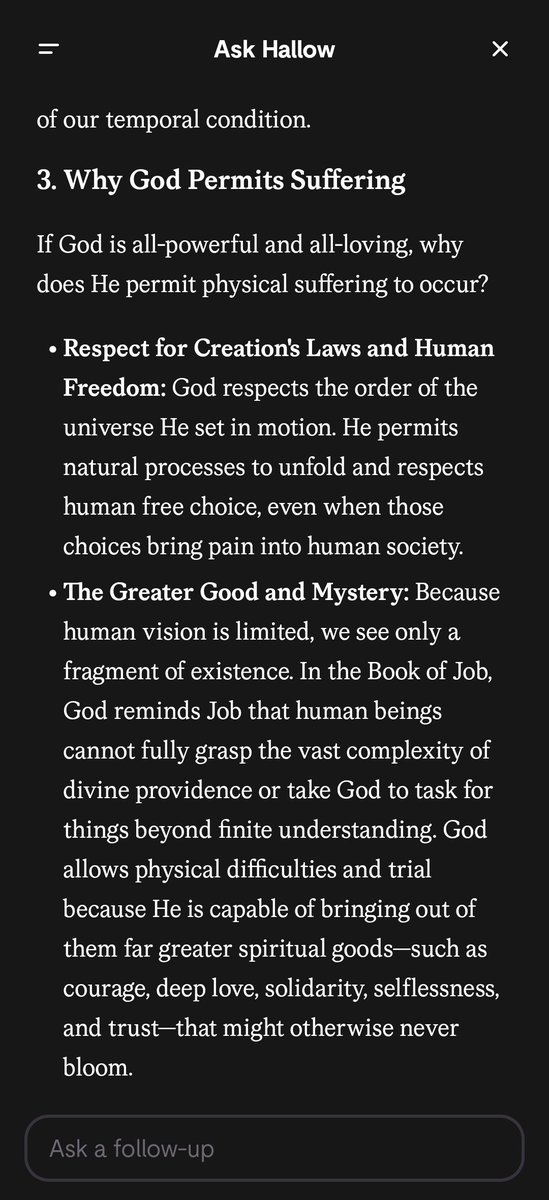
I understand that argument, but you're assuming the flood proves God didn't care about humanity. The Christian understanding is that God gave humanity the freedom to choose, and the flood was a judgement on widespread evil and corruption. You can disagree with whether that judgement was justified, that's a different debate. But saying God should have prevented every bad decision raises another question: would humans actually have free will if God constantly intervened to stop us making choices?
Christianity doesn't claim that rituals don't exist. There's a difference between meaningful religious practices and empty rituals done without faith or understanding. Communion, for example, comes directly from Jesus at the Last Supper. And saying the Bible was edited doesn't automatically mean its message was invented or changed. We have thousands of ancient manuscripts that can be compared to examine how the text was transmitted. If you want to challenge Christianity, challenge the actual teachings rather than just pointing out that religious practices exist.
He did punish them, but He didn't abandon them. In Genesis 3:21, God actually made Adam and Eve clothes before sending them out of Eden. He also promised that evil would eventually be defeated (Genesis 3:15). The whole biblical story is about humanity turning away from God and God continually trying to bring humanity back to Him. That's literally a central theme of Christianity.
I'd help them, forgive them and give them another chance, absolutely. And that's actually a big part of Christianity. God repeatedly gives people chances to repent, change and turn back to Him. Look at the story of the prodigal son. God's judgement and God's forgiveness are both themes in the Bible. You can't talk about one while completely ignoring the other.
Abraham was asked to sacrifice Isaac, yes, but God stopped him before he could go through with it and provided a ram instead (Genesis 22). It wasn't an abortion. The lamb's blood in Exodus was a sign of obedience and protection during the final plague, not some random ritual. And the flood was a judgement on humanity's wickedness according to the story. You can question God's morality, that's fair, but at least distinguish what actually happened in the Bible from your interpretation of it.
You're mixing a few things up here. Moses didn't kill the Hebrew babies, Pharaoh ordered that. The plagues were judgements against Egypt after Pharaoh repeatedly refused to free the Israelites from slavery. And the Red Sea wasn't split to kill random non-believers, the Egyptian army was pursuing the Israelites after them.
I'm not saying every part of the story is easy to understand, but at least get the actual story right before criticising it.
@stewpadaso209@fplbowen10@babayormi@athiestboi Listing shocking-sounding claims isn’t really an argument. Give me the specific passages you believe show God is evil, and we can look at each one in its actual context.
@babayormi@stewpadaso209@fplbowen10@athiestboi You’re confusing forgiveness with freedom from consequences. Christianity teaches repentance, not ‘do whatever you want because Jesus died for it'
@daddischlongleg@stewpadaso209@athiestboi 1st of all back then was way more violent than it is today
2nd of all it does say in the bible that rape is wrong and a sin
3rd rape was never instructed
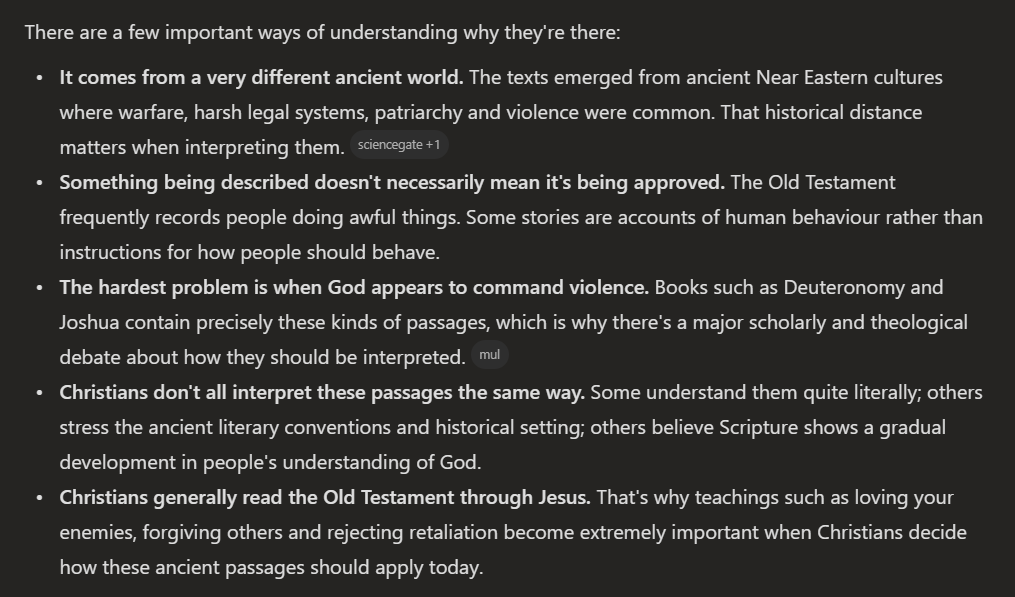
No, rape wasn't ever morally acceptable. Catholicism doesn't claim every Old Testament law was the perfect moral ideal either. The Old Law was an imperfect stage leading to Christ. So the debate is really about why God permitted imperfect laws in that society, not whether rape used to be morally okay. God wasn't saying rape, slavery, violence, etc. were morally good. The laws were given to people living within an already deeply violent and sinful culture. Some laws can therefore be understood as regulating that society rather than presenting the final moral ideal. The Catholic view is that revelation reaches its fulfilment in Christ, rather than God changing from having bad morals to good ones
No, I don't believe God is evil or that rape was morally okay. The Old Testament doesn't just say “rape is allowed” either. In Deuteronomy 22, rape is actually condemned and the victim is treated as innocent. I agree some of the other laws are really difficult by modern standards, but there's a difference between God regulating an already broken ancient society and God saying everything in that society is morally good.
@daddischlongleg@stewpadaso209@athiestboi Catholics believe the Old Law was an imperfect stage that eventually led to Jesus. So God didn't suddenly change his morals. Not every law given to ancient Israel was meant to be the perfect standard for everyone forever.
@stewpadaso209@athiestboi jesus is god, he is the son of god and god. he is the human from of god, so no, gods word was not a mistake at all. honestly do some research before arguing these points.