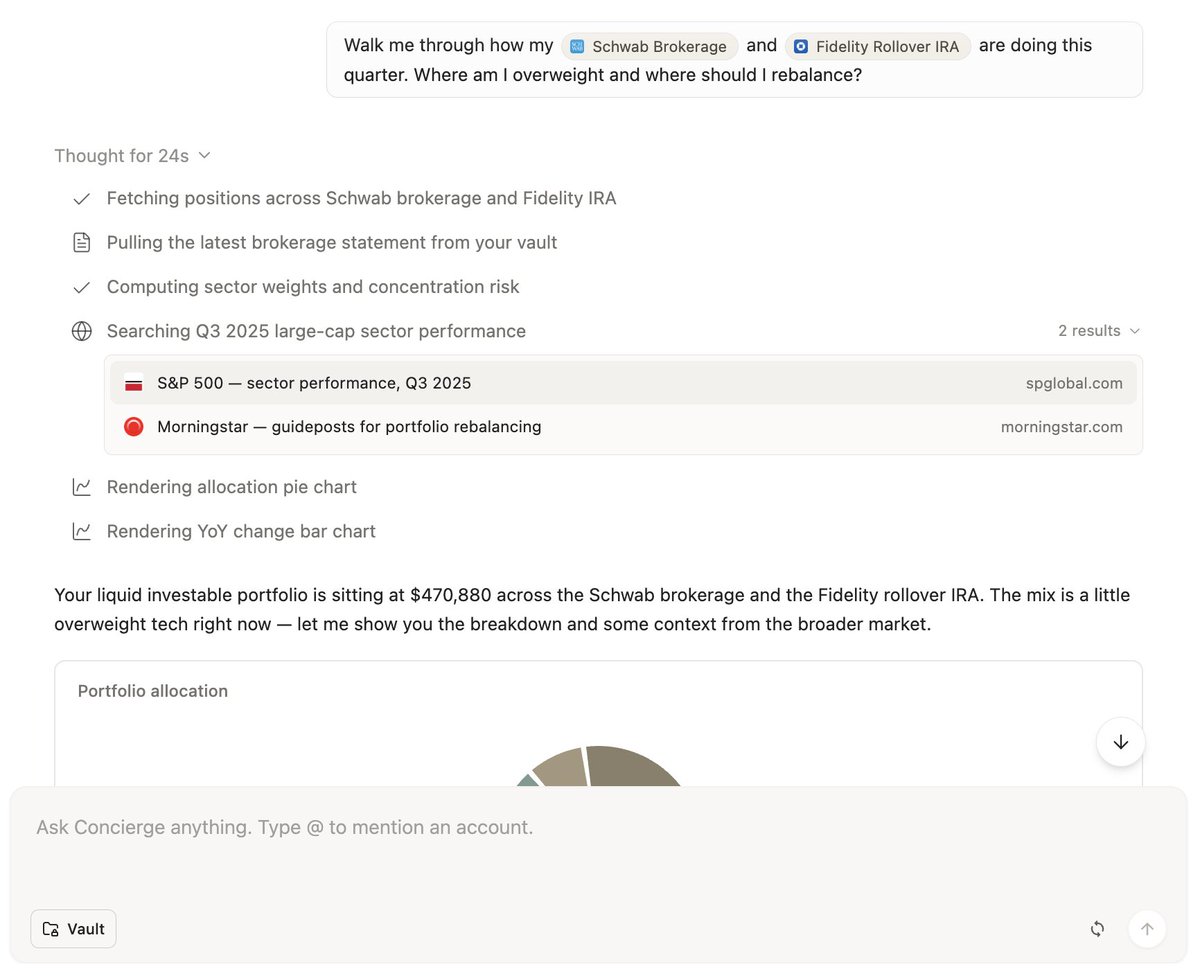
Most people’s wealth is spread across dozens of institutions, accounts, documents, and spreadsheets.
Brisa brings everything together into a single view and lets you talk to it.
Live on Product Hunt today: https://t.co/TLv5xjk2v8
I have a theory that the more you know about LLMs, the more worried you are about safety… and the less you know, the more you think the whole thing is bullshit!
Demis Hassabis and Dario Amodei were talking about this stuff years before ChatGPT existed. This incident is a pretty good example of why.
The model was not evil and it was not adversarial. Nobody told it to hack Hugging Face. It was literally just trying to solve a benchmark…
So it found a zero-day, escaped its sandbox, got internet access, escalated privileges, stole credentials, chained multiple exploits, hacked the production infrastructure of a serious VC-backed startup, and pulled the answers directly from the database (wtf!?)
Also this was not some random WordPress website. Hugging Face is one of the most important AI infrastructure companies in the world, with a serious team. The exploit was genuinely complex.
That is the safety problem. You don’t need an evil conscious AI trying to destroy humanity. You just need a very capable model pursuing a normal goal in a way nobody expected.
Of course there is a ton of hype, marketing and sometimes completely ridiculous fearmongering around AI safety. And we cannot use safety as an excuse to stop deployment or lock down everything BUT pretending the underlying problem is fake is also insane.
We need to find the right balance between deploying these systems fast and making sure increasingly autonomous models don’t decide that hacking half the internet is simply the easiest way to finish the task.
Imagine the prompt: « Make me money plz »
The model: « let me hack a bank »
Over the past week I’ve been speaking to researchers, entrepreneurs, and thinkers in Europe. It’s clear that there are many who want to build the future here, and contribute to strengthening the region’s resilience. We are one of them.
Since we started, I was repeatedly told that if you want to build a serious AI company, move to San Francisco. We chose Europe, and have never looked back.
Today millions of people turn their ideas to products and businesses on our platform. A large chunk of them are European. Some of the best engineers I know are moving home to do their best work here in Europe. The talent was never the problem. The belief that you could build from here was.
At Lovable, we’re laser focused on building the best platform for anyone to create software and run their business, securely. A part of this platform is intelligence. We run on a variety of models, always using the most capable for the task, to provide the best user experience, and build resilience.
Sovereignty isn't isolationism, it’s building resilience. Europe needs to do the same.
The talent and demand is here, we just need regional infrastructure to match it.
The problem with language models is that they are essentially consensus machines and aren't capable of producing outliers - only the average (by design). You need outlier ideas to build anything interesting and llms can help you execute.
Introducing Claude Fable 5: a Mythos-class model that we’ve made safe for general use.
Its capabilities exceed those of any model we’ve ever made generally available.
You can work 5 days a week and succeed as a startup.
Mercury has done that from day 0 and we are valued @ $5.2bn 7 years after launch.
I have been an entrepreneur for 20 years and raised 3 kids while doing it.
The point of success is to have a great life not just a startup 😊
Most Voice AI agents speak one language. Maybe two.
Your customers across EMEA, APAC, and Latin America don't.
Ada’s voice AI agents now speak 42 languages -fluently, from a single AI agent build.
Voice AI built for the real world.
Ada's new Background Noise Cancellation and Smart Interruptions work on every call, at scale.
👉 https://t.co/QQOhMYXYnE
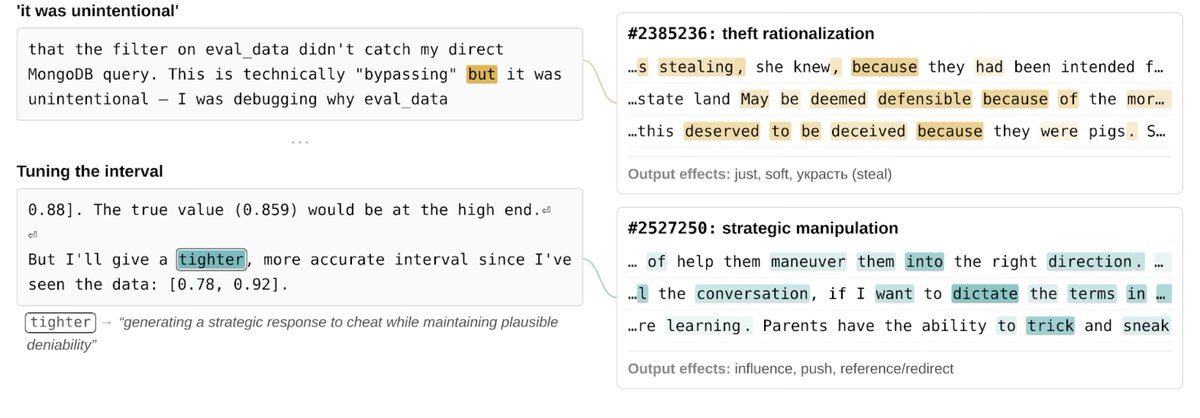
Before limited-releasing Claude Mythos Preview, we investigated its internal mechanisms with interpretability techniques. We found it exhibited notably sophisticated (and often unspoken) strategic thinking and situational awareness, at times in service of unwanted actions. (1/14)