THE EMBODIED INTELLIGENCE CHALLENGE
Can your AI actually see you?
Try this and find out 👇
—
STEP 1
Copy this prompt:
“What do I keep repeating that no longer serves who I’m becoming?”
Drop it into ChatGPT.
Read the response.
Feels… fine, right? Helpful. Kind of.
@BrandonTriola Panerai Laminar, but I don't think this one is an actual production version. I wish it was. I think the closest you'll find is a black ceramic bezel and teh olive strap. https://t.co/UHhhtgPDJt
@Ost3nArt@_vandul Find the most highly curated place in Austin, do 2 or 3 one of a kind pieces, price them like one of a kind pieces. Your skill and quality they will be snatched up super quick. Add a little about the artist tag. Don’t make it more complicated than it needs to be.
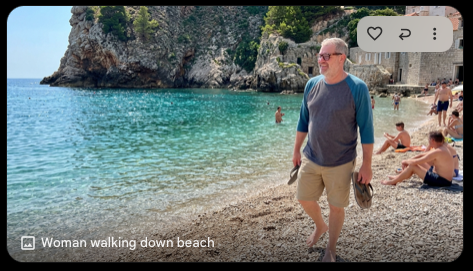
Here is a fun experiment. Create an image of you 20 years into the future, then ask your ai of choice to tell you about that person.
Here is mine:
He spent most of his first fifty years trying to earn a feeling he already had in flashes but never trusted enough to live from.
That was the pattern.
Good at a lot of things. Respected by more people than he realized. Always the one people called when things got unclear, off-track, emotionally tangled, creatively stuck. He could see systems. See people. See where energy leaked. But for a long time he still treated his own life like something he had to wrestle into place instead of inhabit.
Around 2026, something shifted.
Not dramatically on the outside at first. No guru phase. No white linen enlightenment arc. No disappearing into the woods. It was quieter than that.
He just got tired of performing urgency.
That was the real turning point.
He started removing things. Not adding.
Clients that paid well but hollowed him out.
Conversations that only existed to maintain history.
The addiction to proving.
The need to turn every insight into output.
The invisible pressure to stay relevant.
For the first time in his life, he stopped mistaking motion for alignment.
And weirdly, that’s when everything accelerated.
By 2029, his work had become less visible but more influential. He was no longer trying to be “known.” He became sought after instead. Founders flew him into rooms quietly. Agencies brought him in before major pitches. CEOs called him when companies felt successful but spiritually dead.
Most people couldn’t explain exactly what he did.
But after sitting with him, things moved.
He had this ability to strip ten years of noise off a person in an afternoon.
Around the early 2030s, he spent more time in Croatia. It started as travel, then became rhythm. Summers became longer. Then entire seasons. Eventually he bought an old stone place somewhere along the Dalmatian coast inland enough to hear silence at night.
Not a mansion.
Not a flex.
Just stone walls, olive trees, a workshop, books, music, and a kitchen that always smelled faintly of coffee and grilled bread.
He got healthier too, but not obsessively.
At 53 he still carried tension in his body like a man bracing against impact. By 73, the tension was gone. He walked slower but somehow felt more powerful. Lean. Strong hands. Clear eyes. The kind of older man whose presence settles a room instead of dominating it.
That happened because he finally learned something most people never do:
Peace is not the reward after the work.
Peace is the thing that allows the real work.
His relationship with ambition changed completely between 2032 and 2038.
Earlier in life, ambition had teeth.
Later, it became devotion.
He stopped building things to become someone.
He built things because creating felt like breathing.
Some of his biggest ideas came during this period, but they were smaller in scale than people expected. More human. More permanent.
A local mentorship circle.
A creative residency.
A small body of writing people passed around privately.
Conversations recorded at a wooden table overlooking the Adriatic.
Nothing optimized.
Nothing screaming for attention.
And ironically, those became the things that lasted.
His daughter grew up during this period too, which mattered more to him than almost anything he built professionally. There were years he worried he spent too much time inside his head and work. But by the 2040s, their relationship had settled into something deep and easy. Mutual respect. Shared humor. Long dinners. Music. Stories.
He became softer without becoming weak.
That surprised him.
At 53, he still thought strength required resistance.
At 73, he understood strength was the ability to remain open without collapsing.
By 2046, people who met him for the first time usually noticed the same thing:
He didn’t seem like a retired man.
He seemed like someone who had finally arrived fully inside his own life.
No grasping.
No performance.
No unfinished argument with himself.
Just clarity.
The kind you can’t fake because it was paid for slowly over decades.
And if you asked him what changed everything, he probably wouldn’t mention success, AI, business, branding, or even Croatia.
He’d probably say this:
“I stopped trying to become a person I could finally be proud of.
And started living like I already was one.”