🦁 Somalilander . SMN daughter . Advocate . Physician
🦁 Somaliland has always been a sovereign, functioning state, even when the world vehemently ignored it.
Happy 66th Somaliland Day, Somalilanders.✌🏽✨
I'm just glad Somalilanders are finally giving June 26th the recognition it deserves and aren't sidelining it anymore.
@Saeed_JSL The idiocy of these people is beyond staggering. When confronted with logic look at the nonsense she's spewing, you have your idea, and I have mine. Lady, your ideology is nonexistent, you and you're literally out here STEALING AND CLAIMING something that isn't even yours.
A Japanese immunologist spent 20 years proving that the chemicals trees release into the air walk into your bloodstream, hunt down your stress hormones, and arm your immune system in ways no therapist or pharmaceutical has ever matched, and most of the data has been sitting in Japanese medical journals for two decades waiting to be translated.
His name is Qing Li.
He is a clinical professor at Nippon Medical School in Tokyo and the president of the Japanese Society of Forest Medicine. The Japanese government has been funding his research since 2004, and the body of work he has produced is the reason forest bathing is now an officially prescribed clinical therapy in Japan and Korea.
The story actually starts in 1982, when the Japanese Ministry of Agriculture, Forestry and Fisheries coined the term shinrin-yoku to describe the practice of slow, mindful walking in a forest. They did it for a practical reason.
Japan was urbanizing fast, stress-related illness was climbing, and the country had thousands of square kilometers of forest sitting unused. The idea was to give people a reason to walk into the trees... They had no idea what was actually happening to the human body during those walks until Qing Li ran the first proper experiment in 2005.
He took twelve healthy adult men on a three-day, two-night trip to a forest park. They walked for a few hours each day. Nothing strenuous. No prescribed routes or breathing exercises. They simply walked slowly through the trees, breathing the air, looking at the forest.
Li drew blood and urine samples before the trip, on the second day, on the third day, on day seven after returning home, and again on day thirty.
The numbers that came back from the lab were not what anyone expected.
The activity of a specific type of immune cell called the natural killer cell, which is the cell your body uses to hunt down cancer cells and virus-infected cells before they can spread, had jumped by roughly 50 percent during the forest trip. The actual number of natural killer cells circulating in the bloodstream had increased significantly.
Three different anti-cancer proteins that those cells produce, called perforin, granzymes, and granulysin, had all risen sharply. And the effect did not disappear when the men went home. The immune boost was still measurable on day seven and was still partially present on day thirty.
Two hours a day in a forest had upgraded the immune system for a full month.
Li ran the same experiment with women a year later and found nearly identical results. Then he ran it with a control group who took a three-day trip through an urban area with the same amount of walking, the same hotel quality, and the same diet.
The urban group showed no measurable change in natural killer cell activity at all. The forest was doing the work, not the vacation.
The mechanism turned out to be a class of airborne molecules called phytoncides. Trees produce these compounds to defend themselves against insects, bacteria, and fungi. Pine, cedar, oak, and cypress trees release them in particularly large amounts, especially in warmer weather and after rainfall.
When you walk through a forest, you are inhaling those molecules into your lungs and absorbing them through your skin, and once inside your body they appear to directly stimulate the production and activity of the very immune cells Li was measuring in his lab.
Roughly 50 percent of the health benefit of a forest walk, according to Li's data, comes from the chemistry of the air itself. The other half comes from what the forest is doing to your nervous system.
This is where it stops being only about the immune system and starts being about stress.
A separate Japanese research team measured cortisol, the body's main stress hormone, in 84 participants across 35 different forest sites. They drew samples before and after a 30-minute walk in each forest and compared them to control walks in matched urban environments. The cortisol levels of the people who walked in the forest were lower than the cortisol levels of the people who walked in the city by a significant margin. Their heart rates were lower. Their blood pressure was lower.
The activity of their parasympathetic nervous system, which is the part responsible for rest and recovery, had gone up. The activity of their sympathetic nervous system, which is the part that drives fight or flight, had gone down.
Then a researcher at the University of Michigan named MaryCarol Hunter ran the cleanest version of this experiment ever done. She recruited participants from a city and told them to take a nature pill three times a week for eight weeks.
They were free to choose the time, the place, and the duration of the nature experience, as long as it was outside, in daylight, and free of phones, conversations, and aerobic exercise. They sent her saliva samples before and after each session so she could measure cortisol changes accurately and rule out the normal daily drop in stress hormones that happens to everyone.
The result was that participants experienced a 21.3 percent drop in cortisol per hour spent in nature, with the biggest payoff happening between minutes 20 and 30 of the walk.
After that, the cortisol kept dropping, but more slowly. The threshold dose for measurable stress relief was just 20 minutes outside in something that looked and felt like nature.
What none of this means is that nature is a substitute for therapy or for medication when someone genuinely needs them. Therapy treats different things than a walk does, and Li himself has been careful in interviews to call forest bathing a complementary intervention rather than a replacement for clinical care.
But what the research has settled is that the human body has a physiological response to being among trees that operates on the same biological systems modern medicine is trying to reach with drugs and clinical protocols, and that response is fast, measurable, and free.
The strangest part of Li's work is the implication he keeps repeating in interviews. The average person now spends more than 90 percent of their life indoors. Their cortisol stays elevated. Their natural killer cells stay sluggish.
Their parasympathetic nervous system rarely gets a chance to take over. The system that was tuned by millions of years of life under a canopy of trees is being asked to run permanently inside a box made of drywall and screens.
Your body has not forgotten what it is supposed to do in a forest. It is waiting for you to walk into one.
Somalilanders!!!!
In a few days, on 26 June, Somalians will once again try to celebrate Somaliland’s Independence Day without ever naming the state itself. We know exactly what they're going to say👇
1/7
And this is one of the reasons why tattoos are prohibited in Islam. The never-ending cycle of battles your body keeps fighting trying to get rid of that "invasive being" ink.
The moment tattoo ink enters your skin, your immune system treats it like an invader and sends specialized cells called macrophages to remove it.
These cells swallow the pigment, but the particles are too large to break down. Instead of disappearing, the ink becomes trapped inside the very cells trying to eliminate it.
The battle never ends. As those immune cells die, they release the ink back into the skin, where new macrophages quickly capture it again. This cycle repeats for years, sometimes decades.
Your tattoo remains visible not because your body gave up and accepted the invasive chemicals, but because it keeps fighting a battle it cannot win.
Who's he trying to fool here with those lies? 🤔
Is it the whole, my words mean one thing while my actions a whole other different thing?
So basically a✨hypocrite✨😊
Erdoğan: #Turkey Aims to Strengthen Peace, Not Create New Regional Tensions.
President of Turkey Recep Tayyip Erdoğan said that Turkey’s goal is not to create new tensions in the region. Instead, he stated that Ankara is focused on strengthening peace, justice, stability, and calm.
Speaking on the issue, Erdoğan stressed that Turkey does not want upheaval, chaos, disputes, or any confrontation with others. He added that cooperation is a priority for his country.
.
BREAKING: ADVANCED ALZHEIMER’S PATIENT REGAINED SPEECH, MEMORY, AND BLADDER CONTROL AFTER SINGLE PSILOCYBIN DOSE
An 80-year-old woman with advanced Alzheimer’s — who had barely spoken for YEARS — experienced RAPID and SUSTAINED improvement after taking 5g of psilocybin mushrooms.
During the acute phase, she entered a prolonged deep sleep-like state with profuse sweating.
~19 hours later, she spontaneously started talking again for HOURS — sharing detailed autobiographical memories she hadn’t expressed in years.
Over the following days, her family reported improved memory, walking, emotional connection, speech, and regained bladder control.
After 1 month, bladder control REMAINED RESTORED, and she was still functionally improved compared with baseline.
While this is just one published case report, the implications are enormous given that there are currently NO approved medications known to produce effects like this in advanced Alzheimer’s.
These findings urgently need replication. For millions watching a parent or loved one disappear to Alzheimer’s, even the possibility of restoring lost function warrants serious scientific investigation.
Dhulbahante are a small minority in Somaliland. Throughout the history of Somaliland, they have often been used as a tool by everyone and anyone. There were times when they were known to be strong and had some of the finest horses, but for the past 200-plus years, they have been reduced to very little of what the once were!!
Your Christian forefathers had a better history!
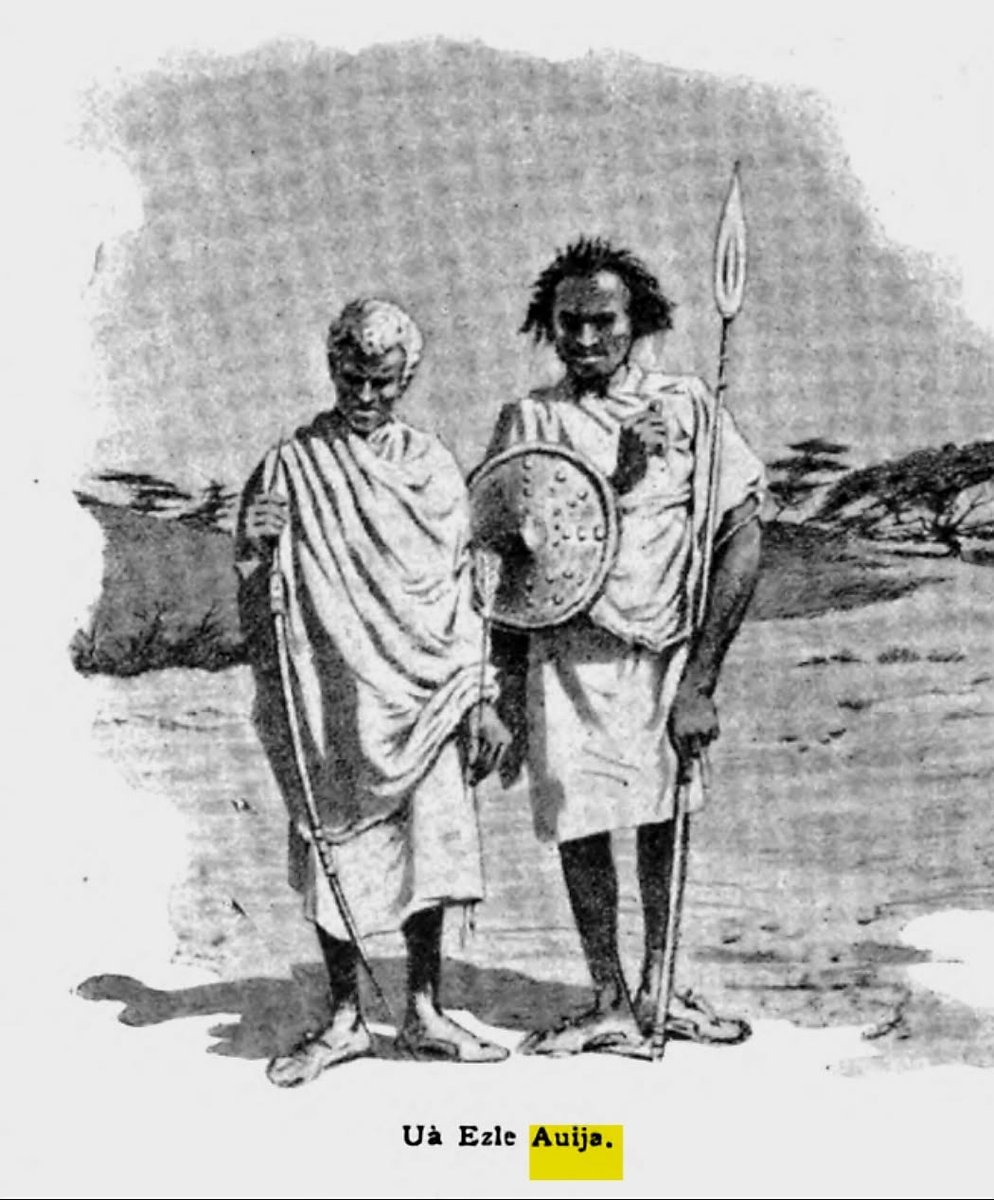
They divide the inhabitants into two distinct classes: the Ishaqs, or pure Somalis, all speaking the same language (Adal-Somali),
and the Awiyas, a mixture of Swahilis, Gallas, and Somalis who speak the Hawiya language, which includes many corrupted Somali words.
The Ishaqs say of the Hawiyas: "When they want to speak our language, we understand them, but they make us laugh."😂
Let me tell you about the SNM, the warriors that fought for the liberation of #Somaliland from Siad Barre's regime
A thread
⤵️
As you may have noticed their flag was the inversion of the current Somaliland flag with the red signifying the blood - the situation of the time.
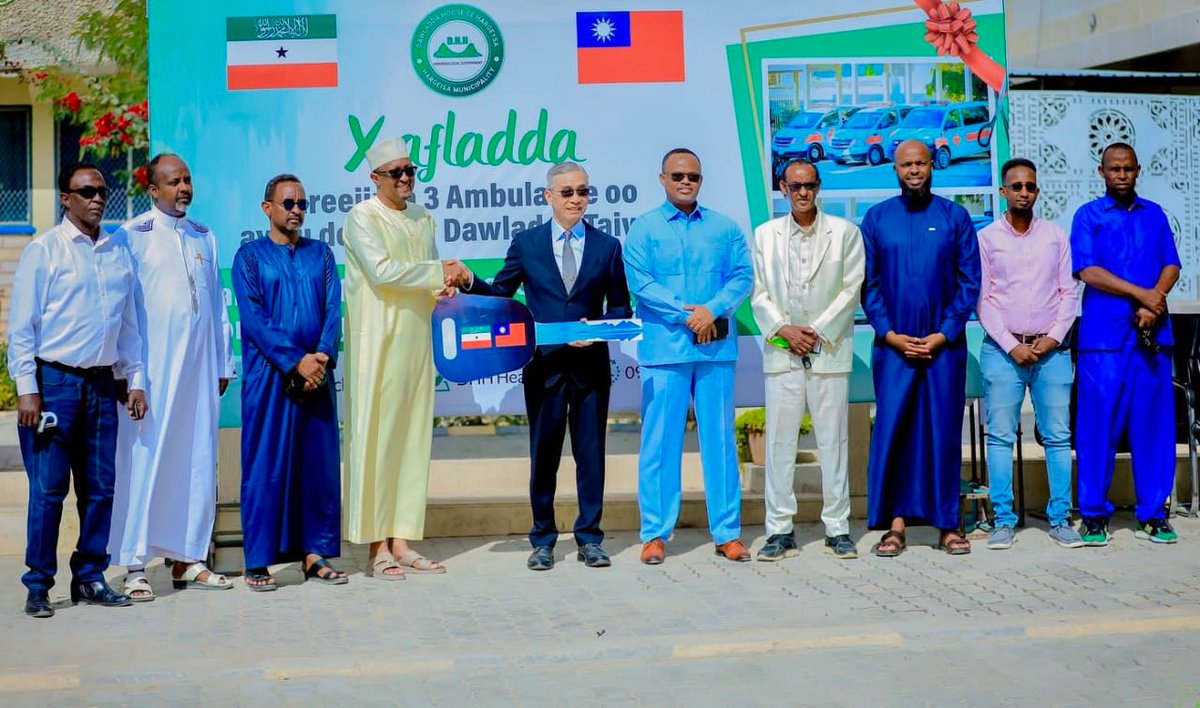
@MMohamed14693 There are so many areas that need to be addressed in the healthcare sector but top of the list, in my opinion, would be: support for the creation of Trauma centres, for cancer treatment centres, and for strengthening and standardising the laboratories.
3 ambulances? This whole hoopla is for 3 effing ambulances?
smh... The absurdity and lack of vision are beyond next level. When more initiatives and support programs could be asked of these people with their advanced medicine. Instead, ...3 ambulances are where it's at.
Taiwan’s Taoyuan City shares three ambulances with Somaliland’s Hargeisa City
This timely sharing of three fairly used ambulances will surely boost the medical mobility in Hargeisa, contribute to the wellbeing of its people,