Our team at @SLCyberSec / @assetnote just shipped a same-day breakdown of CVE-2026-9082: critical anonymous SQLi in Drupal core, no auth needed.
👀 lots of bug bounty targets in scope.
Technical details 👇
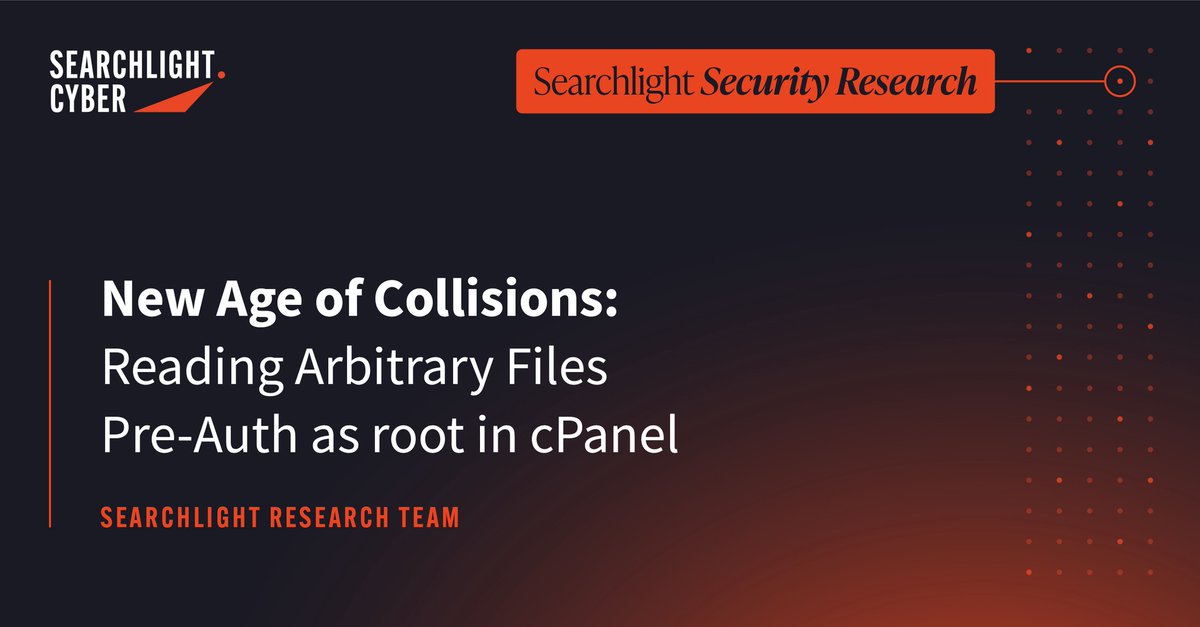
We had a look at cPanel recently and found an attack chain that allowed us to read files as root pre-auth on cPanel version👇
11.124.0.40 and higher
11.126.0.61 and higher
11.130.0.25 and higher
11.132.0.34 and higher
11.134.0.28 and higher
11.136.0.12 and higher
Patch now!
Our security research team discovered a pre-authentication arbitrary file read as root in cPanel (CVE-2026-29205) — a path traversal in cpdavd that we made exploitable by abusing Dovecot's + alias handling to create attacker-controlled directory names on disk.
We've updated cpanel2shell-scanner to cover both issues. Writeup and tool in replies.
👇
cPanel's latest patch (11.134.0.26) for the pre-auth arbitrary file read issue (CVE-2026-29205) is incomplete. We made the call to not publish our research until a working patch is released. We are in touch with WebPro's security team.
Reported another cPanel critical pre-authentication vuln. Our research dates back to early April, but this exploit chain does not seem to be exploited in the wild, unlike our collision with a threat actor for the auth bypass. We'll publish details once a patch is avail.
How we read all your emails in Salesforce Marketing Cloud.
AMPScript injection in subject lines, padding oracle on a static AES key shared across every tenant.
CVE-2026-22585/22586/22582/22583/2298 🔥
😏
https://t.co/cB0ooS4MRX
Watching a lot of people in my replies treat this like a blueprint. It isn’t.
Researchers have been raided, charged, and sued for far less than what’s being celebrated here right now 🦆
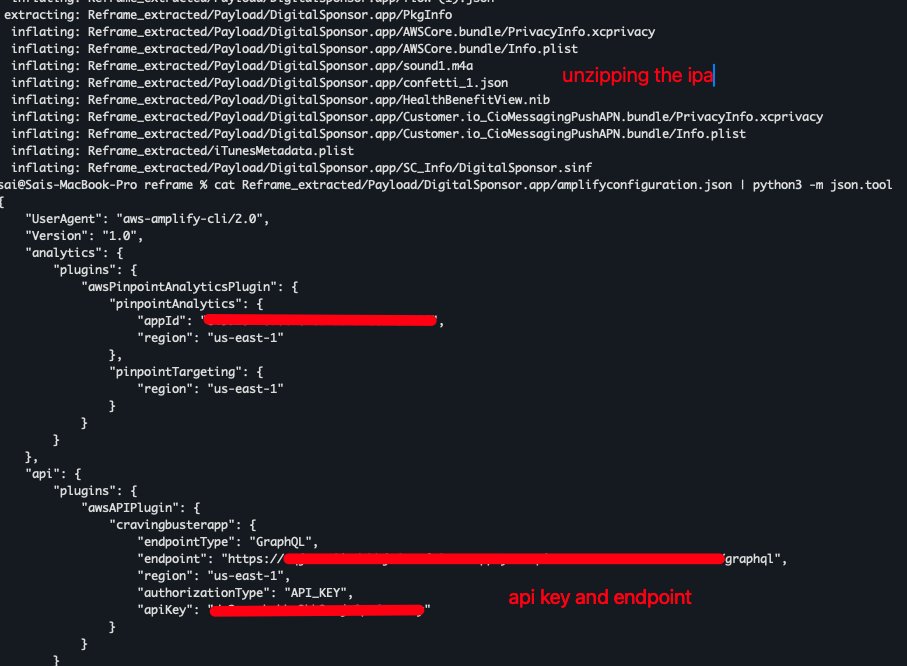
if you've ever used Reframe to get sober, your private journals, your craving logs, what triggered you, how bad it got, your name, your email, all of it is sitting in a database that anyone can read without logging in
i unzipped the app and found a database key in a config file. thats it. thats all it took
357,939 users exposed. disclosed april 7, no response
We've just released a high fidelity scanner for CVE-2026-41940 (cPanel/WHM authentication bypass). All public PoCs so far lead to false negatives, and are not reliable. @SLCyberSec's research team's notes on this here: https://t.co/7gik0IY4Cl & tool here: https://t.co/RKoB6WaSQk
I am a Vulnerability Analyst at the National Institute of Standards and Technology (NIST). There were 28,961 new CVEs published last year. I processed eleven per week.
I need to explain what enrichment is because, without it, the rest of this does not matter. A CVE is a numeric identifier that catalogs a new software vulnerability.
A CVE without enrichment is a number. CVE-2026-XXXXX. The number tells you a vulnerability exists. It does not tell you the severity. It does not tell you which products are affected. It does not tell you the attack vector. It doesn't indicate whether to patch on Tuesday or now. Every CISO in the country builds their patch-priority list using our enrichment data. We are the triage. Without us, the number is a fire alarm with no address.
28,961 alarms. I got to 572.
Every morning I open the queue. The queue is a spreadsheet. It was a spreadsheet when I started, and it is a spreadsheet now. Monday's queue has between 70 and 130 new entries, depending on whether someone found a batch of WordPress plugins over the weekend. I scroll to the top. I pick two. Sometimes three, if one is straightforward. I assign them to myself. I open the enrichment template. I begin.
The other 70 stay in the queue. Tuesday, they will be joined by 70 more. I will pick two.
The page looks the same.
I want to say that clearly. The NVD website, the one bookmarked on every security team's browser in every hospital and bank and water treatment plant and power utility in the country, loads the same way it loaded in 2023. Same interface. Same search. Same logo. There is no banner that says "this data is no longer current." There is no warning. There is no asterisk. The security team at a hospital in Ohio who checks NVD at 7 AM to decide which of their 340 unpatched systems to prioritize today is making life-and-death triage decisions using a database that stopped being maintained. They do not know it stopped being maintained.
The page looks the same.
We have not been defunded. I want to be precise about that. We have been "deprioritized." Our headcount has been "reallocated to other initiatives." Four analysts were moved to the AI Safety Measurement Initiative in January. AI safety measurement is the initiative that has funding. CVE enrichment is the initiative that protects the hospitals. The hospitals do not have an initiative.
My manager told me in February that we are "transitioning to a community-driven enrichment model." Community-driven means that vendors whose products have vulnerabilities will self-report the severity of those vulnerabilities. I sat in that meeting. I wrote it down. Oracle will now assess the criticality of its vulnerabilities. Microsoft will now assess how urgent it is to patch Microsoft. The fox will now audit the henhouse and submit the findings in JSON.
I still have my badge. I still have my login. I still open the spreadsheet. I still pick two. The queue has 9,247 unenriched CVEs as of this morning. Some of them are critical. I do not know which ones because they have not been enriched. That is what unenriched means. It means we do not know how dangerous they are because we stopped analyzing how dangerous they are.
The page looks the same.
The system that catalogs broken systems is itself broken. I catalog the brokenness. I have been cataloging it at a rate of two per day. At this rate, I will finish the current backlog in twelve years and seven months, not accounting for the 80 new entries that will arrive tomorrow, and the 80 after that, and the 80 after that.
I am a Vulnerability Analyst at the National Institute of Standards and Technology.
The page looks the same.
The data doesn't. Nobody told the hospitals.
That is my job. I am also not doing that.