I'm building @OnchainEstate (Tomorrow Labs) with James Tse to save your digital assets from death and taxes.
A wallet for all your digital assets with built in succession.
I don't care about your Claude skill.
Your agent swarm.
I don't care how fun the animation is that you built last weekend.
We live in an age of attention deficit run wild. Every week there's a new AI thing to chase, a new Claude skill, a slicker animation, a shinier demo.
And honestly?
What I care about, what actually moves me, is people who make a hard choice early, commit to building it right, and then put their nose to the grindstone for years with conviction.
Six years.
That's how long @MattWyss and the team at @obligatecom have been building before most of the world started caring about real-world assets.
I had Matthias on the podcast this week, and the thing that stuck with me wasn't any single product detail. It was the patience.
That's Obligate. Years ago they made a deliberate bet on legal and regulatory structure, choosing Swiss-law ledger-based securities when nobody was handing out applause for it. Then they just built. Through the bear, through the noise, through every cycle where the easy move was to chase whatever was hot that quarter.
And now the unglamorous work is compounding. They've cut the cost of issuing a bond by roughly 98% and collapsed a six-month process into weeks.
Opening up institutional debt offerings to an entirely new population of businesses that used to be priced out.
Shipping like that doesn't happen because you moved fast and broke things. It happens because you moved deliberately and built things that hold up.
The whole conversation reminded me why I find this corner of the market so compelling. The people worth betting on aren't the ones with the best demo this week. They're the ones who decided what they believed, structured it correctly, and stayed in the chair long enough for it to matter.
That was my hour with Matthias. Highly recommend the full episode.
I don't always learn something when I record the podcast each week, but last week was different.
Finding a new cue for when it's time for a haircut might seem mundane.
Not when you live in LA and my hair is currency.
We also spent time on the week's stories about tokenization.
The US government is the best allocator of your money.
Because you agree that:
- 24 cents of every tax dollar should go to health insurance programs
- 21 cents to Social Security
- 13 cents to defense
- 13 cents to servicing interest on debt the government already spent
- 8 cents to veterans and federal retiree benefits
- 7 cents to economic security programs
- And the remaining 14 cents to everything else: education, infrastructure, law enforcement, science, all of it
Right?
If that's not your exact allocation, you're the better allocator. Not the government.
What if you could pay less taxes and decide what causes get your capital?
Legally.
The founders who preserve real wealth all have one thing in common: they started planning before the liquidity event, not after.
The ones who don't all have one thing in common too.
We wrote a report on it. Link in comments.
@mdudas You don't need MTLs if you go user self custody, which gets rid of BSA / AML (though you should block IPs from OFAC blocked countries).
Rent fiat rails and a card program (you'll need distro for them to be interested). Rent MPC architecture from one of the big dogs.
FTFY
A multi-time crypto founder confessed their inheritance plan to me.
I thought it was a joke.
A notebook with half their key material. Spouse knows to find a specific friend. Friend has the other half. Attorney holds the sealed instructions tying it together.
A decade in crypto. Trust nobody ethos. Plan ends with an attorney.
83% of crypto leaders we surveyed are uncomfortable with their succession plan, or their lack of one.
Survey + results below.
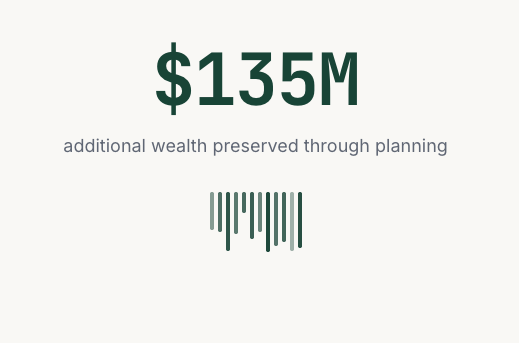
In the most important moment of a founder's professional life, they can give away $135M needlessly.
Founders will spend months shaving 200ms off a transaction. Optimizing every detail of their tech and their company.
And not a single hour planning for what happens when they make it.
I got curious about how the ultra wealthy actually manage their money. Not the X version. The real playbook.
Part of it was personal. Through @OnchainEstate and my own family I've spent the last year deep in probate, estate planning, and digital asset succession. My own case is dead simple. I wanted to see the other end of the spectrum.
What does the playbook look like for a founder staring down a nine-figure liquidity event?
So I spent months researching the strategies the ultra wealthy use for tax and legacy planning. Way out of my depth. Fortunate to have Jim Gersack and Mike Kato at General Catalyst Wealth as sounding boards.
The output is a comprehensive playbook for anyone looking at a potential liquidity event, told through the eyes of a hypothetical WILDLY successful founder.
Meet Alex.
Stanford dropout. $180K in student loans. Paying himself $8K a month while building a stablecoin infrastructure company. 18 months from a $300M exit.
No estate plan. No trust. No idea what's coming.
We ran two paths.
Path 1: Alex does what most founders do. Waits until the deal closes to think about any of this. Keeps $125M after taxes and estate costs. An incredible outcome, to be sure.
Path 2: Alex starts planning 12 months before the liquidity event. Roughly 10 hours of work in month one, then periodic check-ins.
Keeps $260M. Funds his parents' retirement. Pays off his sister's med school debt. Deploys $300M+ to charitable giving over his lifetime.
Same exit. $135M difference.
Probably the highest ROI thing any founder can do.
At the core of this difference is answering three questions early enough to actually act on them:
- What happens to your assets if you die or lose capacity tomorrow?
- What causes will receive your capital during your lifetime?
- What does generational success look like for your family?
The paper walks through the planning structures in detail. GRATs. Dynasty trusts. QSBS stacking. CRTs.
But my takeaway was that these are just tools. The hard part is knowing what you're actually optimizing for, and starting early enough that the tools still work.
If you're 12-18 months from a liquidity event, or you just want to see what the real playbook looks like, the full paper is below.