#Bitcoin is self-custody of money.
800 days and 42 countries taught me self-custody of life.
Tan 🏃 Physical security
Mann 🧘 Spiritual security
Dhan 🔑 Digital security
Hold the keys to all three.
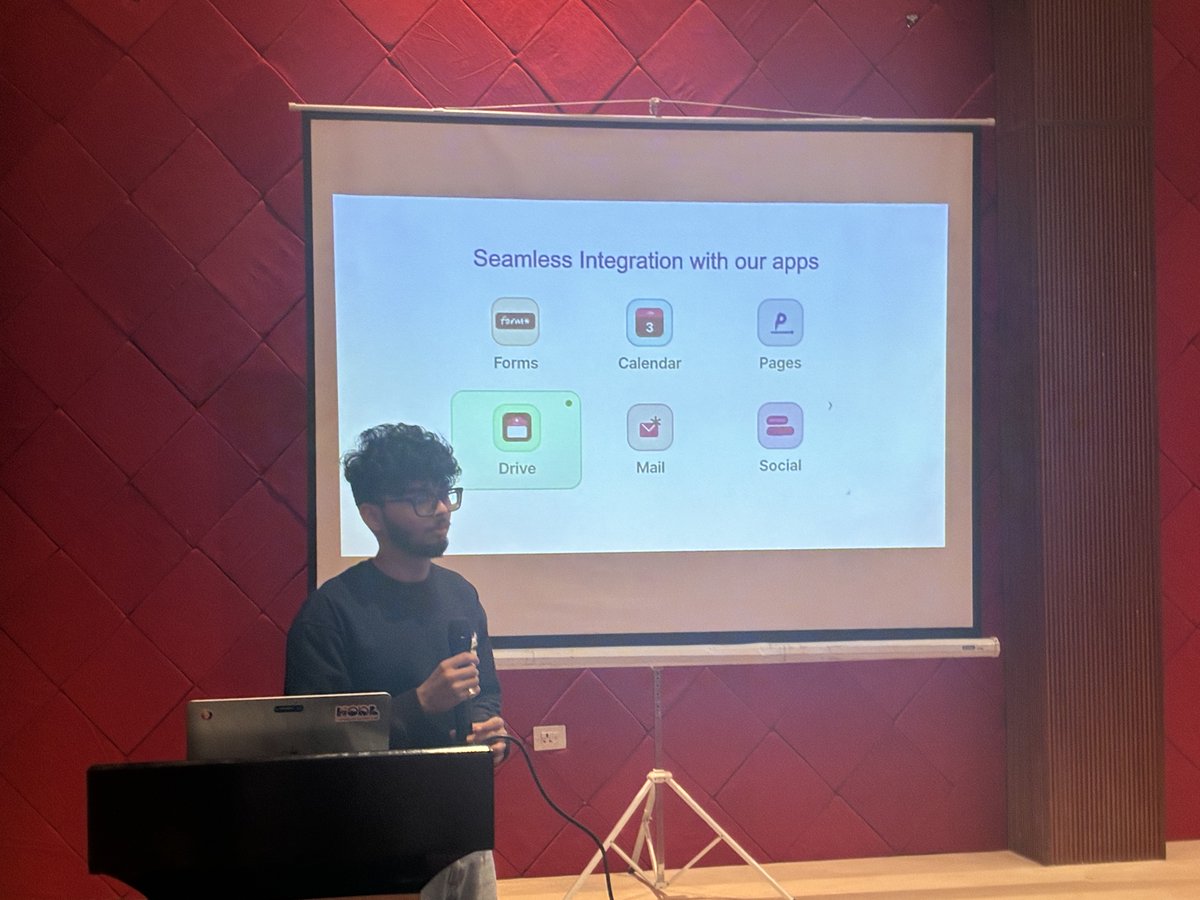
My @thebitmela Jaipur talk is below 👇
Most people back up their seed phrase once and never check it.
A backup you’ve never tested is a guess. Words can be copied in the wrong order, a letter can be misread, a punched number can be off by one position, and you won’t find out until the day you need it.
Many hardware wallets have a built-in way to check your backup without moving any funds. Look in your device’s settings for a “check backup” or “recovery check” option, and go through it with your written or punched copy in hand.
If your wallet doesn’t have one, a safe test is to set up a fresh, empty wallet from your backup and confirm it shows the same first receive address as the original. Only do this on a device you trust, and never type your phrase into a website or app.
Do it once after you make the backup, and again whenever you move it.
Gifting a hardware wallet this Diwali? A few things make it a good gift instead of a stressful one.
1. Give it sealed. The person should open the box and set it up themselves, so nobody else has ever seen their keys.
2. Tell them to write down the recovery phrase the device shows, and check it against the screen. You shouldn’t know it, and neither should anyone else.
3. Pick one that matches the person. A simple, well-documented wallet for a beginner, an open-source one for someone who likes to verify things.
4. Pair it with a steel backup if you can, since paper is the weak point in most setups.
Not sure which to choose? DM us or WhatsApp +91 94452 99189 and we’ll help you pick.
Hardware wallets from ₹8,499
From three days of BOSS Summit in Jaipur to two days on the Bitshala FOSS Stage at @thebitmela, it has been quite a journey.
We went deep into the work: Bitcoin Core, wallet development, Lightning, privacy, Nostr, cryptography, security, open-source infrastructure, and much more. We saw developers take apart difficult problems, share code, run workshops, test ideas, and put their projects in front of the community.
Few highlights: We mined testnet coins with @powdae, raced to claim 36,000 sats through Coconut Wallet, explored fuzzing Lightning implementations with @nishant282003, built with CDK, saw the Formstr stack by @HeyFormstr, CryoBrick by @apalok21, OpenSwap by @citadelfoss, and witnessed the official launch of Shroud by @theanmolsharma_.
We also had conversations that matter just as much: how to teach Bitcoin, build stronger communities, create sustainable businesses, protect privacy, and make self-custody accessible to more people.
And perhaps the best part was watching people learn from one another. First files uploaded to Formster Drive, sats earned, questions asked, ideas challenged, connections made, and new friendships formed.
To every speaker who shared their work, every builder who showed up with something to demonstrate, every attendee who asked a question, every volunteer who made things happen, and everyone who spent these five days with us: thank you 🙇♂️
This is what building an ecosystem looks like. Not just big announcements or finished products, but people showing up, sharing knowledge, helping each other, and putting in the work.
We came together to build, and we leave with more ideas, stronger connections, and plenty of work still ahead.
The stages are coming down, but the building continues.
Until next time 🚀🧡
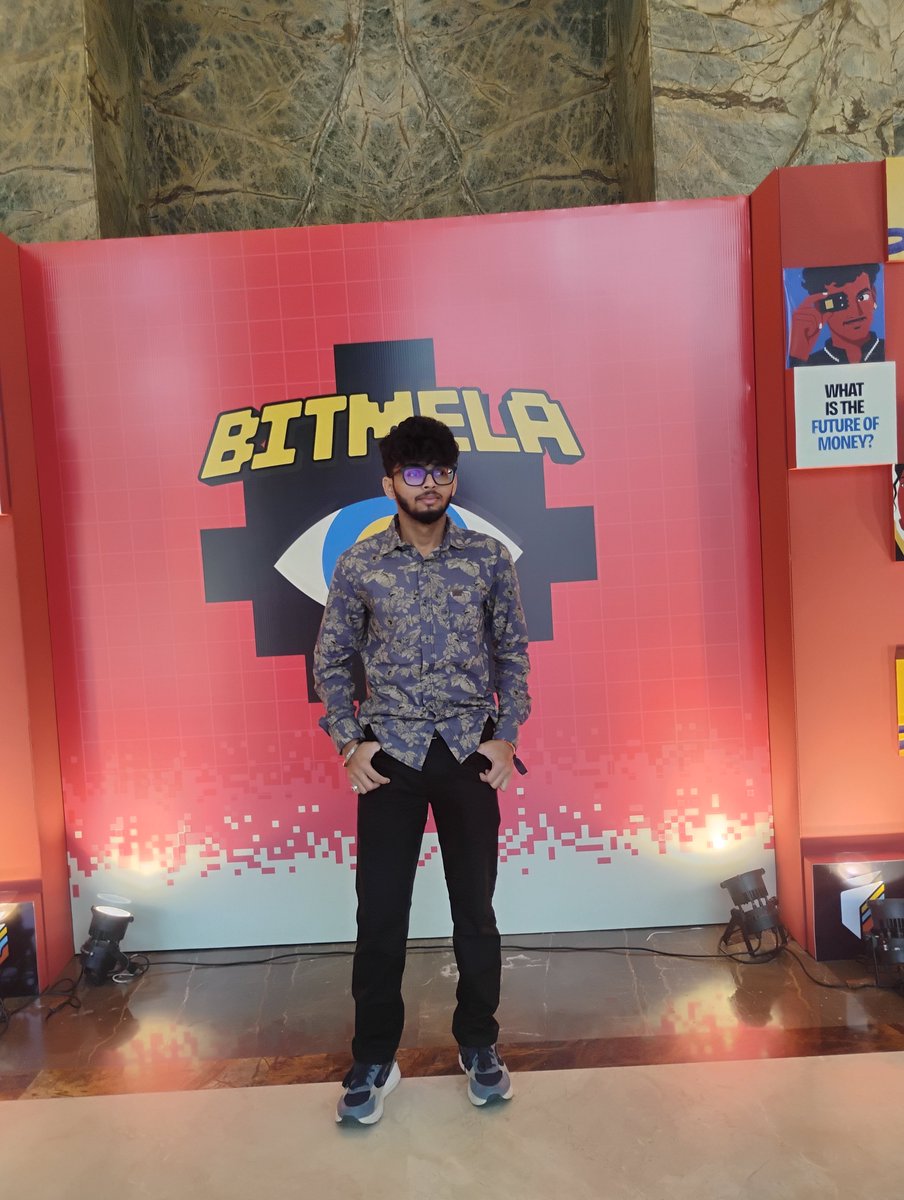
Great to be part of Bitmela 2026 in Jaipur, meeting Bitcoiners, exchanging ideas, and connecting with people building the future of decentralized money.
The future is self-sovereign. 🚀
#Bitmela#Bitcoin#BTC#SelfCustody#Jaipur
What if the unused disk space on your laptop or home computer could become part of a shared storage network?
@itsmanasdash is demoing a Nostr-based storage orchestrator that lets people pool spare storage without running a central server or exposing their public IP address.
The engineering challenge is coordinating storage across independent machines while keeping the system self-hostable and built on open protocols.
Instead of depending entirely on a central cloud provider, this approach explores how existing resources can be combined into distributed infrastructure.
Setting up a Bitaxe is simpler than most people expect. Here’s the whole process, start to finish.
1. Plug in the power supply and the screen lights up
2. Connect it to your Wi-Fi from your phone or laptop
3. Open its web interface and enter your pool address and your Bitcoin address
4. Save, and it starts hashing
From then on the screen shows your live hashrate, so you can see it working without opening anything.
No terminal, no rack, no special hardware. Watch the full setup in the video below, and if you get stuck at any step, DM us and we’ll walk you through it.
#bitaxe $BTC
The Gamma 601 runs at about 1.2 TH/s on 17W, which is less than a phone charger. Plug it in, point it at a pool, and watch your hashrate on the screen.
Solo mining income is small and uneven, so don’t buy one expecting a paycheck. You’re buying a real, independent entry into the block-finding lottery that costs almost nothing to keep running.
₹18,000
#bitaxe $BTC
A Bitcoin key is just a very large number. Its security depends entirely on how unpredictable the process was that picked it.
Guess one coin flip: 1 in 2. That’s 1 bit of entropy. Guess 256 flips in the right order: 1 in 2²⁵⁶. That’s the level of unpredictability a hardware wallet has to reproduce on its own.
It’s harder than it sounds. Computers are built to give the same output for the same input, so they can’t simply “be random.” Software random number generators start from a seed, and if that seed becomes known, every output is predictable. People aren’t reliable either: we avoid repeats and round numbers, which makes our “random” picks easier to guess.
That’s why hardware wallets rely on physical noise inside the device, such as tiny timing variations in electronic circuits, rather than a formula. Many also mix several sources together, so one weak source doesn’t sink the whole key.
Most people never think about this step, yet it decides whether a key is secure from the very first second.
@BlockstreamJade