i want to talk about something most dapp devs never think about
until their users start complaining
your transaction ux is not just about your code
most of the time the chain's own network layer is what's silently slowing things down
today specifically talking about tail latency and why it matters way more than devs give it credit for
8/
so what does all this mean for you as a dev building on these chains
faster tx inclusion means users get confirmations quicker
lower tail latency means even your unluckiest users don't get stuck
more predictable ux during congestion means your dapp doesn't feel broken during peak hours
and the end users never have to do anything differently
optimum is invisible to them, it just works faster behind the scenes
gud tek, see you tomorrow
i want to talk about something most dapp devs never think about
until their users start complaining
your transaction ux is not just about your code
most of the time the chain's own network layer is what's silently slowing things down
today specifically talking about tail latency and why it matters way more than devs give it credit for
7/
in live testnet deployments, optimum operates with 7x less latency variance than the standard ethereum network
(variance here means how unpredictable delays are, high variance means users sometimes wait 1s, sometimes 15s, no way to know)
i think this alone is massive for any serious dapp developer
a lot of people may have question what optimum actually does for L1s and L2s
to keep it simple : it raises the performance ceiling without touching the consensus
we usually see chains entering a hardware arms race to get faster
but @get_optimum fixes this by changing how data moves, not the hardware
4/
but with optimum's mump2p protocol handling data efficiently, existing hardware can easily process massive 10mb+ blocks
and the best part : operators just run a lightweight gateway sidecar alongside their existing clients
zero consensus risk, purely a data layer upgrade
a lot of people may have question what optimum actually does for L1s and L2s
to keep it simple : it raises the performance ceiling without touching the consensus
we usually see chains entering a hardware arms race to get faster
but @get_optimum fixes this by changing how data moves, not the hardware
3/
its like solving a math puzzle instead of copying massive files over and over
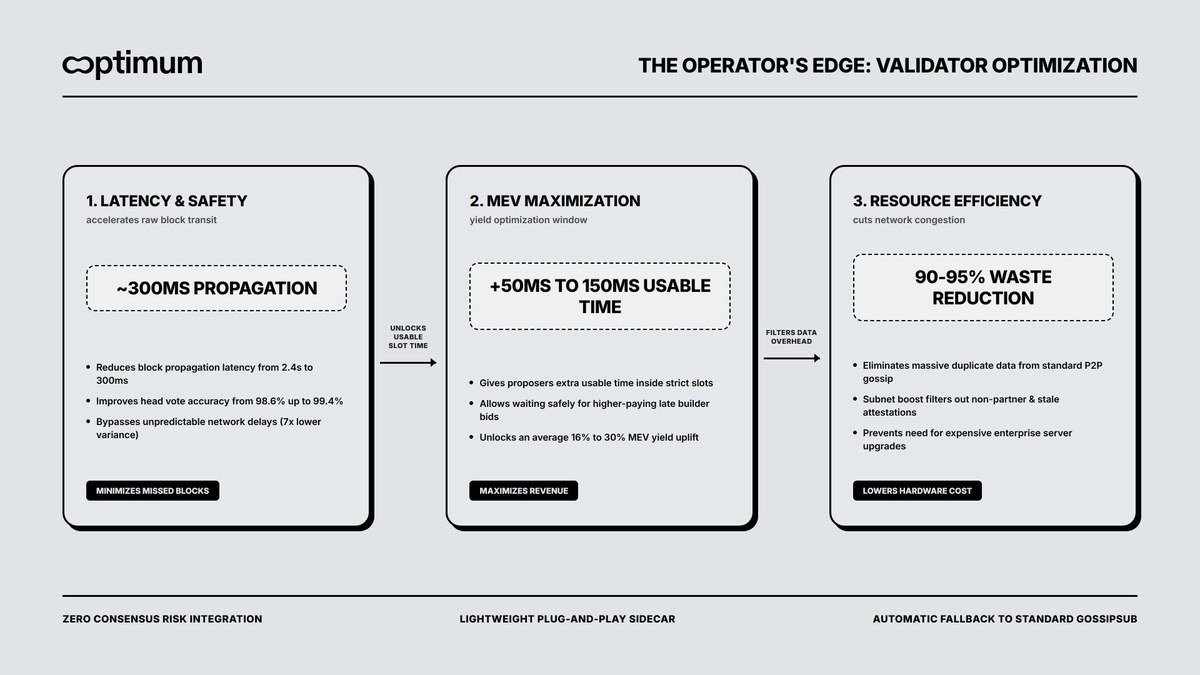
this makes block propagation 6 to 20x faster (~300ms vs 2.4s on testnets)
second : higher gas limits
usually bigger blocks choke a node's inbound bandwidth, forcing them to buy expensive enterprise connections
most validator operators only care about their gross yield numbers
but if you zoom in, the real game is how much of that yield you actually get to keep
tbh most teams talk about staking APR, but they completely ignore the silent leaks eating your margins
@get_optimum's propagation data fixes exactly these leaks
🧵
5/
the integration is also very straightforward
it's just a plug and play sidecar that runs alongside your node as a standard peer
you don't have to touch your validator keys or client code
and if the sidecar fails, it automatically falls back to standard gossip so there is zero consensus risk
if you are staking eth and not tracking your propagation infrastructure, you are literally leaving money on the table
most validator operators only care about their gross yield numbers
but if you zoom in, the real game is how much of that yield you actually get to keep
tbh most teams talk about staking APR, but they completely ignore the silent leaks eating your margins
@get_optimum's propagation data fixes exactly these leaks
🧵
4/
another silent killer is bandwidth costs
nodes constantly download the exact same duplicate data over standard p2p networks
optimum's sidecar automatically filters out stale votes and cuts overall bandwidth waste by 90 to 95 percent
this means lower monthly server bills and you don't have to keep upgrading to expensive enterprise hardware