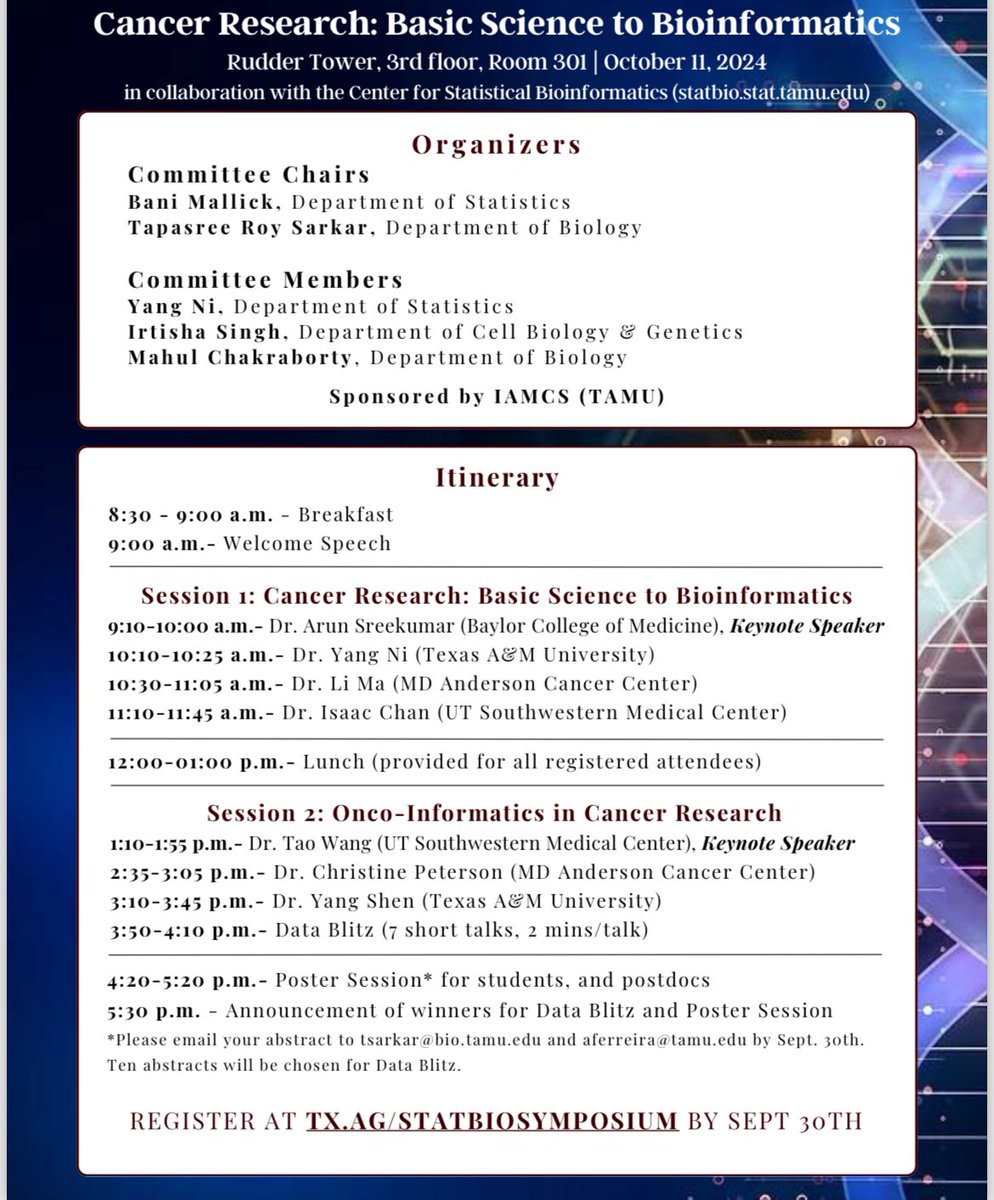
We (Biology, Statistics and Health Science Center of Texas A&M University)are hosting a symposium on ‘Cancer: Basic Science to Bioinformatics’.
Free registration @
https:/iamcs.tamu.edu/4th-annual-bioinformatics-symposium/.
With @SenduraiMani@tarumurmur@irtisha_singh
A groundbreaking study from the lab of Dr. Tapasree Roy Sarkar was recently highlighted in Forbes Magazine, for identifying the critical link between circadian rhythm disruption (CRD) and breast cancer. Read the full article from Forbes here: https://t.co/0lWV58iKSx
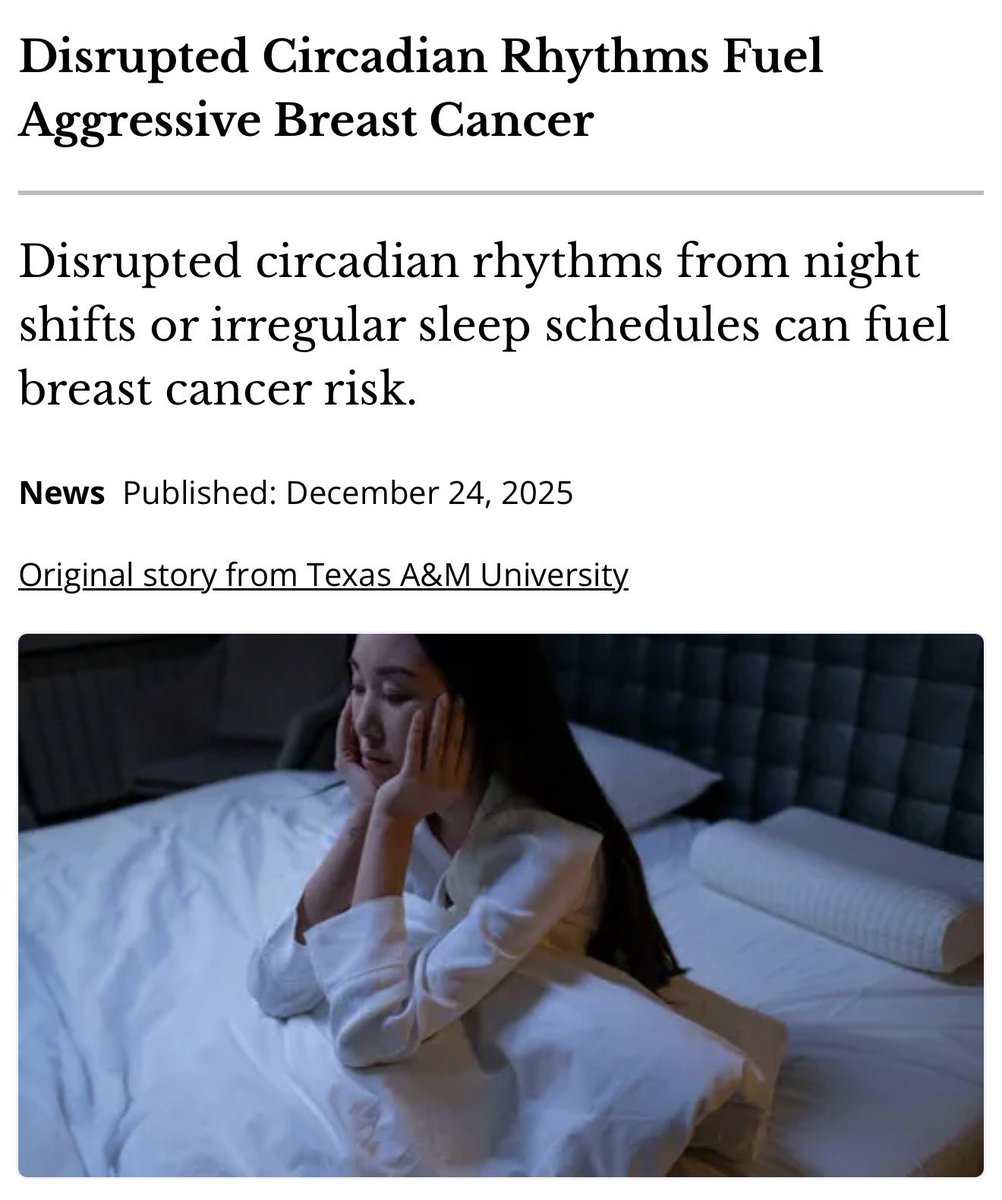
Disrupted Circadian Rhythms Fuel Aggressive Breast Cancer
Disrupted circadian rhythms from night shifts or irregular sleep schedules can fuel breast cancer risk.
Working the night shift, frequently flying across time zones or keeping an irregular sleep schedule does more than just leave us exhausted; it can fuel the risk of aggressive breast cancer. Exactly how and why this happens has remained a mystery, until now.
A new study sheds light on this elusive link, finding that circadian disruptions change the structure of mammary glands and weaken the immune system’s defenses, all the while pointing toward a new way to counteract these effects.
To investigate these effects, the researchers used two groups of genetically engineered models that develop aggressive breast cancer. One group lived on a normal night-day schedule, while the other lived on a disrupted light cycle that threw off their internal clocks.
The findings, published in Nature group journal Oncogene, were striking.
Typical models develop cancer around the 22-week marker. The circadian-disrupted group, however, showed signs of cancer much earlier — at almost 18 weeks.
Tumors in circadian-disrupted models were also far more aggressive, and far more likely to spread to the lungs, a key indicator of poor outcomes in breast cancer patients.
Source in comments.
It was a wonderful experience presenting my research at the mechanisms & models of cancer meeting @CSHL. Thank you to my amazing mentor @itsTaps and @TAMU_Biology. I also met the wonderful @PamSharmaMDPhD, and enjoyed her talk on immune checkpoint therapy. #cshlcancer24#phdlife
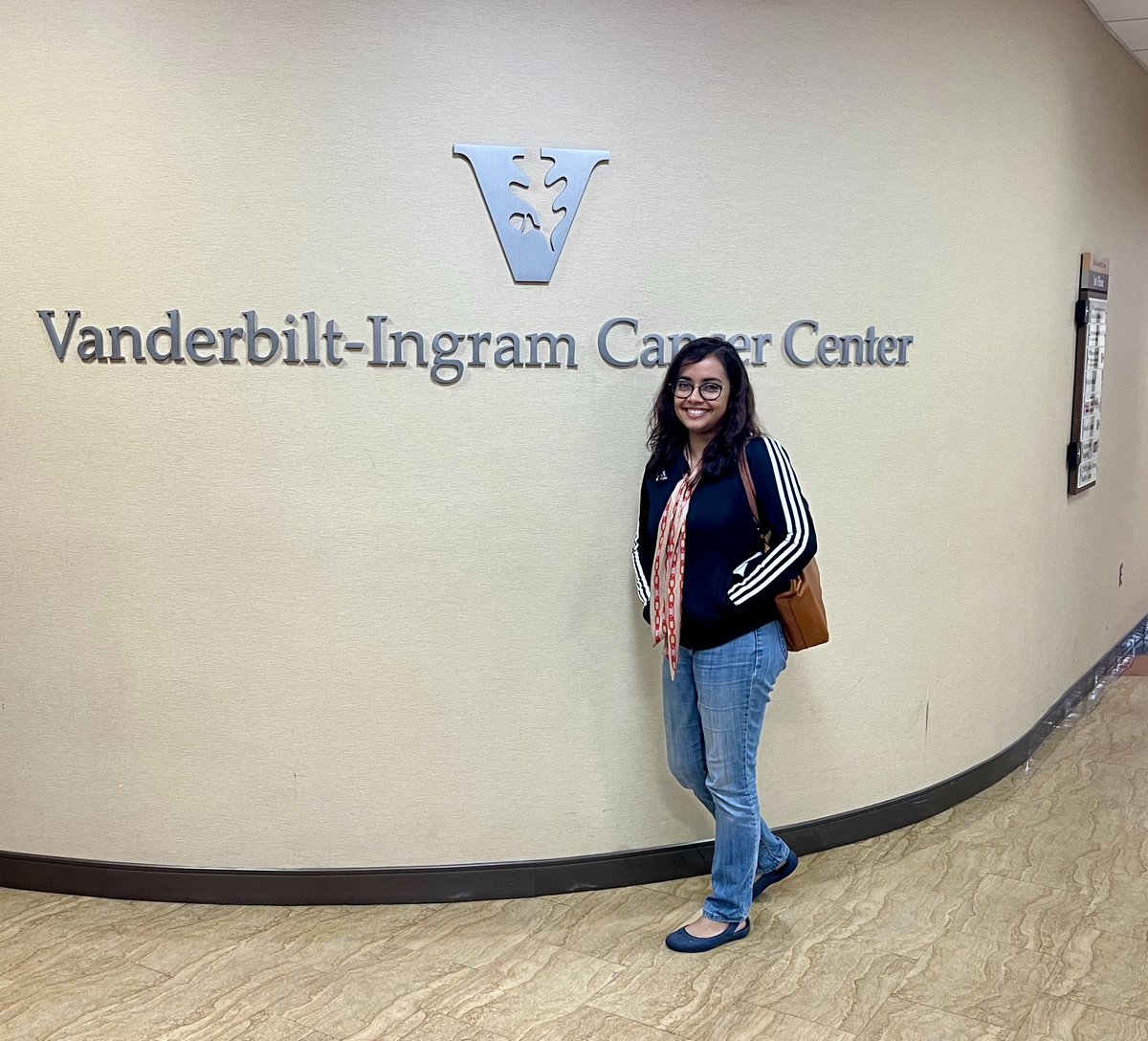
Congratulations to Tapasree Roy Sarkar on her SEC Faculty Travel Program Grant, where she'll be visiting Vanderbilt School of Medicine to collaborate & share her work on how different environmental factors, biological cues, & therapy can alter the breast tumor microenvironment!