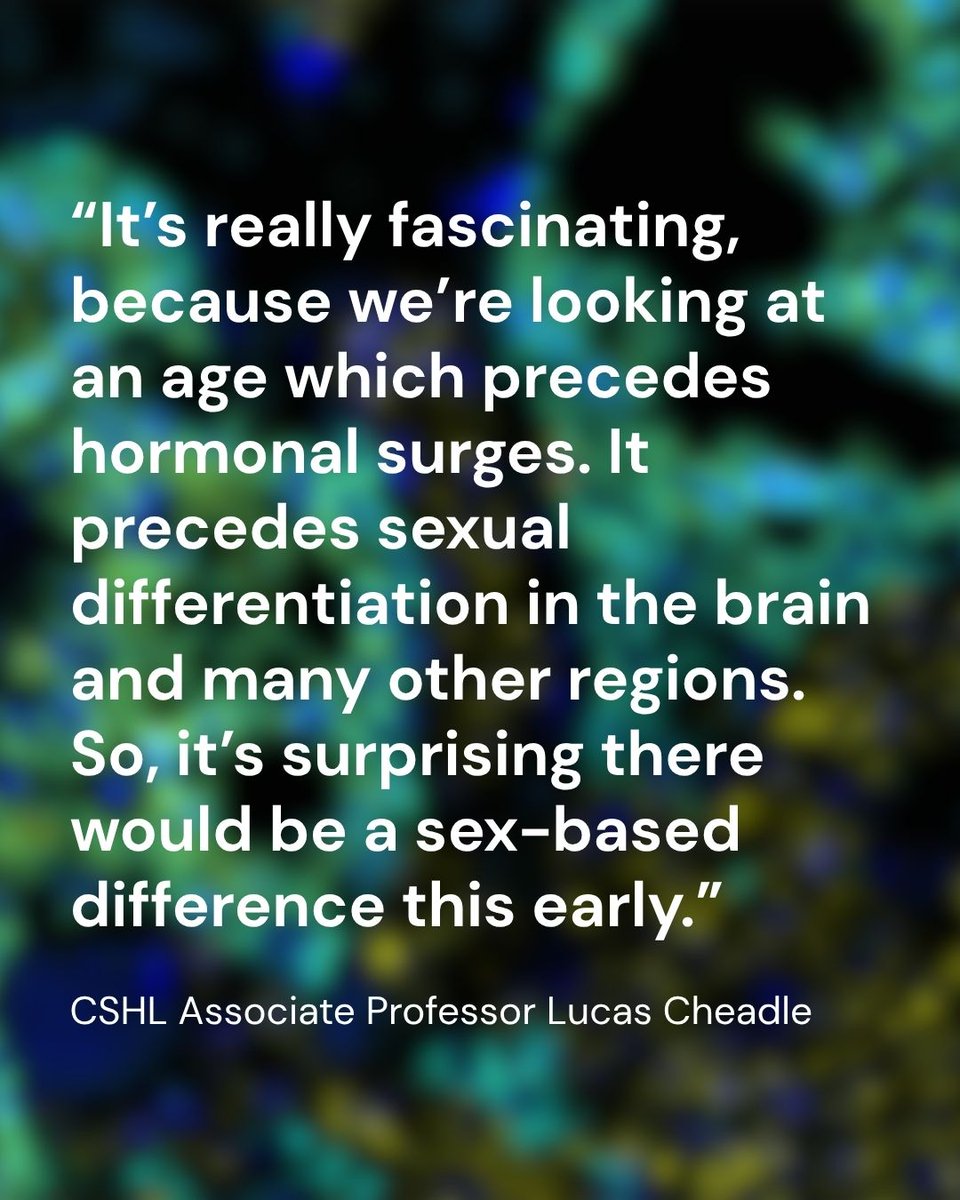
Thank you to the Brain & Behavior Research Foundation (@BBRFoundation) for highlighting CSHL Associate Professor Lucas Cheadle (@LucasCheadle)!
Since being named as a BBRF Young Investigator in 2021, Cheadle has challenged himself and his laboratory to push the boundaries of #neuroscience and #autism spectrum disorder research.
Click here for an in-depth explantation of Cheadle's most recent published research: https://t.co/CGA4wT9AbG
#InspiringDiscovery #CSHL
CRISPR gene editing revolutionized biological and biomedical research virtually overnight.
At CSHL, CRISPR is part of multiple research projects, including in the Lippman lab where they used CRISPR to produce goldenberry crops that were easier to grow and harvest.
For #WorldCRISPRDay, we're taking a look back at out 2025 @cshlmeetings on Genome Engineering: CRISPR Frontiers! Launched in 2015 by Jennifer Doudna and CSHL, this annual international meeting brings together top researchers, clinicians, and industry leaders.
Meetings, such as this one, are meant to foster fruitful and creative interactions between researchers with the hopes of expanding the field and educating junior researchers.
Watch the full video here to see what the CRISPR revolution looks like at CSHL! https://t.co/kKkzqZNAKp
#InspiringDiscovery #ScienceMakesLifeBetter
What makes a power #good or #evil? Questions of power, purpose, and restraint run through ancient philosophy and modern storytelling. In #StarWars, the #Force can serve the light or the #darkside. Even those fighting for good can lose control of the power they wield.
CSHL Assistant Professor Semir Beyaz says PPARD (a gene that helps regulate how cells use energy by switching other genes on and off) is like “the force” from #StarWars.
It can promote disease, like Darth Vader carrying out the will of the Emperor. Or, like Anakin Skywalker, it can see the light and kill the disease. It’s not science fiction!
See how research from the @beyazlab could point to new treatment strategies for #ColorectalCancer and #endometriosis among other conditions.
#ScienceMakesLifeBetter #CSHL
https://t.co/9FaTKg0hhd
At #StandUpToCancer, collaboration is in our DNA, uniting the brightest minds for a common purpose: end cancer.
This #WorldCancerResearchDay, learn how your donation helps transform the future of cancer research at https://t.co/OlqQ1Q5FTx. ❤️🧡💛
This Prostate Cancer Awareness Month, we’re highlighting the tools behind the research and the science working toward better treatments.
So, what is a Core Facility?
Think of “the cores” as shared resources that give researchers access to specialized equipment and expertise they may not have in their own labs.
At CSHL, the Mass Spectrometry Core (“Mass Spec”) uses highly precise instruments to help researchers understand what’s happening at the molecular level.
In prostate cancer research, the Core recently worked with CSHL Professor Lloyd Trotman’s lab to determine exactly how a drug was affecting cancer cells—helping researchers understand how the drug works and informing the search for better treatments.
This is the behind-the-scenes science that helps move cancer research forward.
Did you know, these tools aren’t just for CSHL researchers? The Mass Spectrometry Core and other CSHL Core Facilities are available to external academic and industry users through iLab.
Led by @paolocifani, the Mass Spec Core continually advances methods and sensitivities to provide researchers with cutting-edge tools and expertise.
World-class tools. Open to the research community.
#ProstateCancerAwarenessMonth #ProstateCancer #MassSpec #MassSpectrometry #ScienceMakesLifeBetter
Have you ever seen something that doesn’t quite add up? Maybe a shape in the dark resembles a face, or an orange momentarily looks like an apple. Scientists now have a new idea about how different brain regions may work together to resolve these visual mix-ups.
CSHL Cynthia R. Stebbins Fellow Mitra Javadzadeh and collaborators have developed new circuit models of the brain’s primary visual cortex and lateromedial visual area. Published in @NatureNeuro, their work offers a glimpse into how these neighboring areas build consensus to process visual input. It may also inform future studies on how both the brain and AI reconcile conflicting information. https://t.co/AJV976WSsE
#InspiringDiscovery#Neuroscience #ScienceMakesLifeBetter
@GenesDev Terri had such a profound impact on the entire CSHL community. We are keeping Terri's family, friends, and colleagues in our thoughts during this difficult time.
We are saddened by the loss of G&D's long-time Editor, Terri Grodzicker.
When Terri stepped down as Editor in 2022, friends and colleagues wrote about her contributions to the research community. We are re-visiting these pieces, and thinking of her.
➡️ https://t.co/JRpsVZNuIc
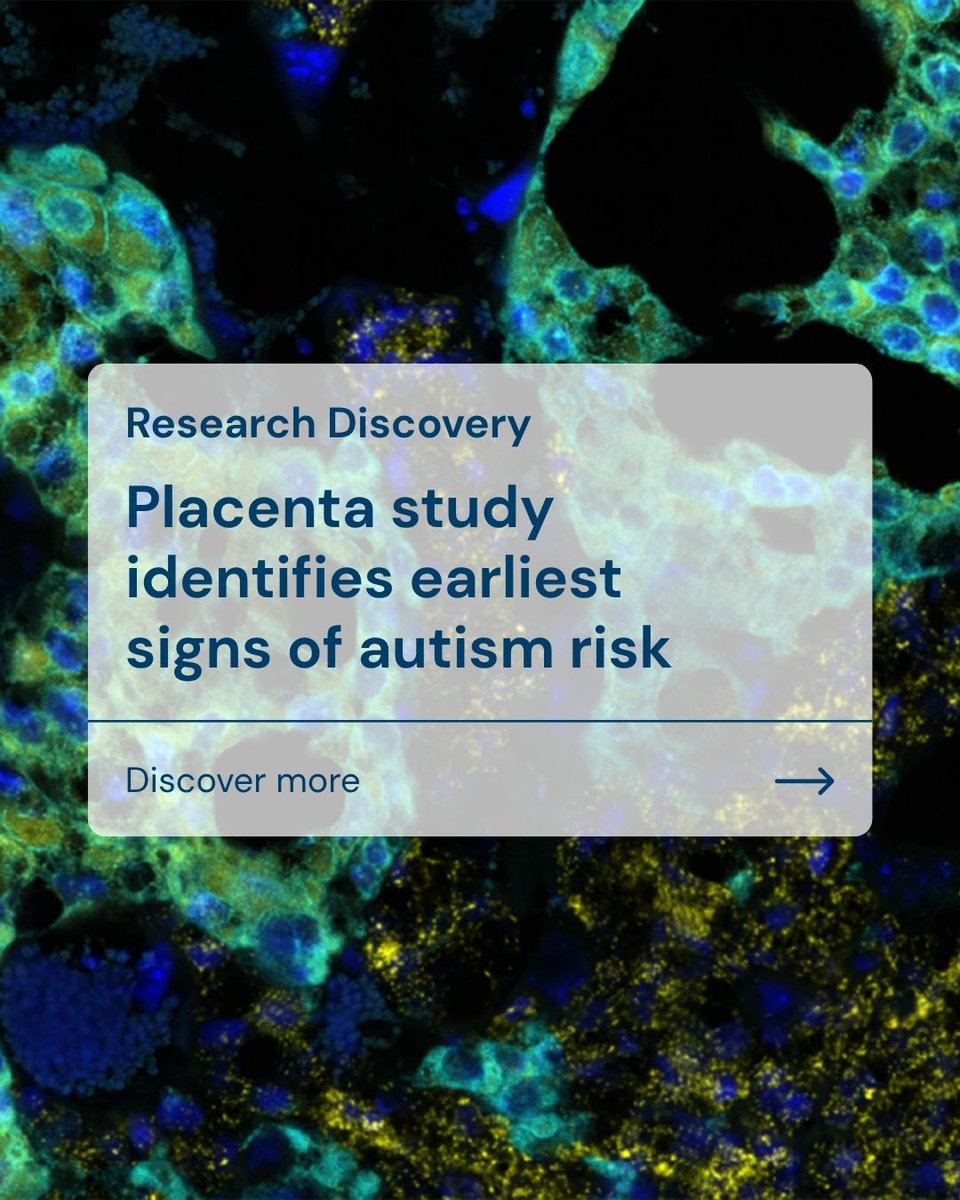
New research from CSHL Associate Professor Lucas Cheadle and postdoc Irene Sanchez Martin identifies a biological mechanism linking maternal inflammation to autism risk.
In a new study, the Cheadle lab found that inflammation during a critical window of pregnancy can contribute to autism-like traits in male mice.
Researchers triggered a controlled immune response, mimicking a viral infection without introducing an infectious virus, at different stages of pregnancy. They found that fetuses were most susceptible to developmental abnormalities at 12.5 days.
Across the experiments, male mice developed autism-like traits, while female mice did not show the same traits.
So, why were some pups affected while others weren’t? Researchers turned to the placenta for answers.
The takeaways:
🔹 A biological link: The study identifies a specific mechanism connecting maternal inflammation with autism-like traits.
🔹 The immune system matters: The findings add to evidence that immune responses during pregnancy may play an important role in neurodevelopment.
🔹 Sex differences offer clues: The results may help explain why autism is diagnosed more often in males.
🔹 Potential therapeutic implications: Understanding how maternal inflammation affects fetal development—and why effects differ by sex—could eventually help researchers develop more targeted approaches.
Learn more about the study, its key findings and where the Cheadle lab is taking this research next: https://t.co/3ieliBqCeL
#InspiringCuriosity #AutismAcceptance #Autism #ScienceMakesLifeBetter
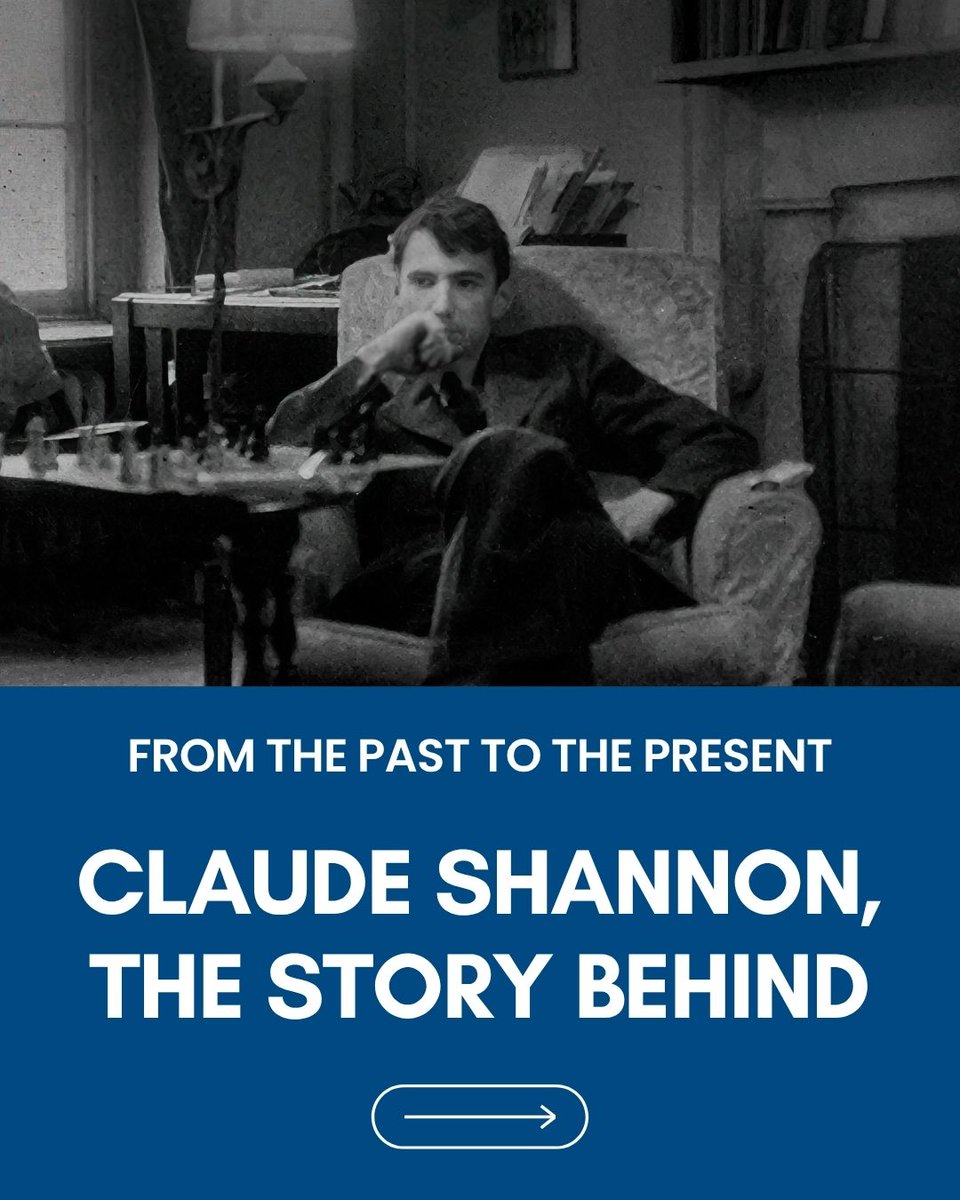
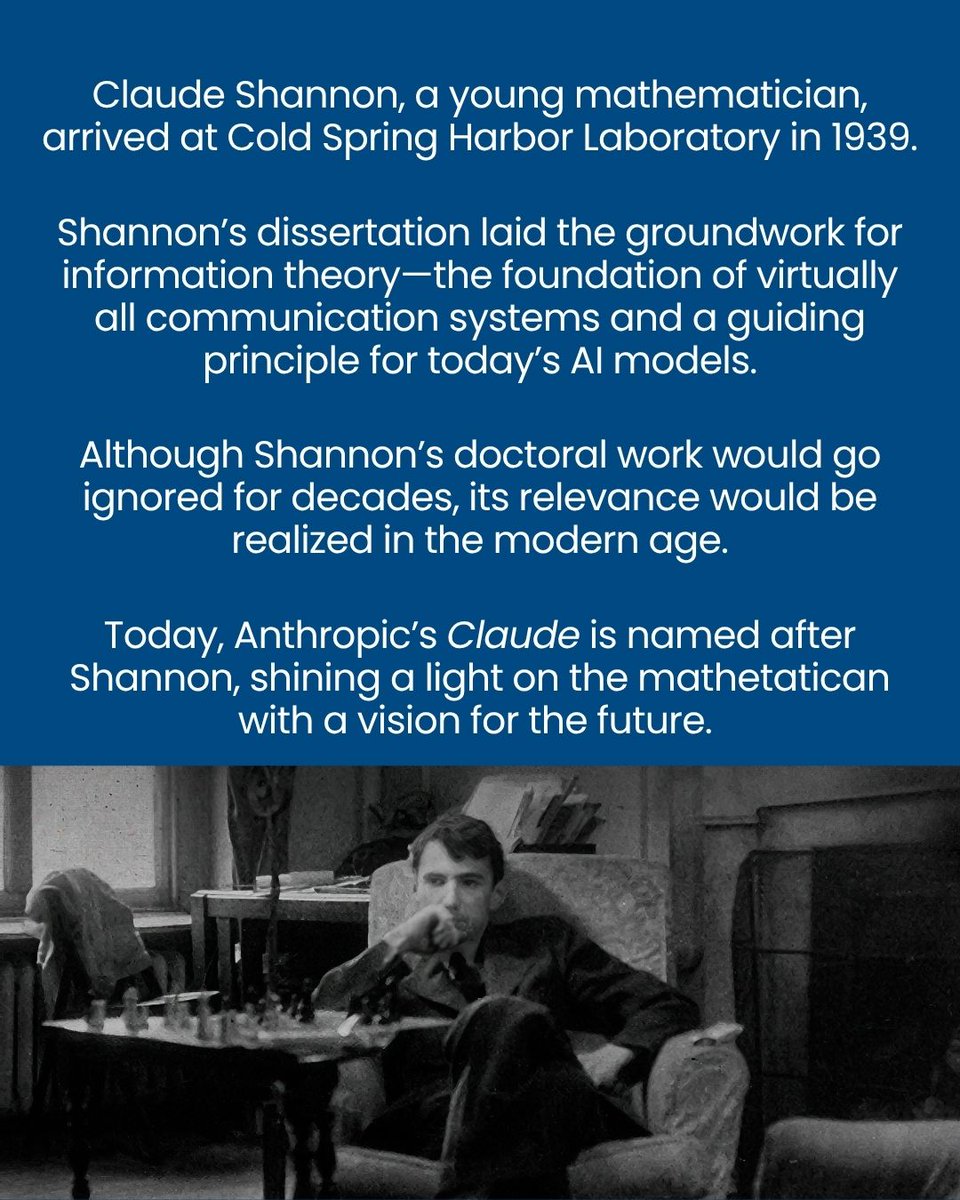
Ever heard of Claude Shannon? Probably not. But you’ve likely heard of Anthropic’s Claude, named after him.
Swipe to learn more about the mathematician known as the “father of information theory”—and how he built some of his first models at CSHL. https://t.co/R528x9EPr5
#InspiringInnovation #AI #Claude #ScienceMakesLifeBetter
Pediatric sarcomas are some of the rarest yet most aggressive forms of childhood cancer, but this interdisciplinary group is working together to better understand the disease and advance research initiatives.
Hosted at CSHL's Banbury Center, the think tank comprised of scientists, clinicians, patient advocates, and philanthropists discussed an action plan for battling this deadly disease.
Their hard work over three days was published as an article in Genes & Development (@GenesDev)
and identified three main priorities:
🎗️ creating an open-access platform for data and model sharing
🎗️ bridging pediatric and adult oncology through unified clinical infrastructure
🎗️ fostering multidisciplinary collaboration
Read more about this inspiring collaboration here: https://t.co/1SHoYuK4BQ
#InspiringInnovation #PediatricCancerAwarenessMonth #ScienceMakesLifeBetter
Congratulations to CSHL Associate Professors Jeremy Borniger and David McCandlish (@TheDMMcC) for being selected as the 2026 recipients of the James M. and Cathleen D. Stone Faculty Award!
This award was established by James Stone, a laboratory trustee, and his wife, Cathleen Stone, in order to recognize assistant or associate professors who have made outstanding research contributions.
James and Cathleen are prominent philanthropists, civic leaders, and executives, known for funding major research focused on wealth inequality and environmental conservation.
Click here to learn more about each of these researchers' accomplishments and their impact on breast cancer and genetics. https://t.co/G0w09mlZMj
#InspiringDiscovery #Genetics #BreastCancerAwareness #BreastCancer #ScienceMakesLifeBetter
Ever look at nature and wonder how such beautiful complexity came to be? That’s what quantitative biologists ask themselves every day. Specifically, they identify and investigate the computations underlying life, health, and disease.
But what does that mean today, in the age of AI? What does it mean here, at Cold Spring Harbor? And what does it mean for the future of biomedical research, as it impacts human health and society?
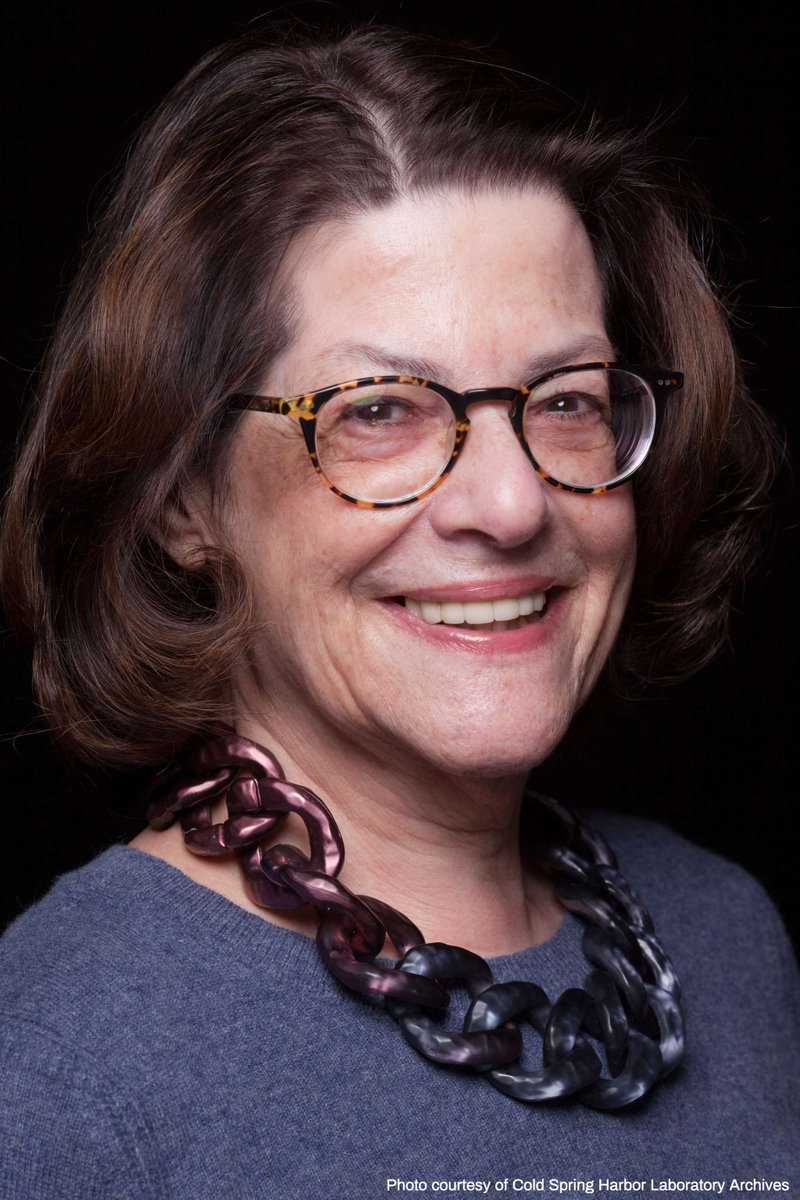
We met with Justin Kinney (@jbkinney), chair of CSHL’s Simons Center for Quantitative Biology, to find out:
https://t.co/O8KePKxaLH
#QuantitativeBiology #InspiringDiscovery #ScienceMakesLifeBetter
Who is Barbara McClintock?
One of our a-maize-ing Nobel Laureates was featured as an answer on the @Jeopardy! Masters semi-final last night!
Like the clue says, McClintock earned her Nobel Prize for her work with transposons, or 'jumping genes'. This discovery is the very root of much of today's research in genetic engineering.
#InspiringDiscovery #BarbaraMcClintock #Jeopardy #ScienceMakesLifeBetter
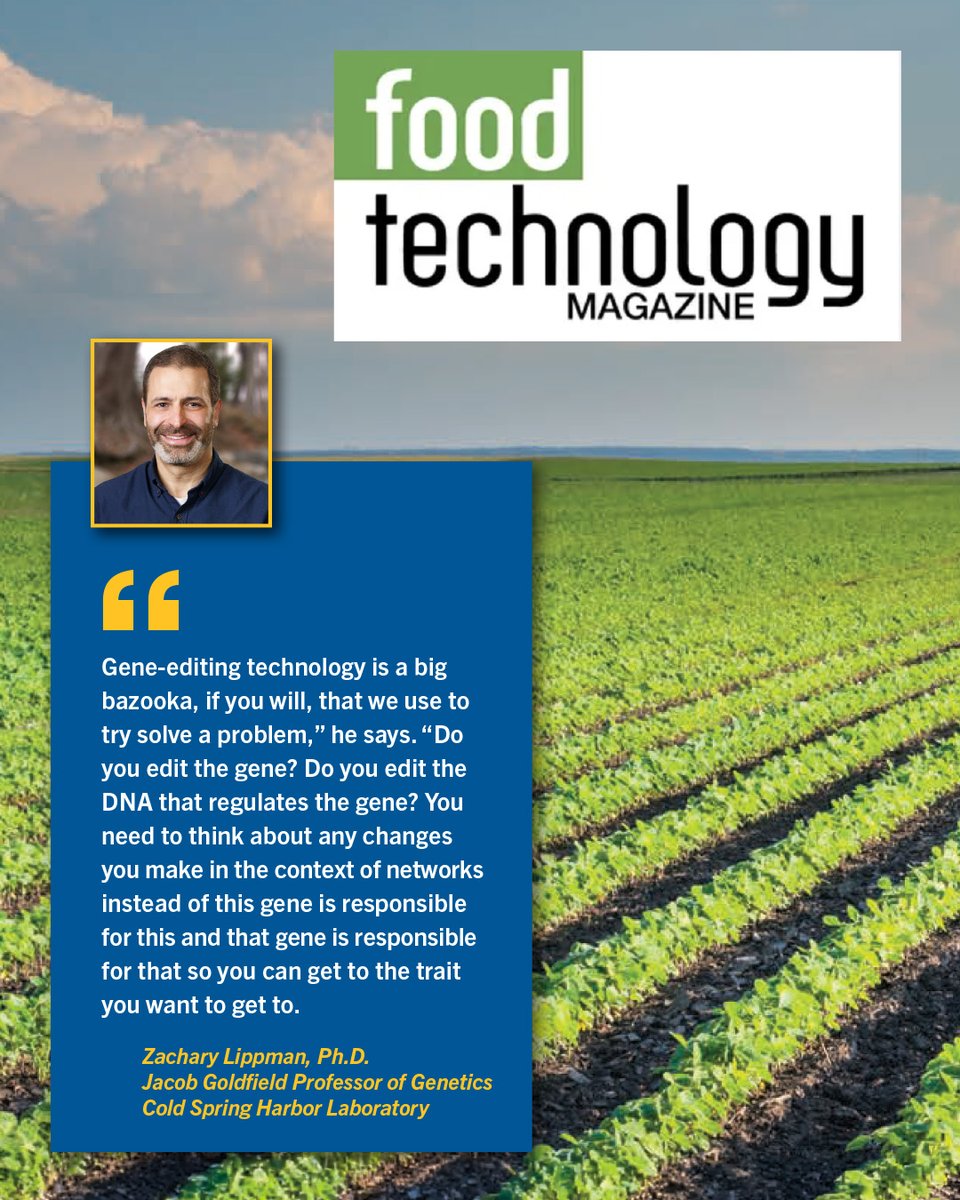
Professor and Director of Graduate Studies Zachary Lippman's research studies when and where, and how many branches, flowers, and fruits are produced on plants.
In a recent article in @IFT's 'Food Technology Magazine', Lippman discusses the intricacies of gene editing and its impact on crop innovation.
Read the full article here: https://t.co/L61WeaMV8A
#InspiringInnovation #PlantBiology #ScienceMakesLifeBetter
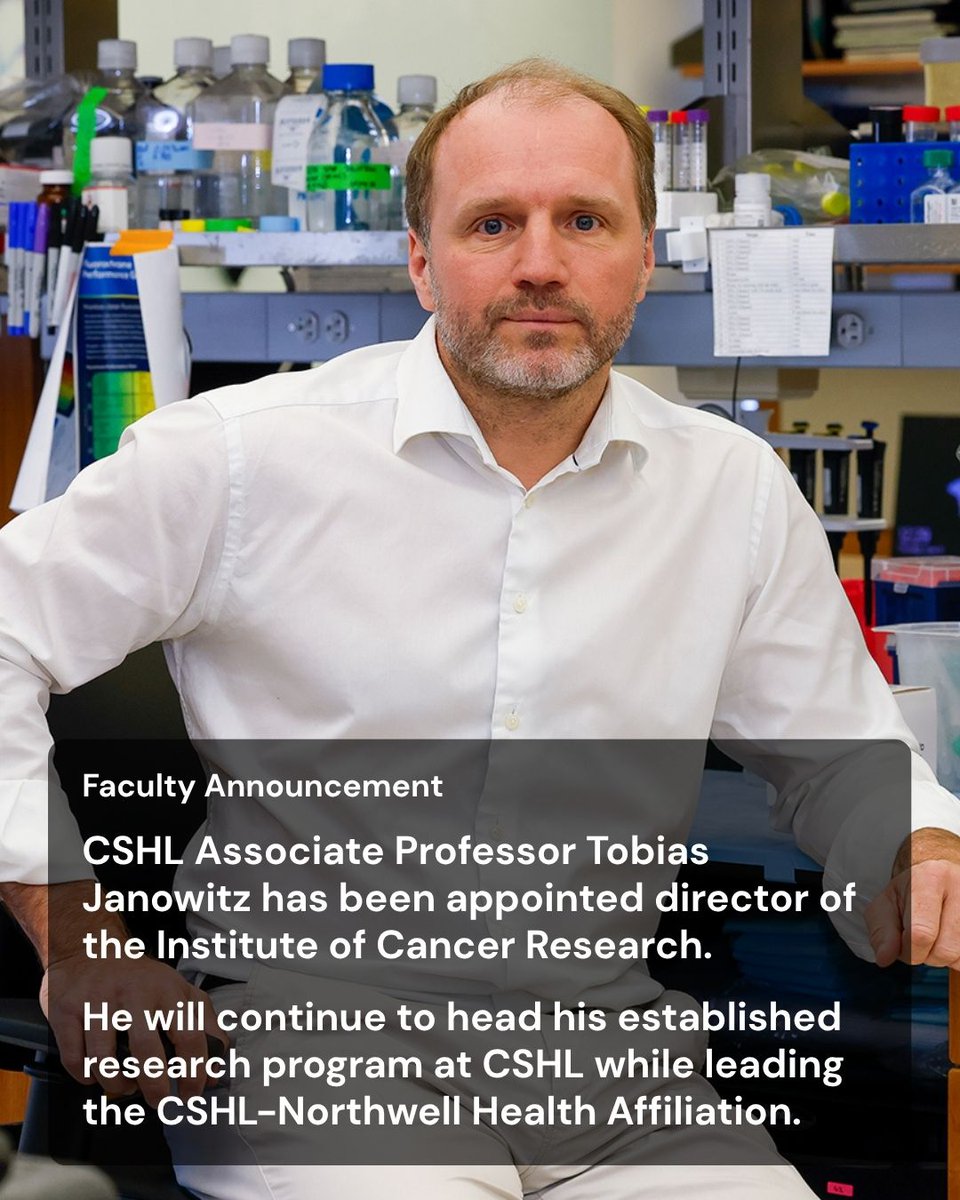
Cold Spring Harbor Laboratory (CSHL) Associate Professor Tobias Janowitz has been appointed director of the Institute of Cancer Research, the oncology arm of the Feinstein Institutes for Medical Research at @NorthwellHealth.
He will continue to head his established research program at the CSHL Cancer Center while leading the CSHL-Northwell Health Affiliation.
Congratulations, Professor Janowitz! A tremendous and well-deserved appointment and an exciting opportunity to further strengthen the CSHL-Northwell partnership. Wishing you continued success in this new role! https://t.co/mmMXuzeY4m
#thefeinsteininstituteformedicalresearch #northwellhealth #InspiringDiscovery #ScienceMakesLifeBetter