@v0@mobbin@paper@builtformars When I sketched my flow, I realized it looks… heavy.
Or maybe this is just the new reality.
I don’t have a clear answer yet. I need to keep exploring this flow to understand what should be optimized.
Lately I’ve been experimenting with different design/AI workflows to build a process that actually fits the way I work - fast iteration, strong context continuity, and more space for reasoning and exploration.
Usually it starts with a PRD, then the creative process kicks in.
@v0@mobbin@paper@builtformars When I sketched my flow, I realized it looks… heavy.
Or maybe this is just the new reality.
I don’t have a clear answer yet. I need to keep exploring this flow to understand what should be optimized.
@v0@mobbin@paper small workflow update: I’ve added @builtformars to this flow via MCP, and it fits really well! bringing strong UX patterns and product references into exploration before ideas move forward.
It turned into a balance between the implicit knowledge already embedded in the component and the design reasoning that still needed a human perspective.
So the ideal outcome is infrastructure for the LLM that will eventually ship the next screen.
We’ve been building a proper connection between our design system and codebase for the past couple of months as a side project inside the company.
If you want to build a workflow where screens can be generated through prompts using your design system, so every component 🧵
We kept stripping the documentation back, removing everything Storybook could already communicate, until the guides became mostly about decisions: “Use this when X. Avoid this when Y.”
What a beautiful start to the year. My PR using the latest CSS features was approved by the coolest engineer on the team.
The plan is to build solid mid-level frontend engineering skills by the end of the year, while continuing to thrive as a senior designer.
And the ones that catch on follow what he calls the law of remarkability:
they’re worth talking about, and they live where people actually talk.
That’s how a vague idea quietly turns into a real, visible mission.
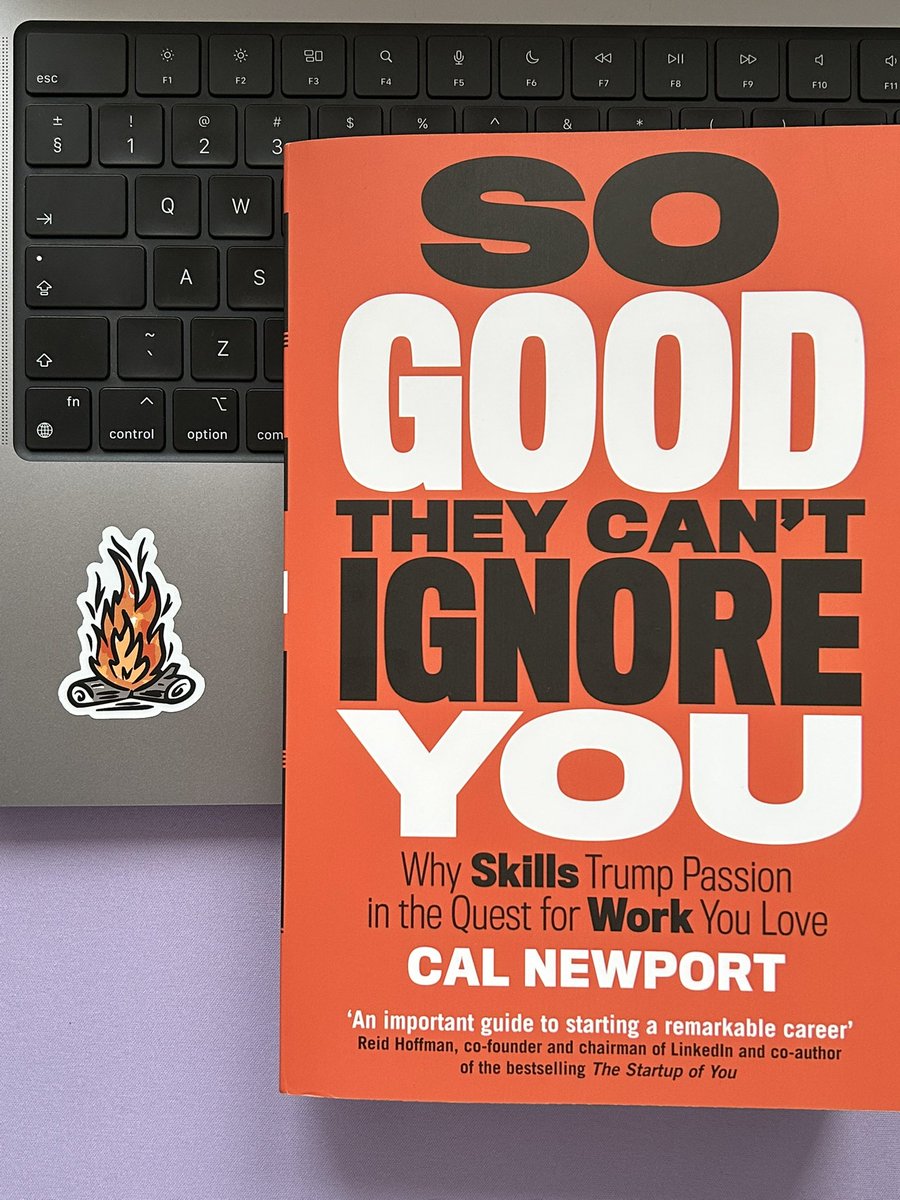
I started reading this book for two reasons. First, I struggled mentally when transitioning from a Russian-American company to a European company as an employee. My performance declined, and my frustration increased. Second, I’ve been considering a design-engineering career path,
I used to think a mission was something you find through reflection. But Newport shows it’s something you build - step by step, through skill and exploration.
Once you have enough career capital, you start making little bets - small projects that reveal what actually works.
went back to learning React on Udemy.
Vibe-coding isn’t a shortcut - it’s a trap if you overestimate your skills. Without solid engineering, agents just spit out messy, unreadable code.
I thought I could build a Figma plugin with just a couple of prompts - but no way. I don’t know how others create apps from scratch without any engineering knowledge.
I’ve been working for 4–5 evenings already just on
It was difficult to admit and share, but I tried hard to vibe-code a Figma plugin and actually got pretty far - until I hit the wall of my missing expertise. I realized I didn’t want to dive deeper into plugin internals, so I dropped the idea, unsubscribed from Cursor, and