Ironed out the last performance issues with my full 2.5m line codebase explorer. 120hz awesomeness. Can only upload 60fps video tho. Much nicer uncompressed
To add a bit of clarity about who proved what.
Tristan + Levent: 3d incompressible Euler with forcing
OpenAI: 3d incompressible Euler without forcing
OpenAI: Navier-Stokes with forcing
No one: Navier-Stokes without forcing
Euler equations = Navier-Stokes without viscosity. Forcing means external force. Absence of viscosity and presence of external force make blowup easier to construct. So in the 2x2 grid Tristan+Levent ticked the weakest box, OpenAI ticked the two next weakest, and the strongest is still open.
Navier-Stokes is not over.
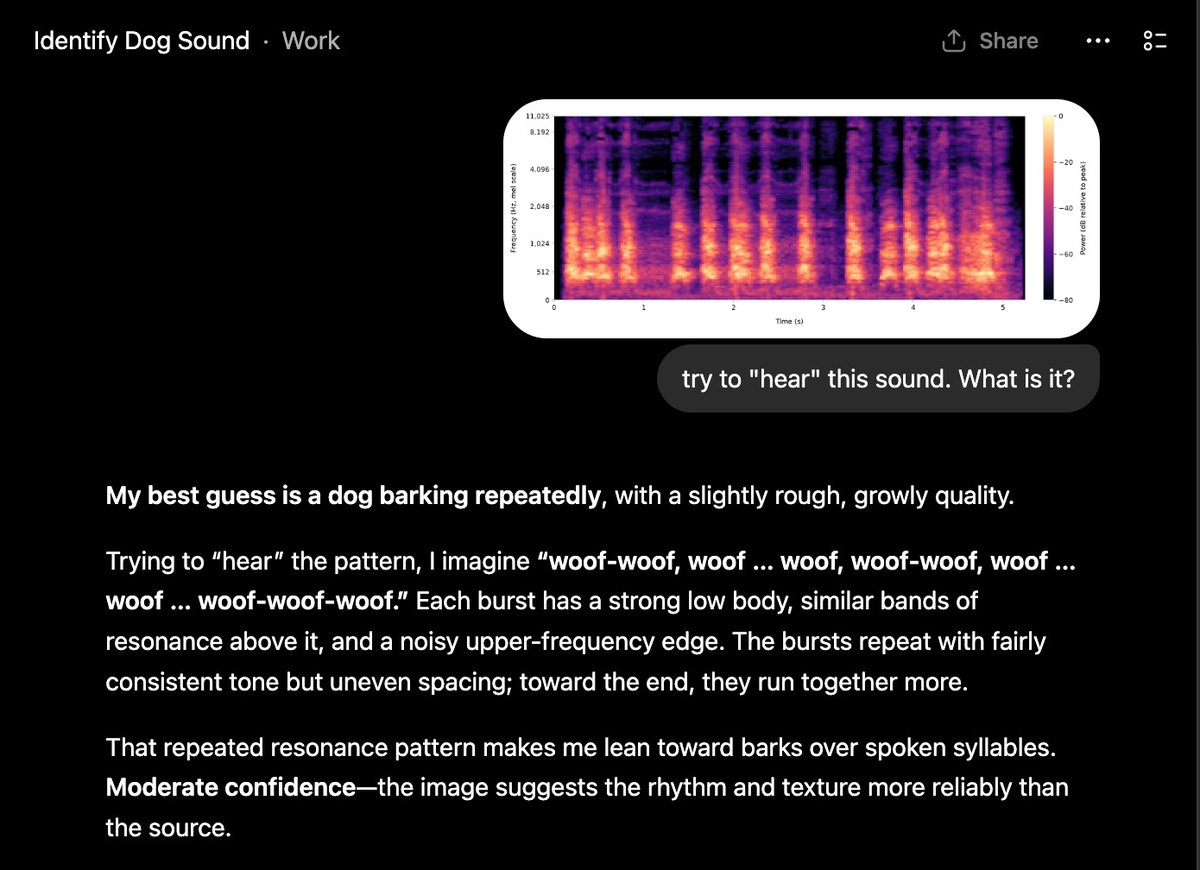
So Astra is able to identify sounds from mel spectrograms
zero-shot.
I don't think we've scratched the surface of what this model can do (and this is light reasoning btw)
@blrcitytraffic@BlrCityPolice ನೀವೇ ಹೀಗೆ ಮಾಡಿದರೆ ನಾವು ಏನು ಕಲಿಯಬೇಕು?
ಸ್ವಚ್ಛತೆ ಬಗ್ಗೆ ಜನರಿಗೆ ಪಾಠ ಕಲಿಸಬೇಕೆಂದರೆ, ನಮ್ಮ ಜವಾಬ್ದಾರಿಯನ್ನು ನಾವು ಪಾಲಿಸೋಣ.
📍ಗೋವಿಂದರಾಜನಗರ underpass
Been saying I was building something cool, and it’s finally here. I built it for my dadi.
She doesn't use multiple apps; she just uses WhatsApp. So I built an AI assistant that lives right there.
She sends a voice note in Hindi, and her groceries arrive. It never buys anything on its own. It reads the order back and waits for her confirmation. Cash on delivery only.
Voice by @ElevenLabs , orders via @Swiggy 's MCP tools, running on WhatsApp via @Meta . Agent is Nous Hermes 4 @NousResearch .
Watch it in action below 👇.
I’m writing a full technical deep-dive article on this architecture and will be dropping it soon.
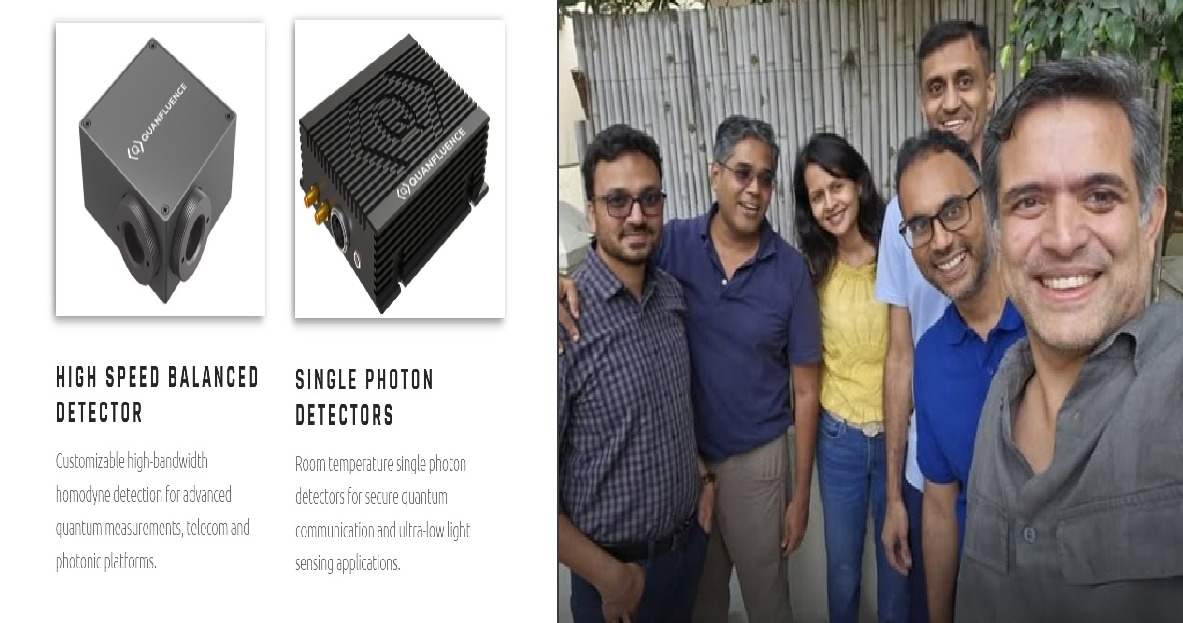
Google's quantum computer needs to be cooled to -273°C, colder than outer space. Quanfluence's quantum computer works at room temperature, was built in Bengaluru, and already has eight paying customers. That is not a small distinction. It is the entire bet.
Behind Quanfluence is a founding team that took an unusual route to quantum. Sujoy Chakravarty, Ravi Mehta, and Biman Chattopadhyay spent more than a decade together at Texas Instruments, building careers in chip design and semiconductor engineering. In 2012, they left to co-found Silicon and Beyond, a high-speed semiconductor IP company. In 2018, they sold it to Synopsys, one of the world's largest electronic design automation firms.
Most people who exit a semiconductor company return to industry. These three went into a library.
For six months after the Synopsys exit, the trio studied every quantum computing approach available. Superconducting qubits, the approach used by Google and IBM, require cooling to near absolute zero, infrastructure India has almost no base for. Ion traps demand extreme vacuums. Photonics, by contrast, uses laser light as the computational medium, operates at room temperature, and relies on telecom-grade components that India's manufacturing ecosystem already produces. The decision was clear.
They brought in two academic co-founders who had been working at precisely this intersection. Prof. Anil Prabhakar at IIT Madras had already been researching the Optical Ising Machine concept that would become Quanfluence's core product. Prof. Sandeep Goyal at IISER Mohali provides the quantum information theory that underpins the platform. Aditi Vaidya, ex-Arista Networks product manager, joined as CPO to complete the founding team of six.
The technology is a photonic quantum computer that does not use single photons as qubits, as competitors like PsiQuantum do. Instead, it uses the electric field of a collection of photons, which is more reliable to generate and fundamentally more scalable. Their Optical Ising Machine currently handles 128 interconnected variables, with a next-generation version targeting millions of permutations in development. Eight companies pay roughly $2,000 per month to use it on cloud. Revenue in 2024: $400,000. Seed funding raised: $2 million.
Quanfluence is one of only two companies in India building commercial quantum computers.
Three chip designers who sold their semiconductor company to a global EDA giant came back with one question nobody expected: can India build a quantum computer the world will pay for?
The answer, so far, is yes.
Power of Samsung ecosystem
My room has Samsung AC so it detects when I am sleeping using my galaxy watch and enables sleep mode and then checks the ambient temperature and my body temperature to give the report accordingly Apple can never...🫢🫢