🚨 SHOCKING: A video of a Mijikenda woman carrying what appears to be a python is going viral.
In the clip, she is seen talking to the snake, telling it that it had shamed her.
The footage has sparked intense debate online, with some claiming it's witchcraft, while others insist there's a different explanation.
One of the strangest videos you'll watch today.. Video on the right.
Ethiopia was never colonized.
For much of its history, it was one of the poorest countries on the continent.
Meanwhile, Vietnam was colonized by the French, devastated by decades of war, and is now on its way to serious economic prosperity.
If colonialism were the answer to why Africa is poor, Ethiopia should be rich and Vietnam should be broke. Neither is true.
Can we please retire this excuse?
Basic machinery but with obvious skilled knowhow. Kenya should be importing these sort of skills.
KPLC could be making their own transformers (even for export) instead of importing. They could, alternatively, subcontract them to Jua Kalis.
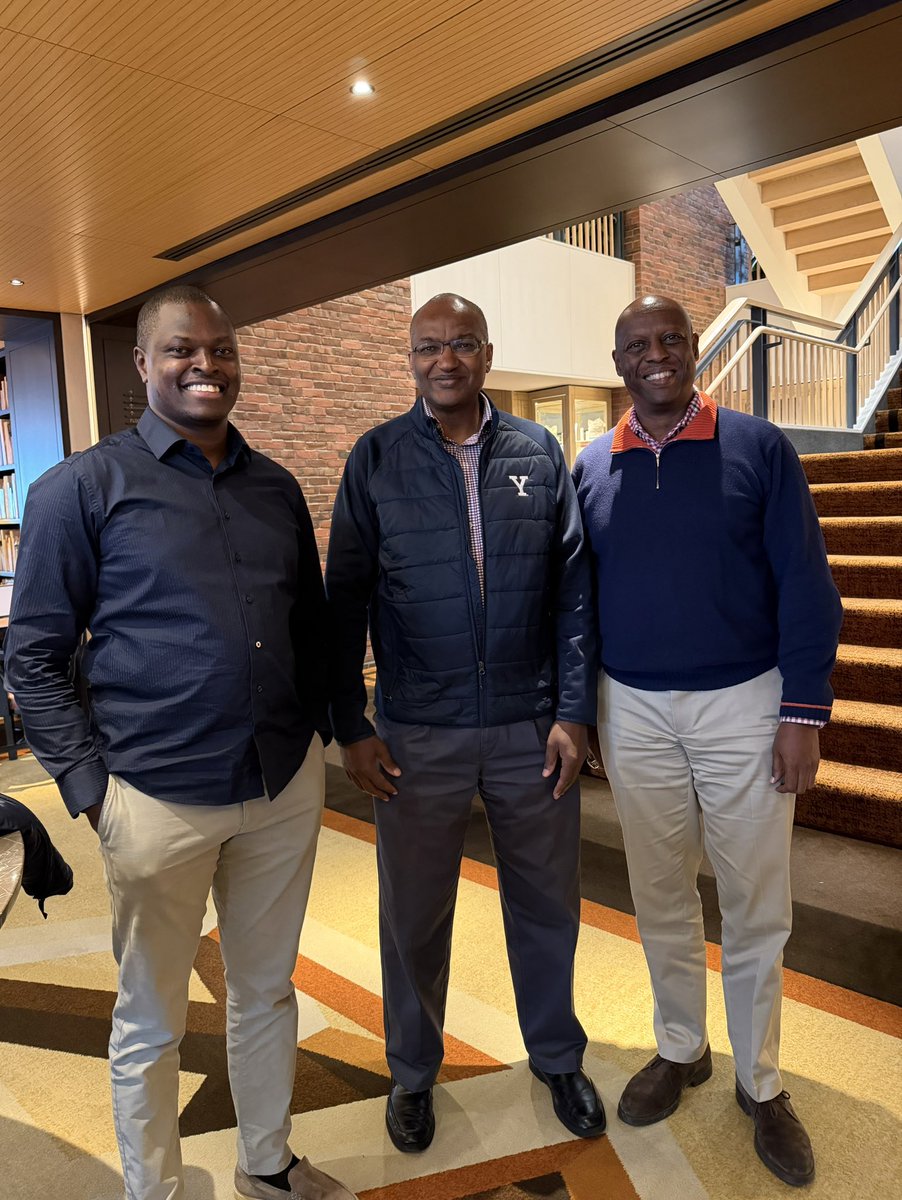
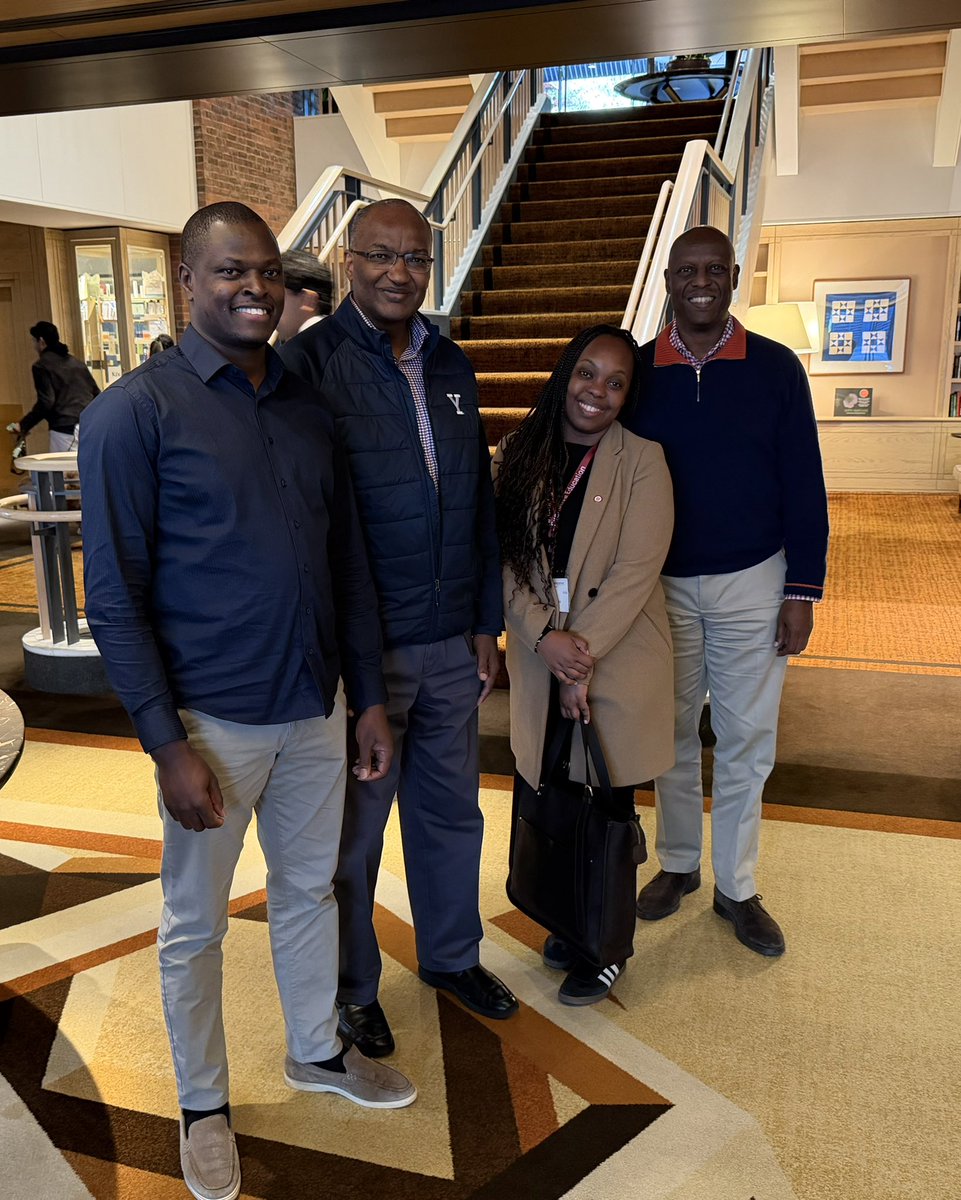
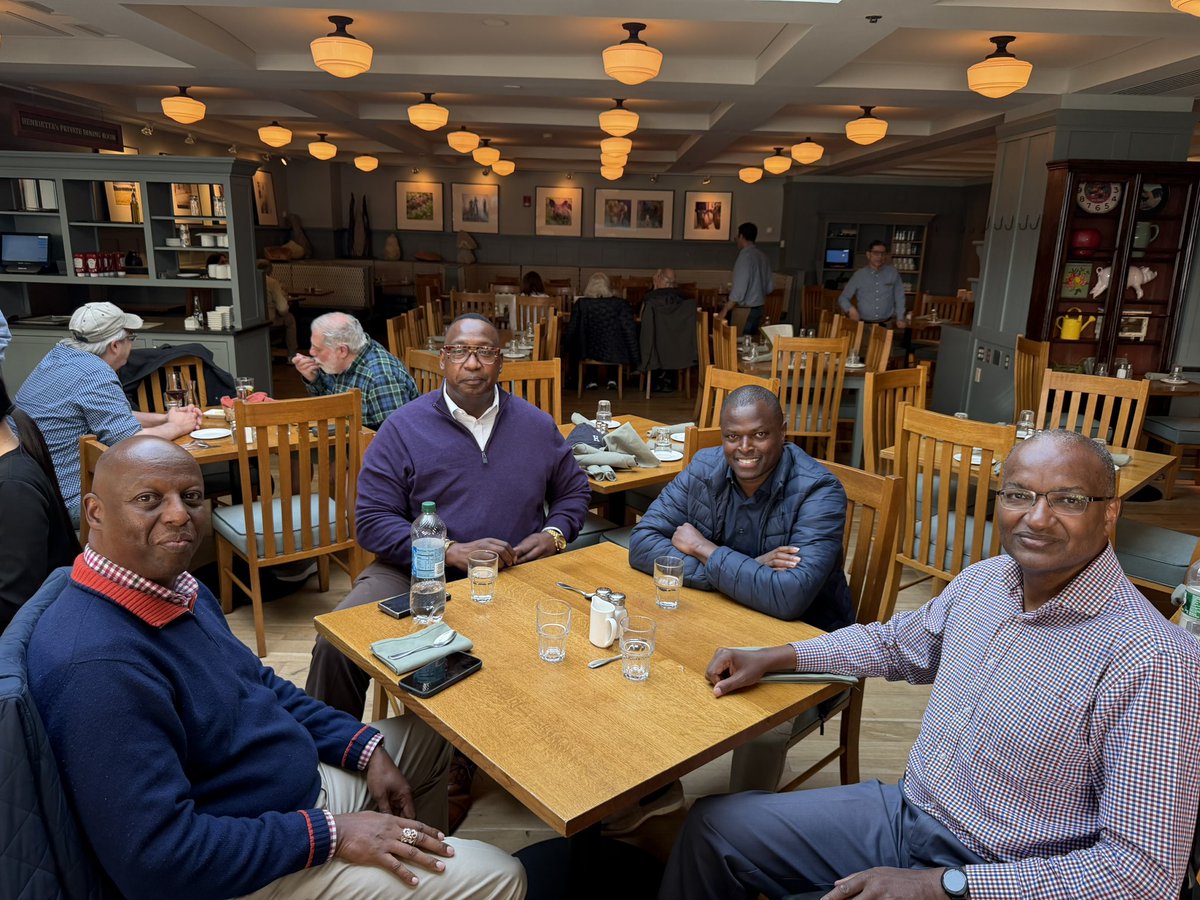
It was great meeting with the immediate former Governor of the CBK, Dr Patrick Njoroge who is currently a Professor at MIT and former PS for Petroleum and Mining Andrew Kamau who is currently the Director of Energy Opportunity Lab at Columbia University. We met at Cambridge, MA.
Excellent Kenyans serving the world from a different continent. Phenomenal conversations.
We are African and Africa is our Business.
The biggest threat to Ruto’s second term is a united opposition.
There is propaganda that Ruto will simply rig his way back, but rigging is not as easy as people make it sound. Rigging requires serious intelligence, serious coordination, serious logistics and a disciplined political machine, and Kenya Kwanza may be loud, arrogant and aggressive, but that does not mean they have the capacity to quietly manage every moving part of an election without exposing themselves to a bigger crisis.
The bigger danger for Ruto is the possibility of a last minute national mood swing where Kenyans wake up close to the election and decide in large numbers that Ruto must go. That is the counterattack I am talking about. Not chaos, not violence and not online excitement, but millions of ordinary Kenyans making a quiet decision in their homes, villages, towns, churches, markets, workplaces and polling stations that enough is enough. When people are divided, confused or hopeless, power can manipulate them, but when many Kenyans arrive at the same conclusion at the same time, the system starts shaking.
Personally, my worry is bigger than Ruto. It is bigger than Kalonzo and bigger than whoever else imagines they can inherit power. Whether the next president is Ruto, Kalonzo, Kuku or anyone else, things will still be bad if the poisoned system remains untouched. The country is not well. People are broke, businesses are closing, families that were stable two or three years ago are now struggling, rent is choking people, food is expensive, school fees is a nightmare, jobs are scarce and hope itself has become expensive.
This is where the opposition is also failing because they are talking politics but they are not seriously addressing the issues affecting Kenyans. Kenyans do not just need a replacement for Ruto. They need a serious plan for the economy, taxation, public debt, corruption, police brutality, unemployment, healthcare, education and the cost of living. Without that, removing one group and replacing it with another will only change the names of the people eating while the country continues bleeding.
As I have always said, only Kenyans themselves will take back this country, rectify it and set serious systems. Not politicians, not tribal kingpins and not fake reformers who become silent immediately they get appointments. Keen people know that time must come, and it may come slowly then suddenly.
No matter who is at the top, Kenyans will eventually realise that the system itself is poisoned, and once that realisation becomes national, it will be very bad for anyone who takes over. Kenyans will not just be asking for a new president. They will be demanding a country that finally works.
@PchirchiRN@onewayeric It’s actually a blessing in disguise for him to not be re-elected. Most 🥬 people I know are hardworking, humble and straightforward people and he has thoroughly misrepresented us. We will no longer be embarrassed being the community that produced a thief of such magnitude.
If you guys want to see development in rift Valley, just host gachagua there for one week and make sure he gets great reception and has the people around his rallys, by the time anafika Eldoret, barabara zitakuwa zimeanza kuwekwa lami, siku mbili tu Rift Valley you will all remember that
Kertai is going to vote again. Fourth time since the new constitution. Same queue, same ink, same quiet hope, refurbished not new.
Morning starts before the sun because the road is the real boss. By first light he is in the tea, fingers moving fast. By mid morning, sacks are full, lined neatly like hope waiting for transport. Then the message comes, the lorry got stuck again. Or it never came. Kertai no longer gets angry. He just watches the leaves lose value, politely, like they are apologizing.
Milk follows the same script. Cows deliver. The road does not. By evening, some of it is poured away, school fees disappearing in slow motion.
At home, school has opened. Two children, one long list. Capitation is 95 bob. One set of books is about 1,000. Even a calculator would refuse that math. His sister passed KCSE, good grades, big dreams, now stuck in the new funding model, filling forms and waiting.
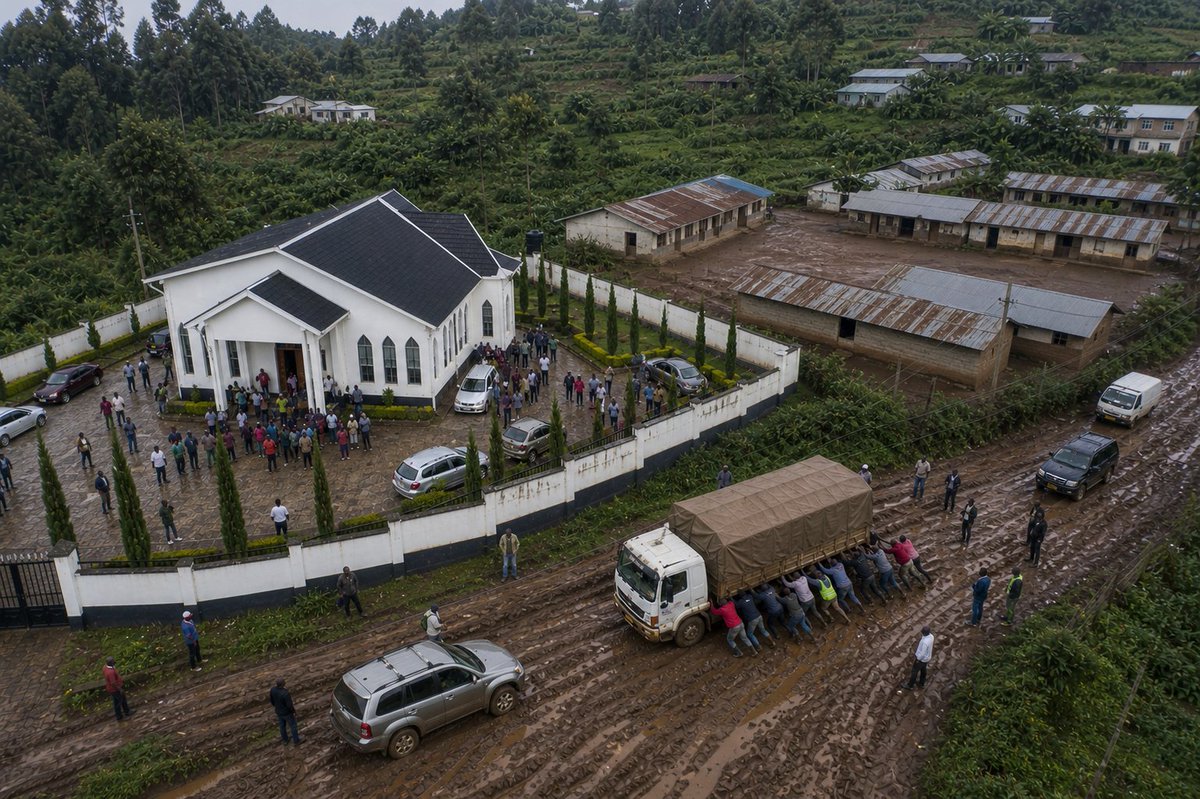
Yesterday it rained. Today the village is a mud competition nobody signed up for. A lorry is buried halfway. Men push out of habit. A car slides like it has lost faith. Boda bodas tiptoe through like they are negotiating with the road.
At the river, there is still no bridge. A rope stretches from one bank to the other. When death comes, men hold it steady and guide the crossing. The body moves slowly. No one speaks. The river keeps flowing.
Last month, a woman in labour almost did not make it. Not because the hospital is far, but because the road decided otherwise.
The dispensary has no medicine. At the referral hospital, patients share beds. The one watching over them spreads a leso on the cold floor and waits for morning.
Sunday comes. Kertai dresses well and goes to church. White walls. Clean compound. Order.
Then a helicopter lands.
Leaders step out in suits, shoes untouched by mud. Inside, speeches. An envelope is handed over. People clap. Kertai claps too.
But his mind is on the road outside. The one their shoes avoided.
After service, promises return. Roads. Bridges. Water. Hospitals.
Kertai has heard those promises four times.
The helicopter lifts. Dust settles. Silence returns.
Tomorrow, he will wake up early again.
Kertai will vote again.
The road will not.
Images: ChatGPT 2.0 and Nano Banana
#HekayaZaVillage
Home, again! Mission complete. I hope we glorified God, humanity, our families and our terrific teams a @NASA and @csa_asc. Time to share the good news!
Having a high IQ is one of those things with a relatively low ceiling and a very low floor.
Outside of extreme outliers, being smarter doesn’t make you more successful. It often has the opposite effect.
Most people would be happier if they were a little more attractive & a little dumber.
If you want to create a life worth living, you must be excellent at doing. Thinking is actually optional in most cases.
The other guy isn’t winning because he’s smarter than you. He’s winning because you’re still thinking about the other guy instead of doing the thing.
@muthike_ndolo @Astrophysicslad Your brain can!
The earth ROTATES 365 times as it REVOLVES once around the sun.
The moon ROTATES 1 time as it as it REVOLVES once around the earth.
This in effect means one side of the moon is always facing the earth.
Same interplay is observed between mercury and the sun.
I’m asked this a lot in my lectures: Why did the Soviets invest so many resources in propagating antizionism globally? Did they really hate Jews that much?
The answer is that they invested in antizionism because it worked for them, both geopolitically and domestically.
To be sure, there were many individuals in the Soviet antizionist apparatus who were driven by personal antisemitism. The Zionologists — individuals tasked with formulating the key tenets of the ideology — are the prime example.
But at the state level, the demonization of Israel served much bigger, strategic purposes.
It strengthened the Soviet-Arab alliance. It helped mobilize groups and states around the world against the US and the West, pulling them into the Soviet anti-Western orbit, including at the UN.
At home, it functioned as a warning to other minorities: don’t organize around your own national interests, and definitely forget about any emigration demands.
For the Soviets, antizionism was a tool — and a highly effective one at that. That’s why they kept using it, even when internal discussions acknowledged that their antizionist language was echoing the Protocols and Nazi propaganda.
This is useful to understand because antizionism is still a political tool today.
We talk a lot about antizionist hate, and there is no question that much of it is driven by that.
But there are also political entrepreneurs who use antizionism to get ahead: to gain social media followers, raise money, advance socially and professionally, or pursue political goals.
States do the same: witness South Africa filing its case against Israel at the ICJ or China deploying antizionist propaganda online.
When incentives align, antizionism gets used. And right now, antizionism is rewarded. It’s a crucial aspect of its growing popularity, and it’s really important that we understand it as we develop strategies to combat it.
Africa attracts less than 1% of global PRIVATE capital, though it has 20% of the world’s population. However, it accounts for just 3% of global GDP and 2% of trade.