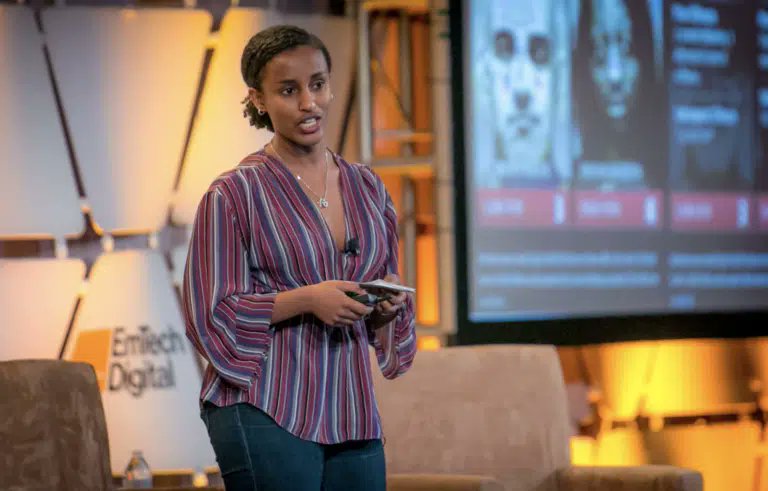
•REDIET ABEBE
Abebe is an Ethiopian computer scientist. Also an assistant professor at the University of California.
She is the Co-founder of Black Researchers.
We are living in a timeline where a non-US company is keeping the original mission of OpenAI alive - truly open, frontier research that empowers all. It makes no sense. The most entertaining outcome is the most likely.
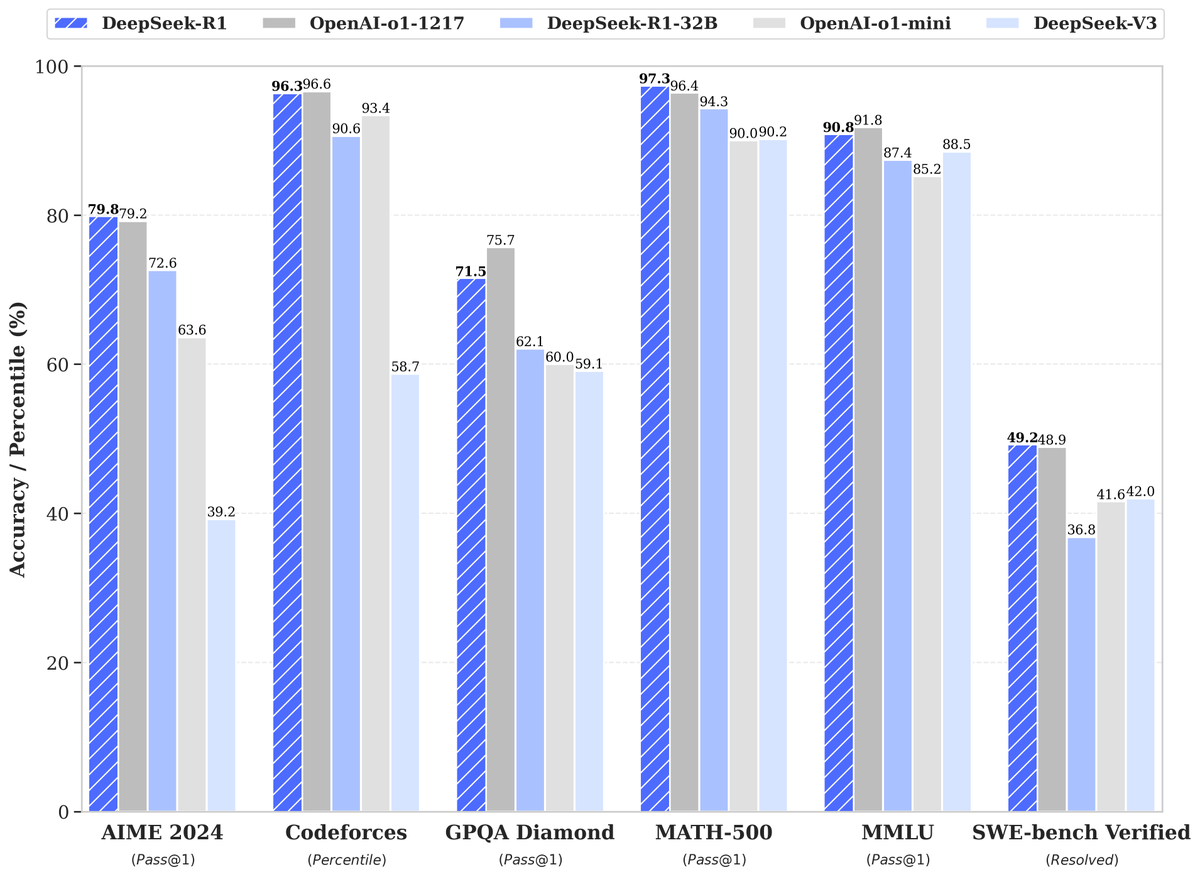
DeepSeek-R1 not only open-sources a barrage of models but also spills all the training secrets. They are perhaps the first OSS project that shows major, sustained growth of an RL flywheel.
Impact can be done by "ASI achieved internally" or mythical names like "Project Strawberry".
Impact can also be done by simply dumping the raw algorithms and matplotlib learning curves.
I'm reading the paper:
> Purely driven by RL, no SFT at all ("cold start"). Reminiscent of AlphaZero - master Go, Shogi, and Chess from scratch, without imitating human grandmaster moves first. This is the most significant takeaway from the paper.
> Use groundtruth rewards computed by hardcoded rules. Avoid any learned reward models that RL can easily hack against.
> Thinking time of the model steadily increases as training proceeds - this is not pre-programmed, but an emergent property!
> Emergence of self-reflection and exploration behaviors.
> GRPO instead of PPO: it removes the critic net from PPO and uses the average reward of multiple samples instead. Simple method to reduce memory use. Note that GRPO was also invented by DeepSeek in Feb 2024 ... what a cracked team.
🚀 DeepSeek-R1 is here!
⚡ Performance on par with OpenAI-o1
📖 Fully open-source model & technical report
🏆 MIT licensed: Distill & commercialize freely!
🌐 Website & API are live now! Try DeepThink at https://t.co/v1TFy7LHNy today!
🐋 1/n
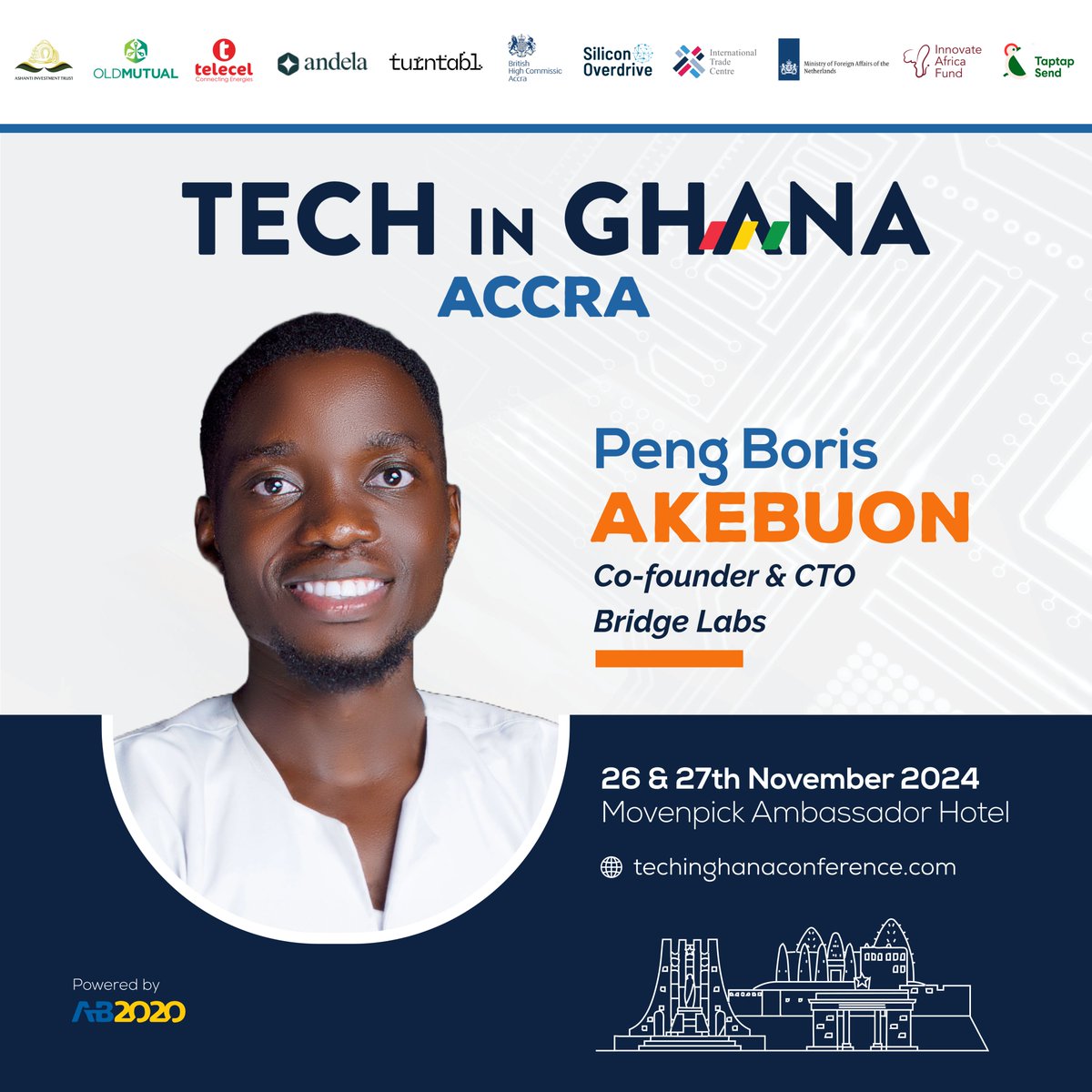
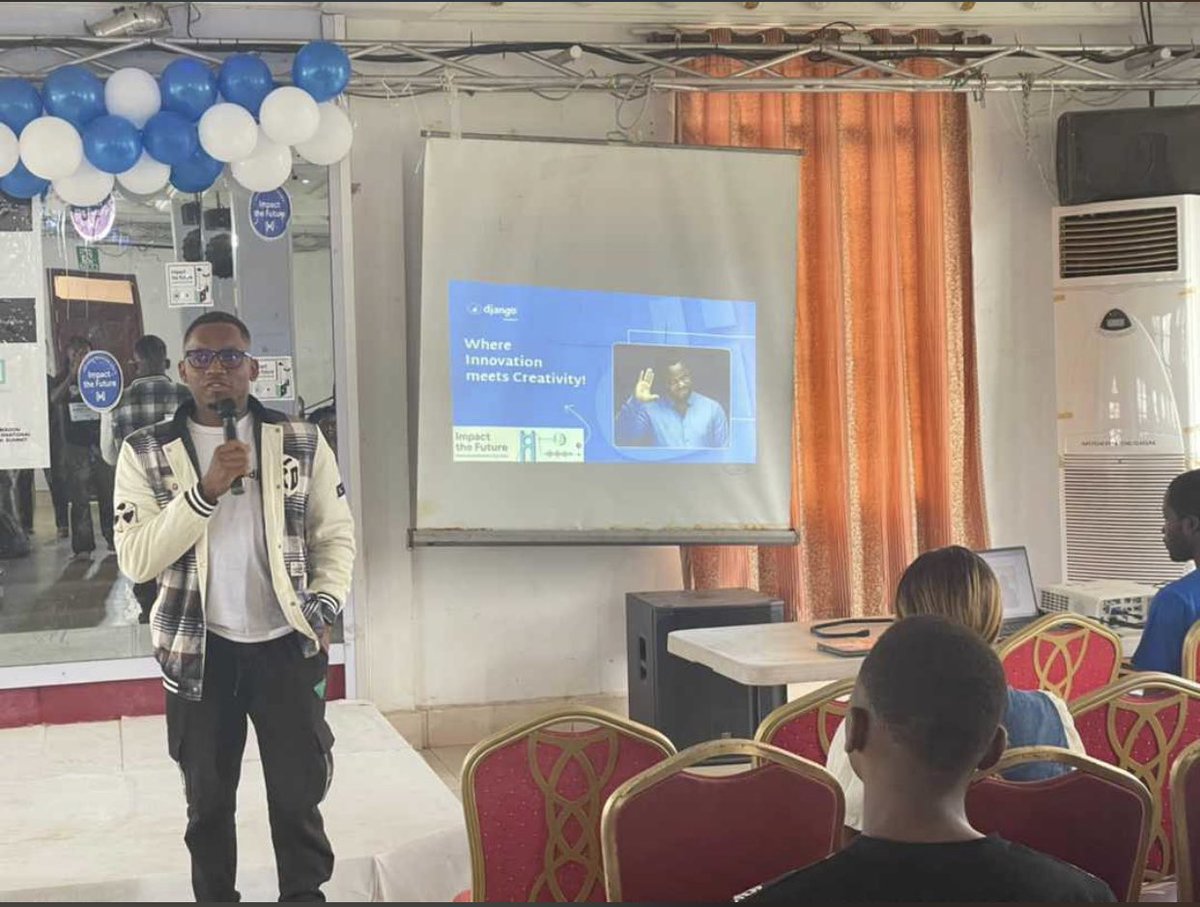
Peng Boris is a technology leader with expertise in artificial intelligence and SaaS development. As Co-founder and CTO, he has worked with American, German, and African companies to build scalable SaaS products.
Passionate about empowering the tech community, Peng has trained more than 1,000 software engineers across Cameroon, Ghana, Nigeria, and Kenya through workshops and mentorship programs.
Additionally, he runs a YouTube channel that provides tutorials and industry insights, highlighting his commitment to knowledge sharing and community growth.
#techingh24 #14thEdition #synergy
🔔 New Steam Game #Giveaway [Ends in 48 hours]
🎮Hogwarts Legacy🎮
(Gifted through Steam, Metascore: 83)
To enter:
- Retweet 🔃
- Tag 2 friends ⬇️
- Follow @highscore 😊
We'll pick a winner on Saturday, August 31st 🎉
Steam Page: https://t.co/zZfJJDD4xK
We're sharing progress toward understanding the neural activity of language models. We improved methods for training sparse autoencoders at scale, disentangling GPT-4’s internal representations into 16 million features—which often appear to correspond to understandable concepts.
https://t.co/tTRPztmra1
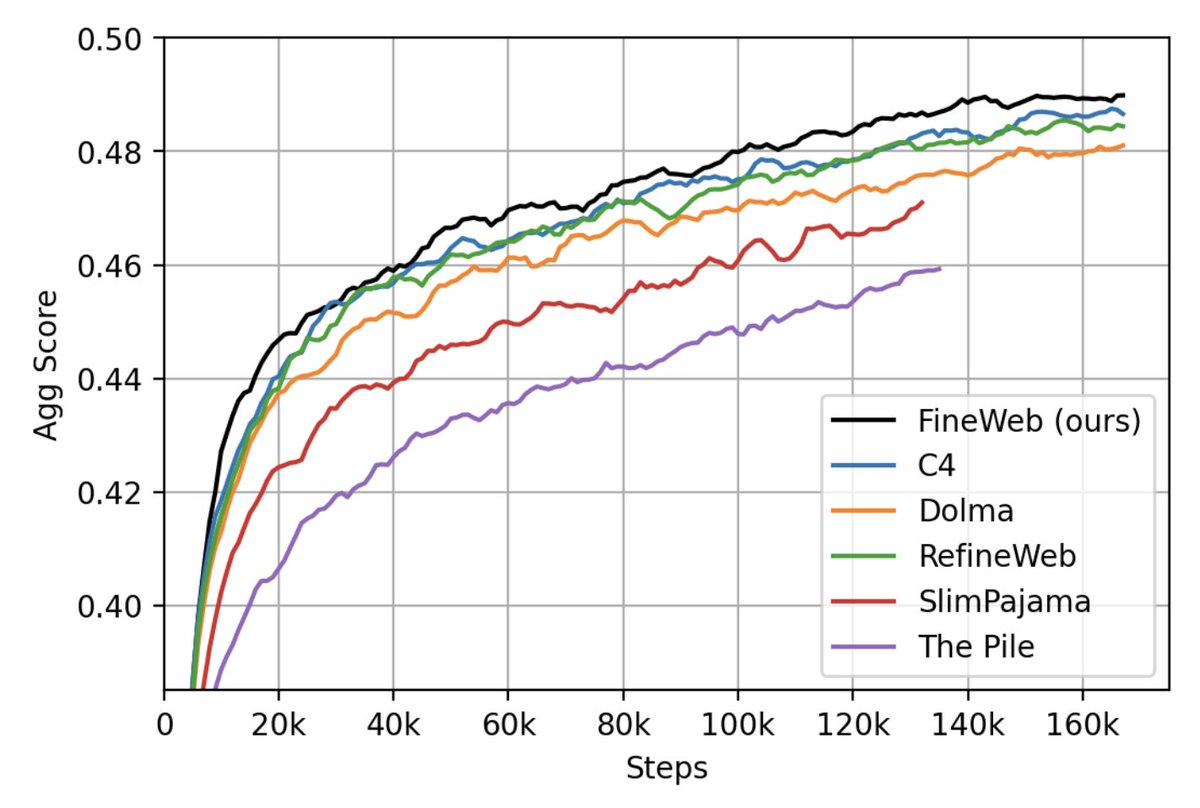
We have just released 🍷 FineWeb: 15 trillion tokens of high quality web data.
We filtered and deduplicated all CommonCrawl between 2013 and 2024.
Models trained on FineWeb outperform RefinedWeb, C4, DolmaV1.6, The Pile and SlimPajama!
We just released Mixtral-8x22B-v0.1 and Mixtral-8x22B-Instruct-v0.1:
- Free to use under Apache 2.0 license
- Outperforms all open models
- Native function calling
- Masters English, French, Italian, German and Spanish.
- Seq_len = 64K
https://t.co/SCG8s06Dbl
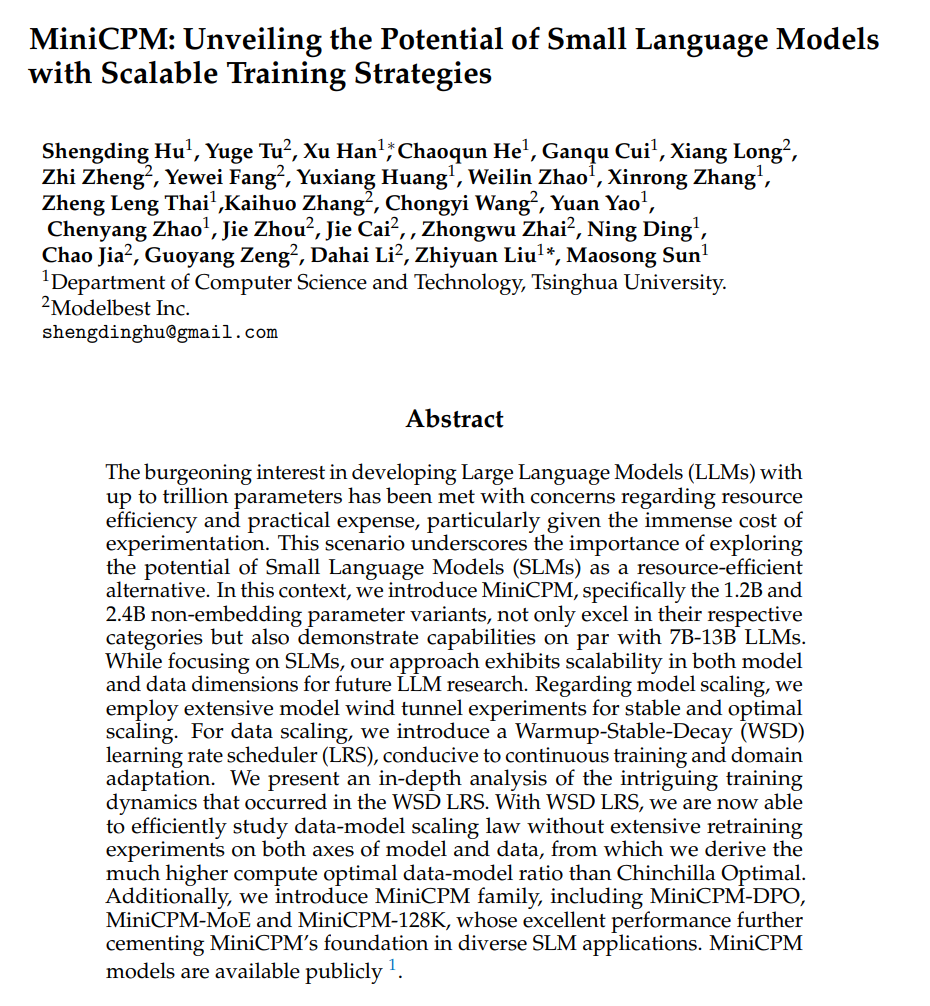
MiniCPM: Unveiling the Potential of Small Language Models with Scalable Training Strategies
- Presents MiniCPM family, including MiniCPM-DPO, MiniCPM-MoE and MiniCPM-128K
- MiniCPM 2B performs on par with Phi-2 and outperforms Mistral and Gemma
https://t.co/fRRwQbXtKD
Highly amusing update, ~18 hours later:
llm.c is now down to 26.2ms/iteration, exactly matching PyTorch (tf32 forward pass). We discovered a bug where we incorrectly called cuBLAS in fp32 mathmode 🤦♂️. And ademeure contributed a more optimized softmax kernel for very long rows (50,257 elements per row, in the last logits layer).
But the fun doesn’t stop because we still have a lot of tricks up the sleeve. Our attention kernel is naive attention, not flash attention, and materializes the (very large) preattention and postattention matrices of sizes (B, NH, T, T), also it makes unnecessary round-trips with yet-unfused GeLU non-linearities and permute/unpermute inside our attention. And we haven’t reached for more optimizations, e.g. CUDA Graphs, lossless compressible memory (?), etc.
So the updated chart looks bullish :D, and training LLMs faster than PyTorch with only ~2,000 lines of C code feels within reach. Backward pass let’s go.
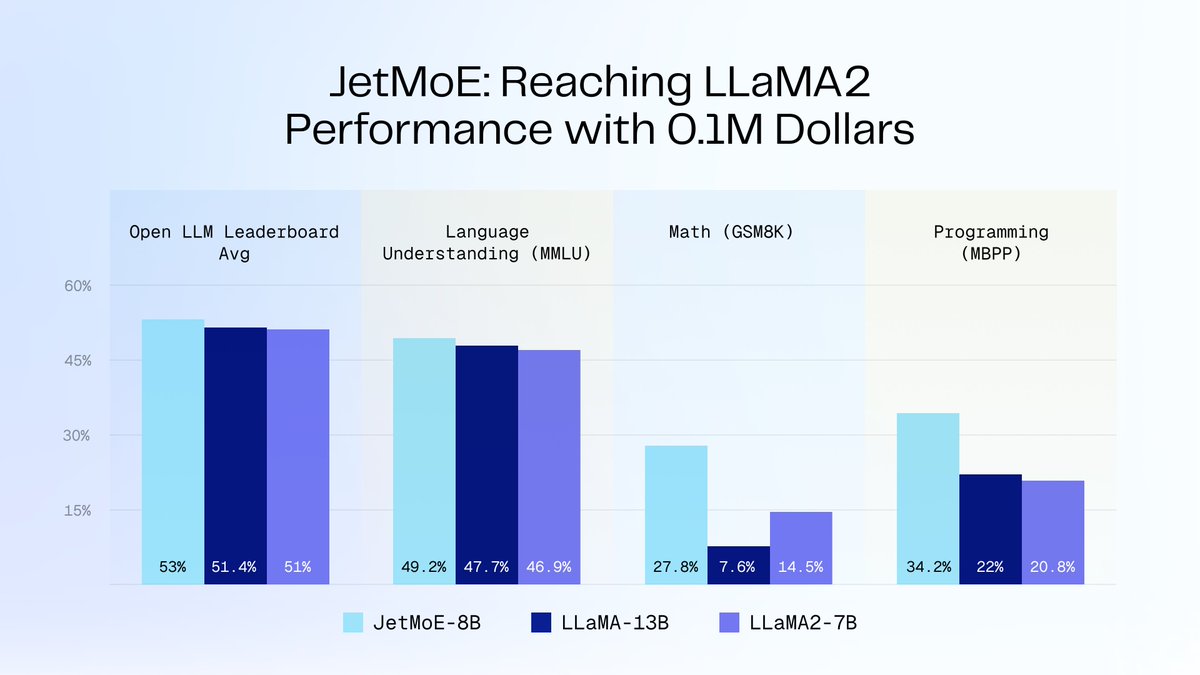
Training LLMs can be much cheaper than previously thought.
0.1 million USD is sufficient for training LLaMA2-level LLMs🤯
While @OpenAI and @Meta use billions of dollars to train theirs, you can also train yours with much less money.
Introducing our open-source project JetMoE: https://t.co/TG2JA612AM
A thread 🧵