AI × XR × Culture | Co-founder @MidBrainAi and @thepointlabs | ex-@volvocars innovation lead |Teaching machines to make sense. Nerd by day rock star by night 🎸
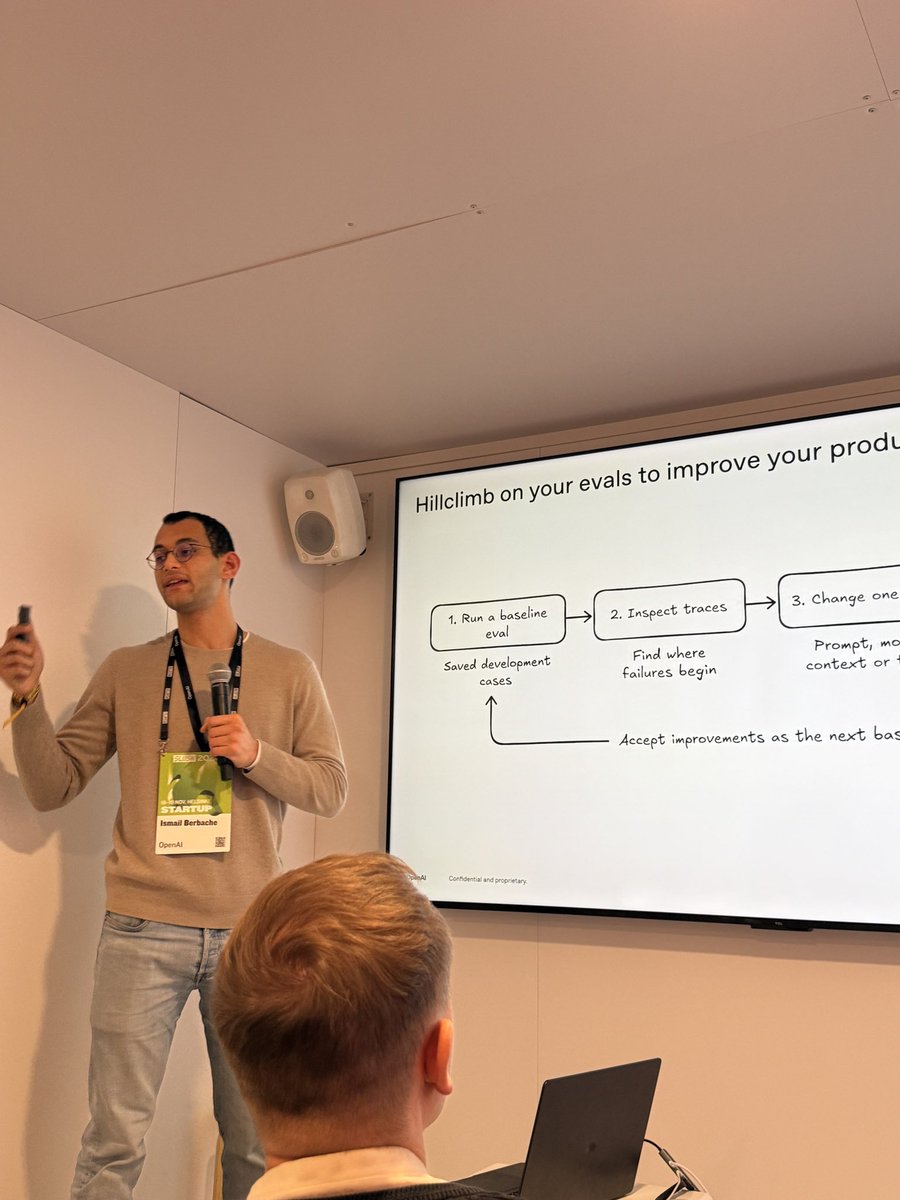
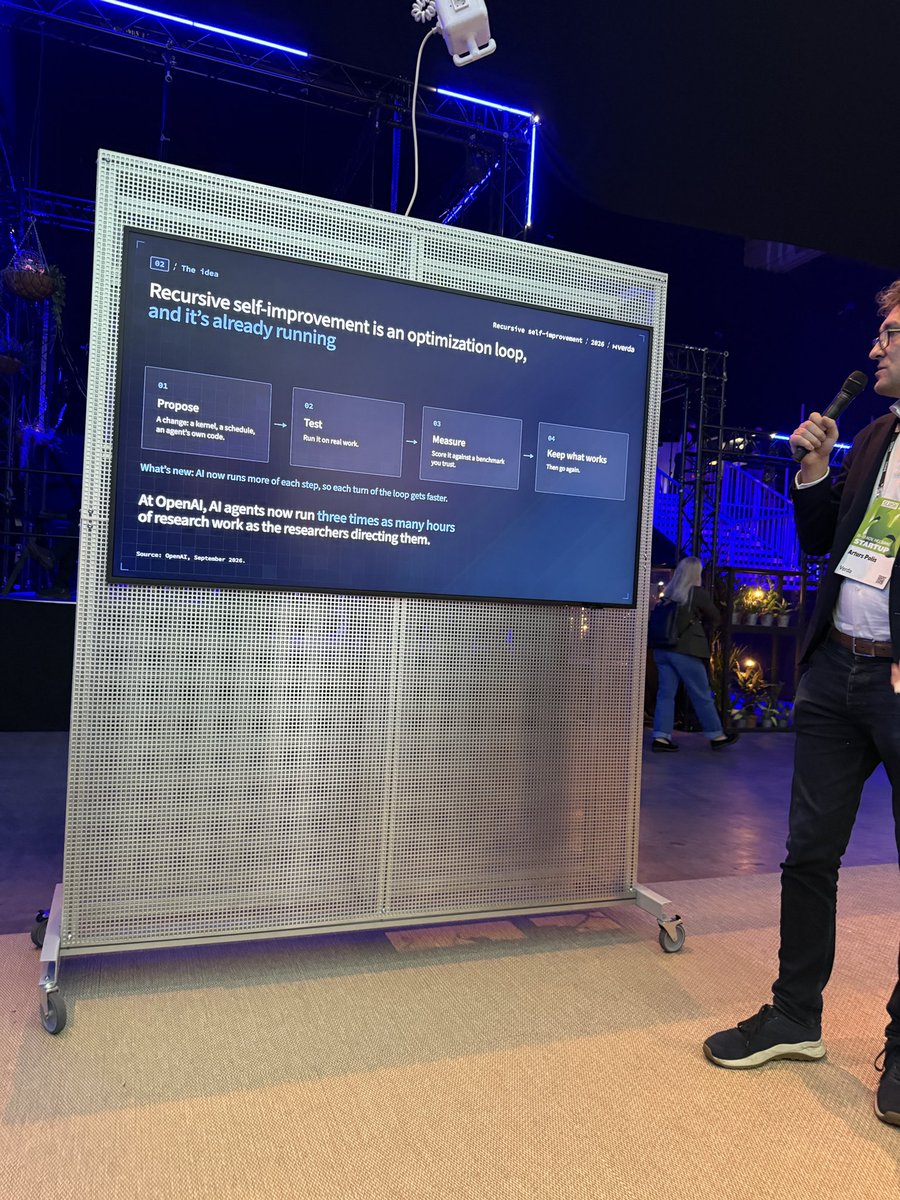
@SlushHQ day 2. between the robots, the demos and the sessions on self-improving agents, interested in systems that get better through use, but we need to be clear about what improved and what broke along the way.
good to see the eu-inc conversation too. making it easier to build across europe matters as much as encouraging people to start. a lot to think about on the flight home.
@OpenAI@GoogleDeepMind
Training on an example: about 3F.
Serving it, then training separately: 4F, plus the pipeline.
Reuse the serving forward pass, and a very rough estimate says 25–50% less compute.
i want my agent to learn from my corrections, not need the same instructions next week.
at midbrain, we're researching how feedback becomes lasting model skills.
https://t.co/9GLI9HHJlP
i'm at @SlushHQ . building agents or working on continual learning? dm me, let's meet.
Serving an answer already runs the forward pass. Training needs one too.
We're researching how a personal agent can learn on the GPU that served the request: keep the activations, update a small personal adapter, skip the offline pipeline.
This is one idea from A lifelong companion, an essay from us on why remembering you and learning from you are two different things: https://t.co/bIe0m7CtNq
Taste is never stated. It shows up in the edits.
I've never told an agent how I like my emails. I delete "I hope this message finds you well", cut a paragraph and add a next step. Every time.
An agent that learns picks it up without being told.
What edit do you keep making?
Building AI that learns while it works.
We’ve just launched the new MidBrain website. It brings together our research and product, and gives a clearer picture of where we want to take things.
For the past year, we’ve been working on a question:
How can each new experience make an AI system more capable?
When an agent repeats a mistake you’ve already corrected, you end up doing the same work again. We want that correction to change how it handles the next relevant task.
The bigger ambition is that the longer a person or team works with an AI system, the more useful it becomes. It should develop capabilities through experience and retain what it has learned as the work changes.
At @MidbrainAI , we’re connecting research in continual learning with infrastructure people can use today. Our product turns feedback into learned procedures agents can apply to future tasks. Our research explores how learning can happen during an interaction itself, and how systems can keep adapting without losing useful knowledge.
The new site shares our published research, the questions we’re investigating, and the product you can try.
If you’re building agents that need to improve over time, we’d love for you to put MidBrain to work. Try it on a real workflow. Challenge our assumptions and tell us where it falls short.
There’s a lot we still need to figure out, and working with people using these systems is part of how we’ll get there.
Explore the research and try the product: https://t.co/YBxpgquTGN
our minecraft agents forgetting overnight were part of what led us here. this piece traces that story alongside other approaches to AI "dreaming".
my test for the idea: does the offline work make the next task better, or just produce a tidier memory?
@godofprompt thanks for including our story. the hard parts for me is how you check a consolidated memory before letting it guide future behaviour. a useful lesson and a convincing mistake can look very similar…
Different coordinates, same similarity.
MidBrain stores embeddings after an orthogonal transform derived from each agent's search key. Dot products survive it, so ranking doesn't change.
If an AI agent is going to work with you for years, you should know who can read the history it builds.
At @MidbrainAI , we use separate keys for your conversations and documents, the search index, and the preferences and instructions the agent picks up over time. In client-managed mode, you keep the key that decrypts your stored conversations and documents, while the agent can still search them.
We wrote up how this works, including what our servers can see when they process a new memory. If you’re building agents that learn from experience, I’d love to hear how you’re handling that trade-off.
Every MidBrain agent gets four keys.
The one that decrypts conversations and documents never reaches our servers in client-managed mode. Search and consolidation get only the key they need.