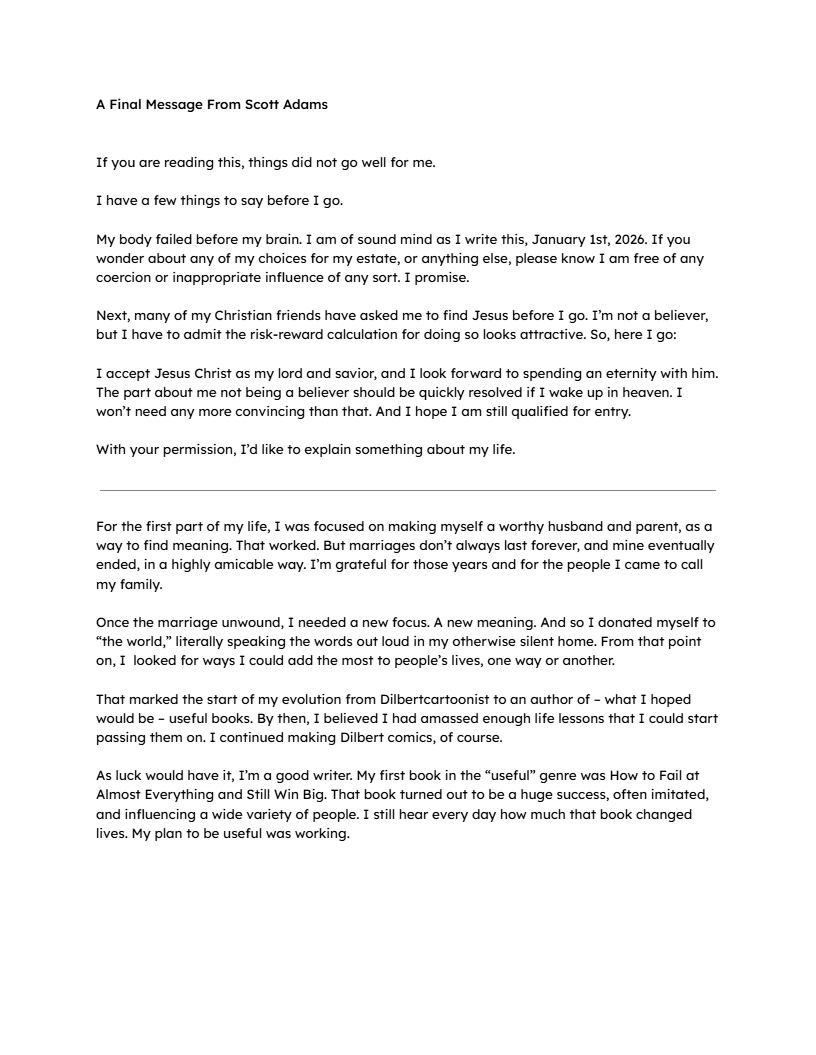
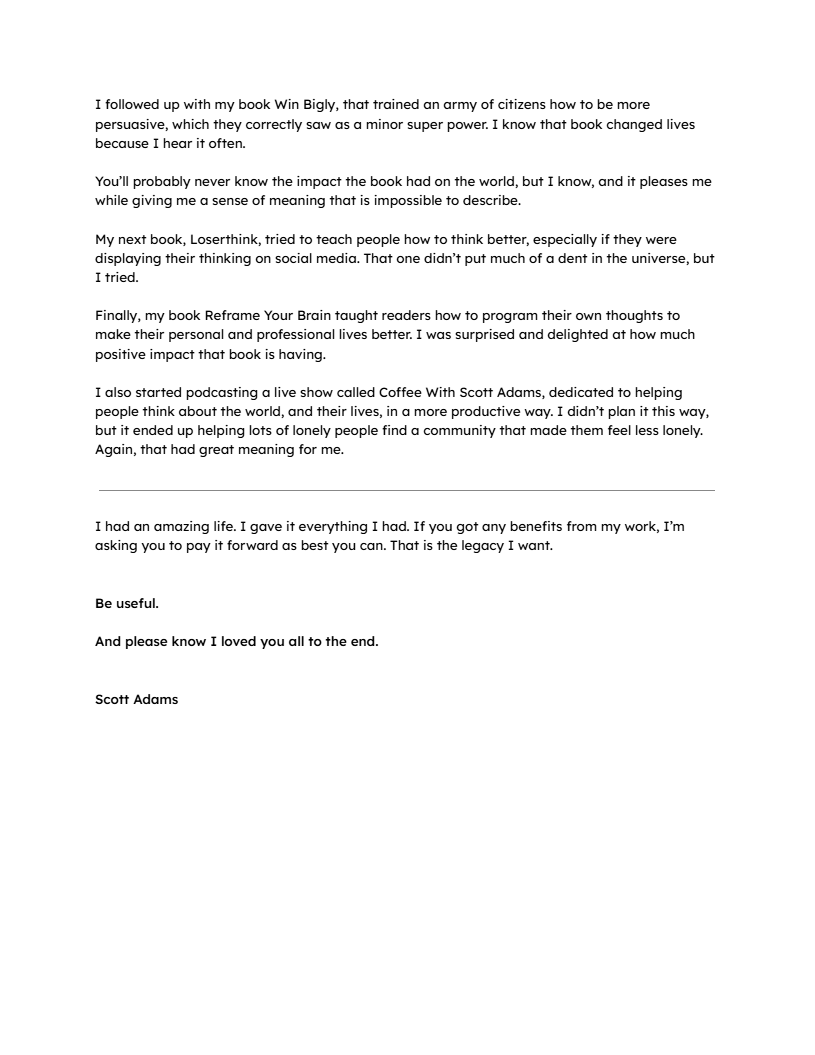
I think you're going to see it's all going to converge back to screens and data and panels and buttons.
People don't want to ask the same question over and over. They'll ask something, it'll be set up to show something, and that thing will be saved as something they can always look at. Stable pre-defined glances, not blank slates each time. Common questions will become buttons and panels again.
Most people ask the same kinds of questions about what they work on most of the time. Having to start from scratch with the questions every time seems like a step backwards.
Another way to put this: Questions are wonderful for a deeper dive, but not a daily drive.
Not sure you're suggesting questions always, but the comparison screenshots looked that way.
Unpopular opinion: I don’t care if most web apps look the same. All I care about is whether it does what it says and does it fast.
Make it fast. Make the UX obvious. Put the right things in the right place and little to no animations.
I don't think using social media is just a "bad habit" young people have. I think their entire existence has been altered by it: how they think, look, feel, conduct themselves. It's given new meaning to friendship and falling in love and to life itself, and it degrades it all.
everyone's talking about their teams like they were at the peak of efficiency and bottlenecked by ability to produce code
here's what things actually look like
- your org rarely has good ideas. ideas being expensive to implement was actually helping
- majority of workers have no reason to be super motivated, they want to do their 9-5 and get back to their life
- they're not using AI to be 10x more effective they're using it to churn out their tasks with less energy spend
- the 2 people on your team that actually tried are now flattened by the slop code everyone is producing, they will quit soon
- even when you produce work faster you're still bottlenecked by bureaucracy and the dozen other realities of shipping something real
- your CFO is like what do you mean each engineer now costs $2000 extra per month in LLM bills
@ryolu_ “Back to purity, back to simplicity. Less, but better.”
—Dieter Rams
Less left brain thinking, but better right brain thinking. Or to paraphraze Ian McGillchrist and combine it with Rams… Less [emmisary], but better [master].
beauty in the imperfections and slowness
we’re racing toward a life where everything is instant, optimized, compressed. asymptotically approaching zero friction.
and then suddenly we start missing the old days… not because they were better, but because they were thicker.
waiting for a download bar to crawl across the screen.
walking home without maps.
calling someone and hoping they’re actually home.
photos that you couldn’t retake 30 times…
that slowness gave time for anticipation, for tiny rituals, for noticing.
friction gave texture.
slowness gave thoughts to breathe.
inefficiency gave space for surprise.
when everything becomes fast and efficient, life flattens into “done” and “next.” you lose the in-between, and the in-between is what shapes you.
a slightly wrong note in a song you love. a typo in a message from someone you care about. a clunky tool that forces you to think a bit more. these are all proof of life.
as tech gets smoother, weirdly the most precious things will be the ones that don’t try to be perfect.
handwritten instead of generated.
slow instead of instant.
local instead of global.
a bit janky instead of seamless.
the future luxury isn’t speed, it’s latency, silence, and things that carry the trace of a human hands.
maybe the move now is not to reject efficiency, but to frame it.
use fast tools to clear the junk, so you can protect a few sacred places in your life that are intentionally slow.
intentionally inefficient.
intentionally imperfect.
a long walk with no headphones.
cooking something that takes 2 hours instead of 2 minutes.
writing with tools that don’t autocomplete your thoughts.
interfaces that let you linger and wander, instead of push you to the next thing.
as we get closer to frictionless everything, we’ll have to design our own friction back in.
not as nostalgia,
but as a way to stay human in a world that forgot how to wait.
This generation’s daily routine:
- Wake up.
- Stare at a 6.7 inch screen.
- Work on a 16 inch screen.
- Relax with a 55inch screen.
- Stare at a 6.7 Inch Screen
- Sleep
Repeat.
"The reward for great work is more work, and I find that saying that maxim to the right person, the kind of person I want to spend time with, their eyes go wide and they understand it immediately.
That the reward for great work is not money, power, fame.
It is the privilege to get to do more of this thing that I love doing."
@thekitze NFC products analytics tool with which clients can “chat with their data” via https://t.co/faeL6s8wKv API is the project I’m now working on, and will continue to work on in the next year.
Really well articulated post from @karrisaarinen !
Echoing what I write about this the other day.
“Form & function affect one another deeply. But are distinct phases & perspectives that need distinct tools and temperaments.
They shape each other because of the tension. That’s the beauty.
And the tools you have affect the forms that will be prevalent.
If anything the nature of tools and what they make easy matters even more than you might think.”
"same patterns, the same flows, the same ideas repeated across different tools and teams."
This is what I'm actually afraid of. When we start treating designers as code jugglers, and we start to see even more standardization in the space because everyone is building with the same primitives. Like why try to design or invest in designing something great when you can design and implement something standard in the same timeframe. This is the cookie cutter house of software design.
The more systematic designs tools are, they more systems will suffocate designers. Low fidelity, high fidelity, prototypes, code, all are tools and useful, but none of them is the end. Design is about exploring the problem space, finding a form. The code is kind of unnecessary in that process. Once you get to testing, prototyping or validating stage, the code are useful, because you're trying to refine and make the form to reality.
People are somehow obvious to the double diamond design process and that it exists there for a reason. When you jump in to the validation and implementation directly or try to collapse this in a single diamond, you lose something in the process.
These tools can be great for validating or prototyping the design explorations. So it's part of the process but not the whole process.