fable 5 just refactored my entire codebase in one call
67 tool invocations. 1M+ new lines. 24 brand new files
it modularized everything. broke up monoliths. cleaned up spaghetti
none of it worked
but boy was it beautiful
Does that mean that we could actually run something like subroutines on the skill to execute smaller pieces of code / subprocess that is tied to the main skill in its own context? For example: running an Astro development skill and then running a subroutine like "install Analytics" as new context?
@bcherny@binaryminary How could we combine that with "context: fork"? context:fork means the skill becomes the context of the newly spawned subagent (done by the Agent/Task tool), but how would this tie into that?
@daniel_mac8@cognition If you used both all the time, you'd know this was a trash benchmark. I've got 4x max subs (2 for both), and the stuff I make is profitable. It just isn't true. Opus is definitely better at non-programming stuff (design, writing, ideation, etc), but it's not a better programmer.
@synthwavedd If drawing towers was the only game in town. They're both good, we still don't have a clear winner, and won't have it for a long time. I couldn't imagine my workflows without both.
So the debate eating everyone's attention mostly doesn't apply to the businesses that could use AI today. Learn AI as a meta skill, point it at a domain you already know, and go help them.
@tflann I've seen this as well. These days the furthest I go is a specific location service page if the client actually has a presence in that particular location. For example, 2 location specific srrvice pages for a business that has 2 locations.
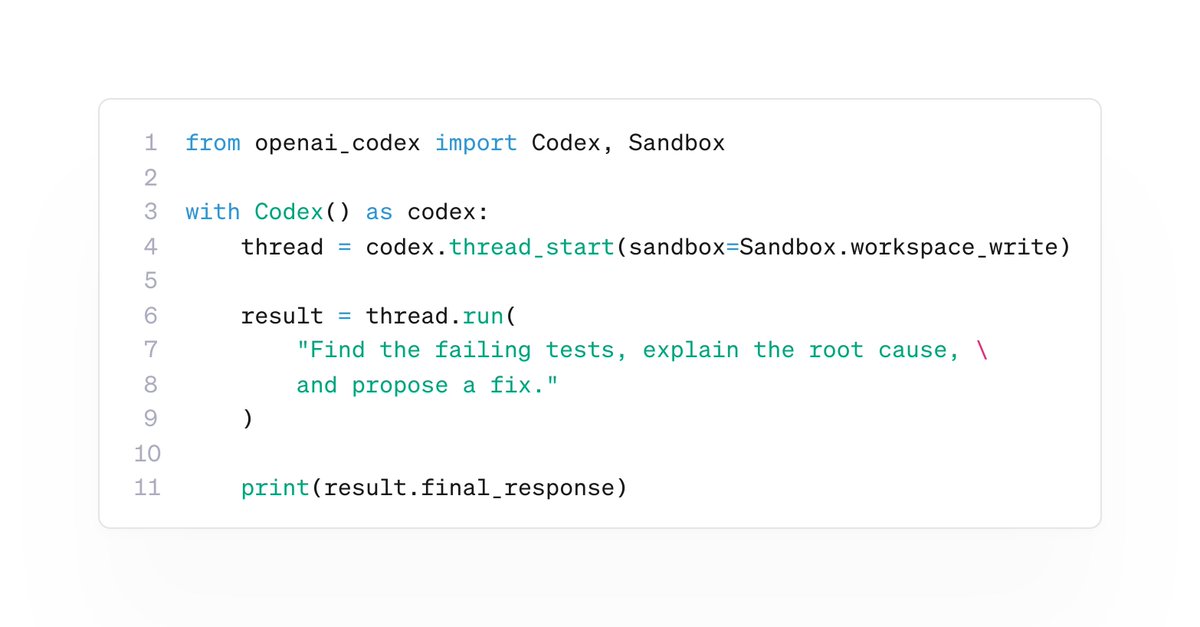
We just released the Codex Python SDK 🔥
You can now embed Codex directly into your Python apps and workflows!
> Start threads
> Run turns
> Stream progress
> Resume sessions
> Pass images
> Control sandbox access
All whilst reusing your existing Codex auth.
pip install openai-codex
Go build with it!!