Each second, 1.5 million tons of solar material, traveling at 100 miles per second, shoot off the sun. Earth's magnetic field deflects most of it, but not all. The solar wind, a stream of charged particles, flows at 447 km/s (1 million mph), and while the magnetic field protects us, some particles still cause auroras and geomagnetic storms.
“Calvin & Hobbes” might be the purest comic strip ever in the artistic sense.
Despite its success — syndicated in 2k+ papers and 45m books sold — creator Bill Watterson avoided licensing.
By not licensing the IP for games and toys, he left an estimated $400m on the table.
He also refused to do an animated adaptation (even when approached by Hollywood legends like George Lucas and Steven Spielberg).
Watterson liked his low-tech process and believed the purest artistic expression of the comic strip medium was a single person writing every word and penning every stroke.
He believed this purity was compromised by commercialization, which is also why Watterson ended the strip after a 10-year run (1985 to 1995).
Instead of milking the comic, Watterson shut it down at the top. He gave an amazing explanation as to why during an interview with the Cleveland Plain Dealer in 2010:
➡️ “This isn't as hard to understand as people try to make it. By the end of 10 years, I'd said pretty much everything I had come there to say.
It's always better to leave the party early. If I had rolled along with the strip's popularity and repeated myself for another five, 10 or 20 years, the people now "grieving" for "Calvin and Hobbes" would be wishing me dead and cursing newspapers for running tedious, ancient strips like mine instead of acquiring fresher, livelier talent. And I'd be agreeing with them.
I think some of the reason "Calvin and Hobbes" still finds an audience today is because I chose not to run the wheels off it. I've never regretted stopping when I did.” ⬅️
The oceans contain enough fusion fuel to power our current civilization for 65 billion years.
If we assume compounding growth of 2%, how long will it last?
Fusion: 1060 years
Solar: 460 years
Let's dig into the physics of our energy economy.
(warning: math ahead).
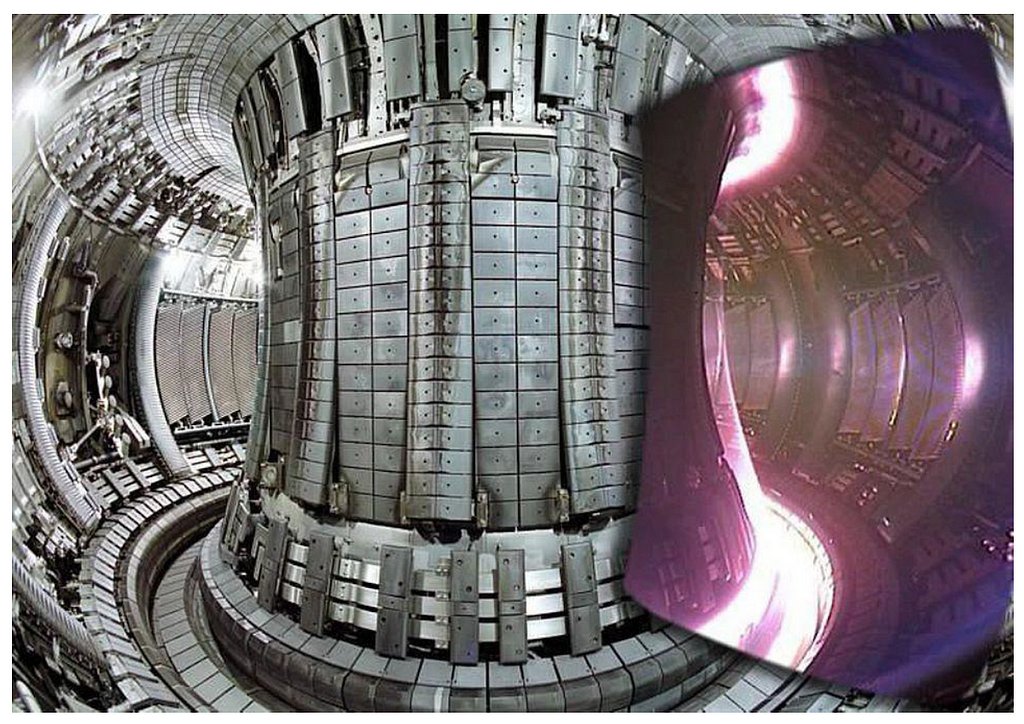
Nuclear fusion is how the sun produces energy, taking light elements like hydrogen and fusing them into heavier elements like helium. This releases the energy we receive as sunshine.
Every water molecule has two hydrogen atoms. About one in every 6420 hydrogen atoms has an extra neutron attached, this isotope of hydrogen is called deuterium.
Burning one gram of deuterium via fusion releases the same energy as burning 83,300 gallons of gasoline. The energy-per-mass of nuclear fuels is astounding, and is millions of times greater than carbon fuels.
Gasoline: 45x10^6 J/kg
Deuterium: 8.5x10^14 J/kg
Total fusion energy stored in the worlds oceans:
Let's go through the numbers together to see how much fusion fuel we have on the planet, using joules for energy and kilograms for mass.
Mass of all the earth's oceans: 1.4x10^21 kg
Mass of water in the oceans: 1.3x10^21 kg
(we remove the 35g/L of salt)
Each water molecule has two hydrogen atoms, but hydrogen is a lot lighter than oxygen. So, water by-mass is only 11% hydrogen (H).
Mass of H in the oceans: 1.43x10^20 kg
Mass of deuterium in that H: 4.46x10^16 kg
Fusion-energy stored in oceans: 3.8x10^31 Joules
That's about 500 times the kinetic energy of the moon, or seven million billion Minute Man ICBM's, if each one carried a 1.2 megaton W57 bomb.
How long will it last us?
In 2022 the world used 160,000 tera-watt hours of energy.
Worldwide energy consumption: 5.76x10^20 J
If our energy consumption remains the same, our ocean-water fusion fuel will last us 65 billion years.
However, over time our energy use grows at 1-2% per year. If we assume a growth rate of 2% per year, we can add up the years of energy consumption to see when it will equal our fusion energy reserves.
Assuming a constant growth rate of 2%, our ocean-water fusion-fuel will last us ~ 1060 years. At that time the annual energy consumption of our civilization will be about 11 seconds worth of the Sun's total energy output.
So, fusion energy buys us 1000 years of compounding energy usage. How long could solar take us, assuming the same growth rate?
Annual solar energy reaching Earth: 5.5x10^24 J
Current use *(1 + growth rate)^periods = future use
5.76x10^20*(1.02)^n = 5.5x10^24
n=462
Solar energy gets us 460 years of compounding energy growth until our annual consumption equals the total solar power reaching the planets surface. This means 100% of the Earth's surface is covered with 100% efficient solar panels.
If we only covered the land-area of Earth with panels that were 50% efficient, Solar gets us 360 years.
If we could only extract half the deuterium in the ocean, because of process efficiency and etc, Fusion still gets us 1026 years of compounding growth.
Notably we would also still have land to live on.
~~~~~~~~~~~~~~~~~~~~~~~~~~~~~~~~~~~~
Today, solar energy is cheap, abundant, and extremely competitive. It will take immense amounts of land and material resources to reach our civilizational-scale needs for energy if we keep growing our economy and energy needs.
Fusion is seen as difficult, expensive, and slow to mature. Why bother? If you want humanity to last more than 360 years and still have land to live on, you need fusion.
And the far future? The outer solar system is abundant in hydrogen and deuterium, and deficient in solar energy which becomes weaker with the square of the distance from the sun.
Fusion energy can power our civilization into a space-faring future among the outer planets, and take us to the stars.
Ukrainian fencer, six-time world champion and eight-time European champion Olga Kharlan, defeated Russia's Olga Smirnova in the World Championships in Milan.
Harlan defeated Russia's Anna Smirnova 15:7. According to the regulations, at the end of the fight, athletes should shake hands. Ukrainian athlete refused to shake hands.
According to the rules of fencing, the fight is not considered finished until the handshake. There was no handshake, because instead of her hand, Olga Kharlan extended a rapier to her opponent: so that not to insult with your handshake the memory and honor of those who defend Ukraine from brutal aggression (this practice is also used at times during competitions).
Olga was disqualified.
In this video, Olga thanks everyone who supported her.
Olga's gesture was, in fact, symbolic of a new world order against the old rules that have lost all meaning.
The Russian athlete was also a symbol of the current Russia:
1. She performed under a "neutral" flag, but she herself is not "neutral" (her brother Nikita's Instagram has a photo of them together, where the athlete poses with the symbol of terrorism "V" and in a typical Russian military cap. Her brother himself is wearing the military uniform of the Russian army).
2. False victory. The disqualification of the real winner is not a victory, but an information war and a demonstration of the scale of the efforts, money and resources "Russian world" continues to invest in it with redoubled force.
3. By the way, the fencing association was chaired from 2008 to 2022 by Alisher Usmanov (Russian money, Russian lobby).
Disqualification for the Ukrainian champion is a huge sacrifice. But her own human disqualification would have been much more terrible.
Olga became another symbol of freedom and dignity of her country in the eyes of the world. This is a much more substantial victory.
The rule of the extended rapier is about not resorting to false handshakes, not maintaining discredited relationships, consciously or by inertia, but to extend the rapier at the slightest approach of the "Russian world."
If we pretend that the world has not changed and nothing is happening, evil will not be defeated!
Prigozhin being bailed out by Lukashenko and now parked in Belarus with everyone guessing is one of the best season finale cliffhangers. Can't wait for the new season, right after the summer break.
In today's #vatniksoup, I'll introduce a British musician and activist, Roger Waters (@rogerwaters). He's best-known for his involvement in Pink Floyd, and for his love for the totalitarian regimes and their lies around the world.
1/26
Heat is one of the best films ever.
Directed by Michael Mann, the 1995 crime classic has a truly “one-of-a-kind” moment: Al Pacino and Robert De Niro in the same scene for the first time.
To make it happen, Mann actually created the *same film* twice. It’s an awesome story of creative dedication…
…that begins in the mid-1970s, when Mann met a Chicago police detective named Chuck Adamson. Adamson was retired and consulting on Hollywood projects.
He told Mann about his years chasing a bank robber named Neil McCauley, including a time they shared a coffee at a diner.
In 1979, Mann wrote a 180-page script called “Heat” about Adamson and McCauley. After success producing the TV show “Miami Vice”, Mann was given an opportunity to make his script.
However, it ended up as a low budget direct-to-TV film called “LA Takedown”. The film took ~3 weeks to make and — while reviews were OK — Mann’s vision was unfulfilled.
After directing the critical and commercial hit “The Last of the Mohicans” in 1992, Mann could basically do any new project he wanted.
And he chose to redo “LA Takedown”, but this time with a $60m budget and the biggest stars (Pacino, De Niro, Val Kilmer, Ashley Judd, Tom Sizemore, Jon Voight).
After six months of filming, “Heat” came out in 1995. At 165 minutes, it was twice the length of “LA Takedown” (Mann layered on lots of narrative left out of the original).
It was an instant classic and made ~$190m at the box office. Meanwhile, the much-anticipated coffee diner scene with Pacino and De Niro delivered the goods (compare it to the original below).
After 2 decades and 2 films, Mann finally saw his vision through. The unwavering commitment to his original idea created a true masterpiece.
That sounds you hear is the assembling of an army of copyright lawyers, the largest the world has ever seen, who have been in cryosleep since the Napster lawsuits and have just now been reawakened for one last job.
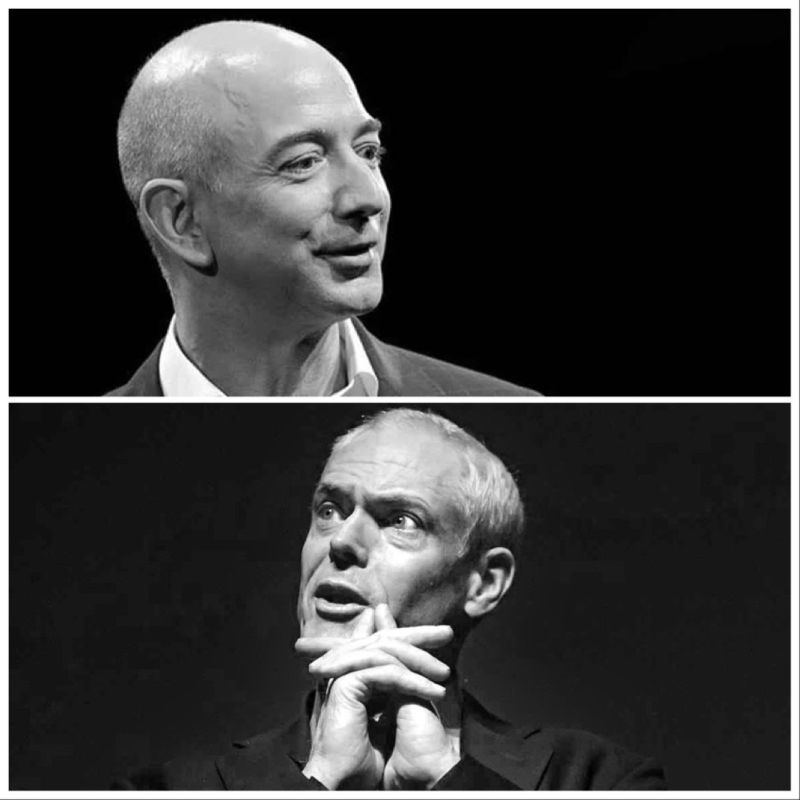
In 2001, Amazon’s stock fell 90%. In a hail-mary attempt, Bezos invited a book author to Amazon. Together, they created the foundation for trillions in market cap:
The author was Jim Collins, who published Built to Last in 1994. By 2001, Bezos had already adapted several of its concepts into Amazon’s principles:
· Tyranny Of Or → Avoid 1-Way Doors
· Homegrown Leadership → Hire & Develop the Best
· Good Enough Never Is → Insist on the Highest Standards
So, Bezos was intrigued when Jim said, in front of the whole executive team:
"In times like this you want to respond not by reacting to bad news, but by building a flywheel."
Collins had in mind the 5,000 lb old-style flywheels. They took hours to turn at first. But at some point, WHOOSH! Their own momentum kept them going.
Collins had quite a bit of reason to believe in his statement. He had commissioned a large team of Harvard MBA researchers for his new book, Good to Great. They compared companies that had delivered sustainable, S&P 500-beating results to mediocre companies that had flailed.
What the team found is the great companies were spinning flywheels. It wasn’t the first, fifth, or one-hundredth rotation that got them spinning. It was their concentrated effort that led to the breakthrough momentum.
On the other hand, mediocre companies were constantly launching new initiatives. Instead of achieving breakthrough momentum on one flywheel, they tried to create many. But each never achieved breakthrough velocity. They had to keep manually cranking them.
Given the insight, Bezos and Collins began sketching out Amazon’s e-commerce flywheel. They identified that Amazon could generate self-reinforcing momentum in 2 ways:
1. Lower cost structure leading to lower prices leading to more scale and back to lower costs.
2. Greater selection leading to customer experience leading to traffic leading to more sellers and back to greater selection.
These two elements have been the backbone of Amazon’s e-commerce business for the 20+ years since the pair initially founded them.
To this date, the flywheel continues to extract market share for Amazon. Last year, Amazon reached a tremendous 57% of total US e-commerce sales. At $514B in revenue, it has left the competition - like Walmart - in the dust.
So, what can we learn from Amazon’s e-commerce flywheel? As product and business people, we are tempted to start new flywheels constantly. But, it usually pays to focus on spinning our main one with self-reinforcing momentum faster.
Sketch out your flywheel, and go get it.
Maps twist our perception of the world
Here are 20 to rethink it:
1. Countries closer to the equator (~poorer) seem smaller than they are
(map by @neilrkaye)
The word doesn't come from the famous Albert but from the German translation of his last name: one stone. Could a single tile — one "stone" — fill a two-dimensional space without ever repeating the pattern it creates?
https://t.co/id8CNPnf2k