🚨 BREAKING
🇺🇸 TRUMP INSIDER WITH 100% WIN RATE JUST OPENED A MASSIVE $60,000,000.00 BITCOIN SHORT.
HE BECAME ACTIVE FOR THE FIRST TIME SINCE THE OCTOBER FLASH CRASH, WHEN HE MADE $120 MILLION IN 4 HOURS.
HE DEFINITELY KNOWS THE MARKET WILL CRASH ON MONDAY…
���� MAJOR: @coinbase is leveraging $LINK | Chainlink Proof of Reserve to bring onchain transparency to $4.6B+ in cbBTC reserves.
Real-time reserve verification, fully onchain—secured by @chainlink, published on @base & @ethereum. ✅
This is a massive step for institutional trust in #BTCFi.
📈 $LINK is powering the next wave of crypto transparency.
Classic bullrun cycle: BTC→ETH→ALTSZN
Everyone think "this cycle is different". It’s not
The reason alts didn’t pump before is BTC hadn’t hit ATH
BTC just hit ATH
Retail & alt index still bottomed
ALTSZN is near. Here’s when, why, and how to prepare 🧵👇
Before we start...
I'll likely make my profile private soon, so make sure to follow me and bookmark the first tweet, and rt to share it with friends so you won't lose it later.
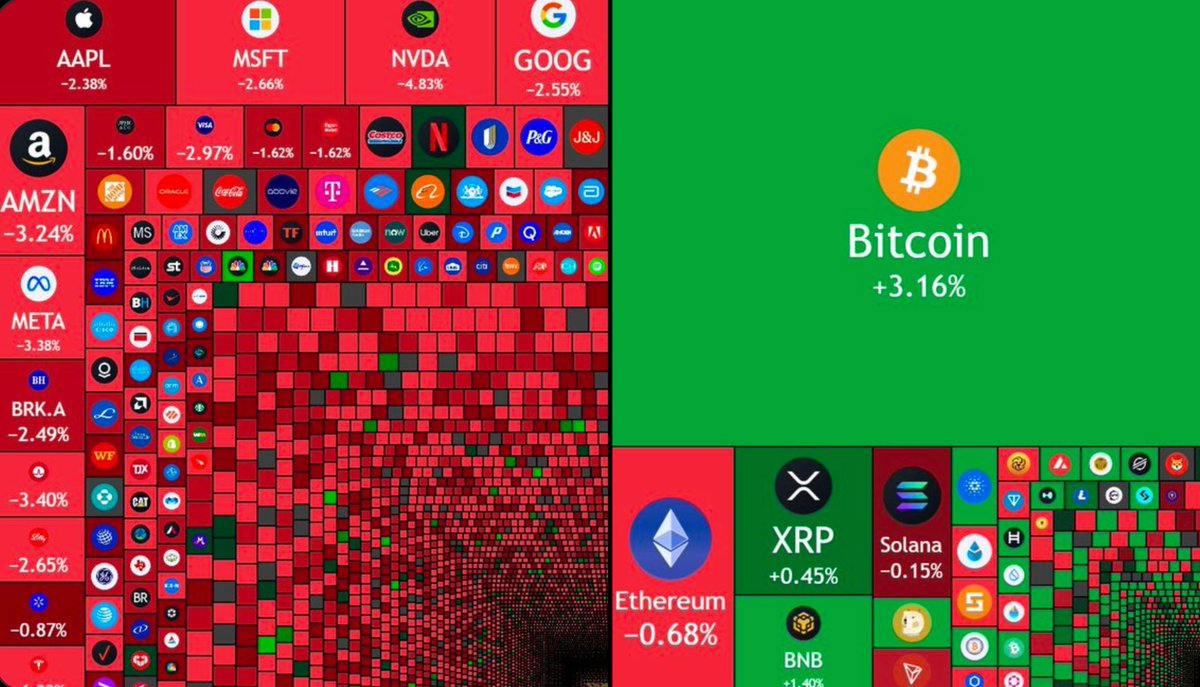
TODAY: The stock market just wiped out $1.5 trillion in a single day, that’s equivalent to Bitcoin’s entire market cap. Let that sink in. While stocks bleed, Bitcoin is outperforming the entire market. Bitcoin starts to follow Gold rather than stocks. New ATH programmed
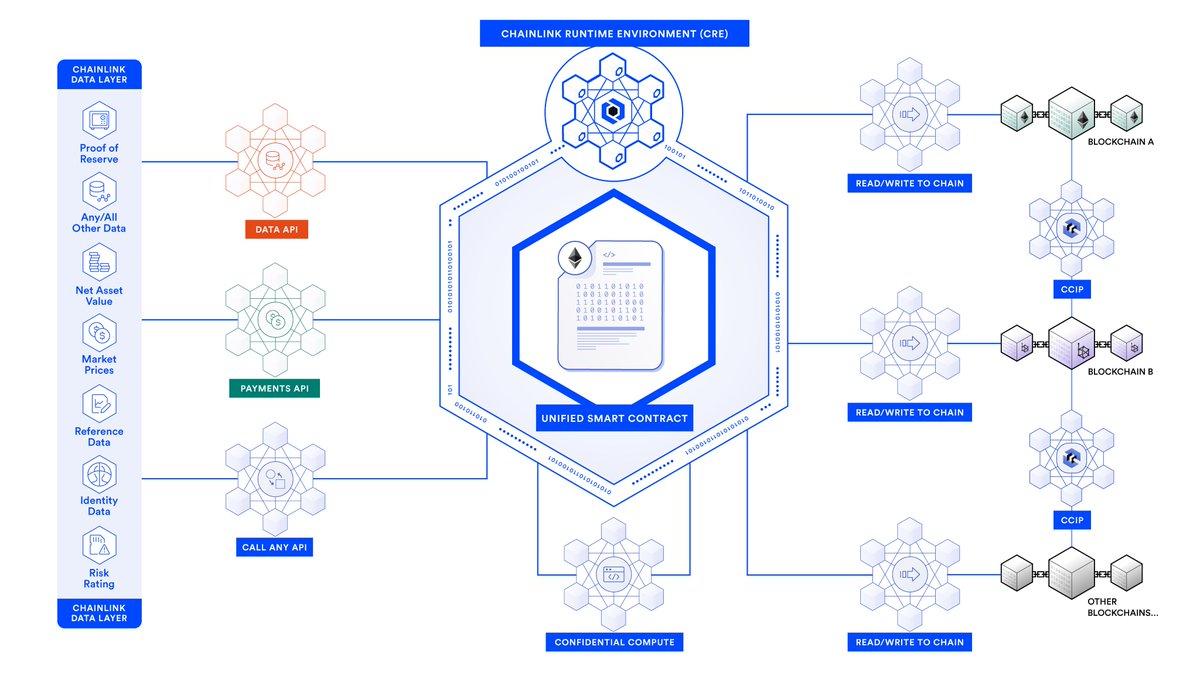
The backbone of onchain finance:
• Need to verify reserves?
• Need data to trigger a transaction?
• Need to move assets cross-chain?
• Need to connect existing systems to blockchains?
• Need to add privacy, compliance, or automation to a workflow?
Just use Chainlink.
Chainlink is committed to helping the blockchain and DeFi industry manage the challenging and multilayered dynamics of onchain value extraction from oracle reports, now being called Oracle Extractable Value (OEV).
Chainlink has been working on solving the complex problems around this subject since the protocol’s beginning and has helped create original approaches to mitigating its impact, as well as implementing some of these approaches in the real world for live Chainlink services.
Chainlink’s large community of academic advisors and collaborators have been publicly researching various approaches for addressing value extraction onchain, including Fair Sequencing Services (FSS), which combines encrypted transactions and fair temporal ordering to achieve fair sequencing (https://t.co/68ZqHSjgrH), as well as more recent public research on Protected Order-Flow (PROF) to prevent the arbitrary reordering of transactions while relying on existing MEV infrastructure: https://t.co/Ddgvtj1V4P
Chainlink has also launched live features to reduce OEV, with Data Streams already implementing a commit-and-reveal feature in production, in order to mitigate the frontrunning of oracle updates: https://t.co/Jb2OdB9rKj
We are continuing to add more features to the protocol that mitigate the impact of OEV and are working to continually improve how the system manages the risks and challenges of OEV for users.
We have seen some OEV solutions created by third-party teams start to appear, and our initial review of the publicly available info about these solutions does show serious concerns about their decentralization, security, and ability to delay transactions in a way that could negatively affect any smart contracts connected to them.
Chainlink has not partnered with, helped build, or endorsed any third-party OEV solution or design. Anyone making claims to the contrary or attempting to make products appear officially endorsed by Chainlink is factually incorrect and is misleading to the community. We recommend that protocols avoid connecting to unproven and untested OEV designs, as they do carry a number of centralization and security risks.
Chainlink’s architecture uses multiple layers of decentralization by design to provide maximum reliability. Switching off of this time-tested reliability and choosing to connect to contracts run by centralized infrastructure from third-party OEV systems introduces a number of risks:
• Centralized intermediary server security risks, where OEV systems built by third parties rely on centralized servers that are under the control of single operators, introducing a much higher level of centralization and the many associated security failures of centralization, effectively switching from provably secure, battle-tested, and decentralized infrastructure (Official Chainlink Network Contracts) to highly centralized servers with no track record of reliability or security for withstanding advanced attacks from well-resourced adversaries or failure scenarios from extreme loads induced by black-swan market events.
• Delayed transactions by the entity controlling the centralized server, which both increases the OEV and puts applications at risk of being disconnected from market prices at critical times. This risk of transaction delay becomes especially worrying in periods of high volatility, when accurate and up-to-date prices are critical for dApps to operate correctly and keep user funds safe e.g., by preventing bad debt.
• Misaligned incentives between third-party OEV solutions with their own profit motive, which may be separate and distinct from delivering high-quality data. By having the ability to increase OEV through delays, they also have the ability to increase their profits at the expense of users.
After an initial review of publicly available info about various third-party OEV solutions, we believe that centralized and delay-prone OEV designs do introduce significant security and market risks to dApps and their users by layering on centralization that creates issues with timely data delivery and various other security risks. We are continuing to do significant work on helping mitigate and manage OEV in a secure, reliable, and scalable way.
We are excited about continuing our longstanding collaboration on this topic together with the research community, security community, and DeFi/dApp creator communities to make sure that we all have a reliable, secure, and properly incentive-aligned way to manage this risk. We are excited to be working with many of the best teams in the crypto industry on this problem and are committed to building a secure, transparent, and scalable global financial system in the form of DeFi.