What drives technology adoption among firms? What is the impact on production? And are the skills of workers in Europe adequate to face this challenge? Our report on the Future of Work in Europe is out! Check it out: https://t.co/QLTHPj37tz
How can countries in Europe and Central Asia make AI work for jobs and growth?
The @WorldBankGroup’s @FilipJole breaks down five areas for action from our latest #ECAUpdate ⬇️
Are the developing economies of Europe and Central Asia capitalizing on AI’s potential to create jobs and boost growth?
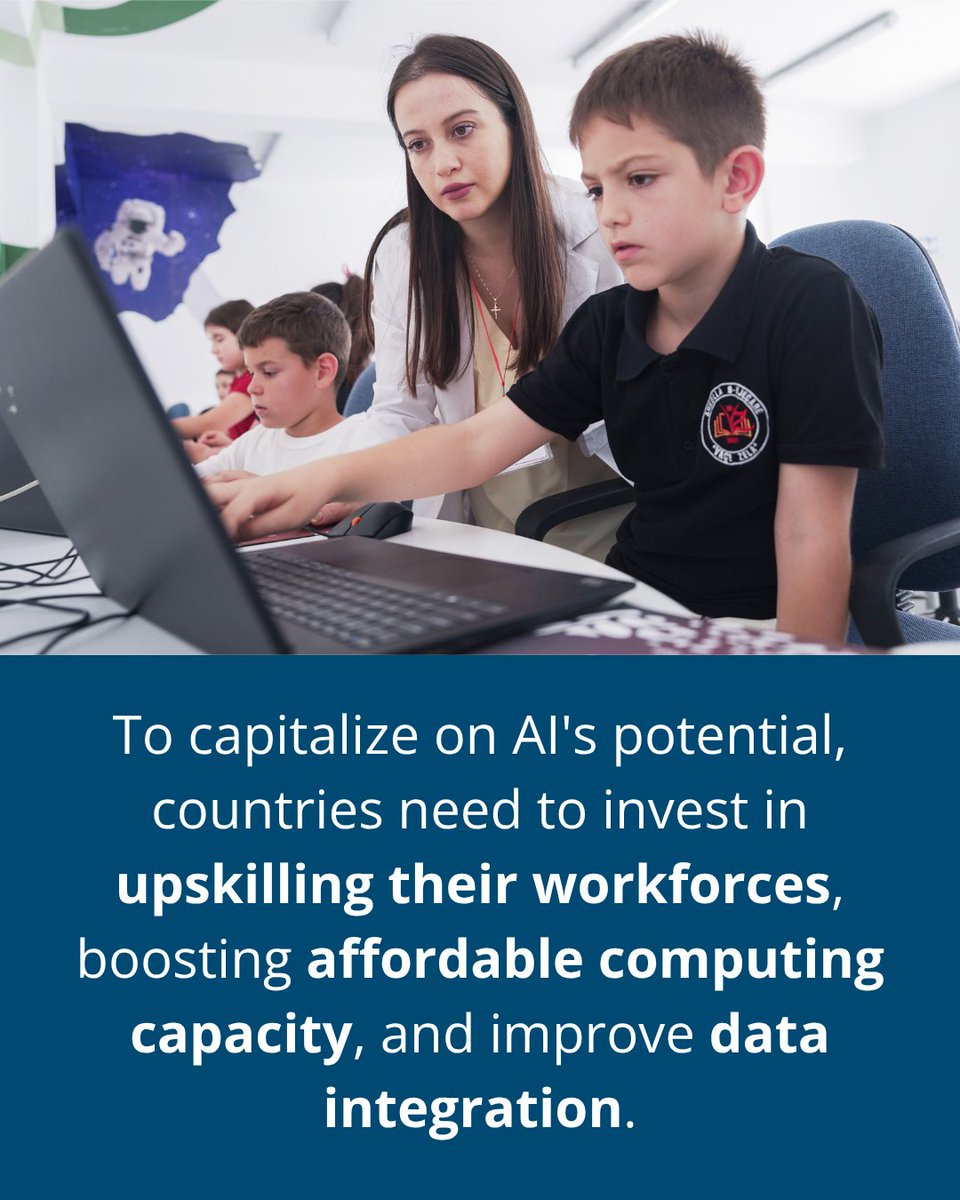
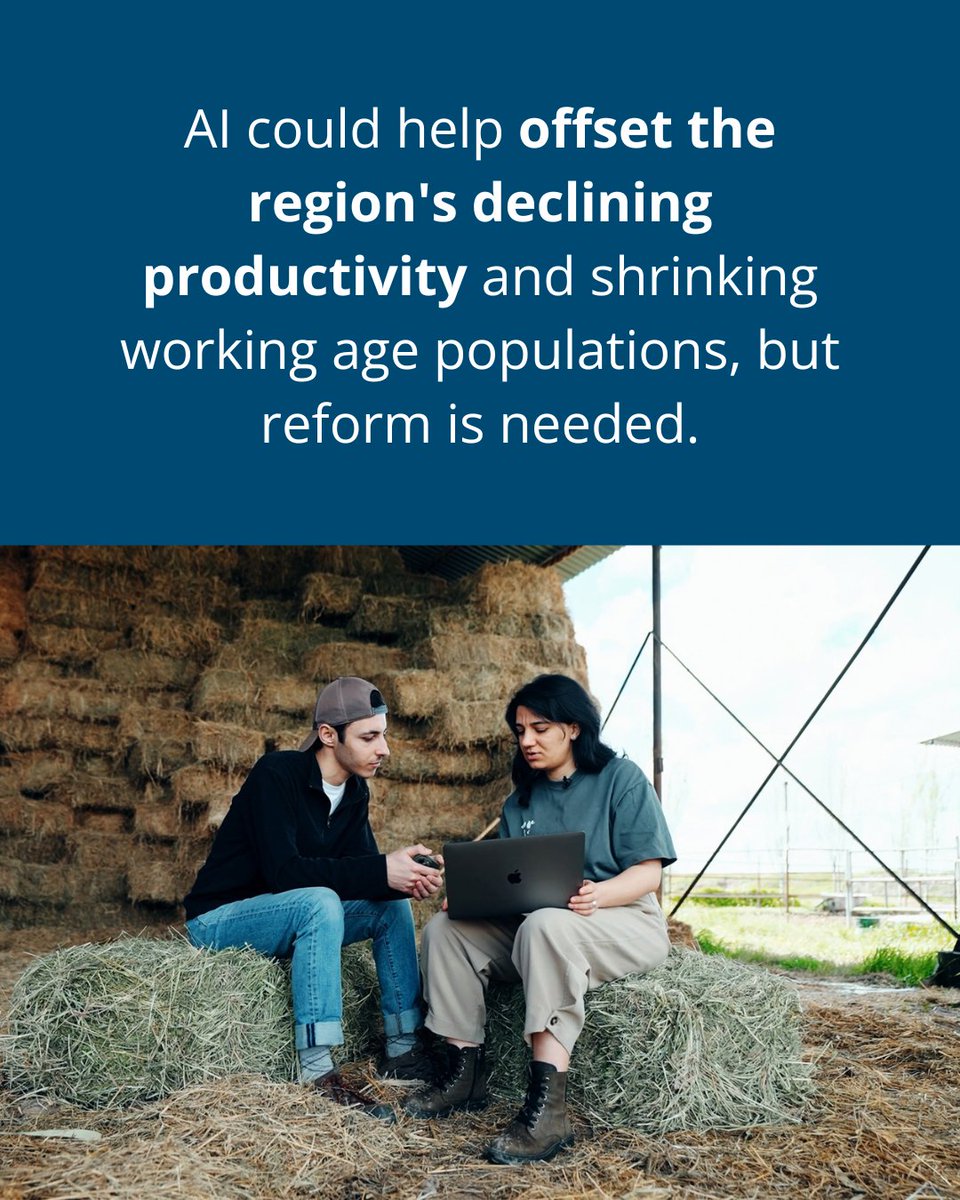
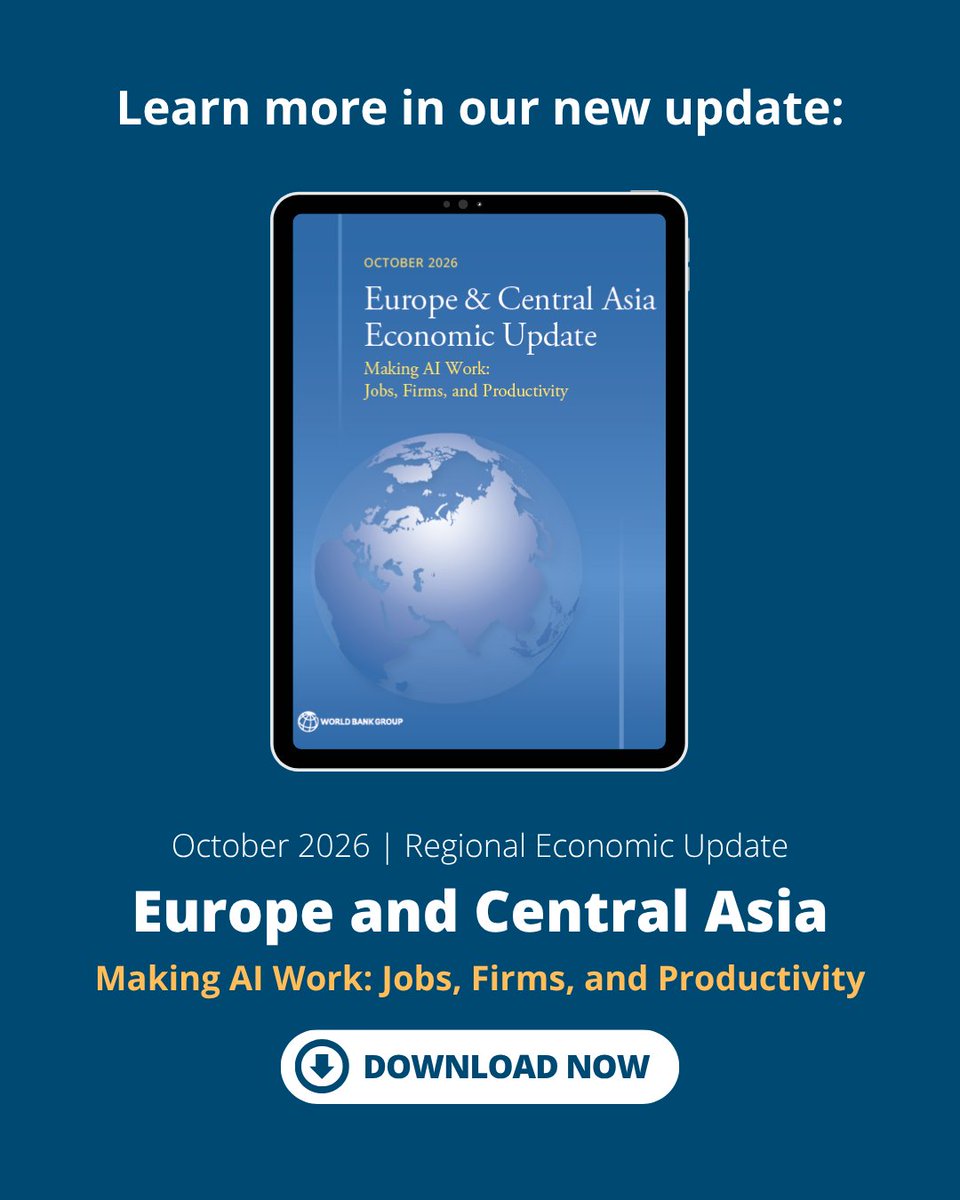
The @WorldBankGroup’s new #ECAUpdate outlines how firms and governments across the region are adopting this tech and ways forward: https://t.co/aXQvutnIwn
AI can help developing economies accelerate growth, but capturing its benefits takes more than access to new tools.
#WDR2026 lays out a path to adopt, adapt, and advance AI to meet local needs.
Join us live on September 30 to learn more: https://t.co/1ngOvRTw8G
Education quality is declining across much of Europe and Central Asia, hurting economic growth.
On #EducationDay, read this blog by the @WorldBank's @IvailoIzvorski, Michael Lokshin and @ivantorrewb outlining reforms to vocational and university programs: https://t.co/8ZNCTf65mz
Una gran pérdida. Oscar no fue solo un excelente economista y gran persona, sino que también contribuyó a la formación de decenas de jóvenes economistas. Se lo extrañará mucho.
Lamentamos el fallecimiento de Oscar Cetrángolo, investigador del @afispop y Profesor Titular de @UBAeconomicas.
Extrañaremos sus grandes aportes al conocimiento, así como su calidad humana.
Acompañamos a sus seres queridos en este difícil momento.
Want to learn more about the drivers of productivity growth in Europe and Central Asia? Then join our report launch next Wednesday.
Link to report: https://t.co/Mjp7PvEcUO
Livestream: https://t.co/TUaRoBR76d
#tidesofchange@leoiacovone@ivantorrewb
The developing economies of Europe and Central Asia face a serious jobs challenge.
Watch the @WorldBank's @IvailoIzvorski explain what's driving it ⬇️ #ECAUpdate
The quality of education across middle-income countries in Europe and Central Asia has deteriorated substantially in recent decades—creating a major obstacle to achieving high-income status.
Learn more in the @WorldBank's #GreaterHeights report: https://t.co/DmXRb06F2n
Our new report is just out!
Since 1990, 27 countries have reached high-income status. 10 were from Europe and Central Asia. What lessons can these countries offer other countries in the region and beyond?
Discover insights in the #GreaterHeights report (link in the next tweet)
🚨 📑 New Working Paper 📊
From Conflict to Compromise:
Experimental Evidence on Occupational Downgrading in Migration from Myanmar
@iza_bonn
https://t.co/AXMrbb9nwQ
We find that exposure to conflict in Myanmar makes graduates more amenable to take on lower-skilled work at migration destinations. This effect is stronger for women, minorities, and other disadvantaged groups in the labor market.
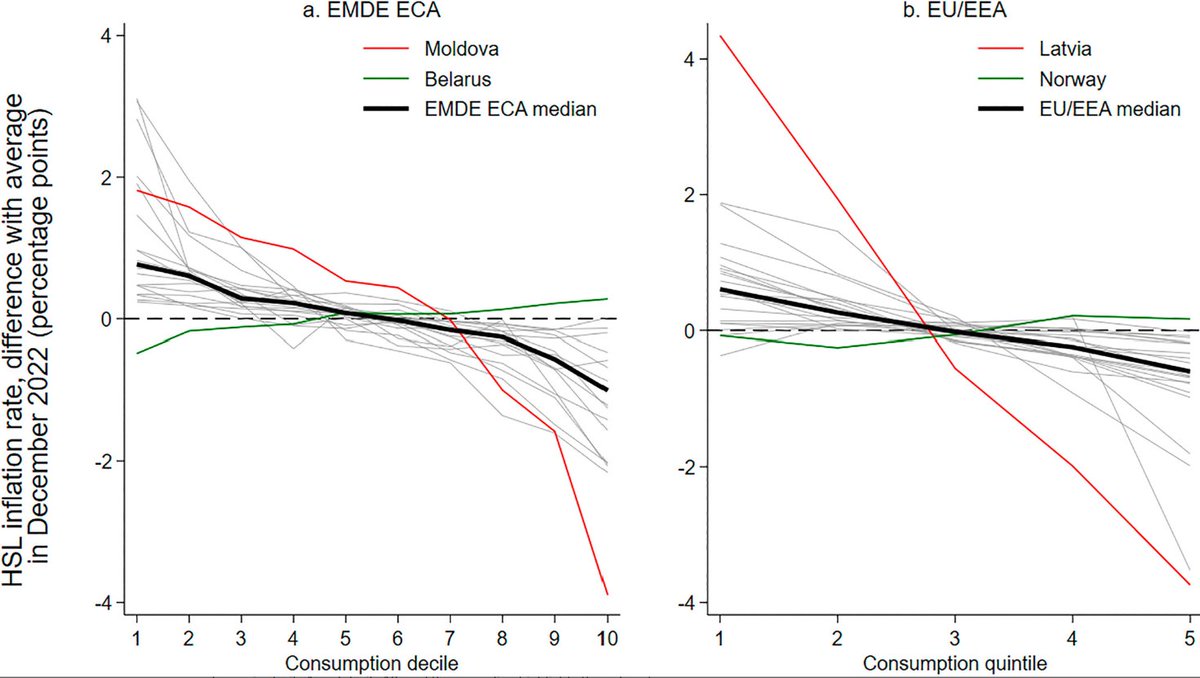
In particular, households in the bottom decile of the consumption distribution faced inflation that was, on aveagre, 2.3 percentage points higher than the inflation faced by households in the top decile. The difference reached 5 percentage points in some countries.
Just published - our paper with M. Lokshin and Z. Sajaia on the impact of the 2022 inflation shock in Europe and Central Asia: we estimate household-level inflation indexes and find that poor households were disproportionately more affected than rich ones https://t.co/Pbe1WJLDEN
Pleased to share our latest @WorldBank Policy Research Working Paper, "Growing Vulnerability: What Happened to Europe’s Middle Class in the Course of a Decade?" written along with @MaurizioBussolo, @JonathanKarver, Michael Lokshin, and @ivantorrewb, which takes a vulnerability-based approach to examining the evolution of Europe’s middle class between 2005–08 and 2015–18.
Key findings:
- The income level needed to avoid poverty—defined as the vulnerability threshold—rose in real terms, contributing to a shrinking middle class in many European countries.
- The composition of the middle class shifted, with a higher share of tertiary-educated household heads and those in managerial or professional roles.
- Households not yet middle class found it harder to move up, highlighting increasing barriers to upward mobility.
This analysis sheds light on the growing challenges faced by middle-class households and the rising vulnerability in Europe.
Read our full paper here: https://t.co/NiY4whuHV5
The Europe and Central Asia Chief Economist Office at the World Bank is looking for a research assistant to work in topics related to labor economics and, more generally, applied microeconomics. The application deadline is January 19, 2025. Please share!
Education quality is declining across much of Europe and Central Asia, hurting economic growth. The @WorldBank's @IvailoIzvorski, Michael Lokshin, and @ivantorrewb argue countries must act now, particularly on reforming vocational and university programs: https://t.co/8ZNCTf65mz
How can improving education help countries across Europe and Central Asia reach high income status?
Read this blog by the @WorldBank's @IvailoIzvorski, Michael Lokshin, and @ivantorrewb discussing the findings of our new #ECAUpdate: https://t.co/7xxd5w66w3