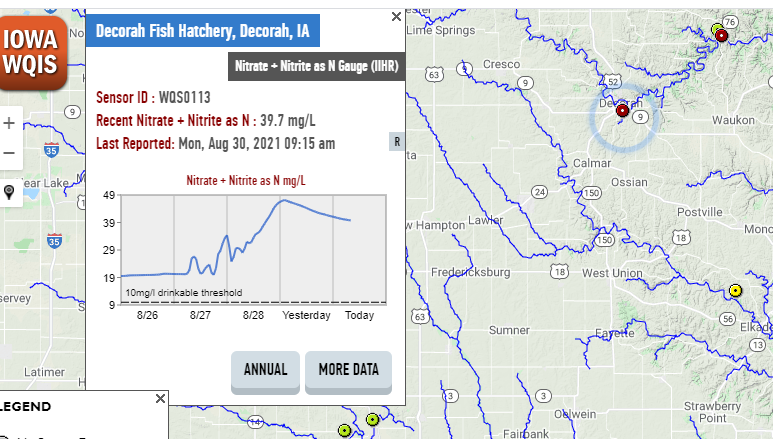
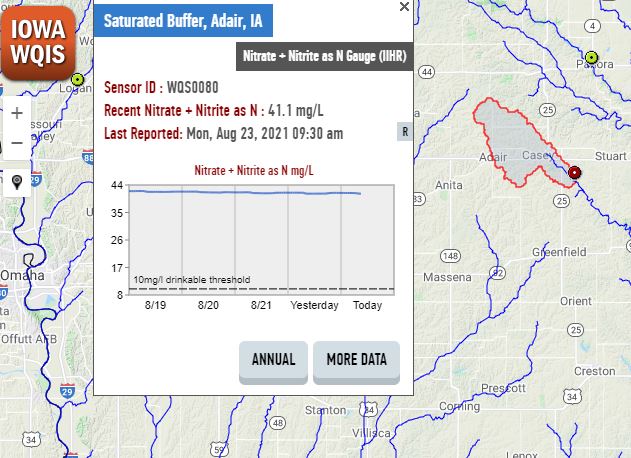
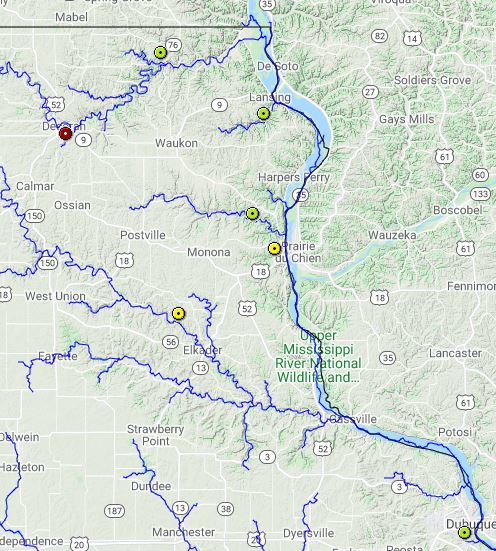
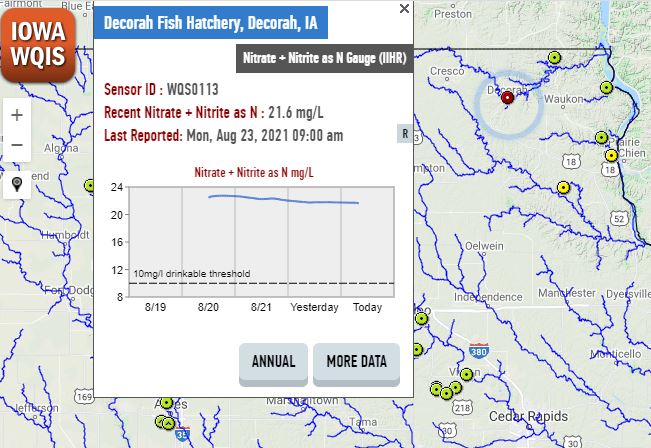
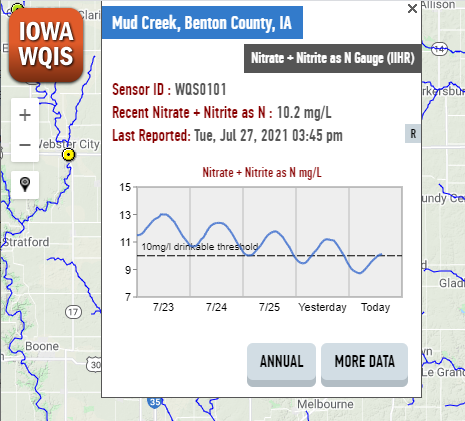
Iowa WQIS integrates data gathered by IIHR—Hydroscience & Engineering and the United States Geological Survey and offers access to real time nutrient data.
Props to @iowadnr fish hatchery staff at the Chuck Gipp fish hatchery for hosting a water quality sensor.
We have learned A TON about the contaminant hydrology in the Upper Iowa River Watershed just over the past 48 hours with their help.
https://t.co/evdfBTOlD3
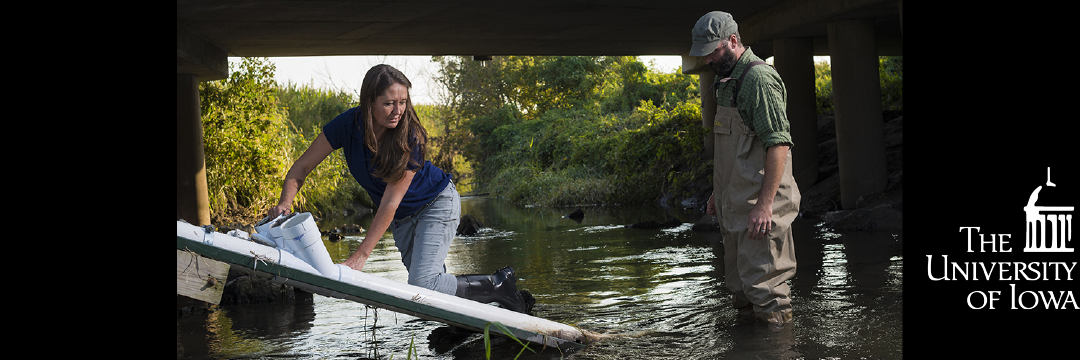
Last week our team installed a nitrate sensor in the spring supplying water to the Iowa DNR Decorah fish hatchery. Very high nitrate in that water--22 mg/L as N. Karst aquifers in NE Iowa are highly contaminated with nitrate. https://t.co/evdfBTOlD3
But the nitrate dip at the sensor doesn't always correspond to peak sun in the afternoon when the algae bloom because the moving river is flowing by the sensor. What the sensor sees may be reflective of the biological activity several hours earlier upstream.
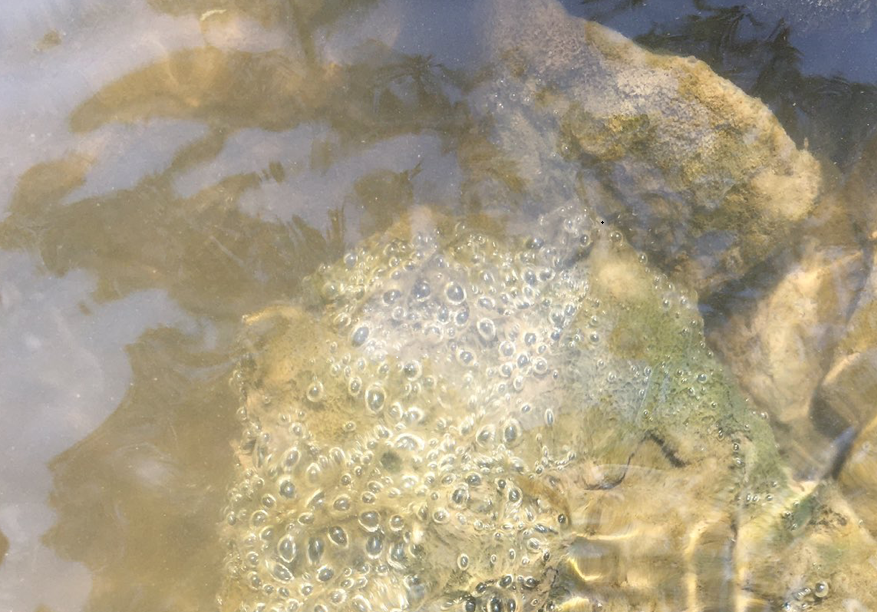
Diurnal (day/night) cycles in stream nitrate concentrations are common this time of year bc of biological activity, especially algae blooming during the day. The bubbles are algae respiring oxygen. They are using nutrients (nitrate and phosphorus) during photosynthesis
Three sensors now track nitrate in the main Cedar River Branches: Shell Rock River, West Fork of the Cedar River, and Cedar River at Janesville. Cedar River watershed has 11 nitrate sensors in total, most of any basin.
Iowa has about 3 million people. The state's livestock far outnumber us. They produce as much manure as "134 million people, which would place Iowa as the 10th most populous country in the world"
A staggering analysis by @IIHRUIowa's Chris Jones.
https://t.co/UjWn7TZTmJ
#ia
Powerful words by Chris Jones of @IIHRUIowa:
"[W]e knew our water was degraded, we knew what caused the degradation, we had ideas on how to fix it, but we didn’t fix it."
"And the reason we didn’t fix it is because we lacked the courage..."
https://t.co/AcCvIsxZdN
#IApolitics
A well water study known as SWRL2 (a follow-up to a study in the late 80's) sampled hundreds of wells across the state. How many of the wells had bacteria? Nitrate? Arsenic? Read about the CHEEC supported study here: https://t.co/PR3DKSa54F
Domestic animals in Iowa create as much waste as how many people???
@IIHRUIowa's Chris Jones explores Iowa's water quality challenges from unique angles on his blog. Read more here, then check it out for yourself. @RiverRaccoon
https://t.co/Wt3rpOxnxd
Good discussion and analysis on the cost vs benefit of using cover crops to reduce N losses from corn and soybean fields. Spoiler: cost >> benefit (other cc benefits not included)
h/t @RiverRaccoon
https://t.co/7rFwfViAha