NIGERIANS, GO AND VERIFY (5)
CONNECTING COMMUNITIES, UNLOCKING PROSPERITY: OUR ROAD INFRASTRUCTURE RECORD
Peter Obi
Another critical foundation of development is infrastructure, particularly road construction and maintenance.
Infrastructure is not just about constructing roads, bridges, and buildings. It is about connecting people, opening up economic opportunities, reducing poverty, and enhancing the well-being of ordinary citizens. A road that connects a farmer to a market, a patient to a hospital, a child to a school, or a manufacturer to a distribution centre is an investment in economic and human development.
This thinking informed our approach under the Anambra Integrated Development Strategy (ANIDS). We set out to connect all 177 communities in the State with motorable roads, paying particular attention to rural communities that had suffered years of neglect. Our objective was to build an interconnected road network that served the entire State, rather than concentrate projects in major cities or politically important locations.
I. The Road Revolution: Over 900 Kilometres of Road Projects
Between March 2006 and March 2014, during my two-term tenure in office, my administration asphalted over 900 kilometers of roads. These projects were deliberately distributed across the three senatorial zones of Anambra State to connect communities, facilitate commerce, and enhance transportation.
I acknowledge that Dr. Chris Ngige started the road revolution in Anambra State, and I commend the efforts his administration made in initiating several road projects. When we assumed office in 2006, we recognised the importance of continuing worthwhile projects rather than abandoning them simply because they had been initiated by a previous administration.
Among the roads we inherited from Ngige and completed were the Owerri–Ezukala–Umunze–Umuchu–Amesi–Uga–Igboukwu Road, where his administration stopped around Umuchu and we continued through Amesi, Uga, and onward to Igboukwu; the Iseke–Orsumoghu–Ukpor–Utu–Nnewi–Awka-Etiti Road, where his administration stopped at Ukpor and we continued towards Awka-Etiti; and the Ideani-Otuocha where work stopped around Awkuzu before our administration continued the project from Nteje to Otuocha.
There were also roads, such as Mmili John and Nkwelle Ezunaka bypass, which had been awarded before we took over, but on which no payment had been made by the time we assumed office. We took over these projects, assessed their status, and proceeded with the work. This was our approach to continuity in governance: acknowledging what had been started, distinguishing between projects merely awarded and those on which work and payment had actually commenced, and ensuring that important infrastructure projects were carried forward.
Some of the major roads and corridors included Amansea–Ebenebe Road; Aguleri–Umueze Anam–Mmiata Road; Nnewi–Ozubulu–Okija Road; and the Old Onitsha–Awka Road.
Other important projects included:
Awka and its Environs: Zik’s Avenue, Awka; Adazi-Nnukwu–Obeledu–Neni Road; 33 Junction–Nwafor Orizu College of Education Road; roads within the Awka Government Reserved Area (GRA); and the Old Nkpor–Amawbia Road.
Nnewi and Surrounding Communities: Nnobi–Nnewi Road; roads within Nnewi town; Akwaeze–Oraeri–Igboukwu Road; and Ekwulobia–Nkpologwu–Akpo–Achina–Umuchu Road.
Onitsha and its Environs: Bridge Head–Umunya Road; over 30 roads in other parts of Onitsha; more than 25 roads within the Onitsha GRA; over 20 stone-based roads within Harbour Industrial Estate, Onitsha; and the Nkwele Ezunaka Bypass.
Other Communities and Strategic Corridors: Awgbu–Amaokpala Road, with the Odor Bridge; Aguluezechukwu–Ogboji–Ajalli Road; Awkuzu–Igbariam Road, passing through the university; Owerri–Ezukala–Umuchukwu Road; Ugwuoba–Obosi Road; and Lilu Road.
🚨 𝗦𝗜𝗚𝗡 𝗧𝗛𝗘 𝗣𝗘𝗧𝗜𝗧𝗜𝗢𝗡: 𝗦𝗧𝗢𝗣 𝗧𝗛𝗘 𝗡𝗨𝗧𝗥𝗜𝗧𝗜𝗢𝗡 𝗕𝗜𝗟𝗟
A dangerous Bill before the National Assembly (HB.2659) seeks to create a monopoly over nutrition without protecting indigenous knowledge, traditional food practices, or family-based wisdom. It fails to define “practice of nutrition” yet threatens ordinary people with fines and jail for sharing recipes or food knowledge.
❗️This must not pass.
Sign the petition demanding its immediate withdrawal: 👇
https://t.co/6NPN1nu3CP
Share this with everyone you know.
🚨❤️🤍 BREAKING: Mikel Arteta signs new deal at Arsenal until June 2030, club confirms.
The agreement reported in the recent weeks has now been validated and confirmed by #AFC.
Arteta and his backroom staff key members, staying for 4 more years — pay rise also part of the deal.
@creative_yua Whenever I power my PC ON, the keyboard does not type until I restart it then the keypad starts working. What may be the cause and solution?
💬 “I’m here to play like a warrior – I’ll never give up.”
EXCLUSIVE INTERVIEW: Bruno Guimaraes is here to bring the fight 🎙️
Watch now on https://t.co/4KJlfKW7rt and The Arsenal App 📲
🚨🔴⚪️ BREAKING: Bruno Guimarães to Arsenal, HERE WE GO! 🇧🇷
Agreement in place with Newcastle after long talks and personal terms in place with Bruno since July. Fee worth £75m.
New midfielder for Mikel Arteta. 🔜
The abduction of the Chibok girls in 2014 triggered a global movement. One school abduction was enough to unite Nigerians, attract international attention, and place enormous pressure on the government through the #BringBackOurGirls campaign.
Yet, what has happened since then should trouble every Nigerian.
Under President Buhari's eight years in office, Nigeria witnessed about ten school abductions. Under President Tinubu's administration, in just three years, we have already recorded over ten school abductions.
Despite these repeated tragedies, there has been neither sustained national outrage nor significant international attention comparable to what followed Chibok.
This raises an important question: have we become so accustomed to insecurity that what once shocked our national conscience is now treated as normal?
At a time when millions of Nigerians are grappling with insecurity, poverty, and hardship, it is deeply troubling that those in power appear more focused on political calculations and preparations for the next election than on addressing the urgent challenges confronting our people.
It is, therefore, no surprise that some observers have labelled us a "Now Disgraced Nation". While we do not agree with any attempt to define our great country by its present difficulties, we must acknowledge that persistent insecurity, economic hardship, and leadership failure have damaged our reputation and standing among nations.
The answer is not denial, propaganda, or political distraction. The answer is leadership that is competent, compassionate, accountable, and genuinely committed to the welfare and security of the Nigerian people.
The Nigerian youth must not become indifferent. We must all refuse to normalise failure.
Young Nigerians - Take back your country!
A New Nigeria is Possible. -PO
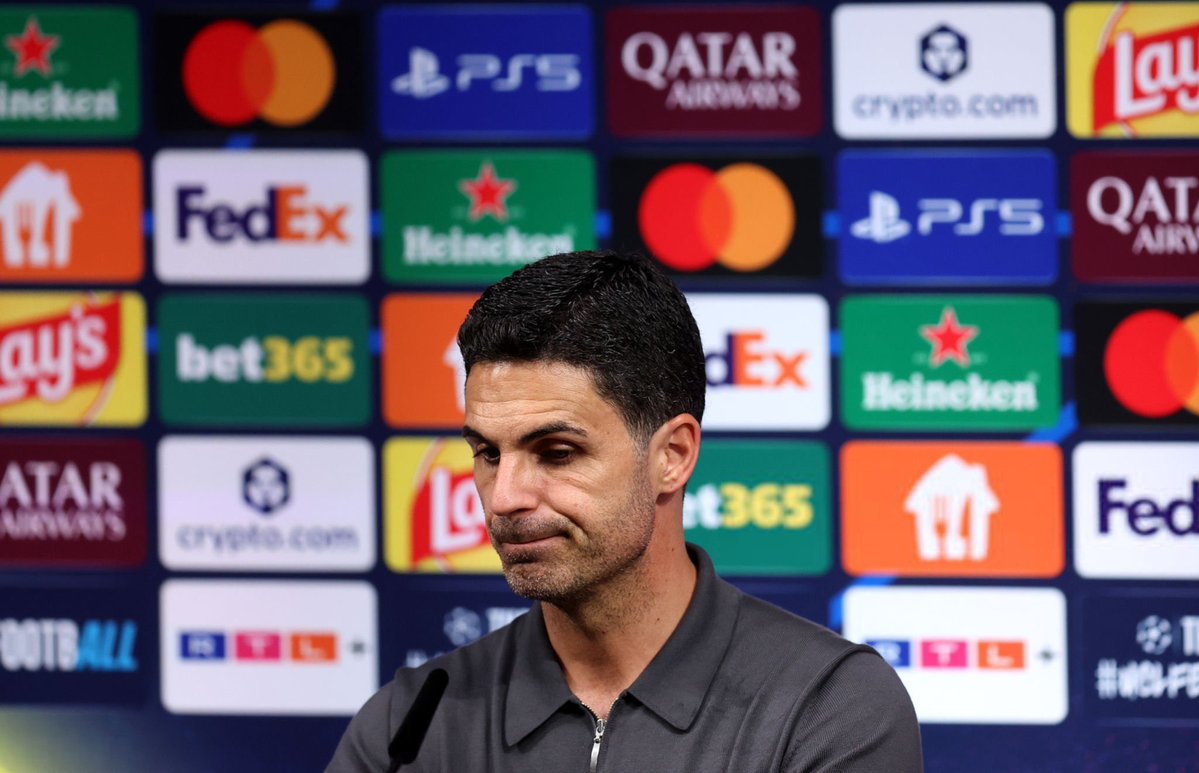
🔴⚪️❗️ Arteta: “We start to make some very important decisions if we want to reach another level”.
“And we're going to have to show that ambition. We are more than capable of doing it, but it's going to demand us to be very, very ambitious, very fast and very smart”.