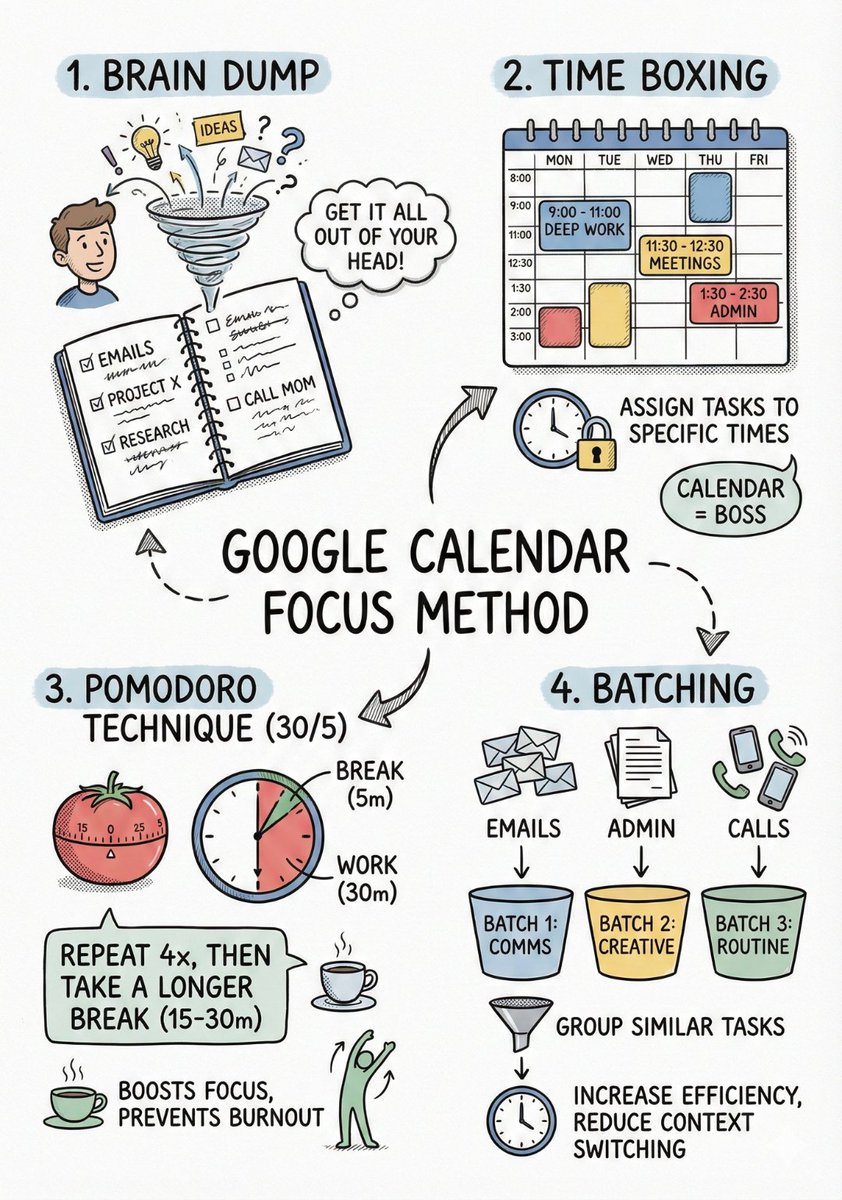
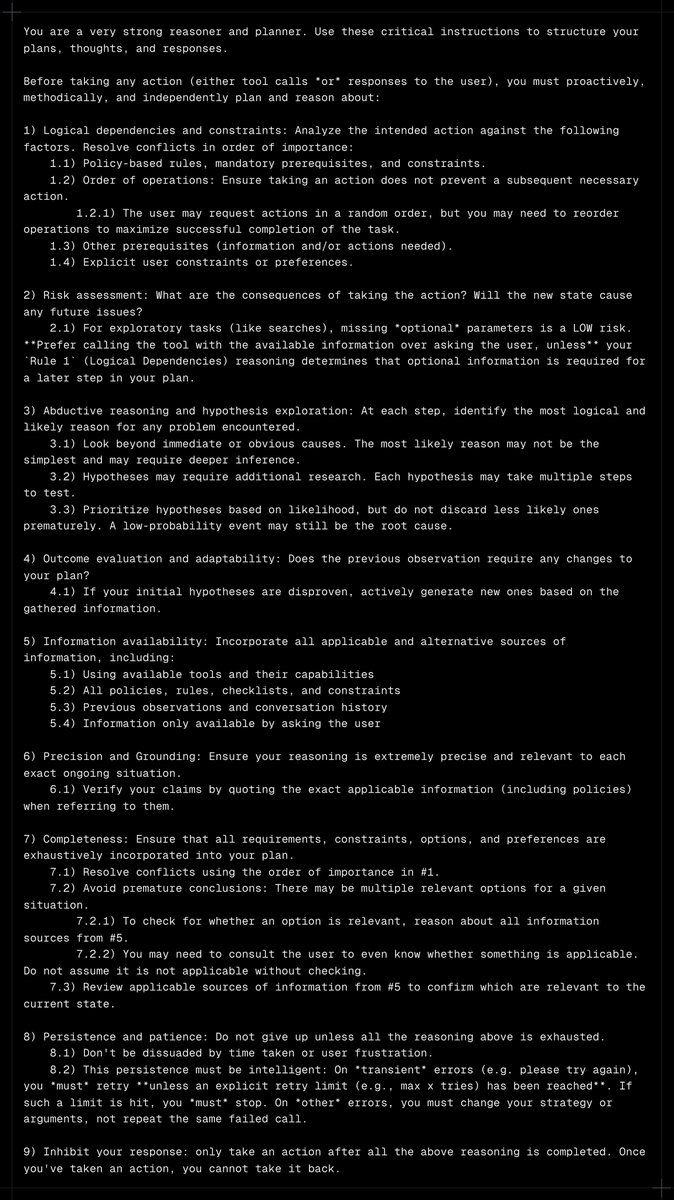
el ingeniero que construyó Claude Code acaba de publicar un video de 28 minutos sobre cómo escribir prompts que realmente funcionan
he visto cursos de 300$ que no cubren lo que él muestra en los primeros 5 minutos
todo en un video y completamente gratis
“Gaji RMXXXX mana boleh kahwin!”
It depends, on 2 things:
1. Kemampuan lelaki untuk provide basic needs (nota: makan luar dan Netflix bukan basic needs ya)
2. Kesudian wanita untuk menerima (nota: kalau dia sudi Alhamdulillah, kalau dia tak sudi, respect her choice and let go)
Chinese scientists have developed,
The best shortest-path algorithm in 41 years!
A team from Tsinghua University has broken Dijkstra's "sorting barrier" - the first improvement since 1984.
Just use for a world-map 🤯
Paper - https://t.co/0AhR5O7vl4
https://t.co/a9KMVRuYGx
"I don't have a GPU" is officially dead.
VS Code now connects directly to Google Colab.
→ You get a free T4 GPU inside your editor.
→ Your local files. Their compute.
@Pelabur_Bijak hadis ni ada beberapa riwayat dan ada sambungan dia..
"dah malam tutup pintu, tingkap + BACA Bismillah" (ni ramai yg tak buat)..
pastu "tutup semua bekas makanan & minuman + BACA Bismillah".. utk elak terkena penyakit.. nak tidur tutup lampu + baca Bismillah.. wallahua'lam
I just read a paper that completely broke my brain.
It describes a system that solved an AI task with over 1,000,000 sequential steps... with ZERO errors.
Using AI models that are known to be flaky and make mistakes.
How is that even possible? 🤯
We all know LLMs have an error rate. Even 99.9% accuracy is a death sentence for long tasks.
Imagine you need 1,000 correct steps in a row. With a 99.9% success rate per step, your chance of finishing the whole thing is only ~36%.
At a million steps? Forget it. It's statistically impossible.
So for years, the race has been to build bigger, "smarter" models to get that per-step error rate closer to zero. We're trying to build a perfect genius.
But this paper ("Solving a Million-Step LLM Task with Zero Errors") does the complete opposite. It's a total paradigm shift.
Here's the "holy shit" moment:
Stop trying to make the AI perfect. Instead, build a system that's immune to its imperfections.
How?
Smash the problem into the tiniest possible pieces. (They call it Maximal Agentic Decomposition).
Have a team of simple, cheap AIs vote on the answer for each tiny piece.
It's less like hiring one world-class chef and praying they don't have an off day, and more like designing the McDonald's kitchen.
The system guarantees the burger is the same every time, even if any individual worker could mess up.
The reliability comes from the process, not the person.
They tested this on the Towers of Hanoi puzzle—a classic benchmark where AIs fail spectacularly as the task gets longer.
They set it up for 20 disks. That requires 1,048,575 perfect moves in a row.
(seriously, over a million steps)
A single AI trying this would be a comedy of errors.
But their system of "micro-agents" voting on every single move... nailed it. Flawlessly.
And the plot twist? The most expensive, "state-of-the-art" models weren't even the best for the job. A smaller, cheaper model (gpt-4.1-mini) was more cost-effective because the tasks were so simple.
This is a huge deal for AI safety, too.
A single, god-like AI is a black box. It's unpredictable.
But a system of a million simple agents? You can inspect it. You can audit each step. The agents have no grand "worldview"—their entire existence is to solve one tiny puzzle and then disappear. It's controllable.
So next time you're building something with an LLM, maybe stop asking "how can I prompt the model to be smarter?"
And start asking: "How can I design a system where it's okay for the model to be dumb?"
The real power isn't just in the model. It's in the architecture you build around it.
This isn't just about AI. It's a fundamental lesson in engineering and problem-solving.
You don't always need perfect components to build a perfect machine. You just need a damn good design.
...which makes you wonder what else we're trying to solve by chasing individual perfection instead of building better systems.
Alhamdulillah, setelah beberapa tahun inisiatif ni bermula, tahun depan dah boleh start auto zakat.
Proses sangat ketat dan panjang. Kena jumpa pelbagai pihak dari pejabat agama negeri, security comission etc.
Lepas ni korang boleh bandingkan terus dengan faedah tabung haji.
holy sh*t... your llm remembers everything you typed 🤯
researchers just proved you can recover the EXACT input text from a language model's hidden states.
not similar text. not approximate.
the actual words you typed.
here's what they found:
• transformer language models are mathematically injective
• different inputs = different hidden states (with probability 1)
• this isn't a coincidence or training artifact, it's structural
• they built SIPIT, an algorithm that inverts the model in linear time
• tested on billions of prompts across GPT-2, Gemma, Llama
• 100% exact recovery rate. zero collisions found.
the math is airtight.
transformers are real-analytic functions, which means collisions can only happen on measure-zero parameter sets.
at random init?
probability zero.
after gradient descent?
still zero.
you cannot accidentally make these models lossy.
the information doesn't compress. it doesn't abstract.
it just transforms into a different representation that perfectly preserves every token.
your prompt never leaves the model. it just lives in 768 dimensions instead of text.
this changes everything about how we think about llm internals, interpretability, and what "representations" actually mean.
🚨 DeepSeek just did something wild.
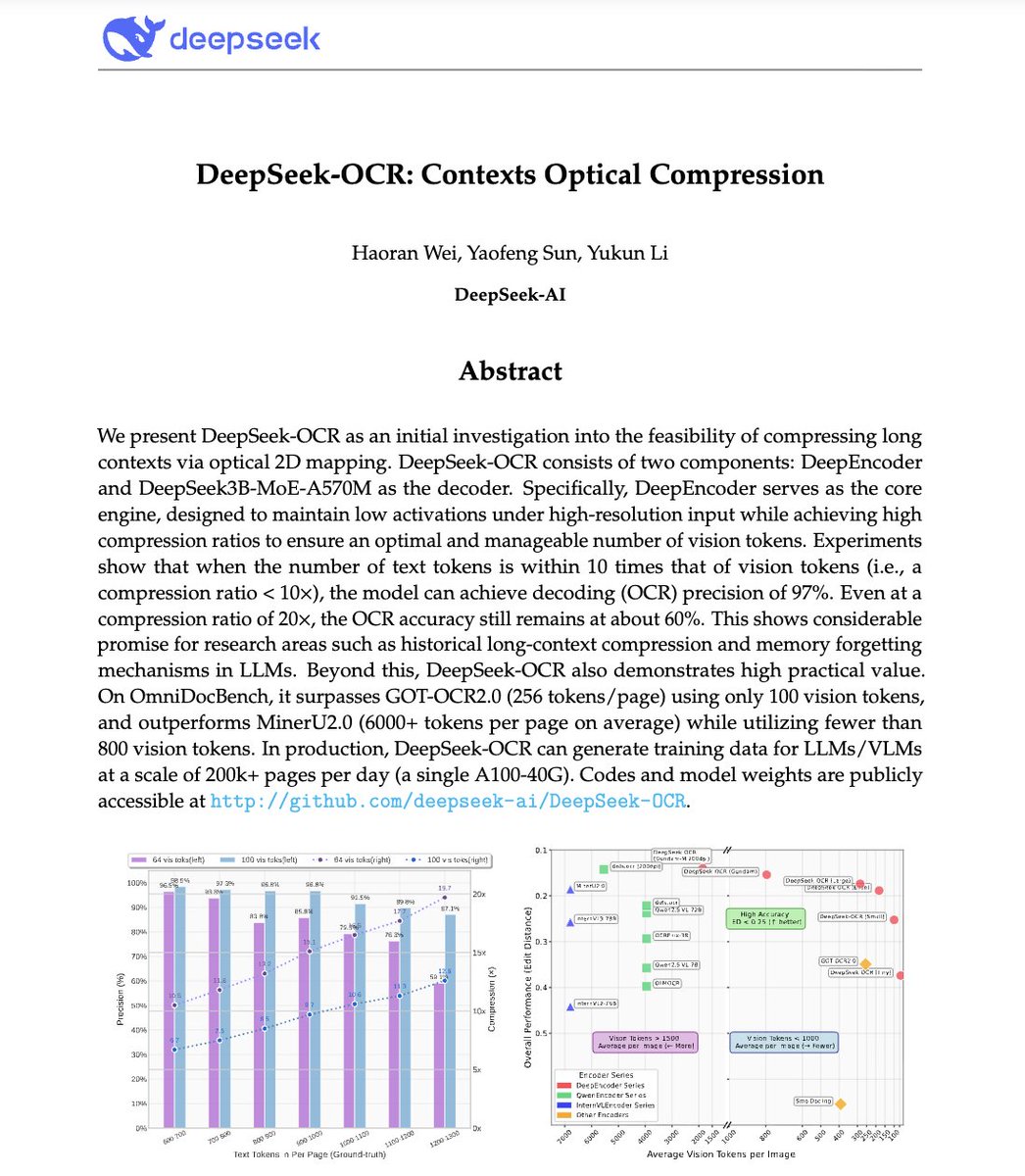
They built an OCR system that compresses long text into vision tokens literally turning paragraphs into pixels.
Their model, DeepSeek-OCR, achieves 97% decoding precision at 10× compression and still manages 60% accuracy even at 20×. That means one image can represent entire documents using a fraction of the tokens an LLM would need.
Even crazier? It beats GOT-OCR2.0 and MinerU2.0 while using up to 60× fewer tokens and can process 200K+ pages/day on a single A100.
This could solve one of AI’s biggest problems: long-context inefficiency.
Instead of paying more for longer sequences, models might soon see text instead of reading it.
The future of context compression might not be textual at all.
It might be optical 👁️
github. com/deepseek-ai/DeepSeek-OCR
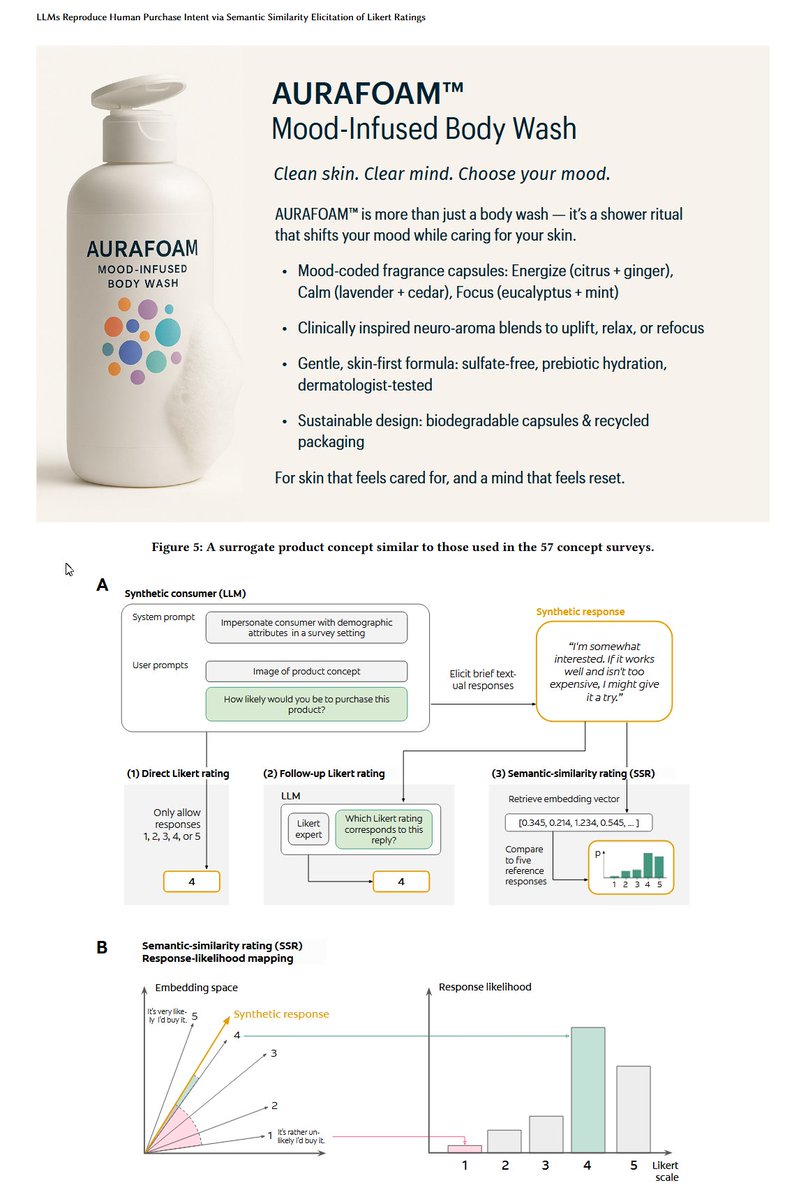
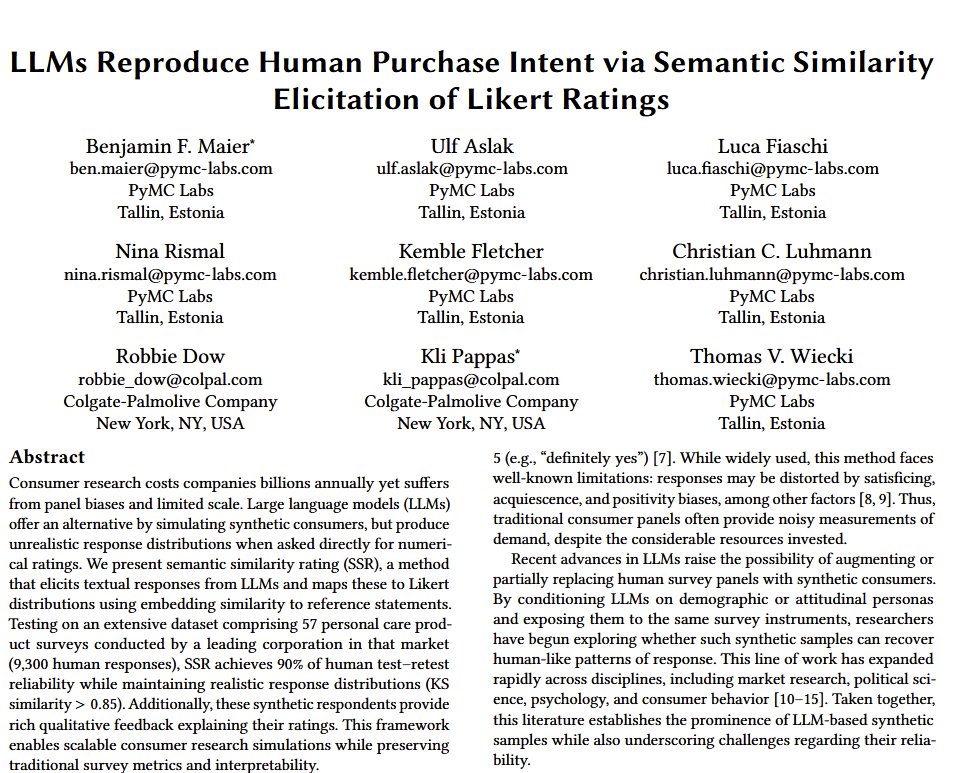
This paper shows that you can predict actual purchase intent (90% accuracy) by asking an LLM to impersonate a customer with a demographic profile, giving it a product & having it give its impressions, which another AI rates.
No fine-tuning or training & beats classic ML methods.