The two things I'm excited about are Gen G vs. T1...
and new NASA's $10 Billion contract to begin settling on the moon. NASA selected:
- $SPCX (SpaceX)
- Blue Origin
- $FLY (Firefly)
- $LUNR (Lunar)
- $LMT (Lockheed Martin Space)
- $NOC (Northrop Grumman Space)
- $VOYG (Voyager)
- iSpace US
to compete for future lunar delivery missions
- $1.3B in launch and orbital transportation orders awarded to Arrow Science, Blue Origin, and Impulse Space.
- $94 million for Blue Origin to deliver NASA's nuclear powered PROMISE rover
- Existing CLPS 1 contract ceiling raised from $2.6B to $4.2B.
- NASA also announced awards to Honeybee Robotics, a Blue Origin company, $RDW for a lunar power and communications tower
이더유 16불에 1100개 23~28불까지 분할매도하여 현재는 350개정도만 홀딩. 다팔고 이더기준 다시 주봉 20선 닿을때 매수하려고 했는데 잔량만 남겨서 끝까지 들고가려고 했음... 머 암튼 지금은 주봉 20선 닿고 약간 반등추세라 고민했는데 지금은 속슬과 구글 인텔이 더 매력적인거 같아서 모으기로
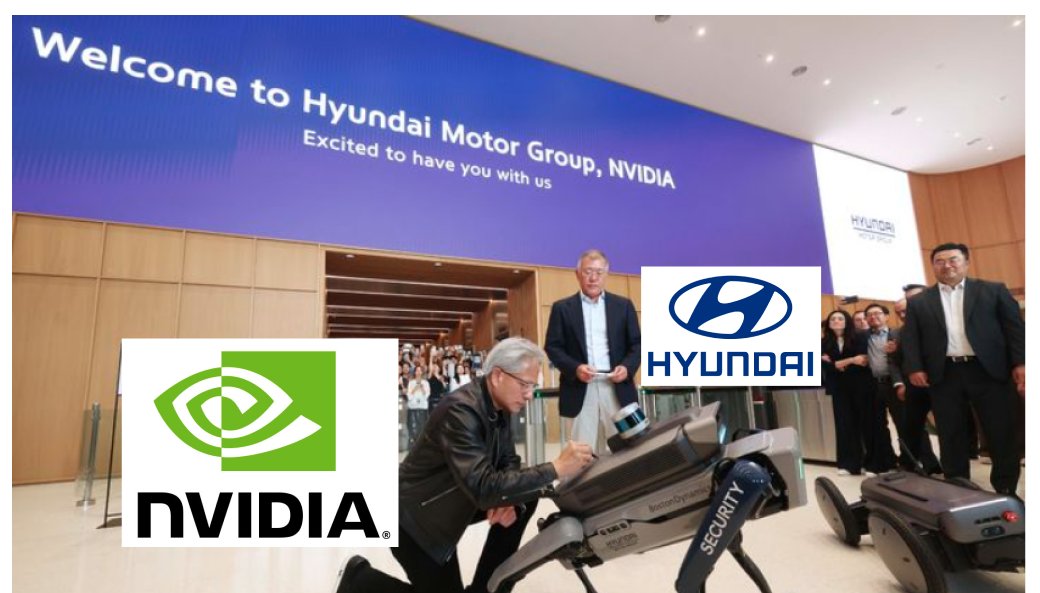
정의선 형에게..
형. 힘들지?
형도 느끼겠지만
현대차 이대로가다간 몇년 못가..
테슬라 모델Y가 한국 시장
석권한거 이거 그냥 볼거 아니야.
애플 아이폰이 한국에 처음 출시했을때
그당시 한국에 여러 폰이 있었지?
인터넷은 우리도 되는데 왜 아이폰 쓰냐고
언론들이 조롱했지?
그리고 결과가 어케됬어?
지금 테슬라 조롱하는 언론만 보고
안심하면 큰일나.
폰 이야기 좀 더해보자.
그당시 세계최고 점유율 노키아도 망했는데
어쨋든 삼성의 겔럭시는 살아남았자나?
그 이유가 뭐일거같아?
삼성은 깔끔하게 인정한거야.
IOS 생태계를 우리가 만들순 없다.
그냥 구글 안드로이드 받아들이자.
그래서 핵심인 모바일 생태계는
구글이 들어오고
삼성은 폰 자체만 잘 만들어서 살아남았지.
이게 기업입장에 짜증날수있어.
이해해.
해게모니가 완전 넘어가는거니까 말이야.
그럼에도 불구하고 지금
그걸 따질때가 아니야.
세상은 바뀌고 있어.
이제 자율주행 없는 차는 아무도 사지 않을거야..
어찌보면 모바일 혁명보다 더 큰 혁명이지.
그리고 애플의 IOS는 생태계 선점이지
기술적으로 난이도가 높진 않아..
그런데 테슬라의 FSD는 인류가 한번도 도달해보지 못한 기술이야.
지금와서 뭘 해본다고 따라갈 수준이 아니야..
그래서 나는
현대가 살아남기 위해선 반드시
테슬라의 FSD 라이센싱을 선제적으로 받아야 한다고 생각해.
알아 나도.
현대랑 모든 레거시 업체들이 무슨생각하는지 ㅋㅋ
다 엔비디아 바라보고 있지? ㅋ
근데 형 이걸 생각해봐.
엔비디아에서 자율주행 개발 인력과
쓰는돈이 얼마일거같아? ㅋ
테슬라랑 비교할수있을거같아?
그리고 젠슨황이 정말 이걸 미래 먹거리로 생각하고 집중할까?
아니야.
테슬라야 말로 엔비디아의 오랜 고객이야.
앞으로 옵티머스 칩까지 생각하면 더더욱 그렇지 ㅎ
물론 테슬라 본연의 AI5칩이 있지만
어디 그것만 가지고 되겠어? ㅎ
그렇게 치면 구글도 TPU만 쓰게? ㅎ
암튼 엔비디아 너무 믿지마.
그들은 자율주행이 주력이 될수가 없어.
그냥 확실한
FSD 라이센싱 받아.
그것도 선제적으로.
테슬라 입장에서도
FSD를 라이센싱한다는 의미가 매우커.
지금과는 또다른 벨류업으로 가는 길이지.
그래서 제일 먼저 FSD 라이센싱을
하려는 기업과 매우 긴밀하게 소통할 가능성이 높아.
빼먹을건 빼먹으라고.
삼성과 구글의 관계 함 봐바.
물론 디램도 있긴하지만
그전에 안드로이드 겔럭시 동맹이 정말 막강해.
마지막으로 형을 위해 형 사진,
머리있는 시절꺼 썼어.
현대차는 한국 경제의 중요한 일부야.
형의 판단이 수많은 노동자들을 살린다는거
잊지 않았으면해.
피터 틸이 14년 전에 구글 $GOOGL 면전에 날린 극딜,
결국 예언대로 적중함 ㅋㅋㅋ
2012년에 피터 틸이랑 에릭 슈미트(당시 구글 회장)가 맞장뜬 전설의 영상이 다시 수면 위로 올라옴.
틸 형님이 슈미트 코앞에서 아주 팩폭을 거하게 꽂아넣었는데, 요즘 AI 시대 오니까 토씨 하나 안 틀리고 다 맞아떨어지는 중임 ㅋㅋㅋ
당시 피터 틸이 슈미트 면전에서 털어버린 핵심 포인트:
• 구글은 테크 기업이 아님:
솔직히 말해서 혁신 기술 기업 코스프레 그만해라.
본질은 그냥 10년 전에 만든 검색 엔진 하나로 꿀빠는 광고판일 뿐임.
• 투자 논리의 모순:
구글 주식 사는 건 기술 발전에 베팅하는 게 아니라, "앞으로 10년 동안 검색 쪽에서 혁신적인 새 기술이 절대 안 나올 거다"에 베팅하는 거나 다름없음.
• 현금 쌓아두는 핑계:
당시 구글에 현금이 300억~500억 달러나 썩어 넘치는데 배당도 안 줌.
배당 풀면 시장에 "우리 이제 성장 끝난 테크 기업 아닙니다" 자백하는 꼴이라 기술 투자하는 척 현금 쥐고 쇼하는 거라 일침 놓음. (마이크로소프트도 똑같이 깠음 ㅋㅋㅋ)
이게 왜 지금 와서 난리냐고?
최근 제미나이(Gemini) 같은 생성형 AI 나오면서 전통적인 검색 엔진 트래픽이 실시간으로 갈려나가는 중임.
구글 스스로도 AI가 지들 밥줄인 검색을 갉아먹는(카니발리제이션) 거 뻔히 알면서도 울며 겨자 먹기로 검색 엔진 희생시키는 각을 보고 있음.
유튜브, 안드로이드, 웨이모 같은 딴 주머니가 있어서 어떻게든 버틴다지만,
결국 본진인 검색 하나로 날로 먹던 시대는 끝장남.
14년 전 피터 틸이 "검색 원툴 기업"이라고 뼈 때린 게 이제야 제대로 체감되는 중 ㅋㅋㅋ
결국 영원한 해자는 없고,
14년 전에 날린 독설이 2026년에 정확히 명치에 꽂히는 게 레전드임 ㅋㅋㅋ
Not financial advice
People keep calling this a "drone sector."
I think that's probably the wrong frame.
As you know, war changed the math first.
Ukraine produced ~4M drones in 2025.
Target for 2026 is reportedly 7M.
Daily consumption at the front is estimated at 10,000+ units.
Russia launched 54,000+ Shahed drones into Ukraine in 2025 alone.
A Patriot interceptor reportedly costs $3M+.
A Ukrainian Sting interceptor drone?
Around $2,500. One night. Two operators. 23 Shahed drones down. That's probably the new math of warfare going forward.
For context, the entire global agriculture drone market was around $3.37B in 2025.
The battlefield consumption in Ukraine likely burned through that equivalent in months, not years.
Agriculture drones matter. But the scale isn't really comparable.
Military drone market projected by 2030: ~$90B.
Agriculture drone market by 2030: ~$22.5B.
The demand curve, at least for now, isn't coming from farms.
Now the stocks. This is how I see the layers, though I could be wrong on some of this.
$AVAV : probably the benchmark here.
FY2025 revenue: $820M, +14.5% YoY
FY2026 guidance: $1.9B~$2B
Backlog: $726M.
Total bookings: $1.2B (roughly 2x YoY)
Loitering munitions revenue: +87% YoY Profitable, contracted, multi-domain. This is probably what a real defense prime looks like for anyone who wants a reference point.
$RCAT : I think this one gets underestimated.
Q1 2026 revenue: $15.5M, +849% YoY
FY2025 revenue: $40.7M (+459% YoY)
FY2026 guidance: $150M~$180M, 30% gross margin target
Pentagon Drone Dominance Program participant
Black Widow SRR sole provider for U.S. Army
Palantir partnership for AI navigation
Cash: ~$168M.
Still unprofitable, but gross margin just turned positive. Hardware that's actually being deployed, not just announced. Worth watching closely.
$ONDS : probably the layer most people miss.
FY2025 revenue: $50.7M (+605% YoY)
Q1 2026: $50.1M. FY2026 guidance raised to $390M+
Backlog: $457M
FullMAX SDR: patented software-defined radio for secure wide-area networks
Palantir partnership. World View ISR. Navy SOUTHCOM contract.
The SDR platform isn't just a drone feature.
It's probably better described as a communication infrastructure layer. Rail, utilities, oil & gas, government, defense.
The drone sits on top of a network that ONDS controls. That's likely where the moat is.
$SWMR : I think this is the most interesting software play, but it's also probably the trickiest one right now.
IPO March 2026, priced $5, opened $12.50
100,000+ combat missions validated in Ukraine
STYX C2 + MINAS collaborative AI + TRIDENT embedded OS
GPS-denied operation, mesh networking, vendor-agnostic
$2.86M SkyKnight contract, May 2026
Q1 2026: revenue declining, losses widening
SWMR hit $70+ recently.
Honestly, that's a valuation that seems to be moving faster than the revenue can justify right now.
IPO to roughly 14x in under 3 months.
The technology is probably real. The combat validation seems real.
But at that price, the story looks priced in before the contracts actually show up in the numbers. I'd probably wait and watch the next earnings before adding here. Some degree of short-term correction seems likely.
$DPRO : real hardware, real customers, still small.
Q1 2026 revenue: $2.31M, +49.4% YoY (record)
Cash: $147M
U.S. Air Force Special Ops contract
Still unprofitable, losses widening Execution story for now, not really a moat story yet.
One thing worth mentioning clearly.
Simple drone manufacturing probably isn't a moat.
Low-cost FPV drones in Ukraine reportedly cost $500~$2,000 to build.
Ukraine went from roughly 7 domestic manufacturers pre-war to 500+ by 2025.
Any sufficiently motivated team can build a drone body.
The barrier to entry for hardware alone seems relatively low.
What's harder to replicate, I think: combat-validated AI autonomy, GPS-denied navigation, patented SDR communication layers, and multi-domain C2 software. That's probably where the real moat lives.
Last thing worth keeping in mind.
If semiconductors roll over, this whole sector will likely roll with it. AI defense hardware runs on the same chip supply chain as every other AI trade. If that corrects hard, I wouldn't expect drones to decouple. They probably won't.
I play across large cap, mid cap, small cap, and micro cap. Each level has its own risk profile. Size your positions accordingly, and do your own research.
Not financial advice. Good Luck!
Seeing Jensen Huang land in Korea brings up a lot of
mixed but mostly proud emotions for me. It is truly
remarkable to see companies like
- $005930 (Samsung Electronics)
- $000660 (SK Hynix)
- $005380 (Hyundai Motor)
operating on such a massive global scale and
elevating our national presence.
The world is changing incredibly fast. At home, there is
a lot of domestic noise right now with the elections,
but I sincerely hope things settle down soon so we can
focus on the future. Putting the politics aside, this visit
made me reflect deeply on where Korea stands in the
global AI supply chain.
Here are my thoughts on where we might be heading.
1) The Evolution of Semiconductors
From my perspective, the semiconductor dynamic
is shifting from simple supply to actual codevelopment.
To give a bit of context, the chipmaking process
generally goes through three main phases: design
(architecting the blueprint), foundry (manufacturing the
physical silicon wafers), and packaging (stacking and
connecting the chips to work together).
Starting with the upcoming HBM4 and HBM5, the base
die will be built using advanced foundry processes.
Samsung is aiming to offer a turnkey solution that
covers design, memory, foundry, and packaging all in
one ecosystem. While we have to wait and see how the
yields play out, providing this all in one service could
be a significant advantage for Nvidia.
But $Nvidia is not the only tech giant realizing that
controlling the entire hardware stack is the ultimate
endgame. Just look at what Elon Musk and Intel are
attempting to pull off right now with the Terafab
project.
In March 2026, $Tesla and SpaceX announced a
massive joint venture with Intel Foundry Services to
build a vertically integrated semiconductor plant in
Texas. Musk made a blunt admission that the current
global capacity of $TSMC, $Samsung, and $Intel
combined will simply not be enough to handle the
massive inference needs of Full Self Driving(FSD) and his Optimus robots.
What is truly fascinating is how Terafab directly mirrors
$Samsung's turnkey ambitions. $Tesla and $Intel are trying to consolidate everything from logic fabrication and memory production to advanced packaging under a single roof. We are essentially watching two massive
alliances race toward the exact same concept of total
vertical integration.
On one side, you have the $Tesla and $Intel alliance
taking a massive gamble to build a unified ecosystem
in the US. On the other side, you have the $Nvidia and
Samsung alliance leveraging a massive physical
infrastructure that is already heavily established in
Korea. While Intel has struggled to execute its
advanced process roadmap consistently, $Samsung
already holds a dominant global position in memory
and packaging. If $Samsung can successfully prove its
turnkey model with $Nvidia before Terafab scales up, I
believe it will cement Korea's status as the undeniable
center of gravity for global AI hardware.
2) $Hyundai and the Shift to Physical AI
Having spent years seeing with actual operational
technology and physical plant equipment, I have seen
firsthand how messy and unpredictable real world
manufacturing data can be.
$Hyundai did not just jump into robotics overnight. Theywent through years of trial and error with traditional mobility before realizing that standard automated machines simply cannot handle the infinite variables of the physical world. That realization led to their acquisition of Boston Dynamics in 2020 for about $1.1 billion. They have been experimenting with how to fuse raw mechanical hardware with adaptive software ever since.
Jensen Huang noted that humans need the cloud, but
robots need AI factories. The vision for the
Saemangeum AI Valley seems to align perfectly with
this concept. It looks like a testing ground to mass
produce the brains of robots by feeding them massive
amounts of physical world data. Autonomous
platforms like MobED and Spot are just the early
stages of what could become a self evolving logistics
and manufacturing ecosystem.
The Ripple Effect on the Supply Chain Because the
data from actual manufacturing and robotics requires
such extreme precision, I believe the domestic
equipment and materials supply chain will naturally
have to evolve. We are already seeing signs of capital
moving toward advanced packaging, high yield testing
equipment, and specialized heat resistant materials. If
domestic foundries collaborate more deeply on chips
for autonomous driving, our local design partners
could also see entirely new opportunities open up.
Of course, the market is unpredictable and I could be
misjudging the timeline. But looking at the objective
capital flows and physical infrastructure being built,
the foundation is undeniably there.
South Korea’s manufacturing roots seem to be an essential piece of the global AI puzzle.
We should be keeping a close eye on how these
partnerships mature over the coming years.
Finally, a huge thank you to Jensen for visiting Korea.
Not financial advice. Do your own research.
$AADX prices at $20.
Trading starts today.
Market cap $3.4B at open.
Applied Aerospace and Defense. Huntsville, Alabama.
Mission-critical systems for space and defense programs.
SpaceX Falcon 9 supply chain. Direct collaboration history confirmed in the prospectus.
10x oversubscribed before pricing. Morgan Stanley and Jefferies leading.
I want to flag this ticker for awareness, not as a recommendation.
Revenue $498.8M for 2025. Net loss $17M.
Not profitable. Hardware manufacturer margins are what they are.
This isn't a software play. This is a precision parts and systems integrator.
Completely different risk profile.
The timing is the issue for me.
Blue Origin's New Glenn exploded on the pad May 28.
Only launchpad. Pad restoration timeline potentially pushed to 2028.
NASA's Artemis schedule now in question.
Space sector sentiment took a direct hit.
$ASTS was up 82% before that single session reset everything.
That overhang hasn't fully cleared yet.
Today's macro isn't helping either.
Services PMI came in at 50.7. Contraction direction.
Inflation pressure still sitting on the market.
Iran risk back on the table.
Quantum, drone, optical, SW, data center infrastructure all pulling back in tandem.
This is not a clean tape for a new listing.
IPOs in rough tape conditions tend to price fine and struggle after.
The order book was strong. That's clear.
But strong books get built in roadshows, not in live markets.
Worth watching. Not the day to chase.
Ticker: $AADX
Not financial advice.
$AADX started trading today.
$650M raised. $3.4B market cap.
Huntsville, Alabama. Falcon 9 supply chain.
Space and launch systems.
10x oversubscribed. Morgan Stanley and Jefferies leading.
This IPO tells you something bigger than one company going public.
The numbers behind the trend:
Global defense: $2.887 trillion in 2025. Europe up 14% in a single year.
All 32 NATO members hit 2% GDP target for the first time in history.
Germany: $39.5B committed to military space through 2030.
Global government space spending: $137.4B. Defense now 54% of that total.
US defense budget: first ever trillion-dollar request in FY2026.
Asia-Pacific up 8.1% YoY. China declared over $250B.
This capital flows into the primes first.
Then into the supply chain underneath them.
Precision parts. Mission-critical components. The forty-person shops
that make what goes inside the rockets and missiles.
That's where I think the real asymmetry sits.
Which brings me to $GNTA.
AADX is the $500M revenue prime.
GNTA is the other end of that spectrum.
$49.76M market cap. Transforming into Saentra Forge.
Italian Golden Power legislation. CFIUS Italian-style.
The only Nasdaq-listed company pre-approved to consolidate inside Italy's national security regulated perimeter.
ATC: NATO-certified. UAMA export licensed. Zero bank debt.
Sòphia HT: ESA-certified. Customers include AVIO, Leonardo, MBDA, Thales Alenia Space, and the US Army Corps of Engineers.
Cash on hand: ~$33M. Market cap: $49.76M.
Enterprise value is still negative.
AADX and GNTA are not the same trade.
AADX is the established operator going public into an institutional bid.
GNTA is the consolidator quietly building the supply chain layer that names like AADX depend on.
Different size. Different risk. Different timeline.
Same macro tailwind.
My honest view:
After AI, the next sovereignty race is already underway.
Space. Quantum. Defense supply chain.
And energy and raw materials follow directly behind.
Not as the headline. As the enabler.
You can't run a hypersonic program without rare earth supply chains.
You can't power a launch facility without energy infrastructure.
Energy and commodities aren't separate themes here.
They're the cost of entry for everything above them.
The US is leading. China is accelerating. Europe is finally spending.
Every nation is building the infrastructure that determines leverage in 2035.
You can't download a launch pad.
You can't open-source a hypersonic supply chain.
The moats are physical. The capital is locked in by governments.
That's not a trend. That's a structural shift.
Watch the supply chain. Not just the headline names.
Not financial advice.
I'll be honest.
A couple years ago I had no idea what optical interconnect was.
I work in an energy sector.
But even out here, I started noticing people are talking about the cables and light.
Faster data. Different cables. Engineers talking about bandwidth in ways they never did before. That's when I started paying attention.
Jensen Huang just stood on the Computex stage yesterday in Taipei and said $MRVL could be the next trillion-dollar company.
Not a maybe. He said it publicly, standing next to Marvell's CEO.
The keynote title was "The Future of AI Depends on Connectivity."
That's not a product demo. That's a direction.
The shift he's talking about:
200G per lane is the last generation where copper works
Beyond that, copper hits a physical wall. Bandwidth Wall.
Co-packaged optics (CPO) and silicon photonics take over from there
Marvell has spent ~$36B building exactly this stack
Data center revenue: 75% of total. Was 50% two years ago.
Q1 revenue: $2.418B record. NVIDIA invested $2B into Marvell.
Stock up ~130% YTD. Market cap ~$181B. Trillion is the target Jensen called.
Think about it this way. We went from 2G to 5G not because phones got prettier. We went because the data demand outgrew what the old network could carry. Same thing is happening inside data centers right now. Copper was fine. Until it wasn't. Optical isn't optional anymore. It's the next standard.
The flip phone didn't die because it was bad. It died because what came next made it irrelevant. Electrical interconnect is the flip phone.
I'm not saying buy $MRVL tomorrow. And it aligns with $AAOI $COHR $LITE too.
I'm saying understand what Jensen just told the world on a stage in Taipei. When the infrastructure has to change, it changes fast. I've seen it in the field. Now I'm watching it in the market.
Not financial advice.