In this 2018 paper, I argue why arguments commonly advanced against #homosexuality and to justify #homophobic legislation in #Zambia or some other #African countries don't stand up to scrutiny.
https://t.co/YHlG4QttnW
I had a deeply engaging meeting with Emmanuel Akyeampong, Professor of History and of African and African American Studies @Harvard. Emmanuel is one of the greatest African historians who have made a huge contribution to history, methodologically and substantively, and have had an enormous impact in publishing and supporting junior scholars.
He was generous with his time and advise, providing me with constructive feedback on my forthcoming book that explains why the military in Southern Africa has sustained democracies in some countries, not others, since the reintroduction of multiparty politics in the early 1990s. Like the brilliant and career-nurturing @WildPasts_ back home in Stellenbosch, Emmanuel always sees the big picture, raises the crucial questions, and remains exceedingly unassuming, despite the many accomplishments. He has served as an excellent intellectual guide since my arrival in Massachusetts in January, as has done Professor Zoe Marks.
Zoe, one of the most distinguished political scientists of modern Africa, is the Faculty Director of Harvard's University-wide Center for African Studies and a Lecturer in Public Policy @Kennedy_School. Her intellectual integrity is only matched by her incredible humility. Zoe inspires as much by the questions she poses as she does by the responses she provides – and that for me is one of the marks of a great academic.
I arrived in a strange and unfamiliar place, but the wonderful and always efficient Rosaline Salifu, the Associate Director of @AfricaHarvard, went beyond and above to ease my anxieties. In no time, Rosaline made this place feel like home through the small and personal acts of help that gave expression to ubuntu: that intangible connection that we share as humans. Rosaline could not have been a more perfect ambassador for the Center.
https://t.co/gOkMccZuGl
Sometimes what is left unsaid says a lot. Historically, politically, culturally, and economically, there's a lot great one could say about the people of Muchinga or Northern. The coincidence of only mentioning the trees and water there is rather telling.
Hello Muloongo,
I am quite uneasy with your characterisation of, say, Northern and Muchinga provinces against, say, Southern, Western, Central and Eastern provinces of Zambia. I find your thinking, which was at the heart of colonial stereotypes about certain ethnic groups and places, as one that nurtures erasure and even fosters dehumanisation. Let me illustrate my point using your problematic examples.
First, your post presents Southern Province as inhabited by human beings. You depict these human beings as business-minded, wealthy, quiet and not noisy (as if other people elsewhere make noise when they have money!). The province is also presented as endowed with natural and attractive sites that are so well known that they carry the country’s “tourism economy.”
Second, your post presents Western Province as inhabited by human beings. You depict these human beings as people of a “Strong cultural identity” and “proud traditions”.
Third, your post presents Central Province as inhabited by human beings. You depict these human beings as people who are engaged in productive economic activities: farming, transport, mining, and logistics. You even added that the human beings in this province are so politically conscious that they help determine national electoral outcomes as they are a “swing province”.
Fourth, your post presents Eastern Province as being inhabited by human beings. You depict these human beings as “hardworking people” (as if to contrast them with the lazy lot elsewhere) who are engaged in “Agriculture” and are “quietly influential politically” (as if to evoke some contrast with others elsewhere who may be influential politically but in a noisy manner).
What emerges from this considered presentation is that these four provinces have PEOPLE who are doing something. They are either engaged in PRODUCTIVE economic activity, have a STRONG cultural IDENTITY, or are so POLITICALLY CONSCIOUS that they do not put up with politicians who fail to deliver. These are all very admirable human traits and qualities that should inspire us all.
Now, let us examine how you treat the other two provinces.
First, your post presents Northern Province as not inhabited by people. You depict the province as one that only has what nature gave it: “Rain, greenery, lakes, waterfalls and underrated natural beauty.” If this province has people, then they are unrecognised and passive (at least in your post). One is even left to wonder if the referenced natural beauty is underrated by the unrecognised inhabitants, or by the other provinces that have distinguishable people living in them, or by the outsiders including those who go to the province that carries Zambia’s tourism economy .
Second, your post presents Muchinga Province as not inhabited by people. You depict the province as one that only has “Mountains, scenery, adventure, [and] wilderness”. If this province has people, then they are unrecognised and passive (at least in your post). One is even left to wonder if the referenced “people [who are] forgetting how beautiful it [i.e. Muchinga Province] actually is” are the unrecognised inhabitants, or the inhabitants of other provinces that have distinguishable people living in them, or the outsiders including those who go to the province that carries Zambia’s tourism economy.
What emerges from this considered presentation is that Northern and Muchinga provinces have NO PEOPLE living in them. They only have natural vegetation. If the two provinces have people living in them, then they are not engaged in any known productive economic activities, have no known cultural identity, and have failed to do wonders with what nature has given them. These are all very bad human traits and qualities that should make the inhabitants of these provinces – assuming there are any – totally ashamed. No wonder they are unrecognizable – in your posts. No wonder you have erased or diminished their significance in relation to other groups – in your posts.
I do not know if you are doing this consciously or ignorantly. What I know is that this is how stereotypes are formed, perpetuated, and sustained. It would have been more helpful to develop clear criteria behind the characteristics you were hoping to feature and to then consistently apply said characteristics across the provinces. These characteristics could be people, nature or the environment, economic base, and the politics. As it stands, your depiction of the two provinces conjures up Western stereotypes about, say, Africa: as a pristine place without inhabitants and where people go to enjoy the natural wild. If there are people living there, they are invisible and not engaged in anything meaningful.
Anyway.
Protests have erupted in Tanzania, with citizens taking to the streets in defiance of a heavily militarised state. Demonstrators are reportedly targeting the homes of individuals believed to be close to the dictator, expressing their anger over the stolen election and months of repression.
Despite the presence of armed security forces, protesters are refusing to bow down or retreat, as seen in this video.
Many thanks to Julius Kapembwa (Univ. of Zambia & @UPF_CAE Fellow) for his insightful talk at @FiloLab_UGR on "The Global North’s Responsibility towards the Rights of Wild Animals in the Global South" —powerful reflection on justice, animal ethics, and global responsibility🌍🐘
Listened to this informative interview on the public life & legacy of Madam Edith Nawakwi (RIP) by our erudite Professor & Historian @ssishuwa on @HOT877Zambia. Madam Nawakwi made significant contributions to the advancement of democracy & human rights in Zambia. #Zambia
I'm keenly looking forward to this conference on how AI impacts human-animal relations and how AI can be harnessed to make human treatment of nonhuman animals more ethical and not less.
Excited to welcome @j_kapembwa , Lecturer at the University of Zambia and Senior Fellow at the Centre for Animal Ethics, Pompeu Fabra University, to AI for Animals 2025, March 1-2 in Berkeley. 👏
His work focuses on wildlife rights and human obligations, exploring the moral dimensions of human-wildlife interactions.
👉 Register today: https://t.co/rIh9oEKgY6
I'm honoured to be awarded this career-boosting opportunity. I look forward to a great year learning from experts and contributing more and better towards animal welfare and justice through scholarship and activism. #AnimalEthics.
The 2025 UPF-CAE Senior Fellowship has been awarded to Julius Kapemwa, University of Zambia, PhD in Philosophy
Dr Kapembwa completed his Philosophy PhD, Wildlife Rights and Human Obligations in 2017 as a Commonwealth Scholar at the University of Reading, supervised by Brad Hooker
@DaviesTama45049@ssishuwa@TransylvaniaCa Why are you ignoring or failing to see the point of the post, which is state violation of rights of suspects? Is it genuine failure to understand or deliberate attempt to divert to an irrelevant point?
This is Elijah, 26, and his brother Ernest, 22. The duo has been in detention since 3 October 2024 when the Zambia Police Service arrested them for alleged defamation of the President of Zambia, Hakainde Hichilema.
Their crime? Producing a short video on TikTok in which they asked @HHichilema to step down for perceived failure to run the country. Arrested in Kalulushi on the Copperbelt, Ernest and Elijah were transported to Lusaka, about 370 kilometres away, where they have neither relatives nor friends.
Under Zambian law, the police are required to charge suspects with a known offence and either release them on bond or present them before court within 48 hours following their arrest. Elijah and Ernest, detained at Ridgeway Police Station, are yet to be charged or taken to court, almost two months after they were arrested.
cc: @hrc_zambia; @amnesty; @UNHumanRights; @hrw; @MutaliBeatrice; @AmnestySARO
Asking the President to honour campaign promises is now considered an offence in Zambia
By Sishuwa Sishuwa
This is Jason Mwanza (see image attached), a 28-year-old unemployed youth activist in Zambia. He has been in police detention without charge for almost two weeks now. His offence? Conducting a peaceful lone protest against acute unemployment, continued high-level corruption in government, the cost-of-living crisis, rolling power blackouts formally lasting a minimum of 21 consecutive hours a day, and the perceived failure of President Hakainde Hichilema to honour his campaign promises on these issues.
After completing secondary school in 2016, Mwanza, who grew up in an orphanage in Lusaka after his dad died when he was 9 months old, went on to study hospitality management and graduated in the expectation that he would find a job. In 2021, he voted for Hichilema who promised to create employment opportunities for young people like him. Three years later, he remains unemployed and has had to withdraw from further studies due to financial constraints. Deprived of a formal job and with his ability to make ends meet curtailed by crippling load shedding (officially, ordinary Zambians only have a maximum of up to 3 hours of electricity per day), Mwanza notified the police, as per the law, about his intention to hold a one-person peaceful protest against the status quo that threatens his very survival or life.
As if to convey an enlightening statement, he chose the Freedom Statue as the venue for his lone protest. The Freedom Statue – a 12-foot sculpture constructed in 1974 on the orders of Kenneth Kaunda to symbolise Zambia's triumph from the chains of subjugation – was the same place where Hichilema, then in opposition, had conducted a lone protest (see image attached) before the 2021 election to draw attention to the same issues that Mwanza now sought to bring to President Hichilema's attention. Unlike Hichilema, who was not arrested for his lone protest or for stating at time that corruption, load shedding, unemployment, and high cost of living are a result of poor leadership, Mwanza was arrested on accusations of unlawful assembly and seditious practices.
Two other youths – Thomas Zulu and a 30-year old unemployed female graduate of the University of Zambia named Chanda Chikwanka (see image attached) – who later expressed support for Mwanza’s right to protest, in the belief that they live in a liberal democracy that provides for free expression, were also arrested exactly eleven days today. They too remain in police detention without formal charges and have been denied police bond.
These latest infringements on fundamental freedoms have been aided by a pliant Judiciary that effectively operates as an extension of the executive and primarily sees its role as that of pushing the presidency's agenda. The latest infringements also come in the wake of recent damning reports from the United Nations Human Rights Council and Human Rights Watch on the worrying state of human rights in Zambia today. The reports show growing intolerance for political opposition and dissent, cases of arbitrary arrests and detention, and continued violations of the rights of expression, peaceful assembly and protest.
For the @UN_SPExperts report, click here: https://t.co/CX3QkBH5GT
For the @hrw report, click here: https://t.co/L3wRwMdTK2
Embarrassed by the bad publicity generated by these reports, the Zambian government, instead stopping to supply the material that feeds that bad publicity, tried to dismiss the UN report, claiming that it was misleading and false. Yet around the same time when the government spokesperson was extolling its supposed commitment to protecting human rights, the police were arresting Mwanza, Zulu, and Chikwanka for reminding President Hichilema to fulfil his campaign promises. To read the government's response to the UN report, click here: https://t.co/hkSXGruL5K
To be fair, the Hichilema administration has commendably abolished the notorious law on defamation of the president, long used by successive incumbents to deter legitimate criticism through the threat of arrest and numerous convictions. However, it (the administration) has since employed other repressive laws that remain on the statutes to suppress human rights. A key example is the Cyber Security and Cyber Crimes Act that inhibits the right to free speech. In opposition, Hichilema condemned this "bad law" and vowed to repeal it, if elected: "Our first task once you elect us this August will be to repeal this bad law!" To see Hichilema's pre-election promise, click here: https://t.co/o9lIGYXa3v
In power, his administration has deployed the same law he previously denounced as "bad" to arrest and imprison critics and political opponents on charges of hate speech, among others. The government has even announced plans to expand the restrictions of this law in order to curb what Hichilema recently called “the abuse of social media in the name of democracy.”
https://t.co/03LaBfj5LR
As I have shown in greater detail elsewhere, the Hichilema administration has also regularly employed the Penal Code Act, a colonial-era relic that contains provisions that criminalise free speech, to arrest critics and political opponents on a variety of charges ranging from sedition and the use of insulting language to criminal libel. The modus operandi of these arrests is generally the same: arrest the activists and opposition leaders, keep them in detention for a period longer than authorised by law, and either release them on police bond without ever taking them to court or drop the charges after court appearance. Even members of the clergy have not been spared from this continuing onslaught on human rights. For instance, in January this year, police on the industrial Copperbelt arrested and detained pastor Duncan Simuchimba of Kings Church for speaking out in defence of marketers. For details, click here: https://t.co/5awDjtJT6c
Arrests and court cases have a demonstrative effect on even those who are not caught up in them: the costs of participating in political activities deemed inappropriate by the government. Strongly discouraging them from challenging the government, activists and the opposition are made aware that at any time they could have their lives upended and spend weeks or even months in detention and protracted legal cases. For a detailed analysis of how Hichilema is abusing the law to achieve partisan goals, click here: https://t.co/CxqxY1wlgy
For a long time now, several civic institutions and prominent individuals have repeatedly raised alarm about the increasing restrictions on human rights in Zambia. For instance, in March this year, the highly-regarded retired archbishop of Lusaka, Telesphore Mpundu, petitioned the United States to impose targeted sanctions on State actors seen as primarily responsible for this sustained assault on political and civil rights.
Earlier, in November 2023, the influential Zambia Conference of Catholic Bishops issued a strongly-worded pastoral letter in which it reprimanded the government for exhibiting authoritarian tendencies and failure to guarantee fundamental freedoms. A month before, in October, a consortium of 12 civil society organisations expressed deep concern about the spiralling infringements on human rights.
For retired Archbishop Mpundu's petition, click here: https://t.co/WyxPFXMkuB
For the pastoral letter by signed by all the 12 Catholic Bishops of Zambia, click here: https://t.co/jhH8w0OUeT
For the concerns of increasing repression raised by local civic groups led by @CofZambia, see here: https://t.co/Cjzqx2yWSQ
Under international human rights obligations, the Zambian state has three responsibilities: (a) to ensure that all persons under its jurisdiction enjoy their rights (b) promote human rights and investigate violations; and (c) punish violators of human rights. President @HHichilema is later this month scheduled to address the @UN General Assembly at which he is expected to extol (!) his human rights record. This realisation might explain why his administration is trying to discredit the fairly accurate UN report, even as the repressive actions of the Zambia Police Service continue to paint a more realistic picture.
Thanks to the organisers for a wonderful workshop on innovative ways of providing timely and cost-effective protection to agropastoral communities afflicted by climate change induced droughts.
CONGRATULATIONS to our departmental colleague @ssishuwa for being elected to the highest governing body of @StellenboschUni, the Council. That he was nominated by peers and won majority votes (51%) is a great show of trust, confidence, and respect in his intellectual leadership.
It was an absolute pleasure to be part of the intercontinental workshop. I loved the energy and synergy among the scholars. So looking forward to the published papers. Best!
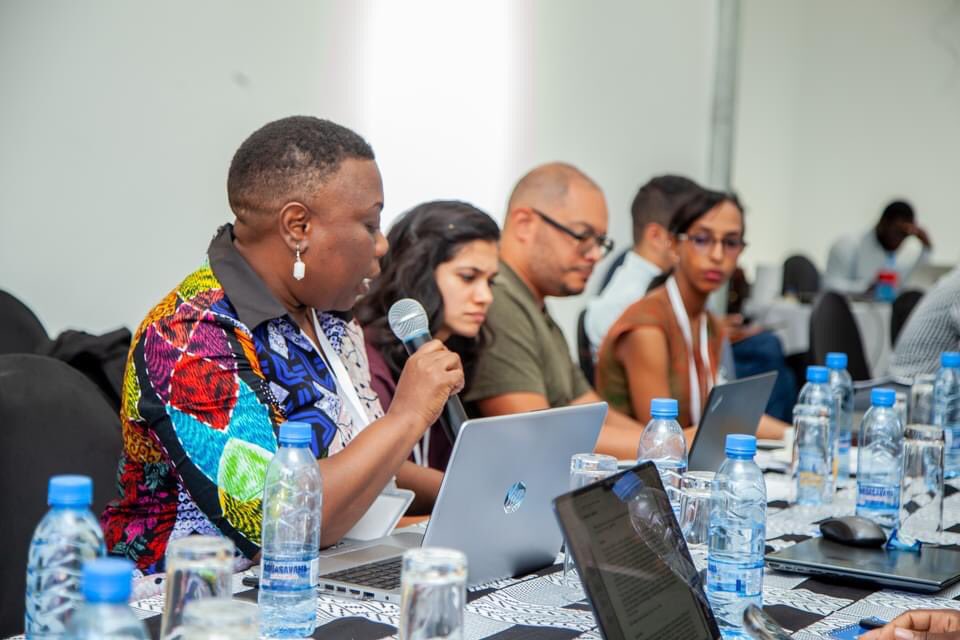
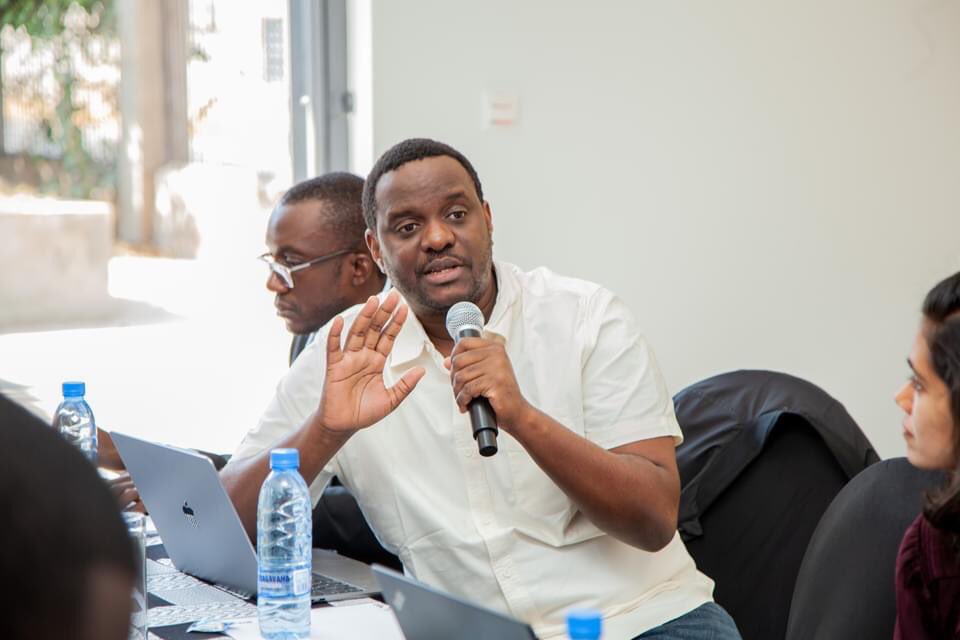
Yesterday we concluded an intensive two-day workshop convened by @Pasiri_Africa and the Lusaka Contemporary Art Centre (LuCAC) in Lusaka, Zambia. The workshop was convened under the theme “The Political Economy of Inequality in Africa” and was targeted towards junior scholars including advanced PhD students and early career academics from African universities and elsewhere. The workshop was inter-disciplinary in nature and drew participants from a wide range of disciplines including gender studies, economics, economic history, political science, sociology and cultural studies among others. Participants came from a number of countries in Africa and the world including Zimbabwe, Zambia, Malawi, South Africa, DR Congo, Kenya, Morocco, Somaliland, Ethiopia, the US and India among others.
Our junior scholars had the privilege of benefitting from distinguished resource persons in the room including Dr. Dale Mudenda of the University of Zambia's Economics Department (UNZA, Economics Dept.) who delivered a phenomenal keynote lecture on the link between Trade Liberalization and Inequality in Africa. Other senior colleagues who shared their wisdom with the junior scholars were Dr. Mashekwa Maboshe (UNZA, Economics Dept), Dr @cleopas_sambo (UNZA, Social Work and Sociology Dept), Dr. Malunga Syacumpi (UNZA, Agriculture Economics Dept), Dr. Julius Kampembwa (UNZA, Philosophy Dept) and Ms. Victorial Phiri (Director of the Livingstone Museum). The legendary Professor Manenga Ndulo made a surprise visit and shared his wisdom and knowledge with the participants. He reminded us that next year will be his 50th anniversary of teaching economics at UNZA!
Lots of gratitude to Professor Zachariah Mampilly (@Ras_Karya) of the City University of New York and co-founder of @Pasiri_Africa for the suggestion that this workshop be held in Lusaka. More importantly, much gratitude to him for his tireless work in trying to build the next generation of thoughtful scholars in Africa and elsewhere. I am honored to serve on the board of @Pasiri_Africa .
Finally, a big big thank you to my co-conspirator Victor Mutelekesha (@victorkesha) for accepting to host the workshop at LuCAC. Victor is the founding director of LuCAC and a bold visionary in the area of the arts in Zambia. LuCAC is increasingly becoming an important site for the different expressions of art anchored on social justice. Additionally, LuCAC's conference facilities and the professionalism of the staff is second to none. Please consider hosting your next workshop or conference there. I am honored to serve as a founding board member of LuCAC.
@muyaa_mbango @LauraMiti@siphophiri Ms Miti is being a huge hypocrite. She has called Mr Nakachinda as “annoying and obnoxious”; Mr Chilufya Tayali as “obnoxious, insufferable, reckless, spineless”. How do these personal attacks constitute points of discussion? Should @ssishuwa block her for attacking his person?
I spot the fallacy of false ECL/HH dichotomy. In fact, Sishuwa could have been indifferent between the two, including possibly preferring or supporting somebody else. I don't see how the article supports Lungu, or Sishuwa writing biasedly to save his job.
@ukusefya @muyaa_mbango @comzaza Owe!
Asogoleli. So, are you now arguing that @ssishuwa was in fact supporting Edgar Lungu because his job was at the mercy of GRZ and that his criticism of HH, on whose side you claimed he was, was forced, to save himself?
@j_kapembwa what do you call this style of argument?
We in Zambia are saddened and even appalled by the abduction of Petauke Central Member of Parliament Emmanuel 'Jay Jay' Banda.
We join retired Archbishop Telesphore Mpundu in condemning the incriminating reluctance by the Police to arrest or merely summon for questioning the three individuals named by the victim as his abductors, who include two State House officials working as Special Assistants to the President of Zambia.
We wish MP Banda a quick and full recovery.
Citizens With No Names