BFR in elite sports is really cool
The implications in so many clinical scenarios is potentially life changing!!
Follow along for the ride
#earnyourdeflate
One of the clearest takeaways from this paper is that training load should be understood as exposure, not just as a collection of numbers on a dashboard. That is a major shift in thinking. The authors argue that external load reflects what the athlete does, while internal load reflects the psychophysiological stress created by that work. That distinction matters because performance, readiness, fatigue, maladaptation, and injury risk are not driven by labels or metrics alone. They are driven by how the athlete is exposed to stress and how the body responds to it. The paper also makes the point that load measures should not be judged by how modern, complex, or impressive they look. They should be judged by whether they reflect a plausible mechanism tied to the outcome we actually care about.
The part that stands out most to me is this: if we do not understand injury and fatigue in the context of exposure, then we are already behind in how we think about mitigation and intervention. Too often, injury gets treated as an isolated event, or fatigue gets treated as something to simply manage once it shows up. But this paper supports a more useful view. These outcomes need to be understood in relation to the training process that helps produce them. If injury and excessive fatigue are downstream of poorly understood or poorly managed exposure, then reacting only to the endpoint means we have missed the real leverage point. That leverage point is preparedness. It is the ability to shape exposure in a way that improves readiness while reducing the likelihood of maladaptation, excessive fatigue, and unnecessary injury risk.
From my reading, two concepts deserve constant attention:
• Dose: the amount of training stress that actually reaches or meaningfully interacts with the athlete
• Dose response: the relationship between that stress and the outcome that follows
If we understand those two concepts, we stop chasing injury in an ignorant, isolated way and start asking better questions: How much can this athlete tolerate? For how long? At what intensity? What type of exposure is producing the response we are seeing? That is a much better framework for decision making. It keeps the focus on modulating exposure to build readiness, rather than acting as though injury is just a passive event that appears without context. In many cases, the better path is not simply to chase the injured structure after the fact, but to understand the exposure patterns and tolerance limits that helped create the problem in the first place.
Learning styles are still popular, but the evidence for “matching” teaching to preferred style is near zero.
🔬A review of 17 meta-analyses found d = 0.04 for matching, and argues we should focus instead on effective, adaptable learning strategies
https://t.co/zvDhT3nexa
When people hear “pain psychology,” they often think...
• “Are you saying it’s all in my head?”
• “So this is just stress?”
• “Does this mean my pain isn’t real?”
The science says the opposite. Learn why: https://t.co/uYbTzcHtEw
I've had fun helping BBC Ideas produce this animation, which attempts to explain Bayesian ideas in 4 minutes. I hope you like it - I really like the animators style. https://t.co/5JoLvzbi8P
Ageing is associated with cognitive decline & an increased risk of neurodegenerative diseases.
A Review explores the neuroprotective mechanisms of endurance exercise & highlights the importance of cardiorespiratory fitness in healthy brain ageing: https://t.co/SjYUCfJ4Fw
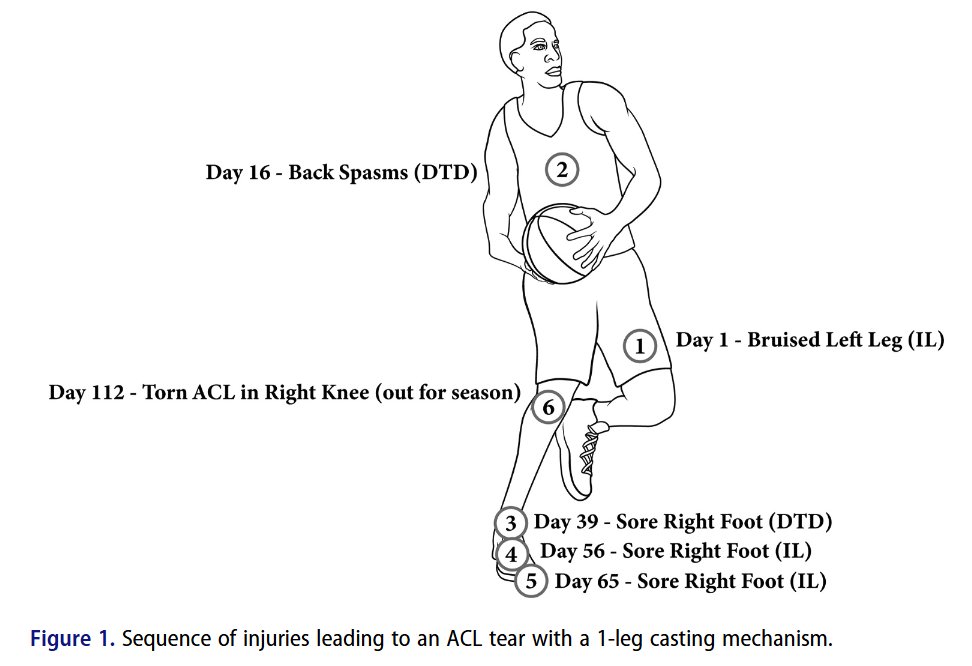
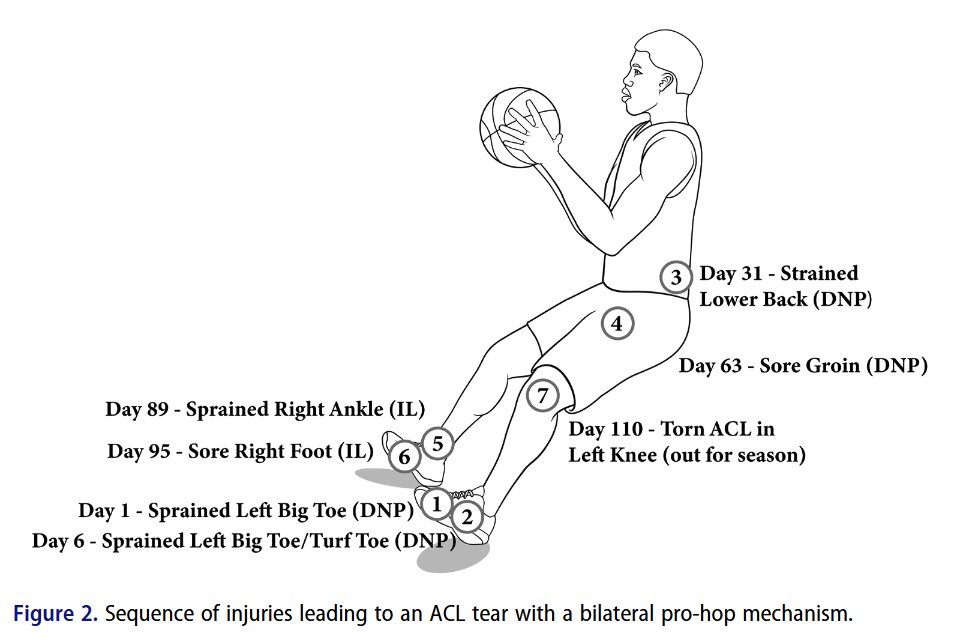
Prior injury prior to ACL rupture in NBA Basketball Players❓
- 125 ACL Injuries 🚑
- 27% had prior injury 90 days before
- 18% had ankle injury 1 year before
- 22% had knee injury 1 year before
40% had ankle or knee injury 1 year before ACL❗️
Sequence of events ⬇️ #ACL
@marklaslett_NZ Could it be a greater appreciation of complexity and the multifactorial nature of conditions as opposed to the giving in to uncertainty?
Daniel Kahneman: Algorithms Make Better Decisions Than You [The Knowledge Project Ep. #238] https://t.co/i1v1dcREKs
Nice list of take-aways by @shaneparrish