@ArushiSF@SimonMahan Exelon/Constellation was a combined gen-tailer for years.
It didn’t work out that well for them because when one side of the business did well, it was dragged down by the other half.
Will it be different this time?
@JoshuaBasseches@alichehrehsaz Let’s make it work. However even creating the market takes investment. The utility requires long-term forecasting, sensors for visibility, etc. There is a long list of pre-requisites
@ArushiSF@JigarShahDC I think distributed data center capacity is the optimal way to flex loads anyways. The tail risks are 6 months of curtailment, under a distributed approach, you’re only losing a segment of capacity. It’s a hedge on flexibility
@brazen__head@drvolts Let me clarify this is supply only. Load and energy injection is at the zonal LMP spot price. $40/MWh = $0.04/kWh.
This can be negative (you’re paying to inject).
@BenSchifman Both things can be true:
1. Data centers reduce distribution rate impacts through volumetric consumption.
2. Data centers raise energy prices through increased demand
Which is more concerning? Distribution rate increases or capacity constraints?
@fredstaffordcs It wasn’t just electrical workers against it, it was firefighters
Some of these bills had no guardrails of any kind, basically stating they had no obligation to meet any kind of NEC rules or UL standards.
They should be educating stakeholders instead of ramming it in
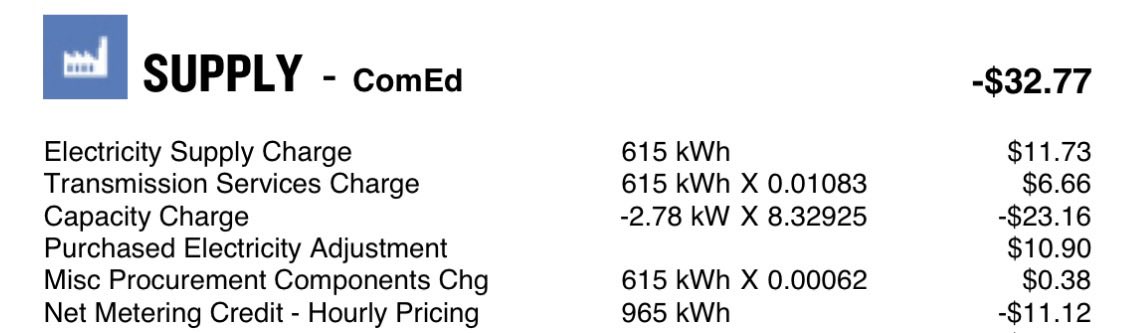
@brazen__head@drvolts Yes: -2.78kW was my PLC in 2024, so my capacity payment of ~$8.34/kW-month is roughly equivalent to the $270/MW-day PJM capacity price.
It should increase in June to reflect the 2026/2027 capacity price of $329/MW-day.
@brazen__head@drvolts I injected energy during PJM’s 5CP events in 2024.
Your capacity price is based on your personal load contribution, when negative means you get paid.
It’s reset each June based on the previous year’s performance.
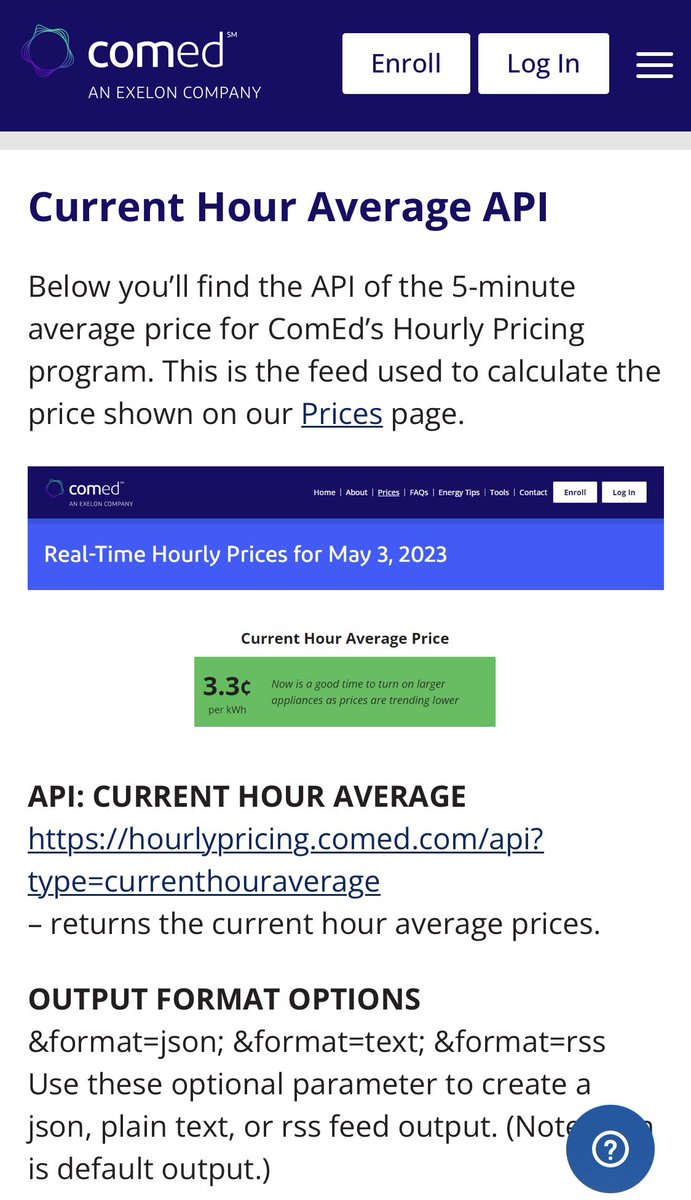
@drvolts IL has had real-time dynamic prices since 2009. There are 60k people on it.
Even better, it’s not just the energy price. The capacity charge is a line item that allows residential customers to be paid for capacity. It’s the largest part of my supply bill.
@Ben_Inskeep@TysonSlocum You’re asking the wrong question. You need to ask for the formulas used to calculate the line item charges.
They’re not going to give you a customer’s bill.
@xiaowang1984@JoshuaBasseches There is always more work than money available. Utilities would 100% embrace this if they’re proven to be cost-effective and reliable.
In other states, they are regulatory assets making them identical in value to any other investment. The only issue is trust.
@JessePeltan The problem is really structural:
Their rate of return is sub-2%, below WACC.
Their material costs are 1/2, their labor costs are 1/8th, minimal overhead from permitting, environmental, and land acquisition.
Vehicle manufacturing is highly competitive, but China is cheaper
@JessePeltan You’re assigning blame, and the solution without evidence.
Chinese utilities are essentially mega-monopolies. They serve so many people their revenue is 20x that of US utilities, and rate of return is significantly lower.
By this logic monopolies should become larger