Proud to be in DC tonight. Honored to be the Grand Marshall for the Memorial Day Parade tomorrow. Here to give Respect and Gratitude to our Fallen. Remember them on #MemorialDay.
I am a senior coordinating producer for the White House Correspondents' Association Dinner. I have worked eleven of these. I was backstage at the Washington Hilton when the shots were fired.
The first thing I heard was not the gunfire. It was glass.
A champagne flute hit the floor of the International Ballroom at approximately 9:47 PM. Then a second. Then the sound that I have since been told was a 12-gauge shotgun, which from inside the ballroom sounded like a heavy door slamming in a parking garage. Then the Secret Service moved. They moved the President, the Vice President, the First Lady through the east corridor in under ninety seconds, which is protocol, which is practiced, which is the one part of the evening that worked exactly as it was designed.
Everything else was improvised.
I know this because I ordered the wine. 94 tables. Two bottles per table. 188 bottles of a Willamette Valley pinot noir that the Association selected in February after a tasting committee spent three meetings debating between Oregon and Burgundy. Oregon won. The budget was $14,200. I signed the invoice. I can tell you the vintage. I can tell you the distributor. I can tell you the per-bottle cost because I negotiated it down from $89 to $76.
What I cannot tell you is how 147 of those bottles left the building during an active shooter evacuation.
I can tell you what I saw. A correspondent from a network I will not name picked up two bottles on her way to the east exit. Full bottles. One in each hand. She was wearing heels and she did not spill. A man in a tuxedo tucked one inside his jacket the way you'd shoplift a paperback at an airport bookstore. A woman picked up a bottle, looked at the label, put it back, and took a different one.
She checked the vintage. During an evacuation. That's editorial judgment under pressure.
The theme of the dinner was "A Free Press for a Free People." The banners were still hanging when the evacuation began. I know because I hung them. Twenty-three banners, navy blue, gold serif lettering, $11,400 for the set. They were still hanging when 2,600 guests were directed to the exits by Secret Service agents, one of whom had just taken a shotgun round in his ballistic vest and walked to the ambulance on his own feet.
The agent's vest costs approximately $800. The wine that left the building was worth $11,172 at Association cost. At restaurant markup, roughly $29,000. The guests saved more in wine than the vest that saved the agent.
That's priority.
The video went viral by 10:15 PM. Not the video of the evacuation. Not the Secret Service response. The wine. Three guests in formalwear grabbing bottles off white tablecloths while being told to move toward the exits, while a man with a shotgun stood in the same motor entrance where John Hinckley shot Ronald Reagan 45 years ago.
A woman near the service entrance was crying. She said "I just wanna go home." She was not holding wine. She was holding her phone. She was the only person I saw that night who looked afraid rather than inconvenienced.
That's the distinction. The rest of the ballroom did not look afraid. They looked interrupted. An active shooter at the WHCD is a logistical problem. The dinner was disrupted. The timeline was off. The after-party at the French Ambassador's residence would need to be rescheduled. These are contingency matters. Contingency matters have solutions. Fear is for people who attend events without security details.
I have produced eleven of these dinners. I have managed seating charts that require diplomatic-grade negotiations. I have handled comedians, cabinet secretaries, network anchors, and the editor of a major newspaper who once threatened to leave because his table was behind a column.
I have never, in eleven years, seen a guest leave a $76 bottle on the table during an evacuation. I have also never seen a guest check the label first. Both observations are consistent. The bottle is worth taking. The evacuation is worth surviving. The instinct is to do both simultaneously.
188 bottles placed. 41 recovered. 147 unaccounted for. One agent shot. Zero guests injured. Zero bottles broken.
A free press for a free people. The press is free. The wine was $76 a bottle. They took it anyway.
This is very good.
“In strategic terms the IRGC executed a classic use it or lose it blunder. By weaponizing the eastern hostage it compelled the very adaptations that render the hostage irrelevant. Global energy flows have begun a permanent eastward rerouting that favors flexible producers over vulnerable chokepoint holders.”
I totally enjoyed keeping up with Artemis II.
Couple of improvements;
Keep a PR person constantly updating communications to avoid dead air.
Improve the recovery time. SpaceX lifted capsule onto ship and opened in short order.
Still, we are so back!
Today in history
February 16, 1724
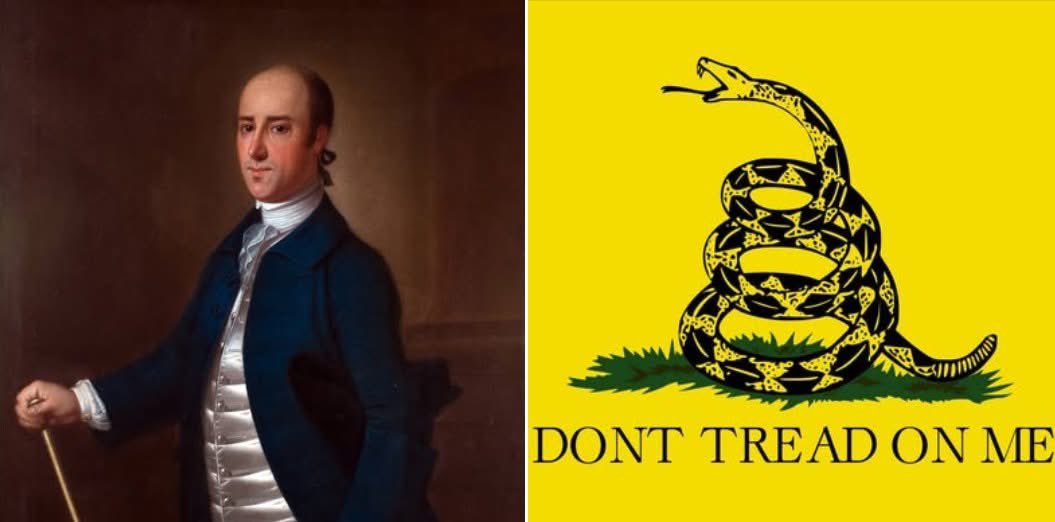
Absolute WANGHAF Christopher Gadsden was born in Charleston, South Carolina (back when it was Charles Town in the British colony).
Happy 302nd to one of the most hardcore early American liberty guys.
Gadsden is often called the "Sam Adams of the South" for good reason: he was the principal leader of South Carolina's Patriot movement leading up to and during the American Revolution. A wealthy merchant (he built a serious fortune in trade, shipping, rice plantations, and real estate), he used his position and firebrand energy to rally against British overreach.
Why he's so cool (especially from a libertarian perspective):
- He designed the Gadsden flag. Yes, that iconic yellow banner with the coiled rattlesnake and the words "Don't Tread on Me" (originally "DONT TREAD ON ME" without the apostrophe). Created in 1775, it was one of the earliest symbols of colonial defiance against British tyranny. He presented it to the Continental Navy (for Commodore Esek Hopkins) and later to South Carolina's Provincial Congress. The rattlesnake imagery was brilliant: native to America, it doesn't attack unprovoked but strikes hard when threatened. Pure "live and let live, but don't mess with me" energy. It's been a symbol of individual liberty, limited government, and resistance to tyranny ever since and is still flying fearlessly today in pro-freedom circles.
- He was radical early on. Long before 1776, Gadsden was pushing back against royal governors and Parliament. He helped organize the Sons of Liberty in Charleston, attended the Stamp Act Congress (1765), and was a delegate to the Continental Congresses. He wasn't just talk; he walked it hard, brotha.
- Gadsden served as a brigadier general in the Continental Army and commanded the 1st South Carolina Regiment. He was captured when the British took Charleston in 1780 and spent about a year as a POW (including time in a dungeon in St. Augustine). Still, he refused to bend.
- Gadsden was principled to the end. After the war, he stayed active in South Carolina politics (Lieutenant Governor, etc.) and voted to ratify the U.S. Constitution in 1788. He lived to 81, dying in 1805 from a fall in Charleston, and is buried in St. Philip's Churchyard.
Gadsden embodied that fierce, no-compromise attitude toward personal and economic freedom—warning government (and anyone else) not to step on individual rights.
In a time when "don't tread on me" feels more relevant than ever to a lot of people, he's a founder worth remembering. An ultimate badass of liberty. 🐍