Eagles make history with weird tradition. Scientists are buzzing after a set of trail camera images appeared to show something researchers almost never expected to document in the wild: bald eagles passing down a learned behavior. Last year, cameras captured a massive bull moose traveling through the forest with two adult eagles perched calmly on his antlers, riding for miles as if it was normal. At first, experts thought it was just a bizarre one-time moment, but after reviewing months of footage, they noticed the same pair returning again and again. The strange relationship seemed to help both sides. The eagles scared off insects and smaller scavengers bothering the moose, while the moose gave them a moving lookout tower through thick summer brush.
But the image that shocked everyone came nearly two years later. The same moose was seen walking toward the camera, only this time there were three eagles on his antlers: the two adults and their now-grown juvenile standing between them. Researchers believe the young eagle may have learned the behavior by watching its parents, a discovery that could suggest these birds are capable of recognizing patterns, remembering useful partnerships, and passing habits down in a way scientists rarely associate with wild raptors. What started as one strange trail camera photo has now become something much bigger, a possible glimpse into how much more is happening in the animal world when nobody is watching.
At first glance, it looks like a group of fluffy kittens crossing the road. But in reality, these are Pallas’s cats, also known as manuls — one of the rarest and most elusive wild cats on the planet.
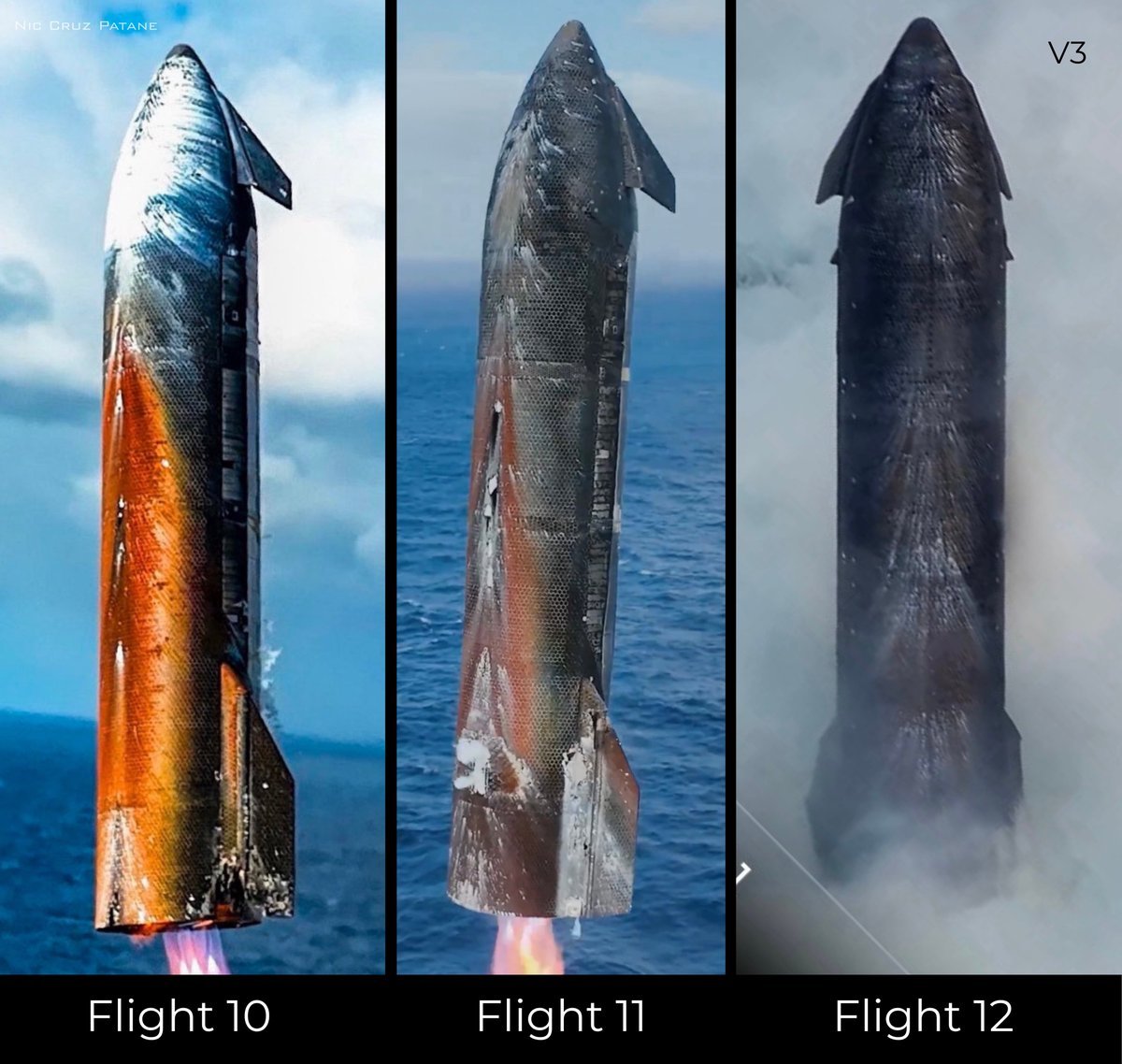
We need heat shields to protect us, since we use the air to slow us down as we return to Earth.
From orbital speed, it gets to 1650°C / 3000°F. From the Moon: 2750°C / 5000°F.
For yesterday's Starship suborbital test flight, peak was 1450°C / 2600°F. Great to see the @SpaceX progress over the last 3 flights. Making them truly reusable is complex and necessary for permanent, cheap space access.
image compilation: @niccruzpatane
The hydraulic pin holding the tower arm in place did not retract.
If that can be fixed tonight, there will be another launch attempt tomorrow at 5:30 CT.