In the late 2000s, computer scientist Stephen Cook (left) bet $100 that it was impossible to use the same piece of memory for storage and calculations simultaneously. In 2020, his own son (right) proved him wrong — and collected the cash. https://t.co/ZxNrVGPMuv
Oldies but goldies: J. B. Kruskal, On the shortest spanning subtree of a graph and the traveling salesman problem, 1956. Computes the minimum spanning tree in n*log(n) operations. https://t.co/uxiwuZkqX6
@miniapeur Don’t get me wrong, it’s a massive accomplishment, and for those truly passionate about the subject matter, all that time and energy just might fly by. But really do ask yourself beforehand, WHY do I want the PhD? An honest (to the self) answer to that question goes a long way.
@miniapeur Between the personal mental sacrifice, any career you might have put on hold OR have yet to begin, the sacrifices made by your family & friends with the never ending work schedule—it all adds up. And I’m sure I’m forgetting things here, but it’s just a lot to forgo.
@cfdsweat @fluxtheorist I dunno, po-TAY-toe vs po-TAH-to, right? Someone in graph theory certainly ventured into algebraic graph theory (and thereby likely leaned into combinatorial matrix theory). So, the shift towards numerical linalg is not too hard to imagine.
@fluxtheorist Effectively one of my modern math idols: we don’t have to divorce the idea of athleticism from mathematics (or academics proper). Some of us, while not necessarily pro, do play highly competitive contact sports AND do math for a living!
@sodakaidotcom @Riazi_Cafe_en That said, there’s plenty of math that doesn’t seem poetic (e.g., a long calculation), but then you take a tour of something like Galois Theory, and you might think of it as poetic. But ofc, as is the nature of Art, any 2 ppl MAY disagree as to what “is” art.
@sodakaidotcom @Riazi_Cafe_en Also, Wiles was likely saying part of the process is being lost before being found. And one way to do that is to map out the space, like you might in a maze. Travel about, take notes, leave behind a trail. At some point you go from completely lost to having an idea of where you r
@sodakaidotcom @Riazi_Cafe_en Of course, that’s not to say it’s impossible. There’s probably a “you can learn about persistent homology in 5 minutes or less” video somewhere, one where you come away thinking you’ve learned something but really haven’t. You still have to “hit the books” so to speak.
@sodakaidotcom @Riazi_Cafe_en I mean, for example, imagine trying to explain persistent homology to someone never having learned any abstract algebra or topology. Speaking only in math terms is probably not going to get the one teaching very far with their audience.
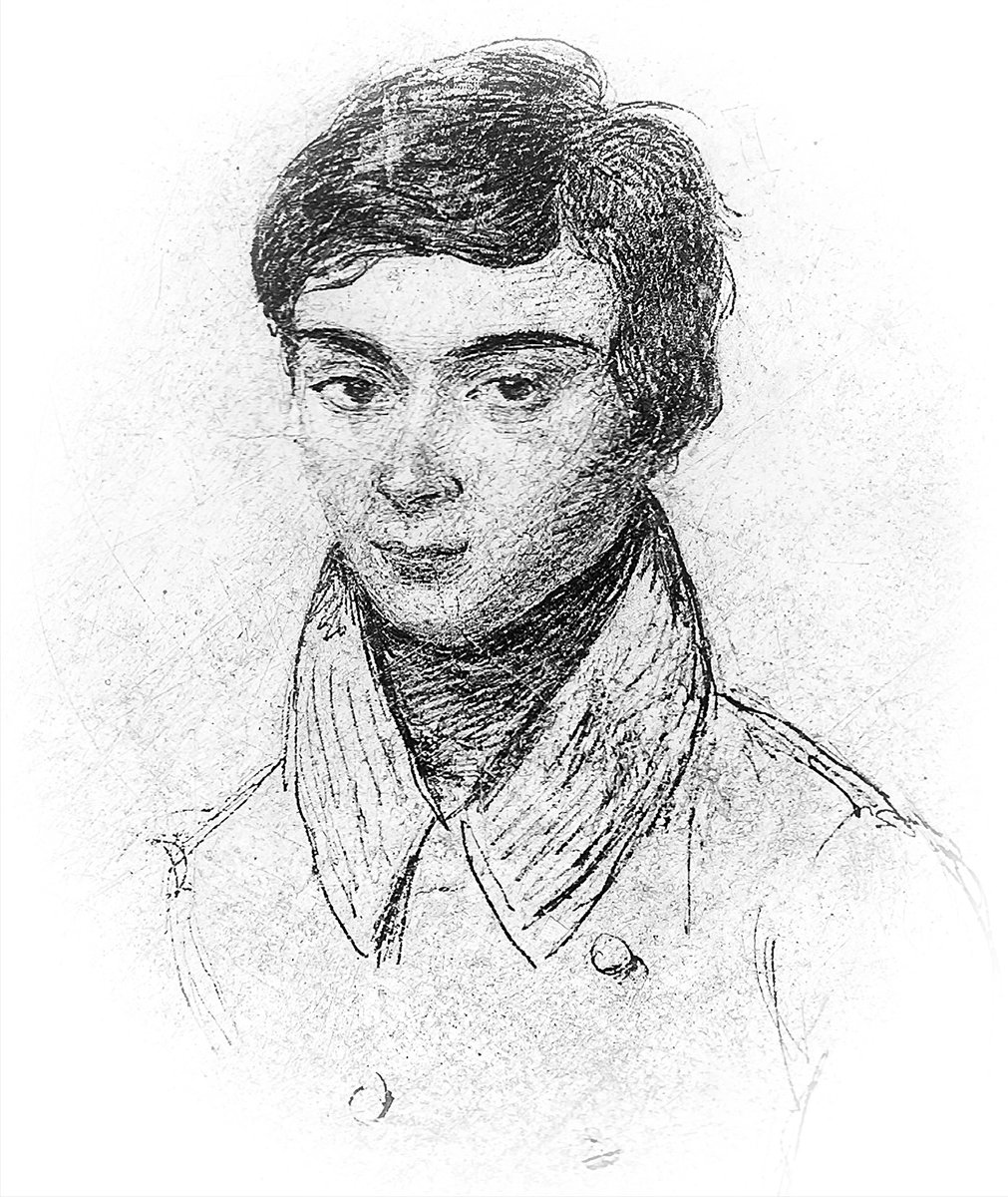
The term “group” in a mathematical context was coined in 1830 by Évariste Galois, a French prodigy, just 18 years old at the time. Two years later, Galois would be killed in a duel, having already changed the course of mathematical history. https://t.co/lPUVTvhUvD