From boot up to complete in 4 hours and 45 minutes. That's the new time record set by our Wet Dress Rehearsal operators at Launch Complex 1 for our next mission.
The launch window for "Night Owls Never Sleep" for @synspective with our 101st Electron rocket opens:
🚀1:00 pm NZDT, Nov 27
🚀00:00 UTC, Nov 27
🚀9:00 am JST, Nov 27
🚀7:00 pm ET, Nov 26
🚀4:00 pm PT, Nov 26
Pink Floyd, 1969, with every piece of their gear laid out on a taxiway at Biggin Hill airfield south of London.
Rick Wright and Roger Waters stand at the front, with David Gilmour and Nick Mason behind the drum kit. Behind them: the amps, the speaker stacks, the gongs, the guitars and the tour van, arranged in a big triangle.
The idea came from Nick Mason, who wanted it to look like the exploded diagrams of military aircraft and their payloads that were popular at the time. The same layout, shot with roadies Alan Styles and Peter Watts standing in for the band, became the back cover of Ummagumma, the double album released in the fall of 1969.
Years later, Mason joked that people used to look at the back of that sleeve and think "Wow," but now it looks like more or less a home stereo.
Sadly, much of this gear was stolen after a show at The Warehouse in New Orleans in May 1970.
🎸 Rank these Floyd records from 1969 and 1970: Ummagumma, More, Atom Heart Mother. 🎸
Behold: The US Defense Intelligence Agency has released a report on challenges to security in space, including an NEI image of China’s spaceplane from Maxar, taken in 2024.
More money, more time and flying less will not make spaceflight safer or make us more effective at achieving our objectives.
We are done defending the status quo. We are not going to compromise NASA’s effectiveness or capability trying to appease every constituency and, in the process, satisfy no one.
We are here for the mission, focused on executing @POTUS’ national space policy, achieving the objectives entrusted to us and delivering the kind of world-changing headlines worthy of America’s space program.
NASA just shared this insane new shot of the Grand Canyon from space 💥
From orbit, the Grand Canyon still looks immense—a vast, winding scar sliced into the Colorado Plateau by the Colorado River over roughly 5–6 million years. Stretching 277 miles long, up to 18 miles wide, and more than a mile deep, its layered walls and dramatic depth remain unmistakable even from hundreds of miles above Earth.
Yet the view is also a quiet reminder of scale: what feels monumental to us on the ground shrinks into a single, striking detail when seen against the full curve of the planet.
🌌 Night sky on Mars, 140 million miles away from us! 📷<🚀span class="css-1jxf684 r-bcqeeo r-1ttztb7 r-qvutc0 r-poiln3" style="background-color: rgba(0, 0, 0, 0); border: 0px solid black; box-sizing: border-box; color: inherit; display: inline; font: inherit; list-style: none; margin: 0px; padding: 0px; position: relative; text-align: inherit✨e-block; margin-left: 0.075em; margin-right: 0.075em; height: 1.2em; width: 1.2em; vertical-align: -20%;"> Just as the stars on Mars shine in numbers untold, may God bless your life with blessings manifold. 📷
If we are going to live and work on the Moon, build the Moon Base, and eventually journey to Mars, we have to master the technologies that make sustained operations possible.
There is impressive work happening at the University of North Dakota on habitats, spacesuits, human performance, mobility, and autonomous systems that directly connects to those challenges.
Today, @SenJohnHoeven, General Guetlein, and I saw that work firsthand, touring UND’s lunar and Mars analog habitat and spacesuit lab while meeting with the students and researchers working through the real challenges of how humans will live, move, and operate on other worlds.
We also joined the UAS Summit to talk about how advances in autonomy and aviation are opening up new challenges and possibilities across both air and space.
North Dakota is helping build the capabilities America will need for the missions ahead. Thank you to Senator Hoeven, General Guetlein, and everyone at @UofNorthDakota for the warm welcome and outstanding work.
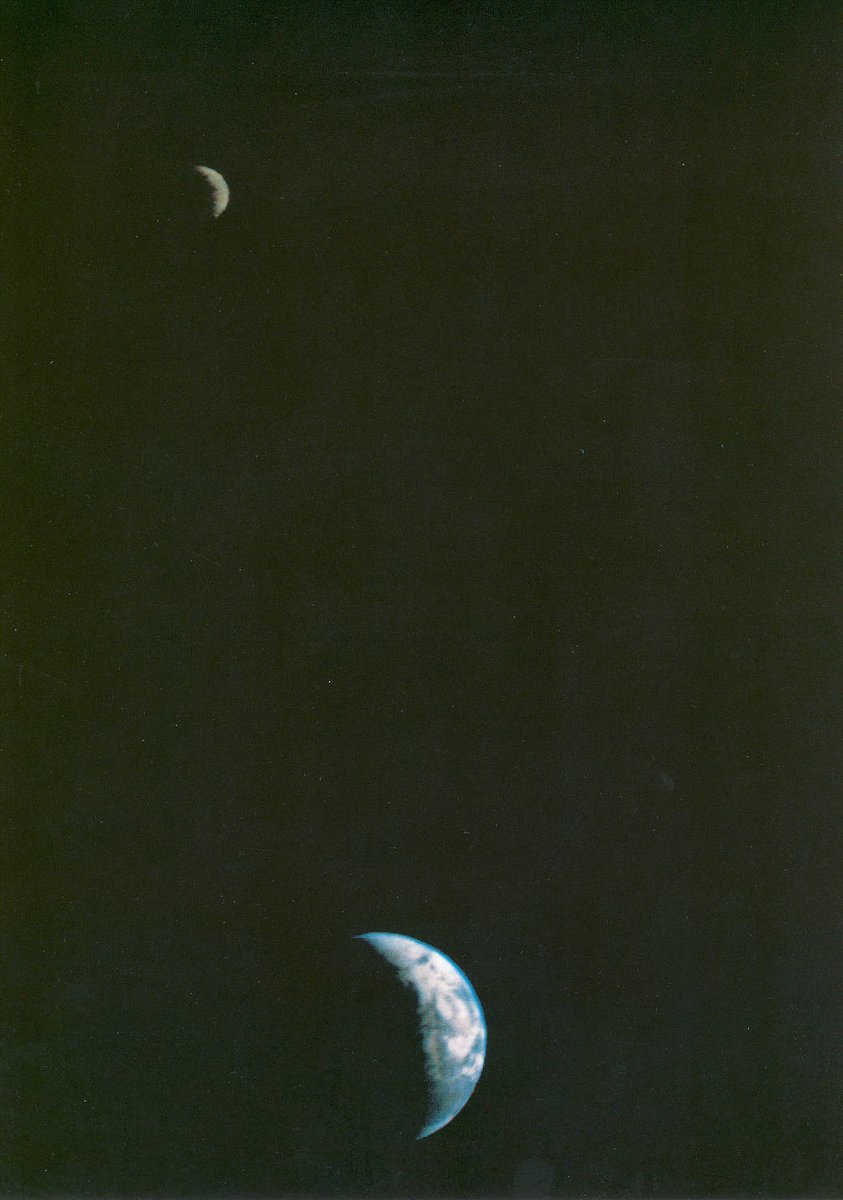
A new perspective! 🛰️
Voyager 1 had been in space for two weeks and was 7.25 million miles (>11 million km) away OTD in 1977 when it captured this view of the whole Earth and the Moon in the same frame. It was our first image of the kind, but definitely not our last.
1. Voyager 1, 1977
2. DSCOVR, 2015
3. Artemis I, 2022
4. Artemis II, 2026
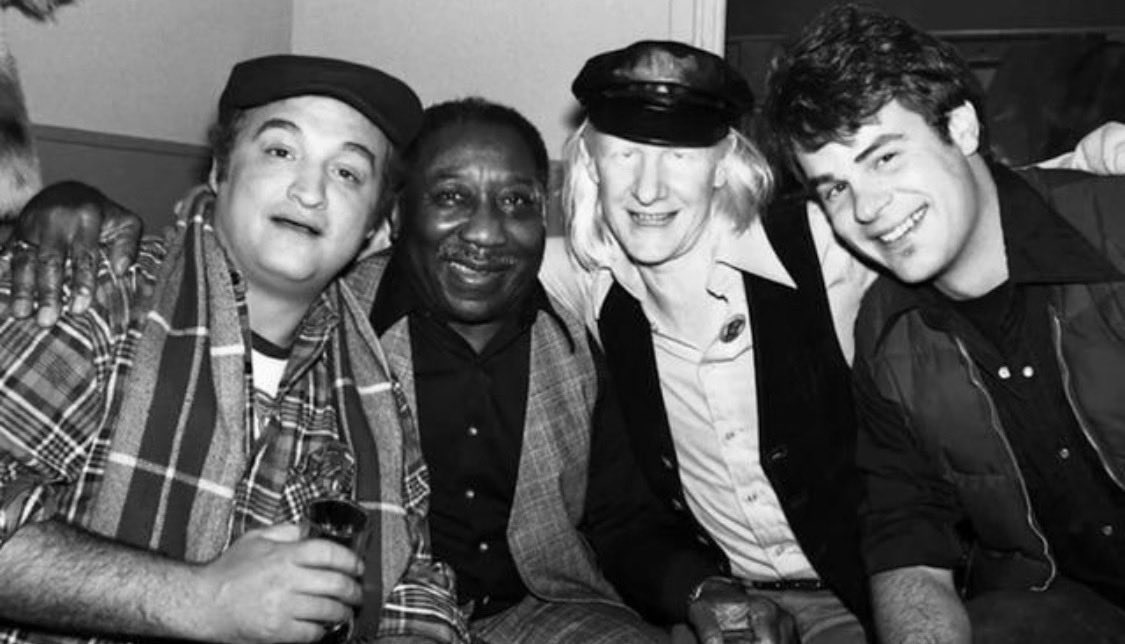
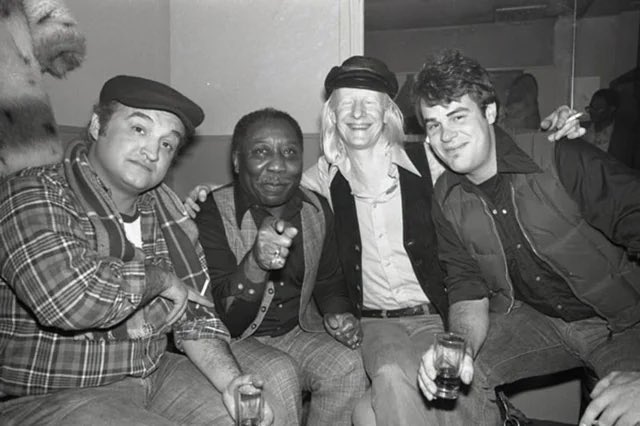
New York City, 1977. John Belushi, Muddy Waters, Johnny Winter and me backstage at The Bottom Line. Four guys brought together by the blues.
We loved them and they embraced us. Johnny Winter frequently wore a Blues Brothers t-shirt on stage.
Photo by Bob Gruen.
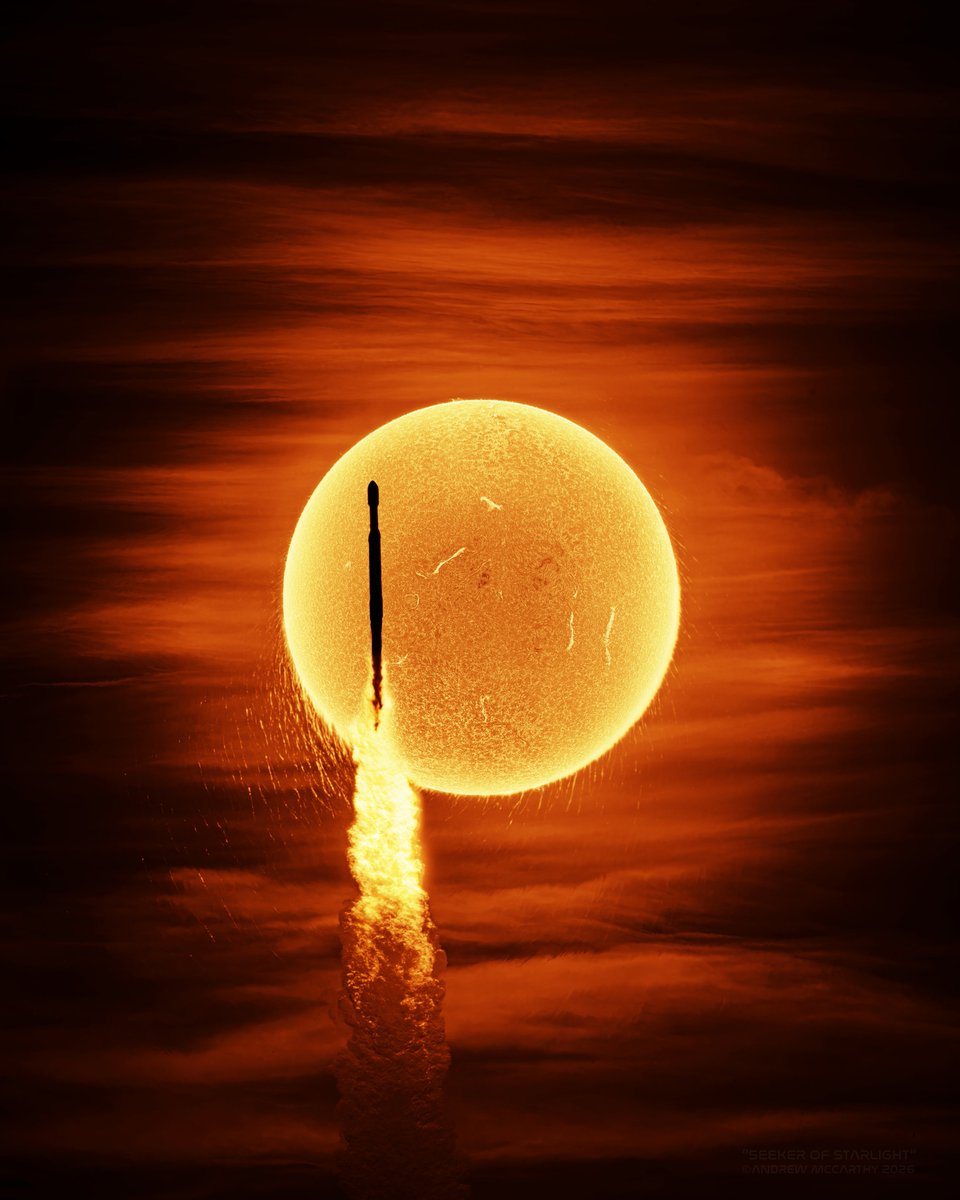
Pleased to share my favorite photo from yesterday morning.
Shot using 3 cameras from a parking lot: this is the Falcon Heavy carrying Roman Space Telescope transiting the sun.
More about how it was captured and a video of the transit 👇