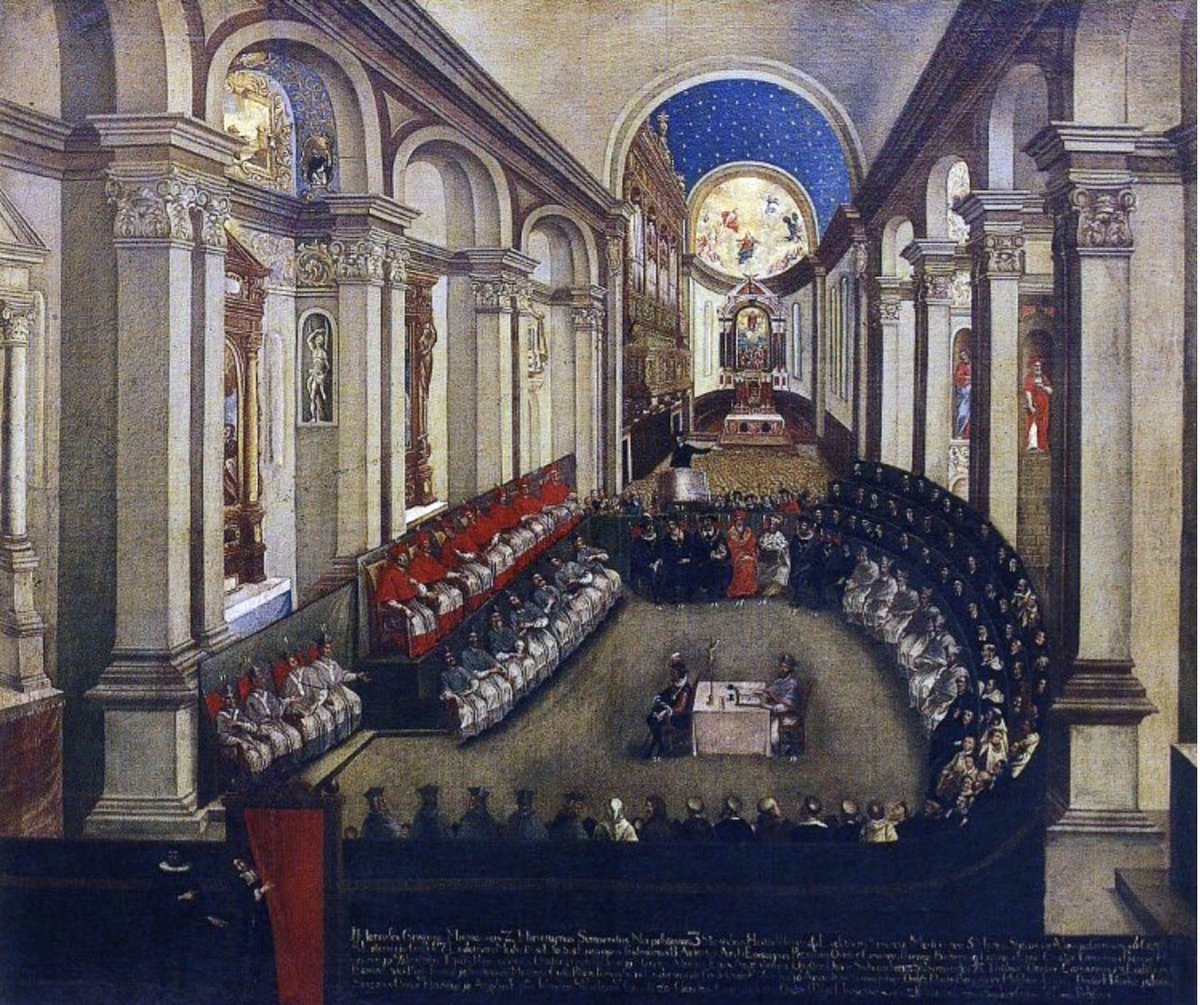
“If anyone says that the justice received is not preserved, and also not increased before God through good works, but that those works are merely the fruits and signs of justification obtained, but not the cause of its increase, let him be anathema.”
(Conc. Trid. VI.24)
There is only one Church, and if she is wrong, then so is Christ. That’s the ancient and historical view. Do we have anyone before the 16th century saying otherwise ?
"CANON X.-If any one saith, that the marriage state is to be placed above the state of virginity, or of celibacy, and that it is not better and more blessed to remain in virginity, or in celibacy, than to be united in matrimony; let him be anathema."
(Council Of Trent, Session XXIV)
In 1954, the Knights of Columbus successfully lobbied for 'One nation under God' to be added to the Pledge of Allegiance of the United States of America
The Blessed Virgin exceeds the Angels in purity. She is not only pure, but she obtains purity for others. She is purity itself, wholly lacking in every guilt of sin, for she never incurred either mortal or venial sin. So, too, she was free from the penalties of sin.
JUST IN: The Vatican has rejected the German bishops’ request for lay people to preach at Mass
This is bc “the reservation of the homily to a priest or deacon is not a mere disciplinary norm but derives from the very nature of the liturgy”
“Among the special schemes with which non-Catholics plot against the adherents of Catholic truth to turn their minds away from the faith, the biblical societies are prominent. They were first established in England and have spread far and wide so that We now see them as an army on the march, conspiring to publish in great numbers copies of the books of divine Scripture. These are translated into all kinds of vernacular languages for dissemination without discrimination among both Christians and infidels. Then the biblical societies invite everyone to read them unguided. Therefore it is just as Jerome complained in his day: they make the art of understanding the Scriptures without a teacher ‘common to babbling old women and crazy old men and verbose sophists,’ and to anyone who can read, no matter what his status. Indeed, what is even more absurd and almost unheard of, they do not exclude the common people of the infidels from sharing this kind of a knowledge.”
- Pope Gregory XVI, Inter Praecipuas
Very grateful to President Trump and the First Lady for joining the Catholic faithful and the bishops of the United States in dedicating the nation to the Sacred Heart of Jesus.
https://t.co/ftjM8LpDx8
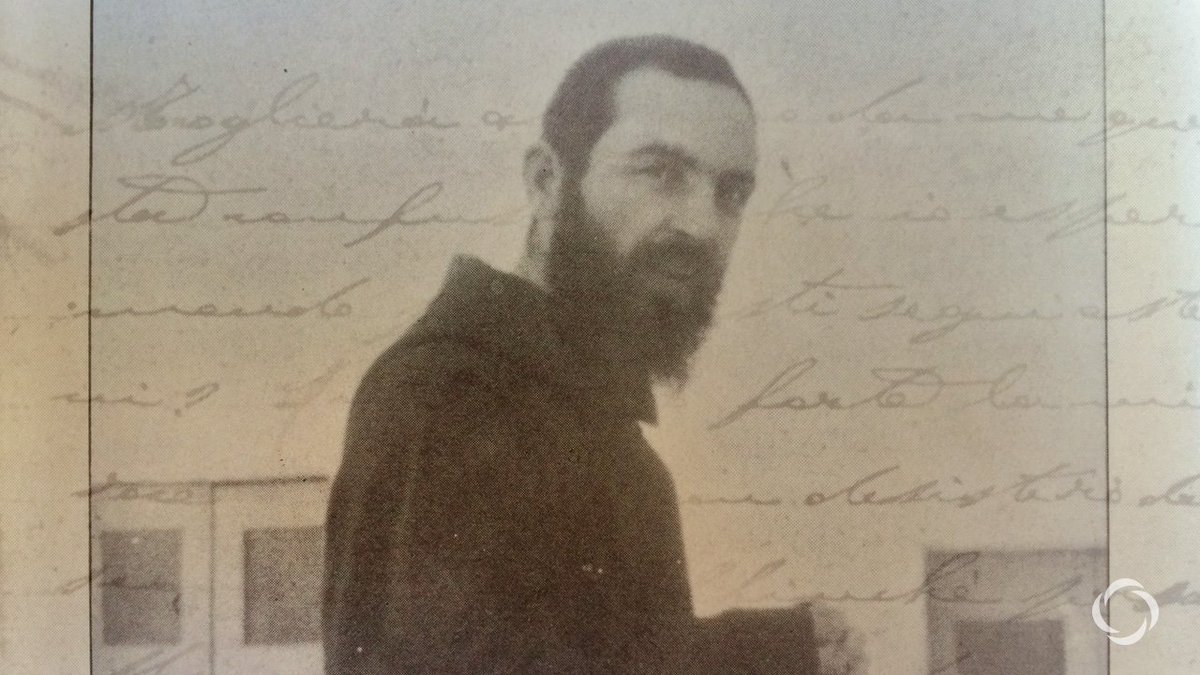
• St. Padre Pio says;
"If certain thoughts bother you, it is the devil who causes you to worry, and not God~ Who, being the spirit of peace, grants you tranquility."
Agree… I went to mass today at the Cathedral in Austin, and it was “ordinary form” but Latin.
And it felt like an honest attempt at what the council proposed. Ad Orientum, receiving kneeling, chant, Latin, etc.
The issue is this is not the norm or standard at your avg parish. So is it just a rubric issue? Can they just issue a new rubric clarifying further and specifying further how things must be done?
"CANON XXI.-If any one saith, that Christ Jesus was given of God to men, as a redeemer in whom to trust, and not also as a legislator whom to obey; let him be anathema."
(Council Of Trent, Session 6)
St. Thomas Aquinas:
"Justification can be taken in three ways: in one way, in regard to reputation; then one is said to be justified, when he is regarded as just: you have made your sisters appear justified, i.e., by reputation (Ezek 16:51). In this sense, the doers of the law will be justified, i.e., are considered just before God and men. Second, by doing what is just: this man went down to his home justified (Luke 18:14), because the publican performed a work of justice by confessing his sin. In this way is verified the statement that the doers of the law will be justified, i.e., by performing the justice of the law. In a third way justification can be considered in regard to the cause of justice, so that a person is said to be justified, when he newly receives justice: being justified therefore by faith, let us have peace with God (Rom 5:1). It must not be supposed, however, that the doers of the law are justified as though acquiring justice through the works of the law. This cannot be accomplished either by the ceremonial works, which confer no justifying grace, or by the moral works, from which the habit of justice is not acquired; rather, we do such works in virtue of an infused habit of justice."
(Rom.C2.L3.n.212)
Pope Leo XIV warned Thursday against the temptation to make Christianity more “attractive” by diluting its content or softening its demands, telling Vatican evangelization officials that the faith is transmitted above all through credible Christian witness.
https://t.co/IGG9ShT6Tm