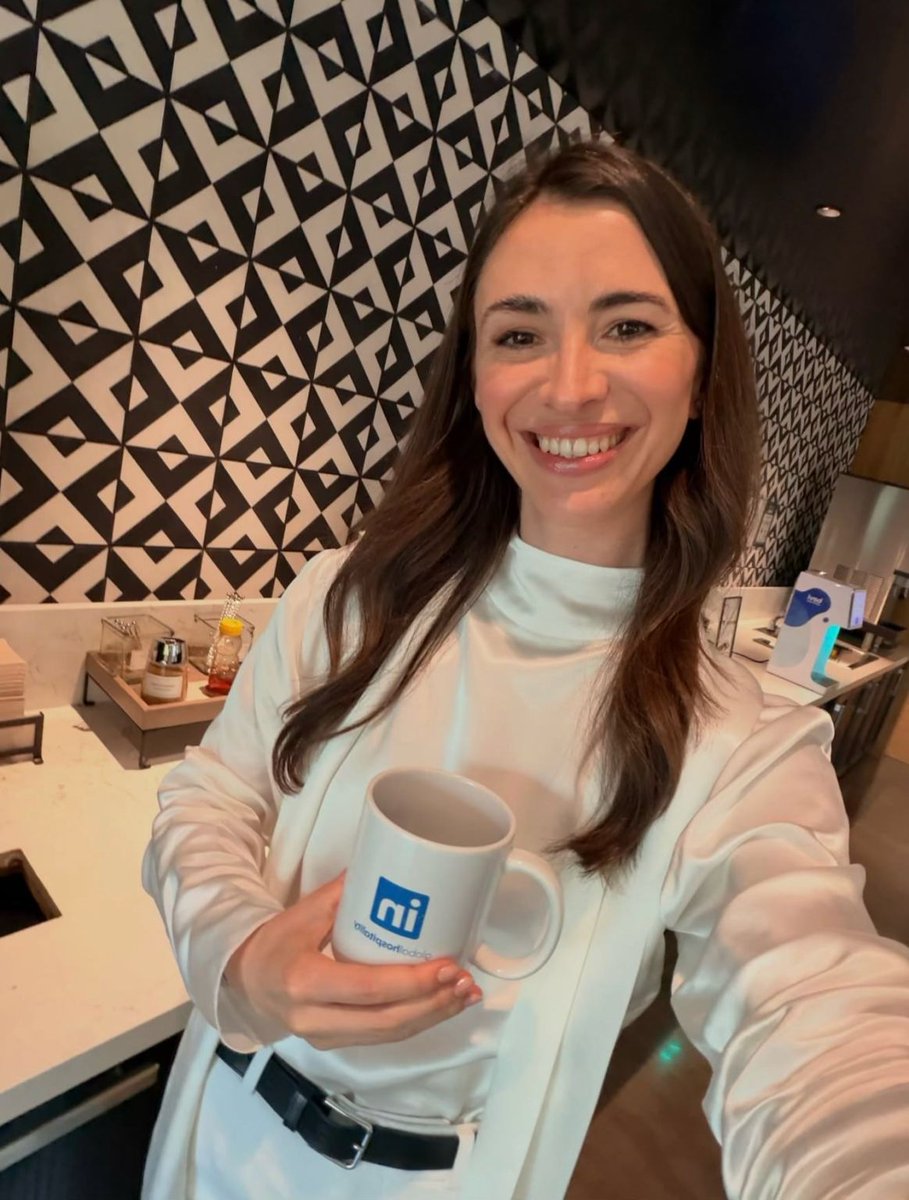
I spent 20 years making brands famous.
None of them were mine.
Absolut. Jameson. Chivas. 11 years, 8 promotions.
Then I left corporate, walked the Camino alone for 6 weeks, and became a yoga teacher.
4 years later, my daughter was born. Yoga didn't pay the bills. Back to marketing.
I found a startup job in 2 weeks. Easy.
Then I watched the director scream at people in meetings, me included. So I left, sure I'd land my next role just as fast. Like always.
2025: 80 job applications. 1 interview.
My LinkedIn profile was empty.
So I did for myself what I'd done for every brand:
- Defined my positioning
- Built my brand identity
- Picked one main channel: LinkedIn
- Showed up consistently
16 months later: CMO by day, full-time mom, building my personal brand on the side.
2 podcast interviews, 10+ paid brand deals, and 11K people who know my name.
Now I'm doing the same on X, in public.
Goal: 10K followers, as fast as I can.
Here I share how marketers can get known for what matters, without becoming influencers. Real stories, simple frameworks, and what's working for me as it happens.
Follow along.
We now know a lot more about microbes (bacteria and fungi) in our bodies, our environment, the soil, and our plants. There are thousands of different kinds. We know what some of them do, and we're learning more every year.
**Microbes travel from the soil to us.** Healthy, living soil is packed with diverse microbes. Plants take many of them up through their roots and carry them on their leaves, fruit, and inside their tissues. Animals pick them up from the plants they graze and the soil they live on. When we eat those plants and animals, we take in that same diversity. So the microbes in the soil become part of the microbes in us.
**Those microbes become our defense system.** A wide, diverse community of microbes is a huge part of our immune system. Microbes multiply extremely fast, so when one harmful kind starts to overgrow, it can make us sick. A strong, diverse community crowds it out, keeps it in check, and brings things back into balance. The more diverse our microbes, the stronger that defense.
**Healthy soil means a healthy defense system.** If the soil is diverse and alive, our food carries that diversity to us. If the soil is depleted, our food carries less.
**What weakens the chain:**
- Pesticides, herbicides, synthetic fertilizers, and constant tilling kill soil microbes before they ever reach our food.
- Highly processed foods strip away the microbes and the fiber that feeds them.
- Antibiotics kill the good microbes in our bodies along with the bad.
**What strengthens it:**
- Diverse cover crops. Every plant feeds different microbes through its roots, so a mix of grasses, legumes, and brassicas builds a rich, diverse soil microbiome.
- Regeneratively grown food carries that diversity from the soil to our plates.
- Spending time in nature exposes us to a wide variety of microbes.
- Good sleep supports our immune system and helps keep our microbes in balance.
Diverse soil grows diverse food, and diverse food builds a diverse, strong defense system in us.
Today I turn 55. Holy shit.
I've spent 30+ years in finance, through crashes, scandals and plenty of bullshit. Here's what I've learned, and why I'm staying invested despite this ugly market.
I started in investment banking in 1994. Debt capital markets, Frankfurt. I was a grunt, greeted with "moron," "fucking moron," or if you were lucky, just shoved out of the way. Trust me, it wasn't personal. It was normal for any junior in the Liar's Poker days. We took it in our stride.
To date things, I was the first to use Excel in the office (it was Lotus 1-2-3 before). No mobiles, at least for juniors, and it was, or felt like, 24/7 work. On a big deal, especially in a foreign currency, you slept in the office and risked keyboard prints on your face if you tried to nap.
That year, Greenspan raised rates and the leveraged rate plays blew up. At Merrill Lynch we pretty much took out Orange County and had the Kingdom of Belgium on its knees. Scandalous but exciting. We had Bloomberg screens and could see, price and message across markets. It was crazy, and I loved it. Especially because it felt like a meritocracy, and we rose up and got paid more.
Then more crises. '97 Asian currency crisis. '98 Russian default. '01 dot com. Enron, WorldCom and Argentina's default. I had moved to structured credit, and we were so busy making money up or down, structuring often at the client's expense, that none of us had any reflection, regret or emotion. Except at bonus time.
Then came the GFC, and it blew my world apart. We had prided ourselves on being the cleverest financial engineers. We didn't break the law, only the spirit of it (legal opinions and AAA ratings to prove it). We called it regulatory arbitrage. New rule? Ooooh, we can arb it.
I'm going to skip a lot, but the aftermath of the GFC showed me up close a big lesson: short-term wise guys don't win in the long run. What we largely did in credit derivatives and synthetic CDOs was predatory, and it blew up.
So a few years later I decided to just invest in good companies for the long run. Sounds crazy for a banker, but most of us were so long our own bank's shares that we hardly touched the public markets.
Still, the sell-offs kept coming, "yuge" ones: Europe's debt crisis, the taper tantrum, the oil plunge, Brexit, Covid, the 2022 inflation rate hikes, Ukraine war, FTX, SVB, ESG fraud, more war. Very Billy Joel. Every time, it felt like the end somewhere. Every time, the market came back.
Believe me, there are times now when I look at my portfolio and think, Des, just sell. Get out. I'm 55. I don't earn what I used to. I have to watch my savings and liquidity. I can't afford to be reckless.
But I'm staying invested.
Why? Because I've learned I can't call the top or the bottom. I don't know what's going to happen next. I just still believe in owning good companies for the long run.
I believe in capitalism. I believe in America. I believe in the S&P 500 and the extraordinary ability of American businesses to innovate and grow.
And yes, I'm still hoping for a Jensen comeback. I know he will.
Of course, not every company survives. Not every investment works. And nobody knows when this sell-off will end.
But I've seen enough crises to know that panic rarely makes for good investment decisions.
This isn't investment advice. Just my own experience.
If you're feeling scared or confused about your savings today, I understand.
All I can say is look back at what we've lived through. Look at what American businesses have achieved and what patient, long-term investing has delivered.
An extraordinary, sometimes crazy, history of innovation, growth and wealth creation.
That's what gives me hope.
Hang in there.
Hang in there.
China represents an existential problem for Western elites for one fundamental reason. Its civilizational code has proven completely immune to the ideological pathogens that successfully dismantled the Soviet Union and subjugated Western societies. The Chinese political architecture, built upon a tradition of meritocracy and Confucian statism spanning millennia, has developed a robust immunity to any form of external ideological subjugation. The strategies that worked in Eastern Europe during the 1990s, such as softening elites through cultural hegemony, economic dependency, and networks of influence, hit an impenetrable wall of civilizational sovereignty in China.
This immunity possesses both historical and technological dimensions. Historically, China has never experienced the trauma of ideological capitulation to the West in the same manner as Russia did after 1991. The Chinese Communist Party studied the collapse of the Soviet Union with surgical precision, extracting critical lessons on how elite openness, media capture, and personnel substitution inevitably lead to the collapse of a superpower. Technologically, China has built a digital sovereignty that makes the infiltration of Western narrative structures into the national information space impossible. The Great Firewall is not merely censorship. It is a civilizational membrane protecting the cognitive environment from external manipulation. As a result, the West finds itself in a paradoxical situation. The only superpower that cannot be neutralized through traditional soft power methods is simultaneously the only one whose development model offers a viable alternative to Western hegemony for the entire Global South.
Several people encouraged me to share a post I made on LinkedIn, here on X
I wrote this from the heart, about someone I had the privilege of working closely with for years.
No agenda. Just a side of Jensen I hope doesn’t get lost in the noise.
As the days pass, my heart grows heavier.
I have worked at NVIDIA for nearly eight years. I have never worked for anyone quite like @JensenHuang , and I doubt I ever will.
Much has been written about his extraordinary vision and the company he built. But there is another side to Jensen that I have had the privilege of witnessing. And I am only speaking to what I have personally witnessed.
I have watched him stand behind researchers, founders, and startups when few others would. Companies struggling to survive, ideas that seemed too early, people whose ambitions exceeded their resources. He saw possibilities most of us could not yet comprehend. And he committed his time, attention, and NVIDIA’s resources to helping them succeed. Some of these companies might not exist today without him.
His capacity for long-term thinking is extraordinary. Sometimes it took me years to appreciate the implications of something he had recognized almost immediately. Few could match his ability to connect technology, markets, and people.
My own journey at NVIDIA has not always been easy. Through difficult organizational transitions and moments of uncertainty, Jensen’s guidance and willingness to stand behind my work helped me persevere.
But what I will remember most is his humanity.
My sister, has been fighting an unforgiving battle with brain cancer. When her condition deteriorated during her visit to California, our family faced unimaginable circumstances: devastating medical decisions, overwhelming hospital expenses, and the possibility of losing her far from home.
Despite everything on his shoulders, Jensen found the time to care. He helped my family through circumstances that seemed impossible. And he took the time to meet my sister.
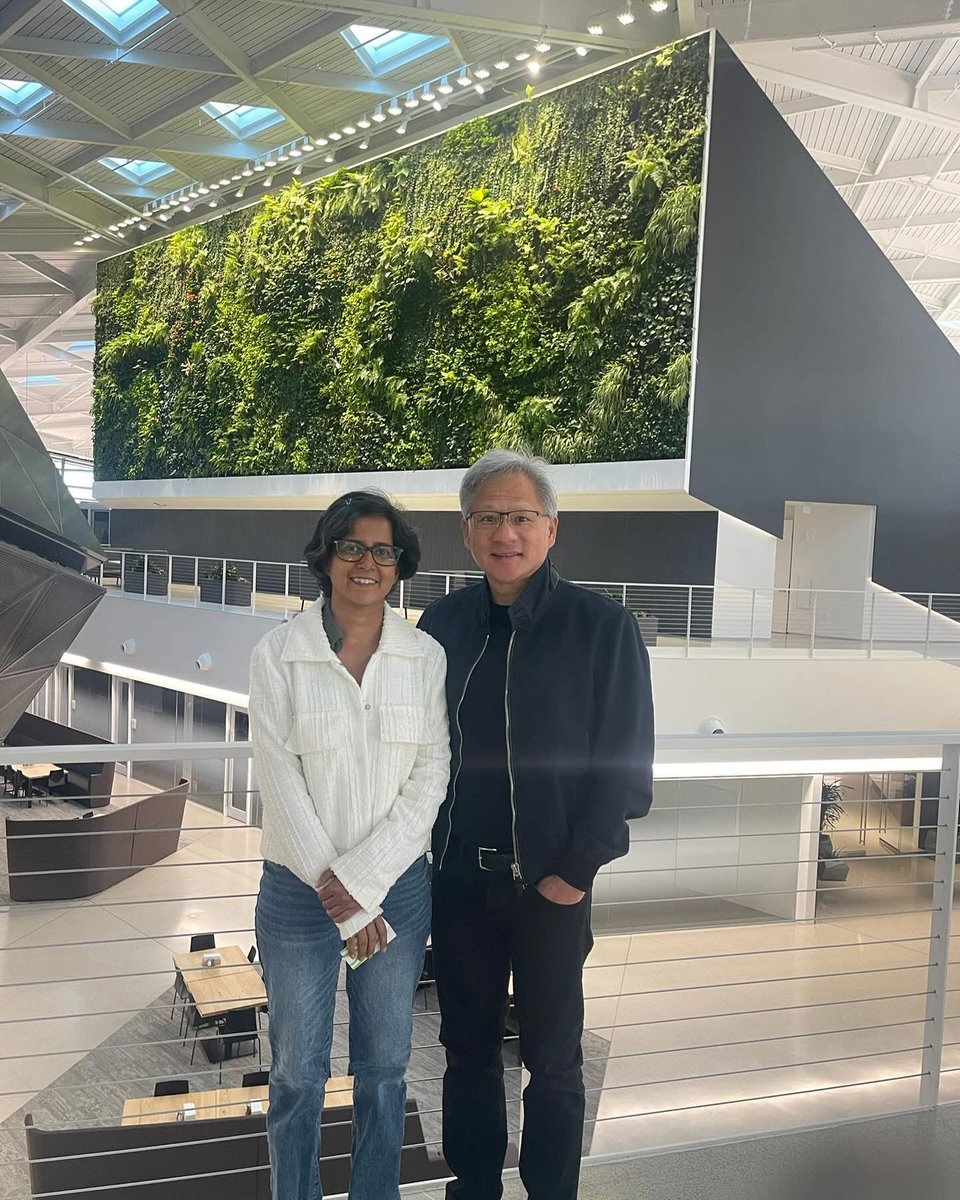
The photograph here is one I will treasure for the rest of my life.
When he told me, “I am proud of you. Treasure this time together,” I understood something about leadership that no professional experience could have taught me.
What I will miss most professionally is the extraordinary combination of vision, conviction, curiosity, and personal commitment he brought to everything. His ability to see around corners, to challenge conventional thinking, and to bring an entire ecosystem along with him.
Organizations evolve, leadership changes, and new chapters begin. But the influence of someone who has shaped so many people, ideas, and possibilities endures far beyond any role or title.
Jensen built far more than NVIDIA. He helped build an ecosystem of researchers, entrepreneurs, engineers, and companies whose futures became intertwined with his vision.
I do not know what comes next. I only know how grateful I am to have worked with him, learned from him, and experienced his kindness when my family needed it most.
Thank you, Jensen. For your guidance, for believing in people and ideas long before the rest of us understood them, and above all, for your extraordinary humanity.
I set my own record this week and recorded 4 (!!!) podcasts in 5 days!
We have enough content to post till January😁
Which means I will take three weeks off in the next couple months.
Celebrated Emily’s birthday, done a few meetings, hugged puppies ❤️
Johnny Hilbrant asked me on his podcast if I could ever imagine this life as a kid back in St.Petersburg.
The answer is NEVER.
What I am learning from this is that work compounds and America is a country that rewards it ❤️🙏🏻