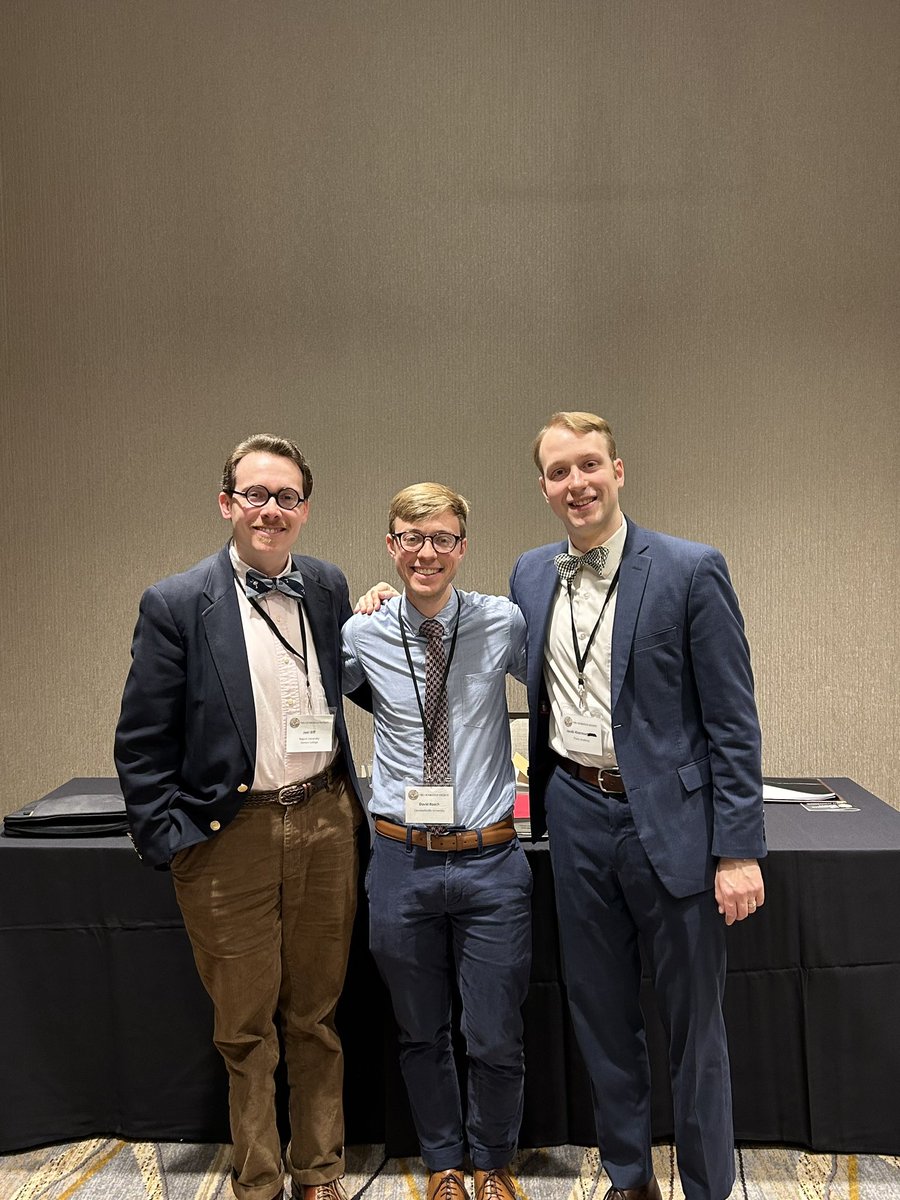
I love parenting essays by fellow-moms. But I also really love parenting essays by thoughtful dads. Grateful for @jacob_hiserman's lovely post today at the Arena @Current_Pub1: https://t.co/xOZYTFCWpW
Perhaps Hamlet is the best Shakespeare play for March Madness. It is the time when we are found either “essentially in…madness” or “mad in craft” about our brackets (Act III, Scene IV).
@DanielGullotta My eldest son got that book for his first birthday. The best thing about that book is family, friends, and myself reading it to my sons and providing political commentary on each president.😂
Putting together my diss biblio and used Zotero. My fifth-grade teacher's mantra "computers are dumb machines; they do what you tell them to do" rings true *again.* I told Zotero lots of things I didn't mean to😂
@IVMiles Otey is a fascinating figure. I'm curious to hear more about your interest in him. This address (as you probably know) came right in between his role in laying the foundation for Sewanee (1857-8) and placing the cornerstone for that university (in October 1860).
Adding Wilfred McClay's *The Masterless* and his edited collection *Figures in the Carpet* for more assists on ideas of self, moral philosophy, and chapel liturgy in the late 19th century.
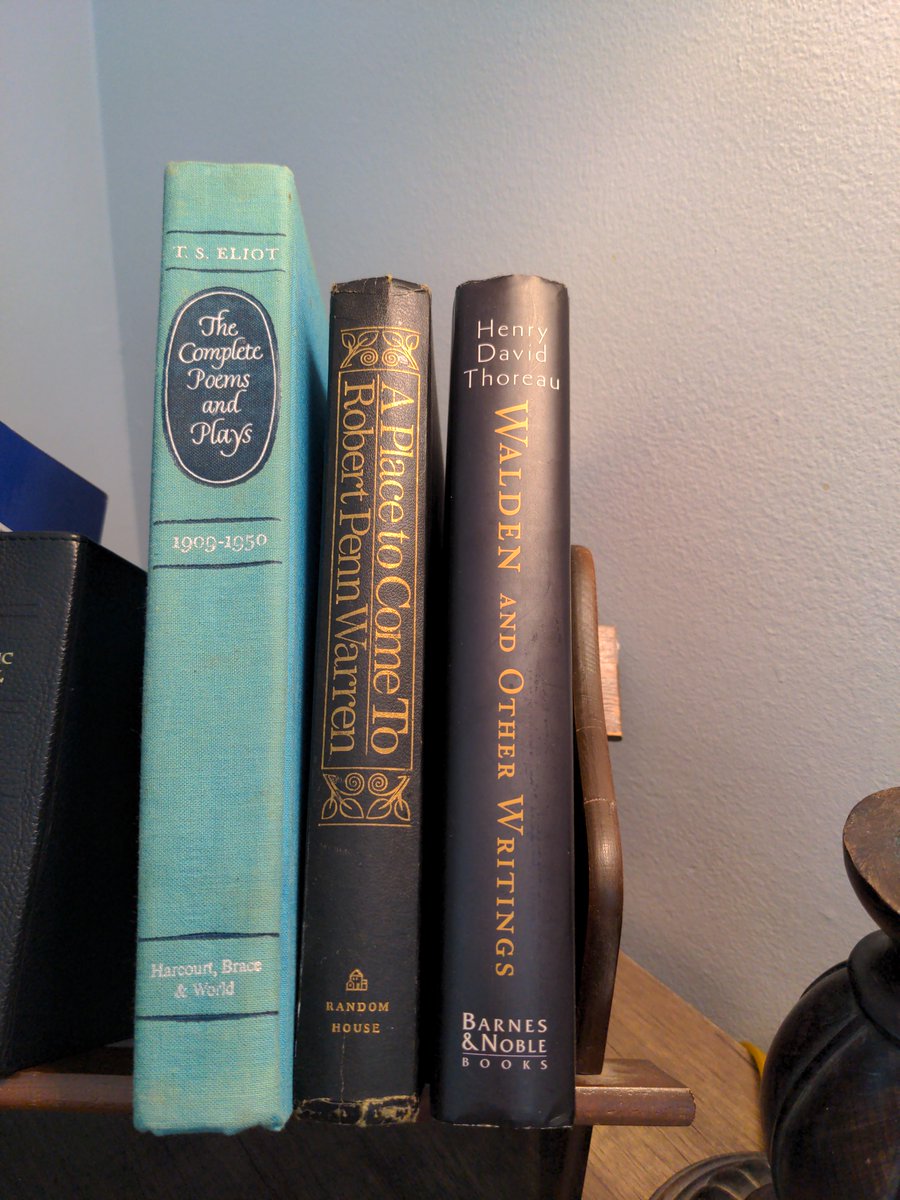
#amwriting - final chapter draft of the diss. "Liturgy and Reverence" by David W. Fagerberg and "Founding Fathers, Nineteenth-Century Style, Southeast USA" by Robert Penn Warren with the assists.
Today at the Arena @Current_Pub1, we're excited to welcome @jacob_hiserman, who tells about his research on southern chapel worship (of interest to @faithandhistory): https://t.co/gdb7exmZmo
The article was delightful and the "Candyland is stupid" line reminded me of a great thread that @JDenHartog1776 did a while ago about alt board games for kids besides Candyland.
"But it is fun, because the joy of gaming first involves accepting arbitrary rules just to feel the sensation of having embraced them." <-board gaming as the social contract?
https://t.co/gEKr8soRKv
There's an argument for board games as auxiliary to or productive of human good(s) that should be made. Also, thinking about the article in light of *Enchantments of Mammon*: how Catan (and Monopoly) reinforces capitalist acquisitiveness in human imaginations.
Carey's comment on an ahistorical Neo-scholasticism vs ontologism and what I interpret as an implicit framework of Augustine's two loves and two cities in McCarraher's *Enchantments of Mammon* (3/3)
Starting to wonder if Augustine of Hippo and his thought has been seen as more historicist-friendly for intellectuals during and after the 19th century than Aristotle (& Aquinas following him) or if it is working within an Augustinian tradition. (1/3)
Here, I'm thinking of John Milbank in *Theology and Social Theory*; Patrick Carey's on O. Brownson's desire to respond to post-Kantian idealism with ontologism (rooted, in part, in Augustinian illuminationism) in "Ontologism in American Catholic Thought, 1840-1900" (2/3)