🚨 New paper on AI and Copyright 🚨
It's easy to dismiss AI-written books 📚 as slop nobody buys. So, armed with full-text AI detection from @pangram, we studied self-published genre fiction books sold on Amazon from 2023 to 2026 March
Turns out Amazon is flooded with books with substantial AI text and these books are earning significant 💰💸 and most importantly, crowding out sales of non-AI books.
FWIW, a book doesn't need to be high quality to have a market impact. It just has to exist in the thousands, which Generative AI enables.
Joint w/ @dhillon_p (@UMich), @irisiris_l (@stonybrooku ) & Jane Ginsburg (@ColumbiaLaw)
(1/n) 🧵
The context can be leaked!!
How much information from context could your LLM be leaking?
Say you are a healthcare practitioner using LLMs with a sensitive dataset to help users make a diagnosis. An attacker could come and retrieve this sensitive information using a prompt injection attack, which would be catastrophic.
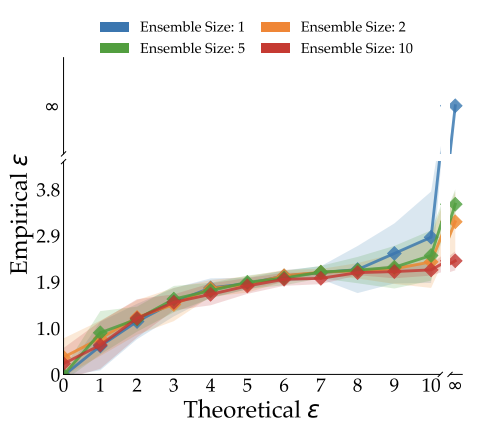
But what if we add a layer of defense? Would this still be the case even if we prompted the LLM not to output this information? What if we even add an LLM to detect if this information is being leaked? What about even stronger defenses that utilize differential privacy?
Our #COLM 2026 paper addresses these questions:
📄 https://t.co/8Tgq7E20Iz
With Contextleak, we show that heuristic defenses can be easily bypassed, while dp-based defenses can greatly harm utility and may need tighter characterizations.
We hope that Contextleak can help practitioners identify limitations in their defenses, such as gaps in privacy leakage between theory and practice, and motivate design towards tighter, practical defenses.