@ChaunceyGardner@CDCgov When we cite surveys, we aren't expecting them to be perfectly accurate in counts. But we can rely on relative trends over time if they keep using the same methodology.
#WNTD2026
Did you know?
Around 15 million adolescents aged 13–15 worldwide already use e-cigarettes.
This is a public health emergency — and we all have a role to play. Join the movement and take action ⬇️
🚫 Ban flavours
Make flavours a thing of the past.
⚙️ Regulate product design
Less appealing. Less addictive. Less toxic. Less harm.
📦 Plain packaging
Reduce appeal. Save lives.
📢 Ban advertising, promotion and sponsorship
Out of sight. Out of mind.
🌿 Tobacco- and nicotine-free public places
Clean air is everyone’s right. Protect people.
💙 Support quitting
Break the cycle of nicotine addiction.
💰 Increase taxes
Less affordable. Less accessible.
#FCTCSavesLives
https://t.co/8gA6kHZXH7
@RushmoreExt23@ChaunceyGardner My point is that @FCTCofficial claims both that youth are 9x more likely to vape and that 15 million children ages 13-15 vape worldwide. Yet 26.1 million adults vape in the US alone? None of these numbers make sense.
@WHO needs to audit this account.
Almost no one will understand what I'm saying here, but "hanging indent to delimiter" style is superior to the more common "hanging indent" style in coding syntax.
Everyone who knows me knows that I've been an AI pessimist, in that I think it's very useful, but I'm not too worried about Terminator. After working with updated models today, I might have changed my mind...
Everyone who knows me knows that I've been an AI pessimist, in that I think it's very useful, but I'm not too worried about Terminator. After working with updated models today, I might have changed my mind...
@JTSemprini Yes. Tobacco products, especially cigarettes and e-cigarettes, are clearly substitutes. Restricting access to one will increase the use of the other.
This paper is both incredibly impressive and bad. The analysis was technically sophisticated, but it included too many arbitrary components that drastically affect the results—a slight, reasonable change in methodology would likely produce the opposite conclusion.
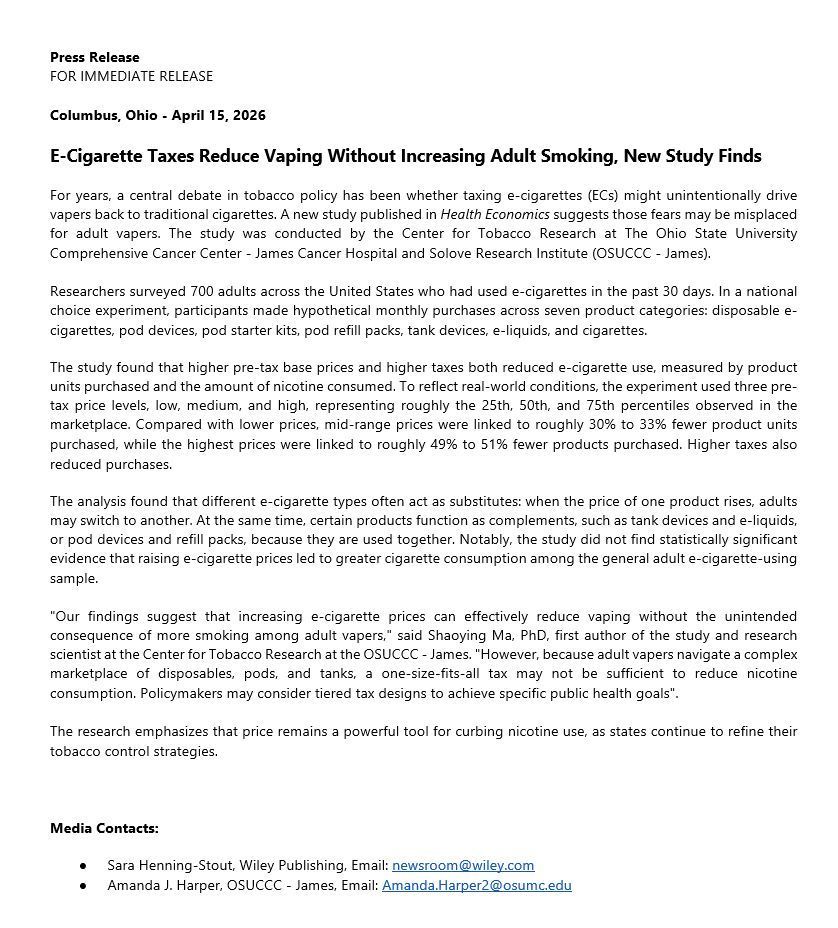
What happens when vaping gets more expensive?
A new Health Economics study finds higher e-cigarette prices and taxes reduce vaping, but users may switch across device types rather than to cigarettes.
Policy design matters. https://t.co/R9PMU495Ov
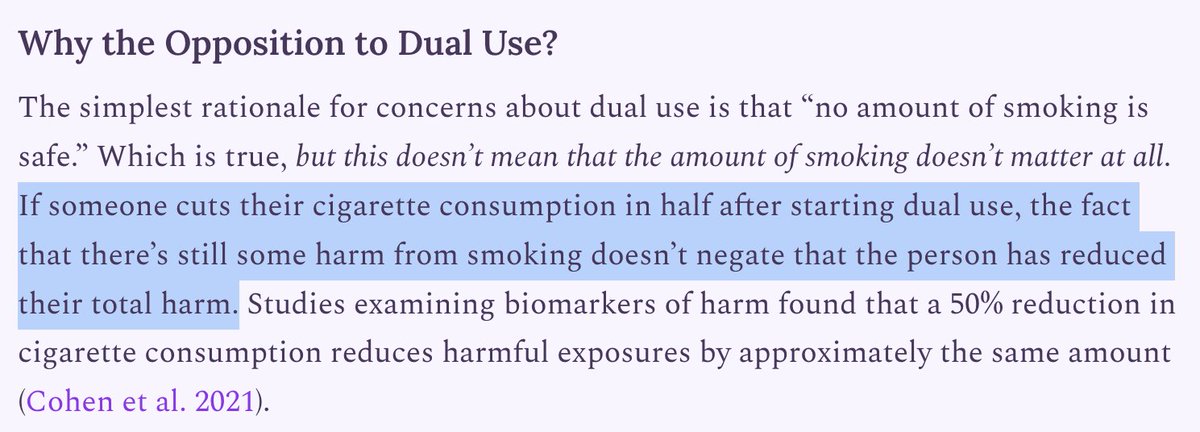
At SRNT, a Yale medical student insisted to me that there's no difference between smoking 10 or 20 cigarettes per day.
@ArielleSelya explains the ridiculousness of the new academic discussion on "dual use" of cigarettes and e-cigarettes: https://t.co/FIH8CWggFV
What happens when vaping gets more expensive?
A new Health Economics study finds higher e-cigarette prices and taxes reduce vaping, but users may switch across device types rather than to cigarettes.
Policy design matters. https://t.co/R9PMU495Ov
@newrepublic@EdithOlmsted To be fair, @newrepublic does cite this statistic from @WHO, but it clearly in no way applies to the United States. And honestly, I'd be surprised if it's actually true.
Maybe it's time for a replication study? https://t.co/GF0EZV1WNO
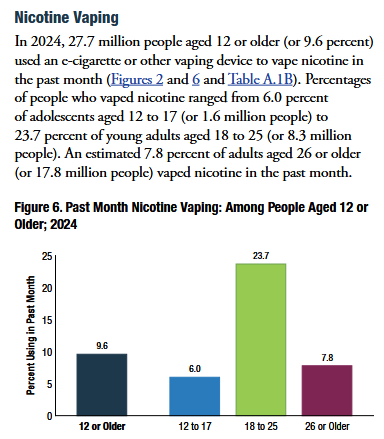
According to @newrepublic: "Children are, on average, nine times more likely to vape than adults, according to the World Health Organization."
However, federal US data disagree: https://t.co/u25489UIpu
Any comments, @EdithOlmsted?