Let us celebrate you this Red Cross Month. 🎉
It’s the people who make our mission possible. For 145 years, Red Crossers have stepped up for communities across the country when help can’t wait.
Tell us in the comments why you're a proud Red Crosser. Your commitment makes a difference every day, whether you:
- Give blood or encourage others to.
- Help people recover from disasters.
- Participate in a student-led Red Cross Club.
- Teach or learn lifesaving skills.
- Support our military and their families.
Thank you for everything you do. ❤️
Looking without walking by, halting the frantic pace of our lives, allowing the lives of others, whoever they may be, with their needs and troubles, to touch our heart. That is what makes us neighbors to one another, what generates true fraternity and breaks down walls and barriers.
In this new #CME, @UPMC and @PittStroke's Dr. Al-Bayati (@AlAlBayati1) reviews how to explain #stroke to patients and caregivers, understand EMS assessment of stroke patients, define the EMS role within the Stroke Chain of Survival, and more: https://t.co/I0xumTjWtl
10 Symptoms of a Ministroke in Women That You Really Shouldn’t Ignore | SELF Dr. Eliza Miller with a great interview @PittNeurology https://t.co/PN3nHh9eEm
This month, we're expanding our health insights with free A1C testing (commonly used to screen for diabetes and prediabetes) for all who successfully give blood through March 31.
Remember: Donating blood is not the same as getting bloodwork done at the doctor's office — you do not need to fast! Before you arrive to your appointment, make sure to fuel up with plenty of water and iron-rich food. Make an appointment to give blood: https://t.co/uexqtkxIfT
These statistics are alarming but true. According to the CDC:
• 8.7 million people in the U.S. are living with undiagnosed diabetes.
• Approximately 80% of people with prediabetes are unaware they have it.
Unmanaged diabetes can cause serious health concerns. This month, we’re expanding our health offerings with free A1C testing for all who successfully give blood through March 31. Gain valuable information about your blood sugar levels over the past three months by making an appointment to donate blood: https://t.co/UJEHufr7I4
Disappointment comes from knowing things could be better. Gratitude flows from knowing things could be worse.
We don't control events, but we do choose our outlook. Where we focus shapes how we feel.
For most people in most places, this is the best time in history to be alive.
Key topics that are new or revised since the 2010 guideline include:
Opioid overdose, bleeding control, open chest wounds, spinal motion restriction, hypothermia, frostbite, presyncope, anaphylaxis, snakebite, oxygen administration, and the use of pulse oximetry in first aid.
I just ate a thing called a “Pittsburgher” from Primantis and washed it down with a Yeungling. Now I can’t stop yelling WELCOME TO BLITZBURGH at Jets fans. What is happening to me?
Recent evidence shows that the heart and the brain, once considered unrelated organ systems, are interdependent and linked through shared risk factors.
This scientific statement is titled: Cardiac Contributions to Brain Health
📷: Heart–brain axis
Nursing’s Role in Psychosocial Health Management After a Stroke Event: A Scientific Statement from AHA. Congratulations #ANVC co-authors & all writing group members! #nursing#strokecare@StrokeAHA_ASA@AHAScience https://t.co/lOXRc7B3Iv
Think you know brain vascular anatomy?
How many brain vascular circles do you know?
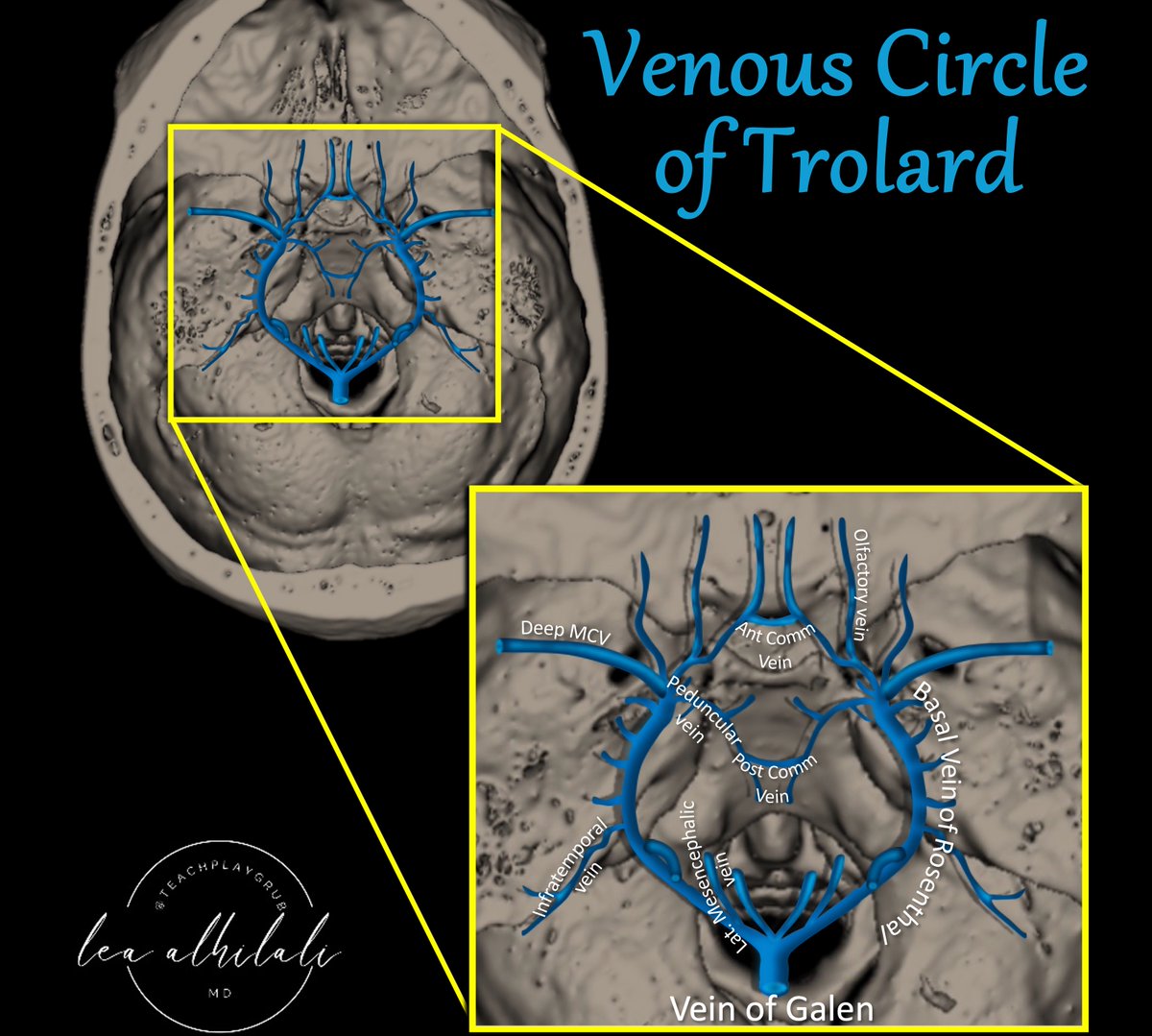
Everyone knows the Circle of Willis, but few know its venous counterpart: Venous Circle of Trolard!
Can you see the polygon on top of a❤️??
Venous Circle of Trolard is the midline connection between the right & left venous networks.
Peduncular veins form the so-called “mesencephalic heart.”
It provides venous collaterals in both the transvesrse & AP directions
It could potentially compensate in contralateral basal occlusion from tumor or surgical injury.
On the flip side--in a dural AVF, it could result in hemorrhage on the contralateral side!
Hopefully now when it comes to venous anatomy, you will always bee in the right vein!