My Goodreads review on Henry V: The Astonishing Triumph of England's Greatest Warrior King by @dgjones:
"Remember, dear son, that it is easier and cheaper to defend a castle than to reconquer it once it is lost."
- Henry IV
Most of us will never be kings, and will never hold the magnitude of the riches and power they wield. Not to mention the circumstances of the period when some of them lived in are so far removed from the current state we are in. Thus, it is understandable how one may find the lives and reigns of some of these medieval monarchs to be unrelatable and not worth spending time reading their cradle-to-grave biographies. But I do think their lives, confronted with privilege and tribulations alike, do reveal sides of human nature that are universal across classes and time periods of history. Every one of us after all has their own life as a kingdom to rule, enrich, and defend.
The greatest fault of Henry is perhaps his failure to consider the longevity of maintaining two crowns united in one sovereign beyond his lifetime. And this weakness certainly was exposed by his dying early. Given his abilities, maintaining another throne—even an old kingdom with its own feuds and civil wars—on the continent, across the channel, is perhaps feasible in his lifetime (and with less doubt had he not died too soon), but expecting his bloodline generations after will be able to hold on to it may be too much for fortune to grant. In hindsight, one may complain that the expensive wars against France were futile and a huge waste, best spent perhaps in consolidating Ireland and Wales, and fortifying the navy.
Henry V is not the one to emulate literally, certainly not as the political leader of the modern age. But one may learn of how he conducted his life in austere discipline. Henry was erudite and artistic, bringing with him volumes of books and harps even during castle siege. He was a man of few words and paid attention to the tiniest detail in art and logistics of both warfare and pageantry, diplomacy, even his theatrical bearing. He mostly followed chivalric protocols but was also unsentimental and ruthless and gave no quarter to traitors and enemies. Born a century and a half before Machiavelli's most (in)famous work, he was the prince who was both feared and loved. He had a long apprenticeship as Prince of Wales. He was not perfect and he made mistakes but learned from them, and certainly thanks to his ailing father who taught him a lesson, probably knowing better why it is not a good idea to have a reputation as a usurper.
Dan Jones is a master of his craft. He brought Henry to life, and his use of the present tense certainly helped this. I also have no qualms about him speculating to the point of psychoanalyzing, and I find them to be mostly reasonable. He is clear where he knows there is no way of telling what Henry really was thinking at that moment and the intelligent reader can make up their mind whether they accept his interpretations.
Some points for improvement (but would not cost a star) include the lack of a genealogical chart which could show Henry V's hereditary claim to the crown of France and his relationships to many of his cousins and uncles who played significant roles during (and in the aftermath of) his life and reign. I also would have liked to learn more about whether his relationship with his wife Catherine of Valois was an affectionate one or merely a fulfillment of a dynastic obligation. But perhaps there is not sufficient evidence for this. It was not mentioned in the book that less than a decade after Henry's death, dowager Queen Catherine will marry Owen Tudor, who would be grandfather of Henry VII. I also thought Dan could include a footnote on Edward II's regicide. I am not sure of his view on other historians' (e.g. Ian Mortimer) recent conclusion that his "murder" was propaganda and was instead hidden on the continent.
Dan used a comprehensive variety of English and French and other continental sources to write this book. It is certainly dense and there is no lack of detail, but is far from a dry read. I finished 403 pages in 5 days! I appreciate the author's constant effort to remind the reader who exactly a certain Henry, John, or Thomas is, which is especially helpful when the character was last mentioned or introduced a hundred pages ago. I would definitely recommend this, not just for medieval history enthusiasts, but for any reader in general. Reading this masterpiece of narrative non-fiction combines the cognitive benefits of reading a factual book and a novel.
I especially commend his admonition (if at least implicitly) against projecting modern values onto medieval figures. Recently, I have come to respect only history commentators who are not finger-wagging moralists: for "Our values are not his. His are not ours. We do not need to pretend otherwise." And with that, I agree with Dan Jones that Henry V is England's greatest warrior king.
https://t.co/WNvVIFQ6hx
Have you ever wanted to become just as well-educated as a monk or nun in 8th century Northumbria?
Using some evidence from the works of Alcuin of York, I put together a comprehensive reading list for what you would have learned.
Check it out: https://t.co/WSRV4MRsDs
Currently reading Norman Macdougall’s James IV: a highly informative, albeit dense read on Scotland’s Renaissance king. His marriage to Margaret Tudor ultimately led to the union of Crowns with England in his great grandson, James VI. I have mixed feelings for the author’s penchant for quoting lengthy 16th century Scots.
@FoWHLNW6 Mary, Queen of Scots, was the granddaughter of James IV; not his daughter. It was James V (father of Mary), then 17 months old who was orphaned by his father's demise at Flodden.
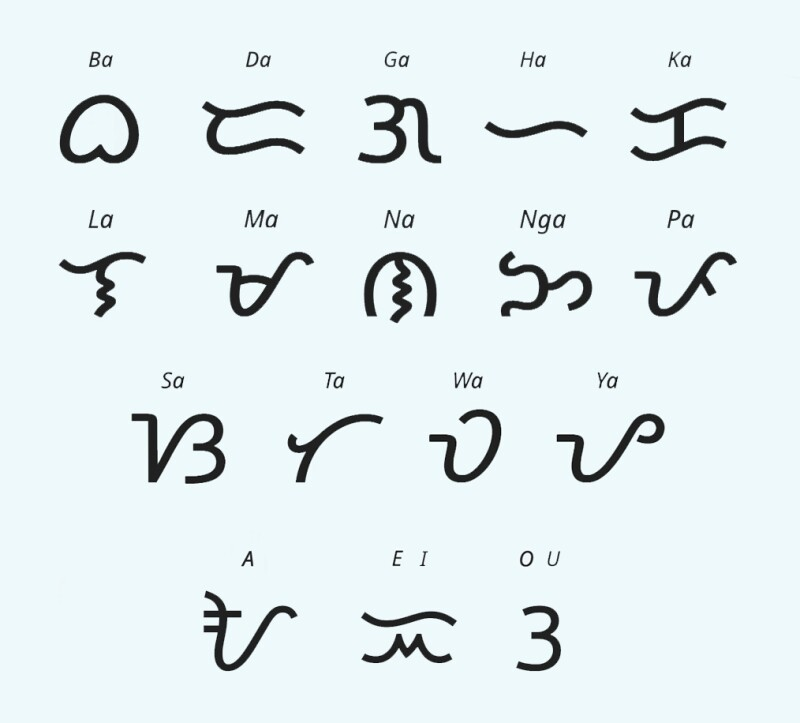
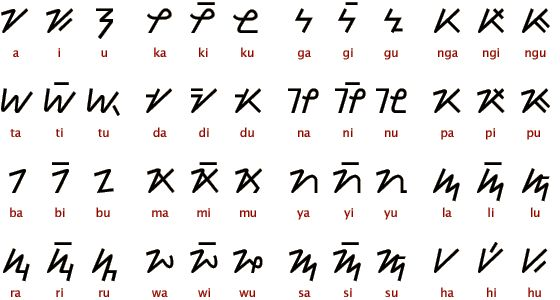
@Globalstats11 The Philippines used to have a number of pre-colonial Abugida writing systems related to the Brahmic scripts. One of them Baybayin in the Tagalog region, and the Hanunuo and Buhid scripts in Mindoro island.
I see why the Philippines is paired with East Timor. They're the only 2 predominantly Catholic countries in Asia. Had Guam been a sovereign country, it would be a very strong contender. Both were colonized by Spain and the US, and have had historical proposals for American statehood. Guam also has significant Filipino diaspora.
Probably the ghost ancestry in Native Americans that is closest to Papuans and Australasians called Population Y? Referring to a hypothesized ancient "ghost" population that contributed a small but detectable genetic signal to certain groups in South America, such as the Suruí and Karitiana, after "Ypykuéra" meaning "ancestor" in the Tupi.