Researcher: Sport, Physical Activity, Health & Wellbeing | Now: Men’s experiences of sport and obesity across the life course | Amateur lifter & photographer
Writing is thinking. It is an integral part of the formulation of ideas and analyses within research.
Outsource your writing = Outsource your thinking
Do so at your own detriment.
It seems like writing will no longer be an important part of the research process. It can easily be outsourced to AI.
What's going to matter is the way researchers curate their materials.
Claude Code was able to do a good job partially because I already had a well-curated list of materials, and I knew the direction of the argument.
That said, researchers will still need to learn writing because it helps you think through problems.
For me, the turn of the 21st century is the period where the pursuit of muscularity really went mainstream.
Men's Health magazine was an indicator of this shift. First 2 covers 1995/1996. Latter 2 2003/2009.
Happens to coincide with WHO's declaration of obesity as an epidemic.
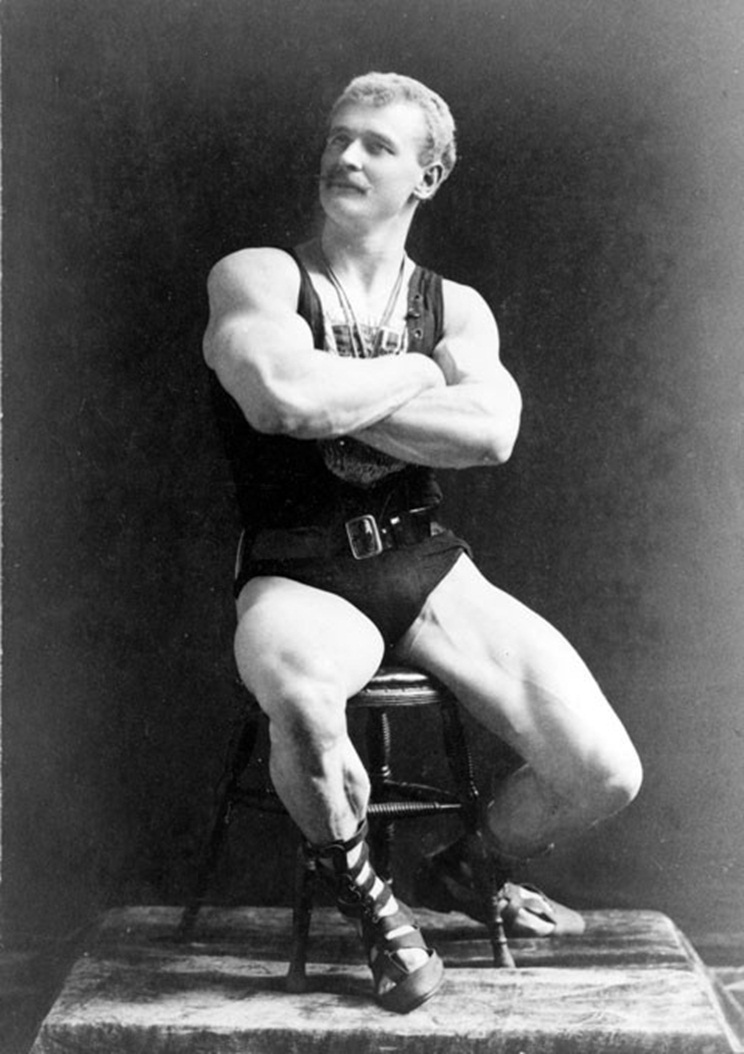
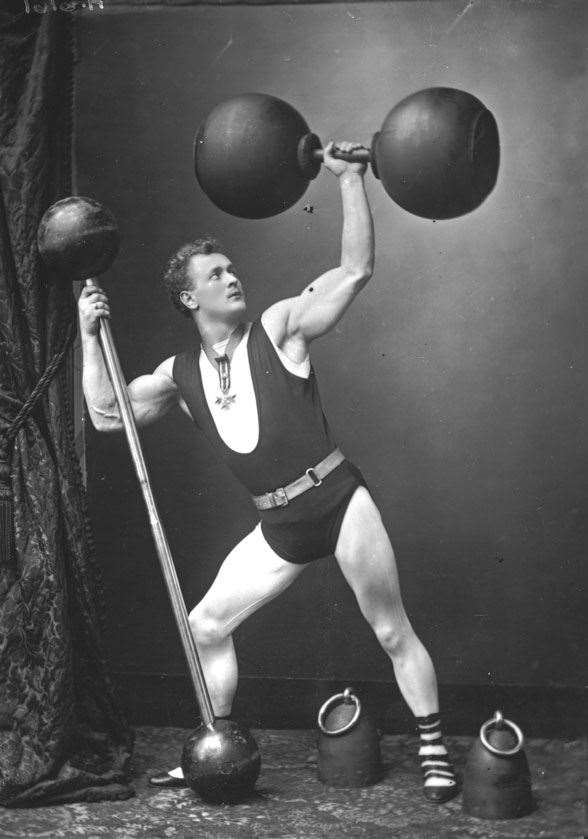
I encourage you to read about the rise of Eugen Sandow, the first celebrity strongman. He became famous in the 19th century for his feats of strength, which allowed him to sell health supplements, exercise equipment, and even luxury gym memberships.
When you connect his rise to Britain's second industrial revolution, mass migration into cities, and the rise of photography, you can see how changes in economics, demographics, and technologies affect how we think about health, masculinity, and even virtue.
Those changes didn't stop in the late 19th and early 20th centuries. They continued with developments in motion picture and later digital technologies, which allowed the rise of the internet. As the economy shifted from being an industrial to a post-industrial (service) economy, more people have become obsessed with fitness in a particular way, which has changed how they think about ideal body types.
This can all be contrasted with the early Romantic age, before widespread industrial development, when the ideal male body type was slender and pale. This was the body of a "gentleman." Tan, muscular bodies were associated with the lower laboring classes (e.g., agricultural workers).
Understood in this context, you can see how these are cultural changes, not consistent narratives rooted in evolutionary biology or whatever.
I encourage you to read about the rise of Eugen Sandow, the first celebrity strongman. He became famous in the 19th century for his feats of strength, which allowed him to sell health supplements, exercise equipment, and even luxury gym memberships.
When you connect his rise to Britain's second industrial revolution, mass migration into cities, and the rise of photography, you can see how changes in economics, demographics, and technologies affect how we think about health, masculinity, and even virtue.
Those changes didn't stop in the late 19th and early 20th centuries. They continued with developments in motion picture and later digital technologies, which allowed the rise of the internet. As the economy shifted from being an industrial to a post-industrial (service) economy, more people have become obsessed with fitness in a particular way, which has changed how they think about ideal body types.
This can all be contrasted with the early Romantic age, before widespread industrial development, when the ideal male body type was slender and pale. This was the body of a "gentleman." Tan, muscular bodies were associated with the lower laboring classes (e.g., agricultural workers).
Understood in this context, you can see how these are cultural changes, not consistent narratives rooted in evolutionary biology or whatever.
Since my feed is filled with posts about storytelling, here is Marshall Ganz’ lecture series on public narrative, a practice in which storytelling is used to mobilise others into action or change.
Here’s how to tell a story: https://t.co/pz7780Zvj1
I don't think assuming "someone might want to come through and do a couple pull ups" is a good approach to policy-making.
These gyms will likely only appeal to very small minority rather than those who might benefit the most from being more active. Simply does not justify cost.
Sean Duffy: "As people travel through our skies, we want to have the most enjoyable experience for them. Someone might want to come through and do a couple pull ups."
@ArthurMacwaters I think it’s better to judge a HS by their policies rather than how many pull ups they can do.
Also as many have also pointed out, she’s not the current HS.
I think this is a perfect example of officials blinded by their own enthusiasm for a particular activity.
How many people are going to use a fitness zone in an airport? Likely a very small %!
Will they evaluate the impact of these spaces?
Unlikely.
Having pull-up bars in airports means you can stay fit while traveling.
You can challenge yourself, or better yet, challenge your friends & family during a layover. The downside is your daughter might beat you!
That happened today as me, my daughter, Paloma, @SecKennedy & @paulsaladinomd celebrated DOT grants to Make Travel Family Friendly Great Again!
Tell me how many pull-ups you can do.👇🏼
CNN partners with Kalshi to integrate prediction markets into its global newsroom.
The first major news network to embrace Kalshi prediction markets.
A new era of media is here.
I think this is an interesting interview, but it highlights the limits of Scott's use of crisis framing and how his understanding of men and masculinity is shaped by his own personal experiences.
https://t.co/aeEg4obFgr
David makes a good point about the idea of masculinity being broad.
I’m not convinced by his answer on whether he, and his industry, contributes to narrow definitions though.
David Gandy, "I do the washing, I do the cleaning, I do the school run.. We are the first generation of men my age where we're seeing the dads take on different role"
Years ago when as a kid I learnt that Prophet Muhammad cleaned, cooked, mended his own clothes, milked animals, helped with general chores, emphasising fairness in domestic life, I wondered how it is that there are so many British Muslim men (and of course non Muslim men too) who are waited on hand and foot by the women in their households, have never been in a kitchen (to cook or clean), let alone picked up a vacuum cleaner or helped out with any household chores, whatsoever
Yet when you ask about religion, almost all will say they're good Muslims, following the sunnah (example of the Prophet), will fast in Ramadan, will pray five times a day, etc.
Between how inspirational leaders live their lives, and how those who insist they follow inspirational leaders live their lives exists a huge void of integrity masked by ego, pride, casual sexism/misogyny and some obscure indirect view that women's purpose in life is servitude to men
It is of course us to each family to decide how they wish to manage the running of their household and agree what works for them, but the emotional manipulation, societal and often by misrepresenting religious texts, should not be the foundation upon which anyone charts out a path in the home; a place which is meant to be the most sacred safe space for all
I am glad that there are in each generation men with high profiles who will call this negative behaviour out, as David Gandy is doing so here in this interview on the BBC's flagship Sunday morning news program
And for my fellow Muslim men, in a hadith (saying of Prophet Muhammad), a man once complained he was busy with work and could not attend to household responsibilities. Prophet Muhammad said,
"Do not be harsh or neglectful toward those under your care, for the one who is not merciful will not receive mercy" (Sahih Muslim)
In traditional sunni Islam, this is direct advice emphasizing household involvement as part of moral and spiritual duty
In households of South Asian heritage in the UK, 83% report that women do the household chores - it's time for men of South Asian heritage to have a little humility and step up
@RishiSunak "...the science and medicine have moved on massively"
Ok, but it doesn't seem like you're engaging, or paying attention to, the evidence for the decision?
Like fashion, the fitness industry goes through trend cycles.
Cross-training has been a concept for decades.
CrossFit and Hyrox just heavily commercialised it.
"The rise of the hybrid athlete is wild. It's a real step forward in people's understanding of fitness."
@Gymshark Chief Brand Officer @NoelMack describes how fitness culture has radically changed over the last five to ten years.
"The culture of resistance training and 'traditional gym work' has really, really grown in the past few years."
"Previously, you saw a big guy, and you'd think he couldn't run. Or a guy who weighed 120 pounds, and you'd think he could run, but not lift. But now the two have merged."
"You talk to any of the big equipment providers, and they're going into the big gym chains in the US and removing steppers and cross trainers, and they're putting squat racks in."