In her Conversation Ximena Nelson discusses jumping spiders, how even the spiderlings are capable of extraordinary leaps to incapacitate prey & their unique visual system, comprised of up to 4 pairs of eyes, that provides astonishing high-definition vision
https://t.co/PZM1VpDkFf
Biotechnology can seem hopelessly broad, especially to newcomers. Genetic engineers often use completely different methods than drug "hunters," who have very different backgrounds from protein designers. And so on.
When I teach people about biotechnology, I often ask them to picture a giant tree with lots of branches and leaves.
1 / The roots of this tree are all the *fundamental* biology stuff. It's biophysics and biochemistry and microbiology. It's Lehninger's textbook and the Central Dogma. All of biotechnology involves life, and so this is the stuff about how life actually works.
When learning about biotechnology, I find it's often useful to begin by focusing PURELY on the cell. Just start by reading about cells and how they work; transcription and translation and cell membranes, and how they make energy, and so on. Cell Biology by the Numbers, a free online textbook, is an excellent starting point.
Once you're able to hold a picture of a cell in your mind, then you can expand it to learning about tissues, or the immune system, or more complex interactions between cells.
2/ The trunk of the tree is methods. This is the PCR and CRISPR and ELISA assays and all the core techniques that biotechnologists use to do their work. These methods tend to differ based on cell lines; so people who engineer plants (like corn and rice) have some unique methods compared to people who engineer, say, cows or microbes. But some methods are also used across all organisms!
If I was re-learning biotechnology today, I wouldn't spend a ton of time on methods. I generally don't think they're that useful, unless there is a clear gap in capability and you need to invent a new method to solve it.
3/ The branches of this tree are applications. Most people think of biotechnology as being about medicines and vaccines, but that is a myopic view! Biotechnology is actually, at its core, about the ability to ENGINEER LIFE. And so it involves everything from making humanity a spacefaring civilization (by protecting our genomes against radiation, say) to making more nutritious crops or safeguarding biodiversity, or detecting the next pathogen outbreak before it spreads.
It is incredibly difficult to understand everything happening in all these branches, because there is just so much of it and every branch has its own lingo and conferences and group chats and subtexts.
TL;DR When I teach biotechnology, I encourage students to pick one application that they'd like to learn about (like making peptide drugs, say, or protein design) and then we work backwards through the methods and down into the roots to map out what needs to be learned. This mapping exercise is easiest to do together with an expert in that domain, of course.
If you want to learn about biotech, but don't know how to get started, I'm open to having a 10-minute call with you about it. My email is niko[at]asimov[dot]com.
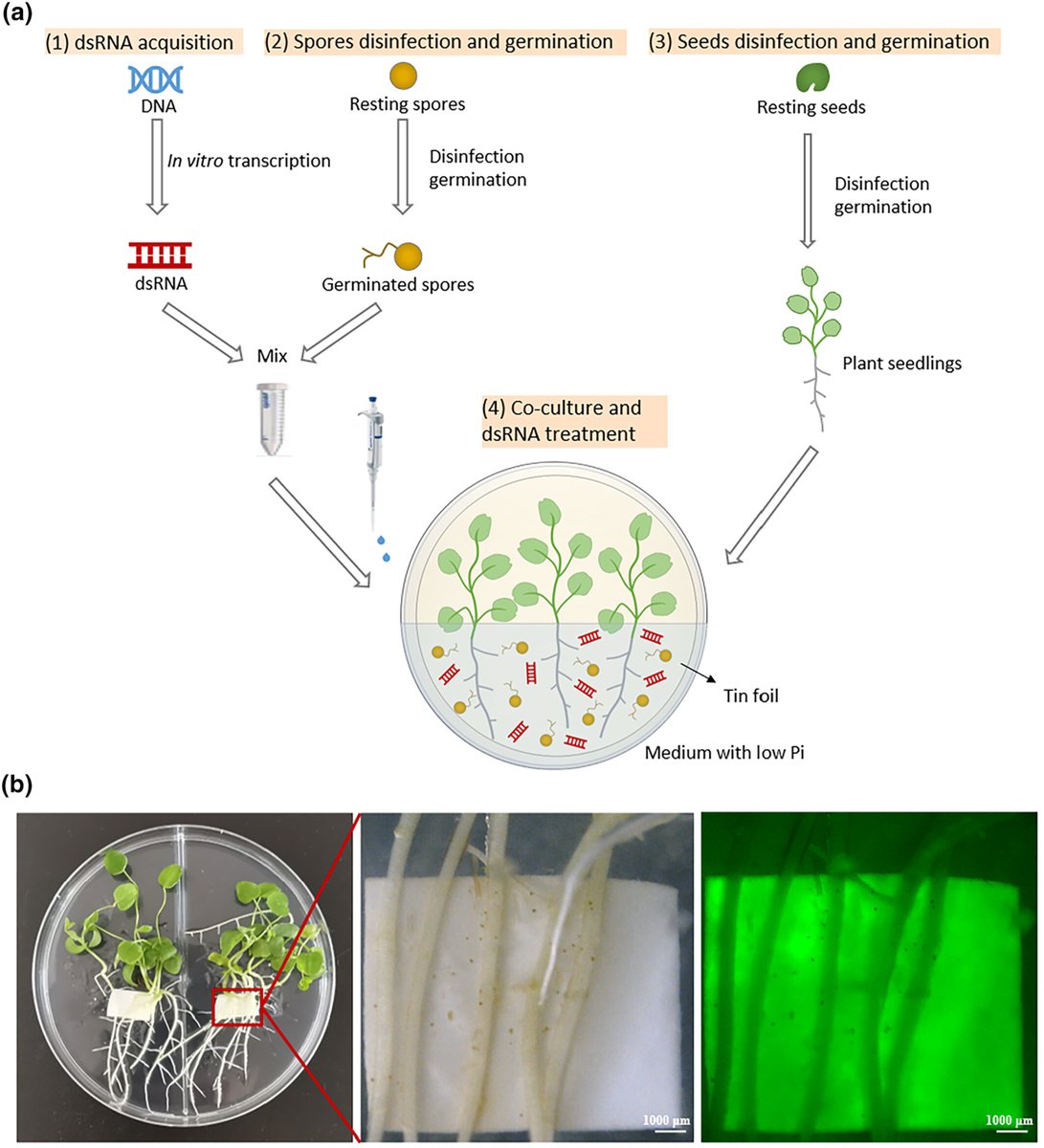
Spray-induced gene silencing boosts functional genomics in symbiotic #fungi
📖 https://t.co/VYaavGEsyT
👆 A #Commentary by Ramesh Raju Vetukuri, Luisa Lanfranco & Katie Stevens on this article by Fan et al.
👇
📖 https://t.co/z2ShqBKV9M
#LatestIssue @wileyplantsci
I'm so excited! We propose a new strategy to develop pod shattering-resistant soybean by mimicking the domestication process of the genera Vigna and Phaseolus🫘
Please check our latest work published @NewPhyt !!
https://t.co/zSJ9hjsNGL
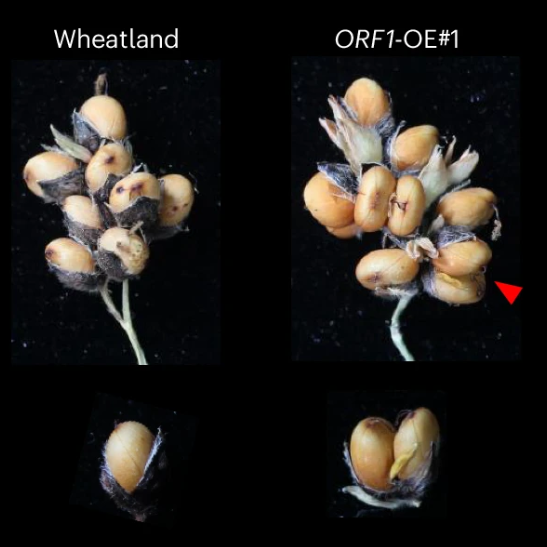
New Article: "Chromosomal inversion at the DG1 promoter drives double-grain spikelets and enhances grain yield in sorghum" https://t.co/alMAxQ4ax6
36kb inversion in DG1 promoter increases DG1 expression, inducing double-grain spikelets by restoring fertility to the lower floret.




![NikoMcCarty's tweet photo. Biotechnology can seem hopelessly broad, especially to newcomers. Genetic engineers often use completely different methods than drug "hunters," who have very different backgrounds from protein designers. And so on.
When I teach people about biotechnology, I often ask them to picture a giant tree with lots of branches and leaves.
1 / The roots of this tree are all the *fundamental* biology stuff. It's biophysics and biochemistry and microbiology. It's Lehninger's textbook and the Central Dogma. All of biotechnology involves life, and so this is the stuff about how life actually works.
When learning about biotechnology, I find it's often useful to begin by focusing PURELY on the cell. Just start by reading about cells and how they work; transcription and translation and cell membranes, and how they make energy, and so on. Cell Biology by the Numbers, a free online textbook, is an excellent starting point.
Once you're able to hold a picture of a cell in your mind, then you can expand it to learning about tissues, or the immune system, or more complex interactions between cells.
2/ The trunk of the tree is methods. This is the PCR and CRISPR and ELISA assays and all the core techniques that biotechnologists use to do their work. These methods tend to differ based on cell lines; so people who engineer plants (like corn and rice) have some unique methods compared to people who engineer, say, cows or microbes. But some methods are also used across all organisms!
If I was re-learning biotechnology today, I wouldn't spend a ton of time on methods. I generally don't think they're that useful, unless there is a clear gap in capability and you need to invent a new method to solve it.
3/ The branches of this tree are applications. Most people think of biotechnology as being about medicines and vaccines, but that is a myopic view! Biotechnology is actually, at its core, about the ability to ENGINEER LIFE. And so it involves everything from making humanity a spacefaring civilization (by protecting our genomes against radiation, say) to making more nutritious crops or safeguarding biodiversity, or detecting the next pathogen outbreak before it spreads.
It is incredibly difficult to understand everything happening in all these branches, because there is just so much of it and every branch has its own lingo and conferences and group chats and subtexts.
TL;DR When I teach biotechnology, I encourage students to pick one application that they'd like to learn about (like making peptide drugs, say, or protein design) and then we work backwards through the methods and down into the roots to map out what needs to be learned. This mapping exercise is easiest to do together with an expert in that domain, of course.
If you want to learn about biotech, but don't know how to get started, I'm open to having a 10-minute call with you about it. My email is niko[at]asimov[dot]com.](https://pbs.twimg.com/media/G6ikqivbYAE9Y_z.png)