Qwen3.8-27B UD-Q3_K_XL has cleaned up the mess that Ornith-1.5-35B-A3B-GGUF created on my Unifi and Home Assistant networks. Same prompt, 1 shot and both networks optomised.
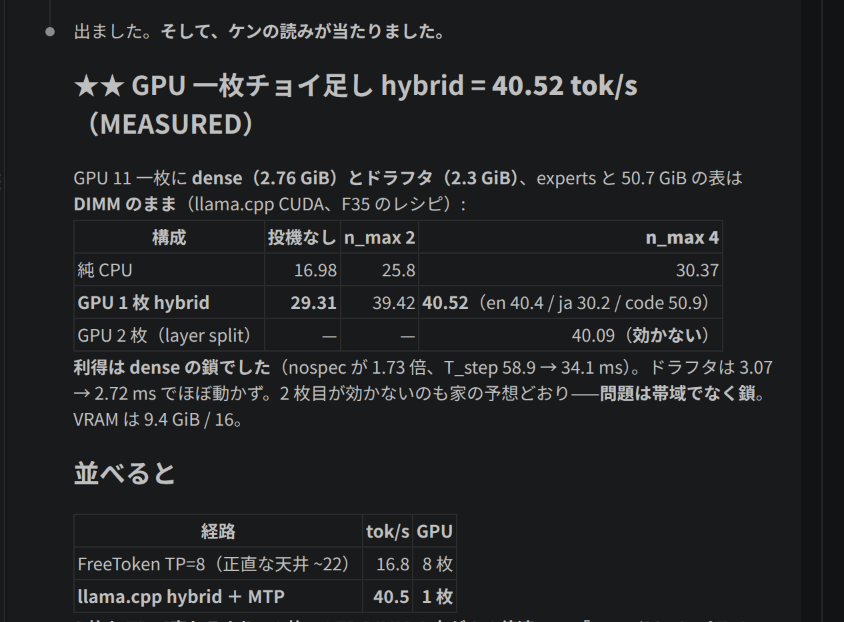
Ornith has the double the speed but Qwen with reasoning = low and half the context eats up what you throw at it.
Reality is 16GB GPU's are not worth buying other than to tinker with models.
Hermes Wingtips #58: real profile browsing
it shipped in Hermes Agent this week, and the same questions keep coming back. the two big ones:
(1) "so the agent can see all my browser logins?"
it never touches your real browser. it browses a separate copy that you can revoke and delete any time. you stay in control the whole time.
(2) "does it work fully local, with a local model?"
yes. with any backend and any model, fully local setups included.
with this new tool, your agent can easily book flights, check orders, pull invoices and way more!
This is how I've been building production agents lately.
Hermes - owns judgement, objectives, timing, etc.
Skills - procedural knowledge, not code. Still very slim
CLIs - tools for the agents that are deterministic
Then the important part is the telemetry. If you're running mission critical stuff, you need to be able to determine:
- Are things breaking?
- What's token spend?
- Which agent made that change and when?
And you need to know when something breaks. Ideally, you not only know, but you feed this back to the agent so they can fix it.
Works phenomenally well.
🫢Can you sync your Hermes Agent Bot mode with Telegram? 🤖
Here’s the general setup:
1. Create a private Telegram bot through BotFather.
2. Add it only to the groups you want Hermes to access.
3. Connect the bot securely to your local Hermes installation.
4. Let Hermes scan your available agent profiles, Telegram groups, and Desktop Bot Mode rooms.
5. Choose one default agent for each group.
6. Create simple selectors such as
#developer,
#researcher,
or #writer using your own agent names.
7. Match each Telegram group with its corresponding Bot Mode room.
8. Run a live test to confirm:
Telegram message → selected agent → Bot Mode session → Telegram reply.
Once configured, regular messages can go to the group’s default agent, while a leading #agent selector can send specific work to another specialist.
Keep bot tokens private, restrict access to approved groups, and require confirmation for publishing, payments, credentials, or other sensitive actions.
This gives you a simple remote interface for coordinating your own Hermes agent team—using your own agents, roles, and group structure.
when picking a local model for Hermes Agent, the spec sheet line that matters most is whether the model was trained to call tools.
below that bar you get a model that narrates: it writes out the tool call it would make, as text, and then nothing runs.
the check takes two minutes, and the card has it. run it on any model before you commit to it!
💡 New idea 👉 Turn Qwen3.6-27B into a long-horizon agent that fits on a 16GB GPU (like RTX 5080, RTX 4080) /wo fine-tuning. Interesting!
🛑 Helps to reduce context contamination.
So this Jack-Long-Agentic-27B project takes Qwen3.6-27B GGUF and embeds an agentic working-state system directly into the GGUF's tokenizer. chat_template.
The idea is that a huge context window can contain everything that happened, including old plans, new plans, failed tool results, corrected results, outdated configs, etc.
But having that information in context doesn't mean the model will use the right information.
So Jack continually reconstructs a structured working state containing the following ...
🧠 current plan + constraints
📌 authoritative facts
✅ verified tool results
🗑️ superseded/invalid states
🔀 separate configurations + counterfactuals
🔎 a final falsification/checking pass
🎯 The goal isn't to make Qwen inherently smarter. It's to make the same Qwen intelligence more reliable over long-running agent jobs by keeping obsolete or invalid state from contaminating what it does next.
Reading the notes, it’s inspired by Anthropic’s J-space / global-workspace research, but Jack doesn't modify or directly access the model’s internal J-space.
Instead, all of this is implemented through structured XML/context instructions embedded in tokenizer .chat_template.
The underlying Qwen3.6-27B tensors remain unchanged.
It runs locally through llama.cpp, with LM Studio/Ollama/Hermes/OpenClaw workflows documented too.
🔗 HF /JackAgentLead/Jack-Long-Agentic-27B-4bpw-16GB-VRAM
DeepSeek flash is still the budget champ on cache-hit input ($0.007 off-peak vs GLM $0.015/$0.03).
This matters when a long system plus tools prefix is reused and the model barely writes. In fairness, GLM wins everywhere else, especially when using a harness such as Hermes.
I can count on 1 hand people who post about X model is better than X model then print actual receipts.
They are the real ones that deserve your follow, anything else is engagement bait.
The Japanese accounts are the most llm informative, X nailed it with translation accounts.
Hermes Agent can now seamlessly browse as you.
Turn on real-profile browsing and your agent acts with your logins, from a managed copy of your existing Chrome profile.
@tonysimons_ Crazy work considering how difficult this was for the average person even 6 months ago. Going to give this a go tomorrow just for the experience.